Introduction to Histology
No description yet. This curated deck is ready for daily study.
Card preview (15)
What is histology
Looking under microscope at tissues and understanding how it works, microanatomy vs gross anatomy of body
How is it studied
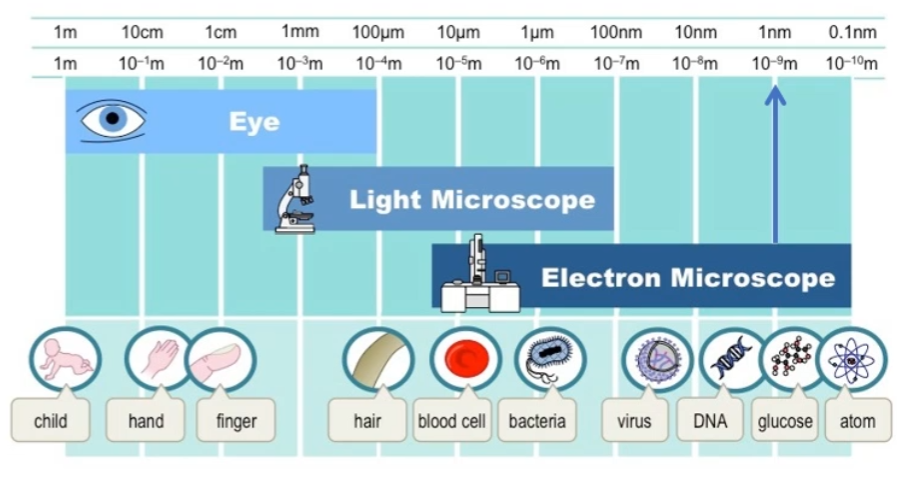
Light microscopy, electron microscopy, staining, biopsy
What are the 4 basic types of tissue in body
Epithelial Tissue (line surfaces of body) Connective Tissue (Support other tissues) Muscle Tissue (For movement of skeleton) Nervous Tissue (communication in body, and bs)
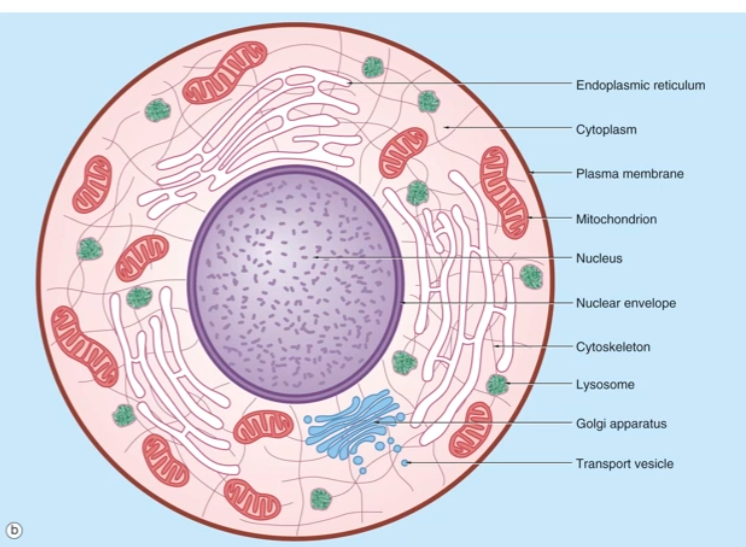
Typical mammalian cell
Adv and Disadv of Transmission Electron Microscopes. How do they work?
Focus beam of electrons through specimen. denser parts absorb more electrons so appear darker on final image. Produces contrast between different parts of specimen. Adv : - High resolution - Internal structures within cells can be seen - High magnification Disadv : - Only thin specimens - Cannot observe live specimens - Vacuum needed - Water must be removed from specimen - Artefacts may be introduced due to lengthy preparation of specimens - Not a colour image
Adv and Disadv of scanning electron microscopes. How do they work?
Scan beam of electrons over specimen. Electrons bounce of surface and detected to form an image Adv : - 3D external structures of specimen can be observed - Thick or 3D specimens used Disadv : - Lower resolution than TEMs - Cannot observe live specimens - No colour
Microscopy thing
What is in vitro
Where we culture cells in labs
Primary vs Cell lines
Primary Cells: Cells directly isolated from tissue, closely mimicking their natural state. Limited lifespan and more reflective of in vivo conditions. Cell Lines: Continuously cultured cells, often modified to proliferate indefinitely. Easier to maintain but may diverge from original tissue characteristics.
Broad steps of histology
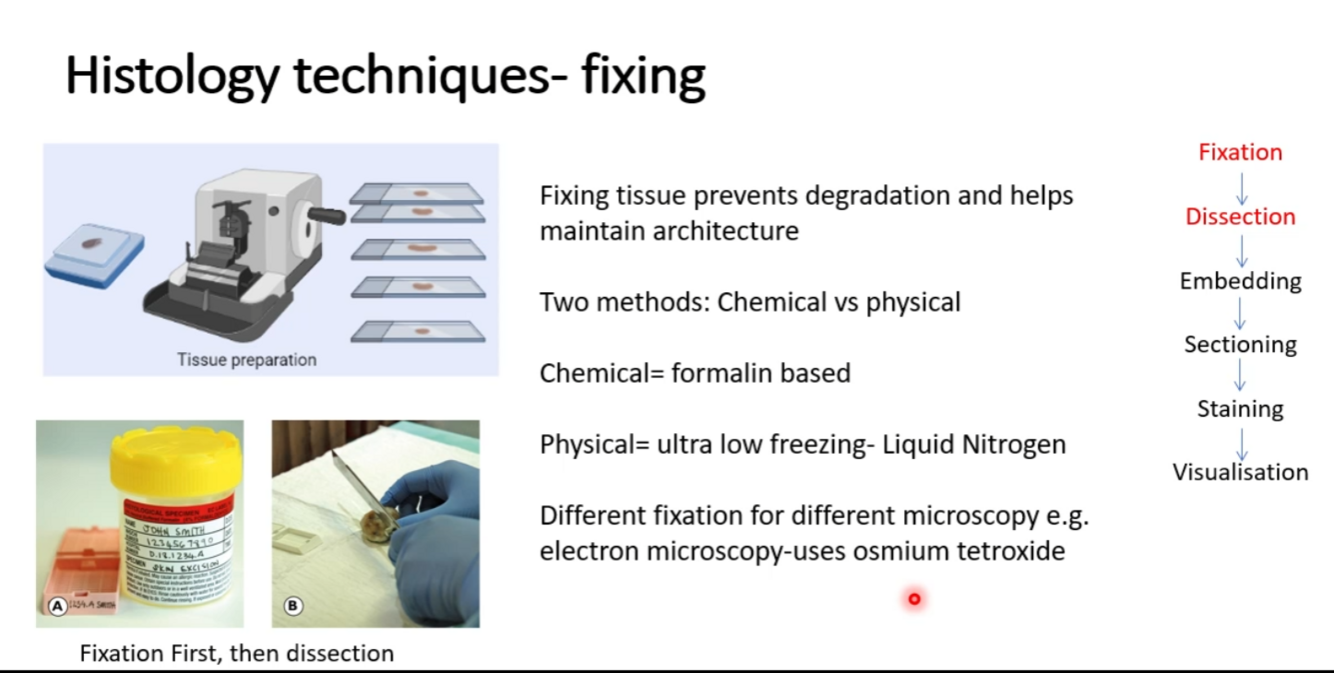
Fixation Dissection Embedding Sectioning Staining Visualisation
Fixing
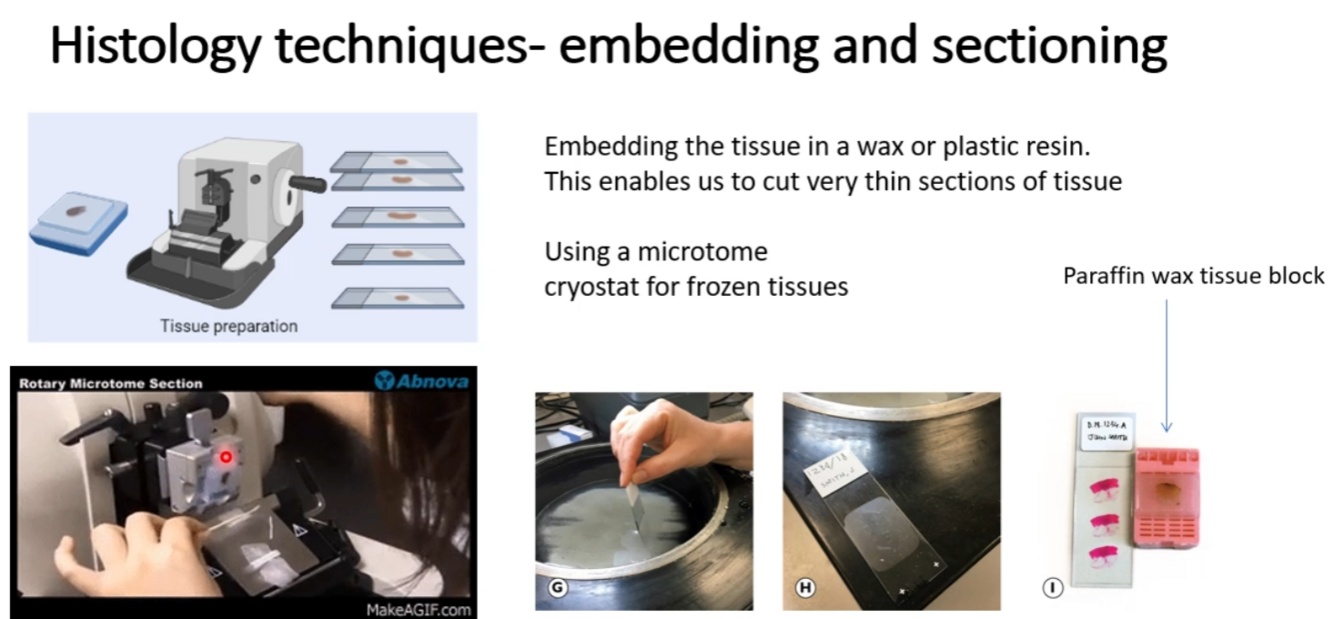
Embedding
Stabilises the specimen before sectioning it
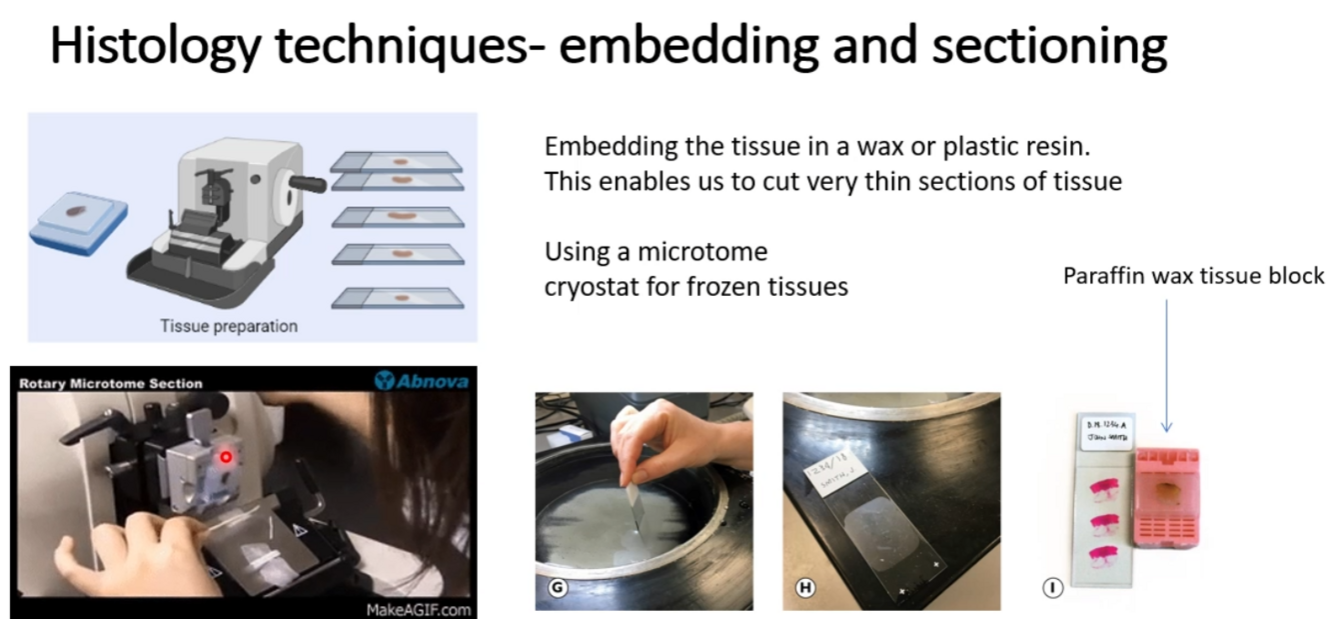
Sectioning
Staining
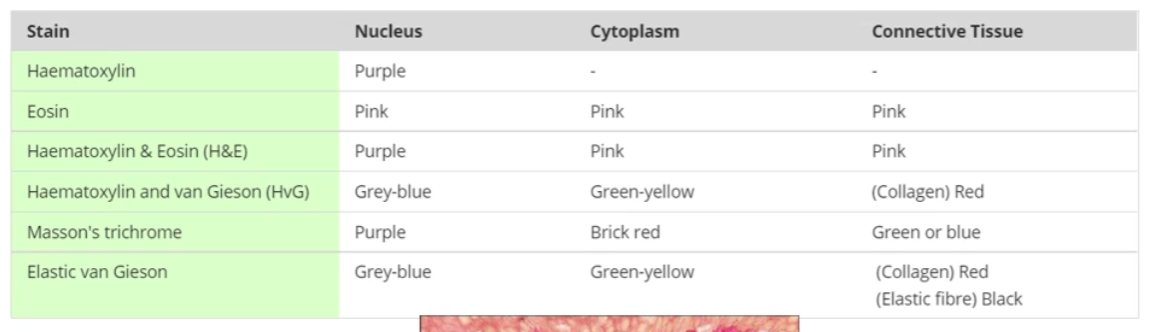
Contrast, easier to see, etc Haematoxylin, acid dyes (eosin) (bind to parts of cell), PURPLE
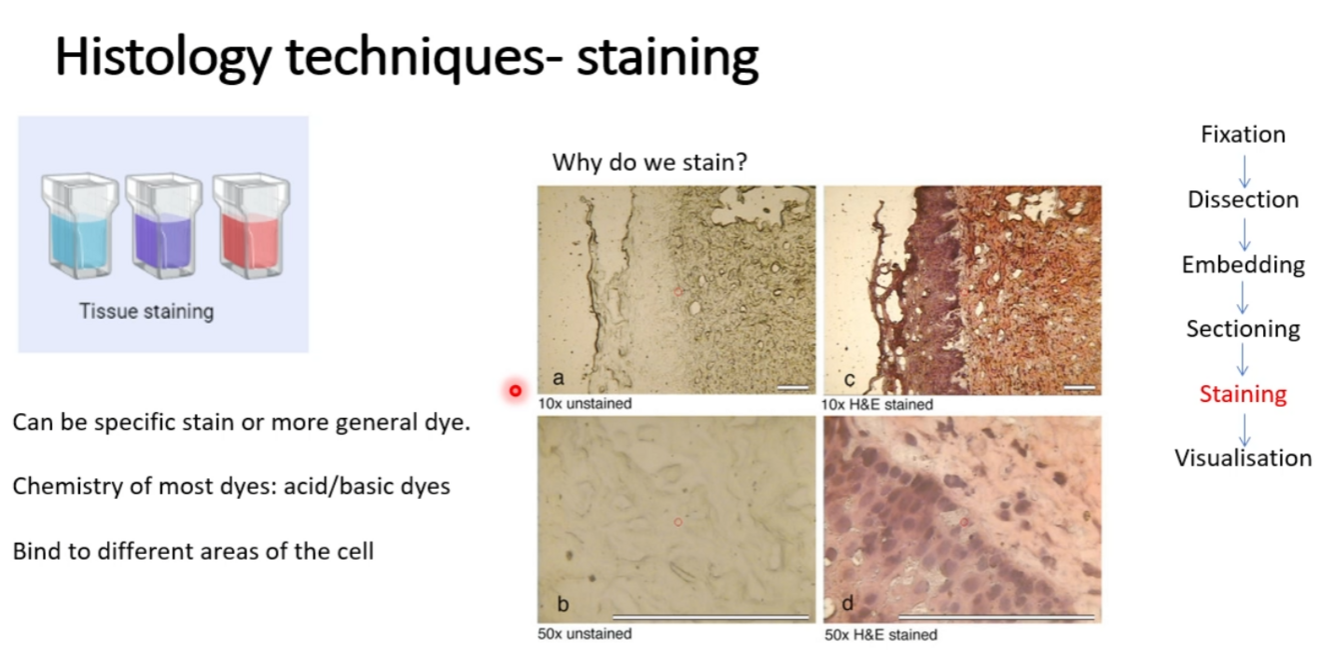
Types of stains