Polymers
No description yet. This curated deck is ready for daily study.
Card preview (24)
What is a Condensation reaction
When a small molecule eliminated ( Usually H2O ) to form a larger molecule
What is a condensation polymer
formation of all long chain molecule from reacting lots of small molecules (monomers) together within each reaction a small molecule is released
What is an addition polymer
Formation of long chain molecules from lots of small molecules (Monomers) with no other products released
What properties should monomers of a condensation polymer have?
Has two functional groups
Give 3 examples of polymers
Polyesters Polyamides Polypeptides
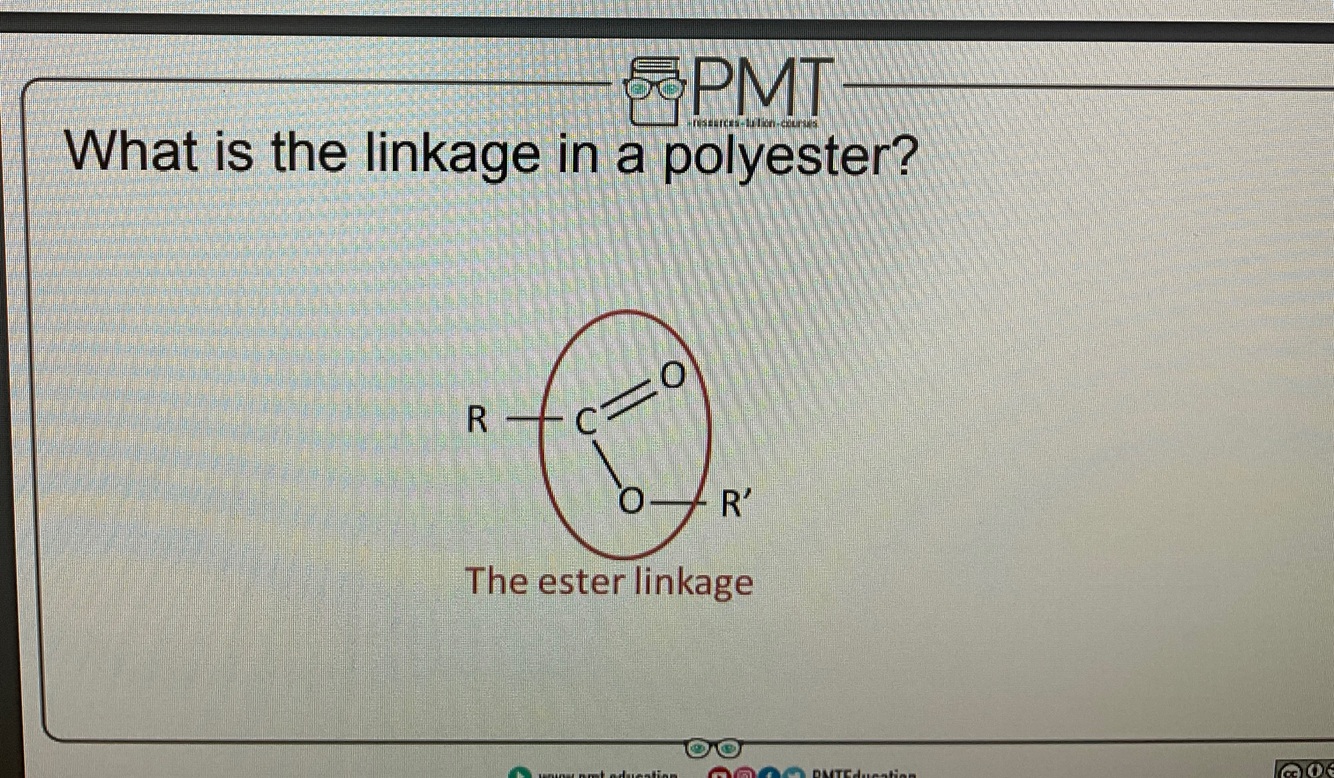
What is the linkage in a polyester
What are the two monomers which form a polyester
Diol & Dicarboxilic acid or a molecule with both alcohol and carboxylic acid functional groups
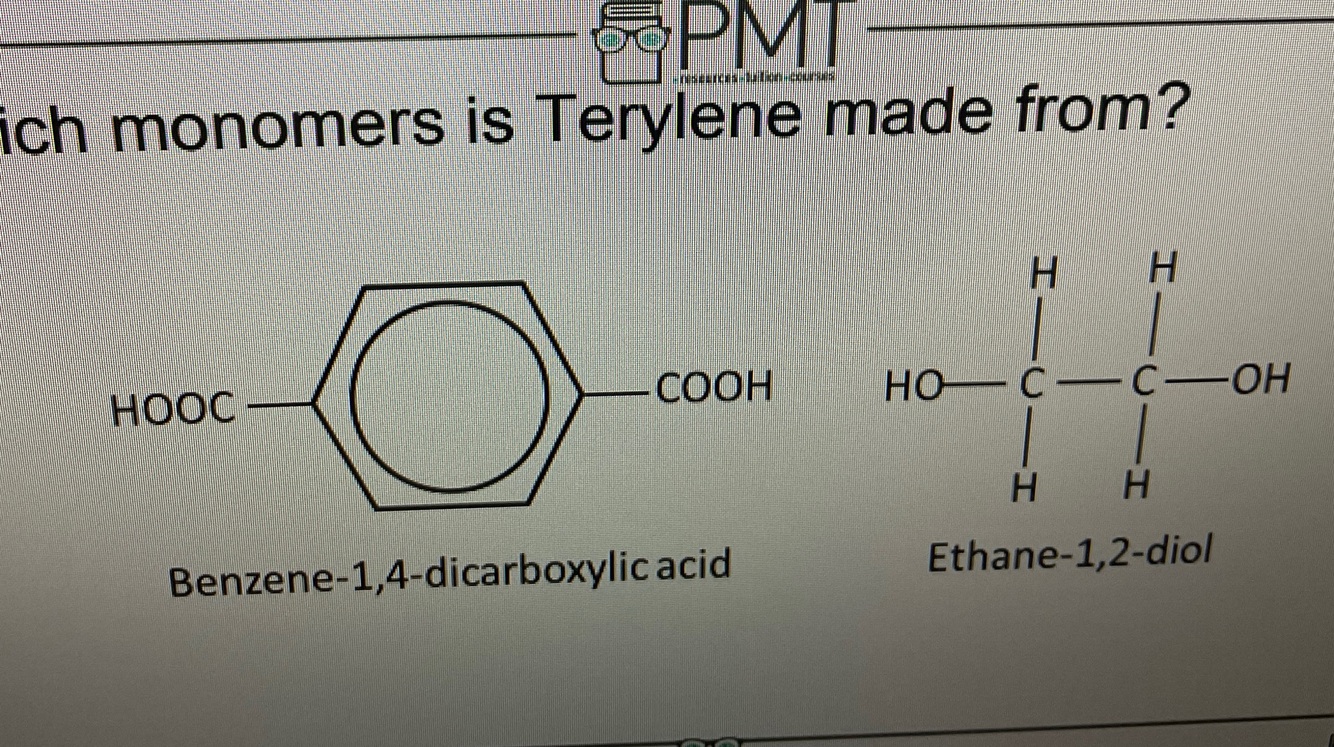
What is Terylene? What is it used in? Draw its monomers
A polyester Used in plastic drink bottles, clothes and sheeting Has the acronym PET
Draw the repeating unit of Terylene


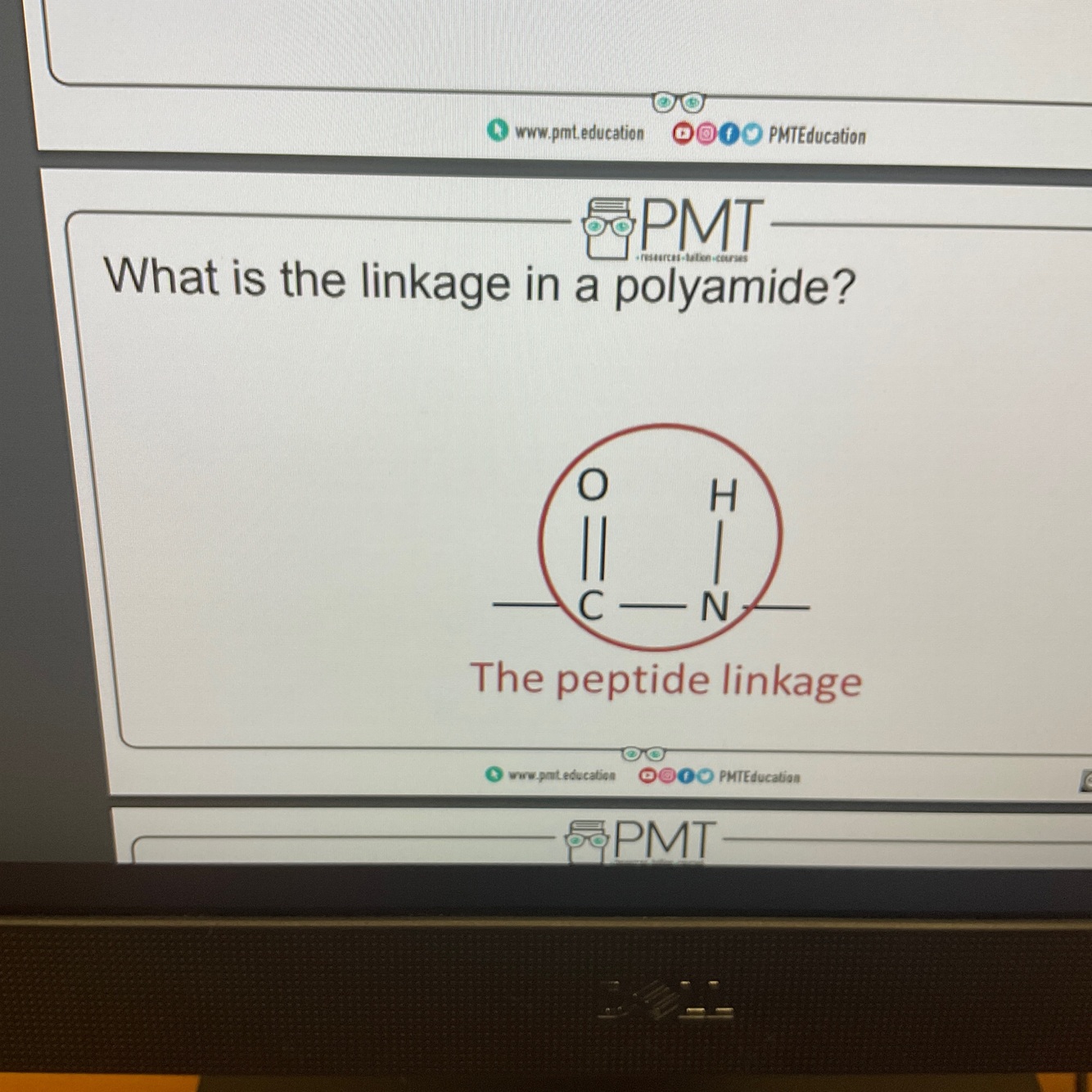
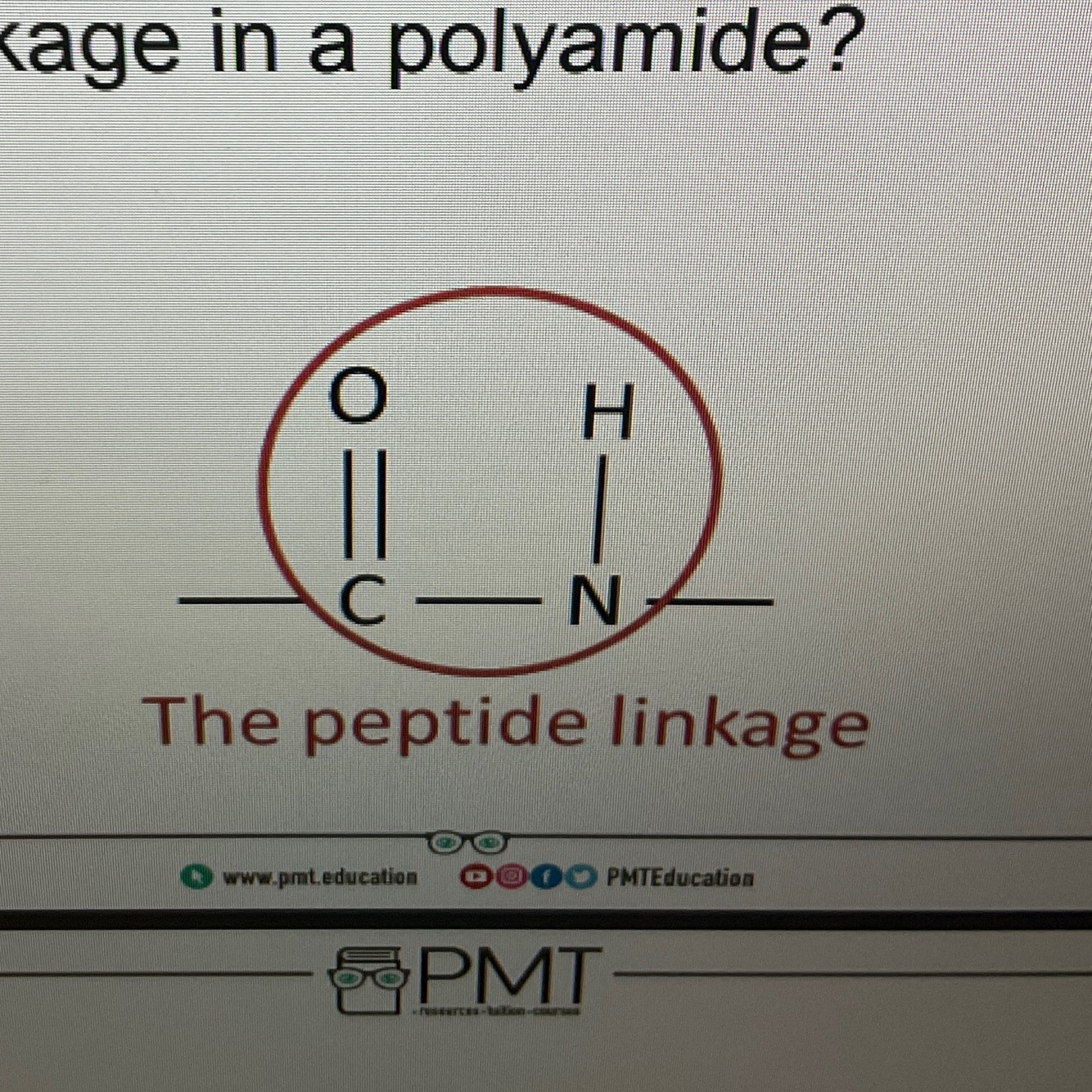
What is the Linkage in a polyamide
Peptide
What are the two monomers to form a polyamide
DiAmine and DiCarboxilic Acid
Name 2 Examples of Polyamides
Nylon & Kevlar
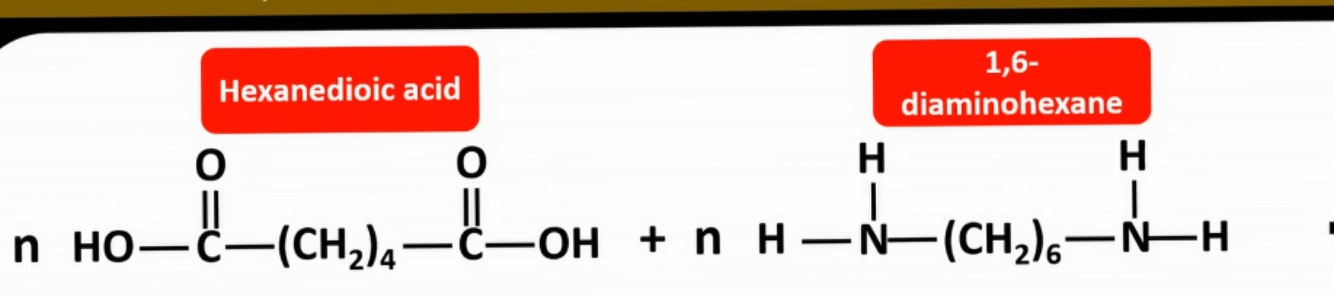
Which Monomers make up Nylon-6,6 What is Nylon? What is it used in?
Hexanedioic Acid & 1,6-diaminohexane Polyamide Used in ropes carpets, clothing and parachute fabrics
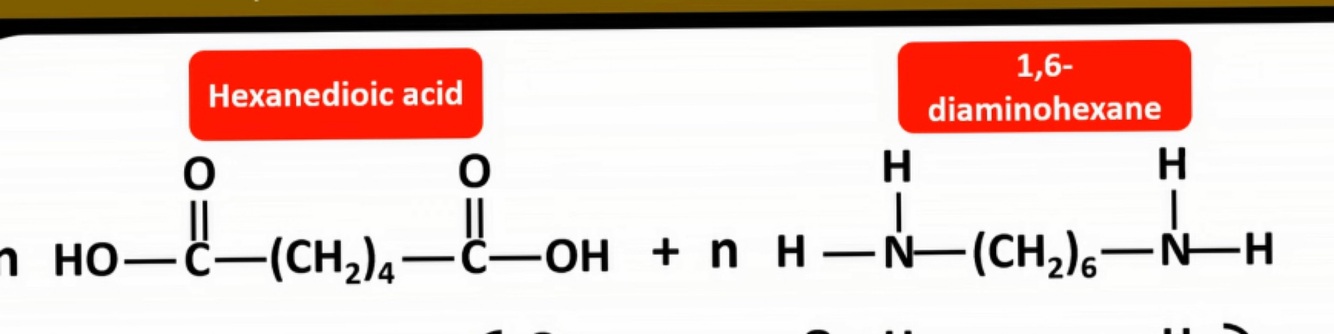
Draw the Polymer Nylon-6,6

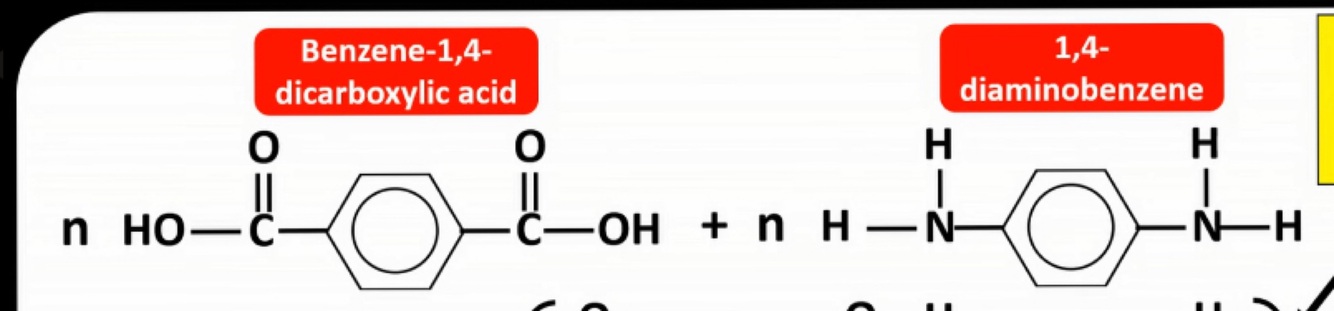
What are Kevlar Monomers? What is Kevlar? What are its used?
Benzene-1,4-dicarboxilic acid 1,4-diaminobenzene Polyamide Used in bulletproof vests, car tyres, racing helmets and some sports equipment Lightweight and Strong
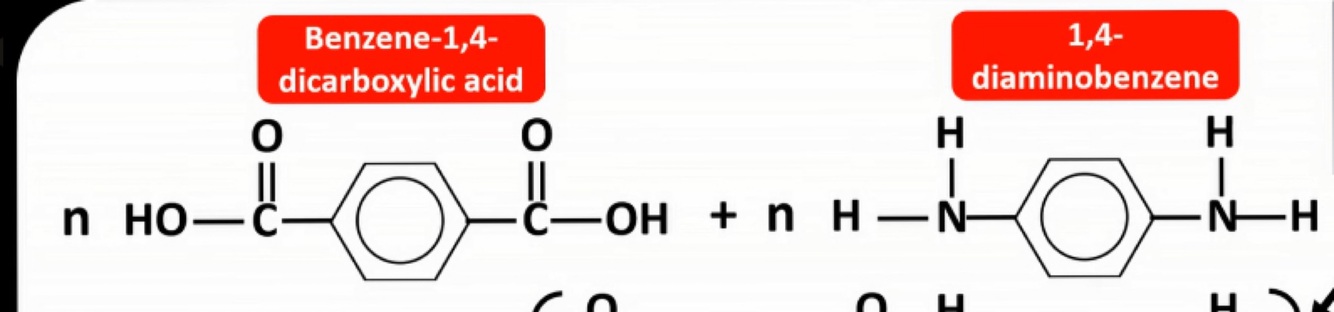
Draw the repeating unit of kevlar

Why is Kevlar So Strong
Rigid chains and Close Packings of flat aromatic rings
What are polypeptides, What is the Linkage
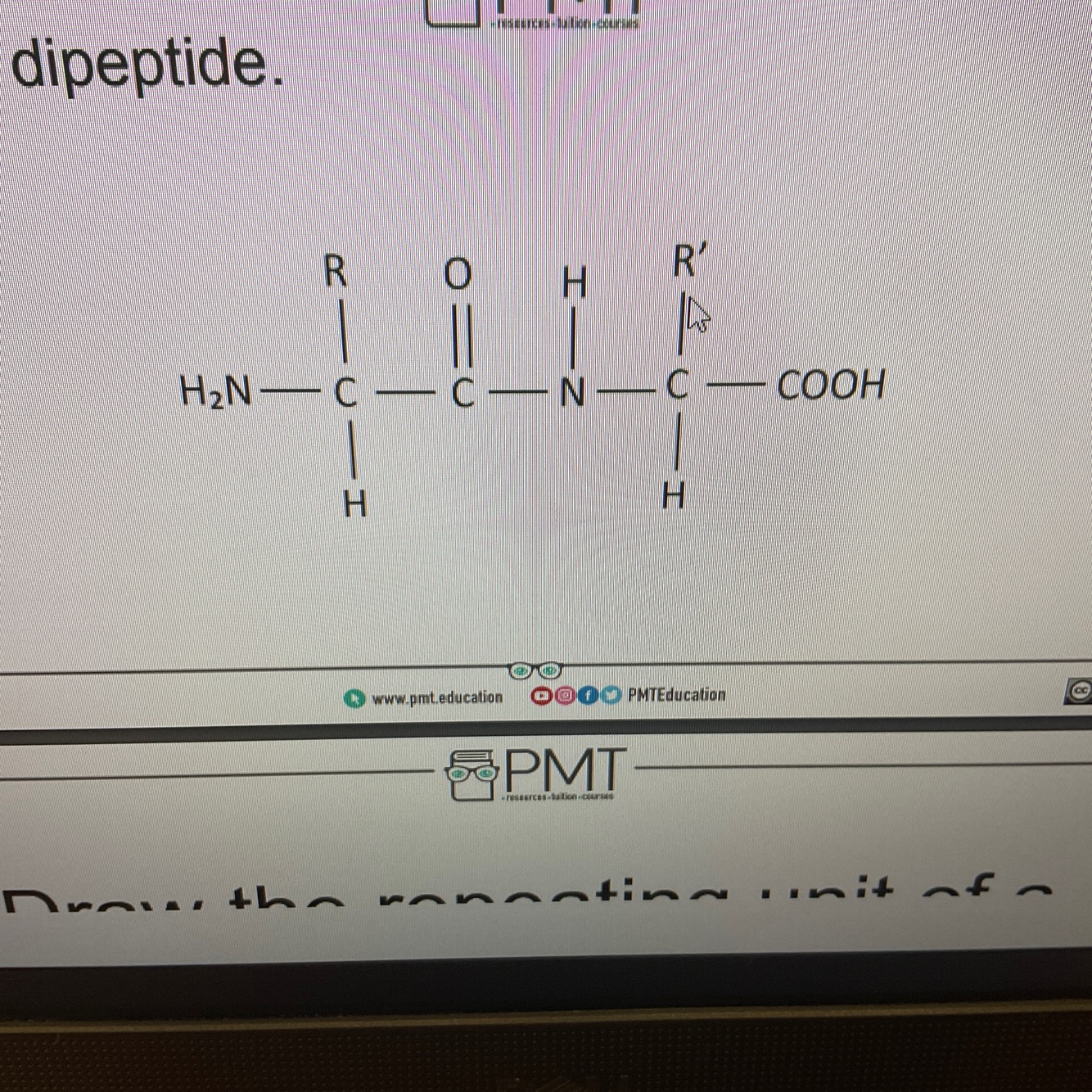
Peptide When many amino acids join together to form a long chain of molecules with peptide links and covalent bonds Consists of only amino acids joining
Draw a Dipeptide
Why are poly(alkenes) Not biodegradable
Non polar C-H and C-C bonds with similar electronegativities No permanent dipole that attracts nucleophile, or be broke down by enzymes No portion of high electron-density that can react with electrophile This means it cannot be hydrolysed & broken down
Why is it bad to burn polyalkenes
Releases Greenhouse gasses, CO2 . Carbon Soot, C and Carbon monoxide ,CO with other toxic chemicals from monomers
Where do most polyalkenes end up?
In Landfill as burning is unhealthy for the environment
Why can Condensation Polymers be broken Down How are Condensation Polymers broken down?
They have Polar Bonds Hydrolysis (opposite of condensation)
Why doesn’t industry execute hydrolysis under standard conditions
Very Slow Rate in Standard Conditions