Lecture 1
No description yet. This curated deck is ready for daily study.
Card preview (9)
Which direction is DNA read?
3’ to 5’
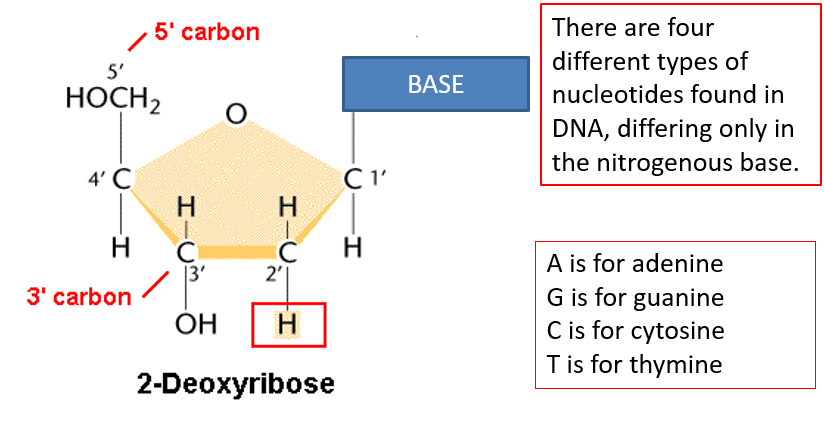
Structure of a nucleotide?
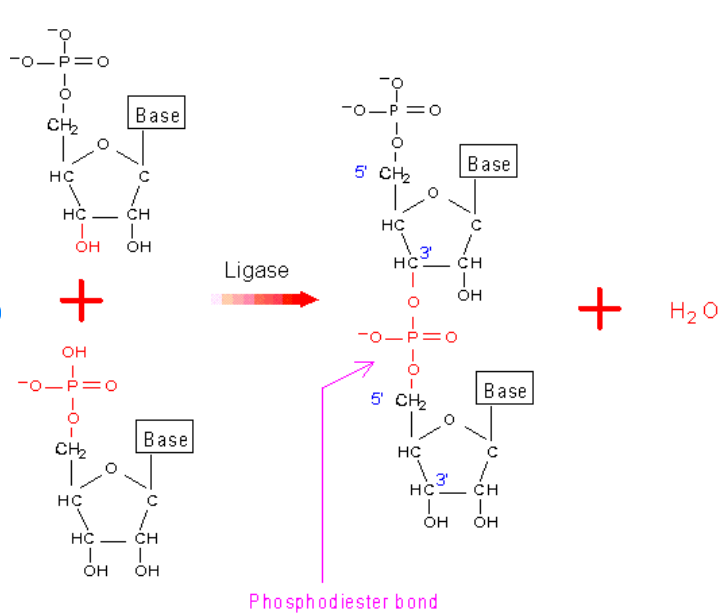
Nitrogenous Bases : Adenosine, cytosine, guanine and thymine (uracil instead of thymine in RNA) - A and G are purines (2 rings) - C and T are pyrimidines (3 rings) - AT GC pair Sugar group : Deoxyribose Phosphate group Phosphodiester bond : Condensation reaction forms a phosphodiester bond between hydroxyl group on 1 nucleotide and the phosphate group on the other.
Visualisation of phosphodiester bond
What are the stages of the cell cycle?
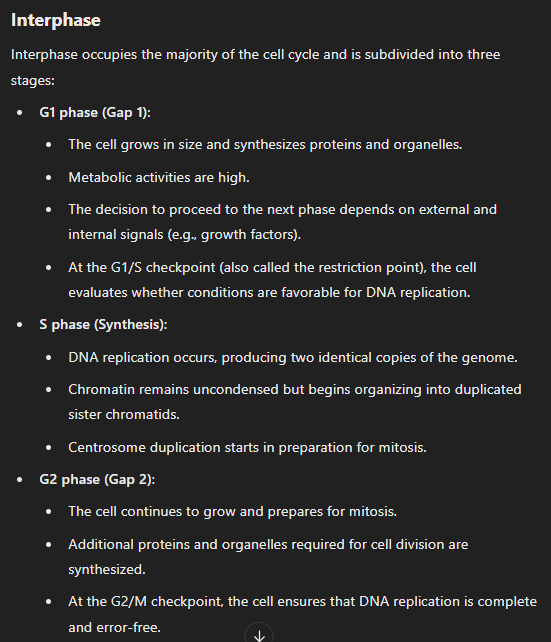
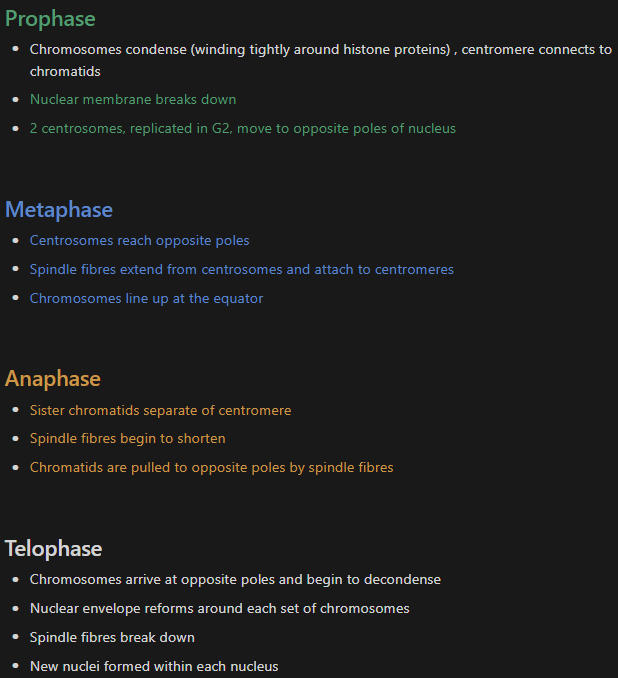
2 main phases, interphase and mitotic (M) phase. Interphase : - G1 - S - G2 M phase : - Prophase - Metaphase - Anaphase - Telophase - Cytokinesis
What is involved in interphase
Phases of Mitosis
What are the 3 steps of DNA replication
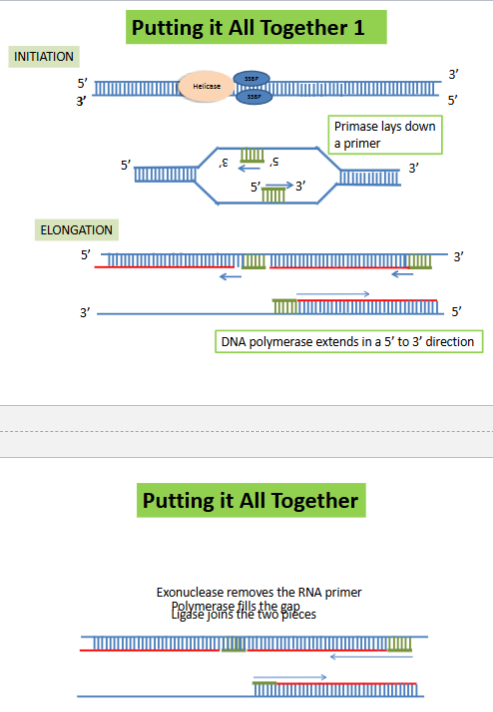
• Initiation • Elongation • Termination
Enzyme activity in DNA replication
Helicase : - Unwinds double helical DNA Primase : - Adds ribonucleotide triphosphates to synthesise an RNA primer - It binds to the initiation point of a 3’ to 5’ parent chain Polymerase : - 5’ to 3’ - Adds 1000 bases per second to growing chain - Requires a template strand and primer to start - Proof reads Exonucleases : - Remove nucleotides from end of DNA strand Ligase : - Joins ends of single DNA strands by making new phosphate bonds Gyrase : - Relaxes supercoils produced when molecule is twisted during replication Telomerase : - Uses short RNA template to add short DNA repeats to ends of linear chromosomes when primers are removed
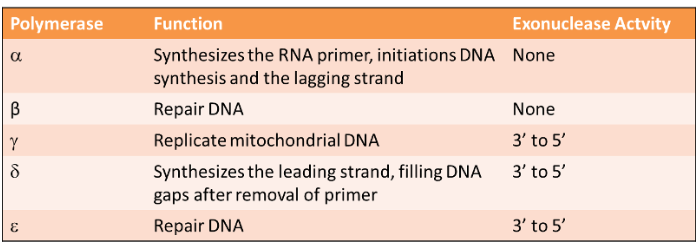
Different types of polymerase