Chapter 16: Conjugated Dienes and Pericyclic Reactions
No description yet. This curated deck is ready for daily study.
Card preview (10)
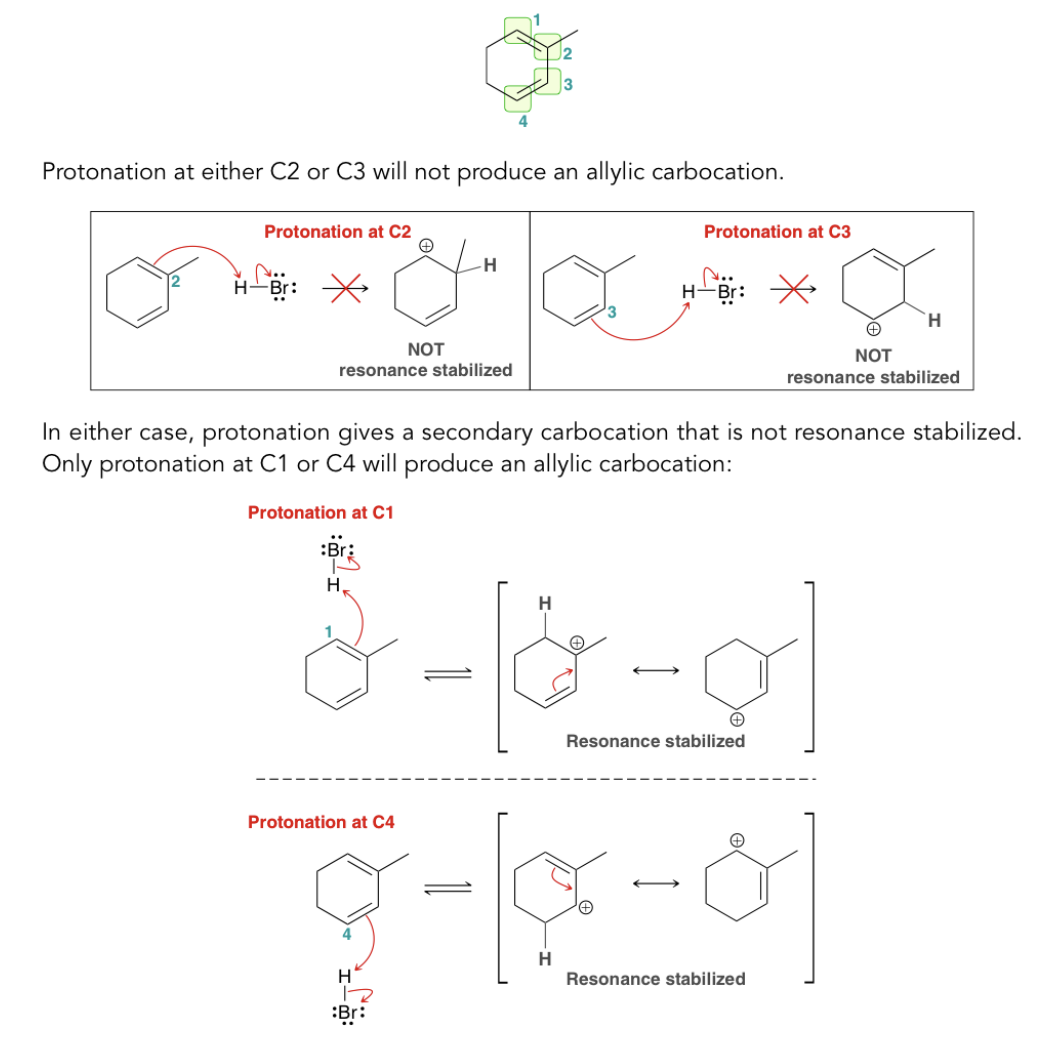
Electrophilic addition to a conjugated diene
• Identify all vinylic locations where protonation can occur that will produce a allylic carbocation • Draw resonant structures for each location • Draw nucleophile attacking at these locations and consider stereochemistry
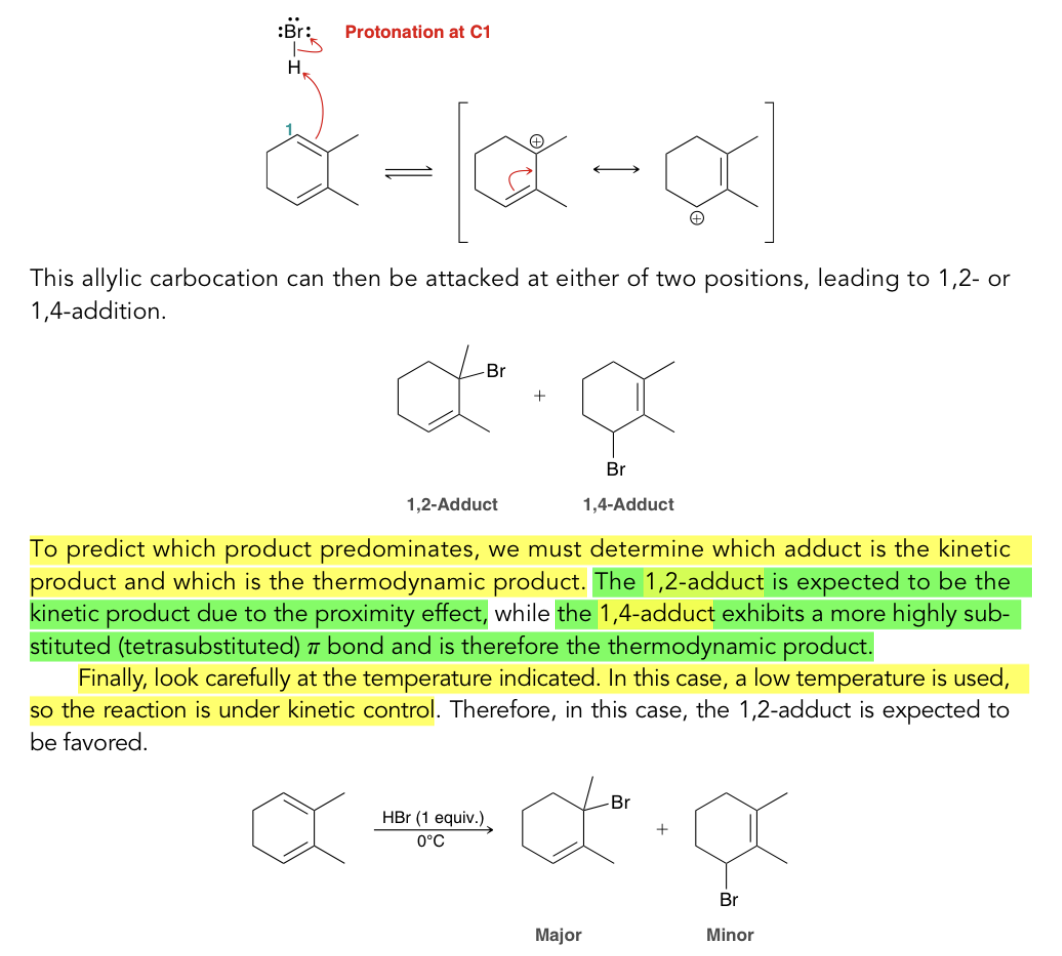
Predicting major product of diene addition
• Identify all allylic locations where protonation can occur • Draw resonant structures for each location • Draw nucleophile attacking at these locations and consider stereochemistry • Identify kinetic and thermodynamic products
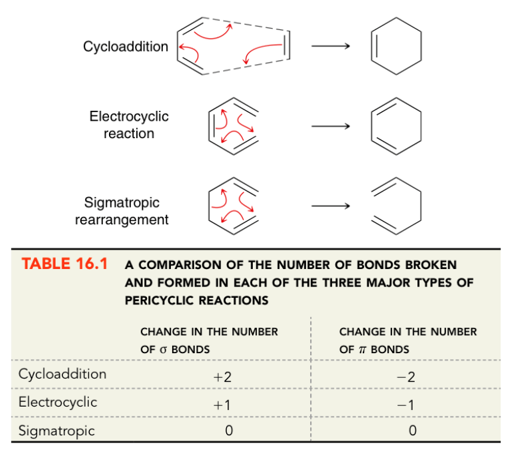
Types of pericyclic reactions
Pericyclic reactions have 4 characteristic features: • The reaction mechanism is concerted; it proceeds without any intermediates • The mechanism involves a ring of electrons moving around a closed loop • The transition state is cyclic • The polarity of the solvent generally has no effect on the reaction rate (transition state has little, if any, charge)
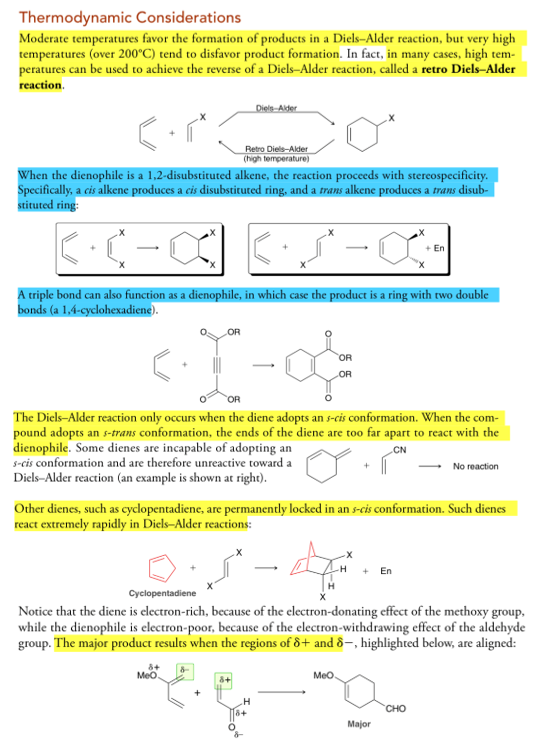
Diels-Alder Reactions
The reactants are the diene and dienophile Dienophile needs to possess an electron withdrawing group or the reaction will require high temp, which does not favor product formation Only work with cis diens
Bicyclic Diels-Alder Reactions
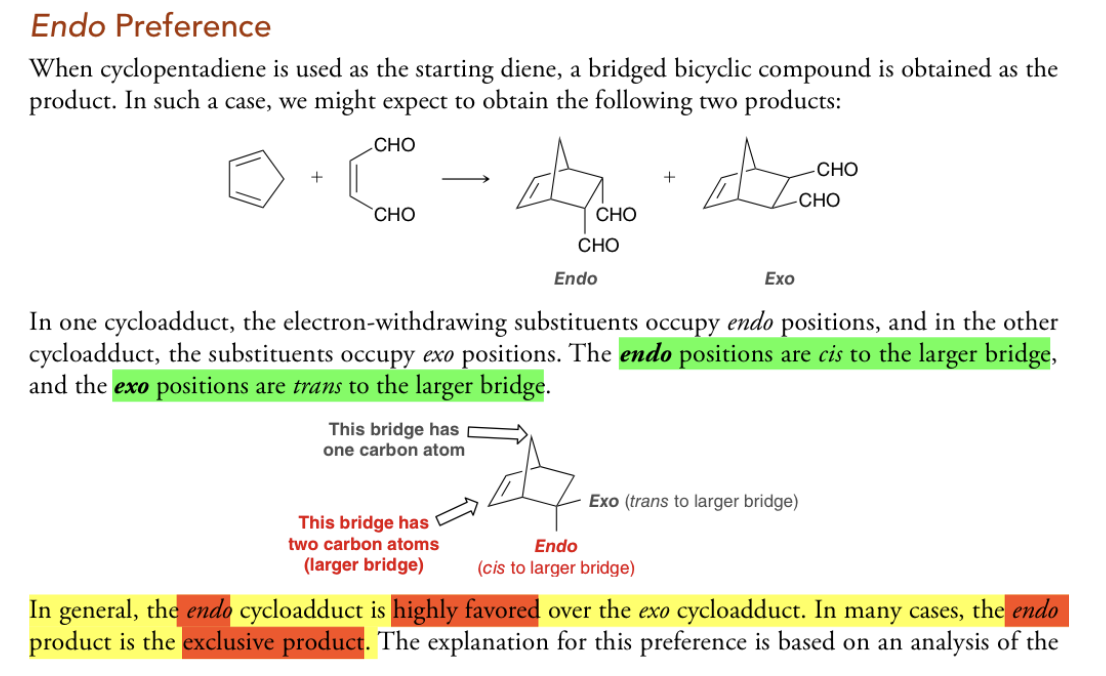
When bicyclic systems form the terms ENDO and EXO are used to describe functional group positioning
Electrocyclic Reactions
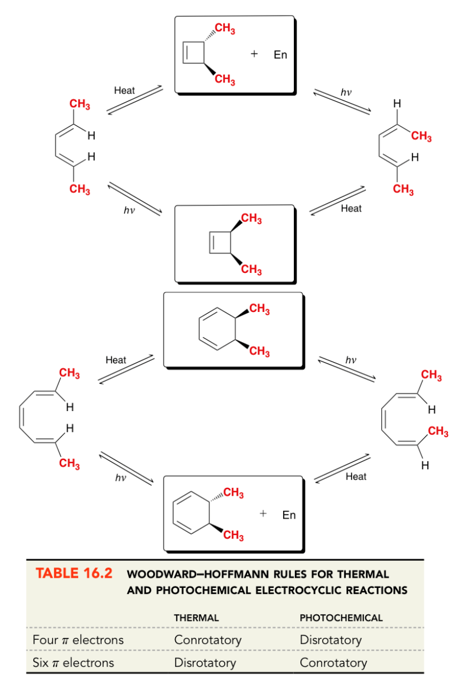
Pericyclic process where a conjugated polyene undergoes cyclization Overall, a π bond is converted to a σ bond Conrotary- both sets of lobes rotate in the same direction Disrotary- both sets of lobes rotate in different directions
Sigmatropic Rearrangements
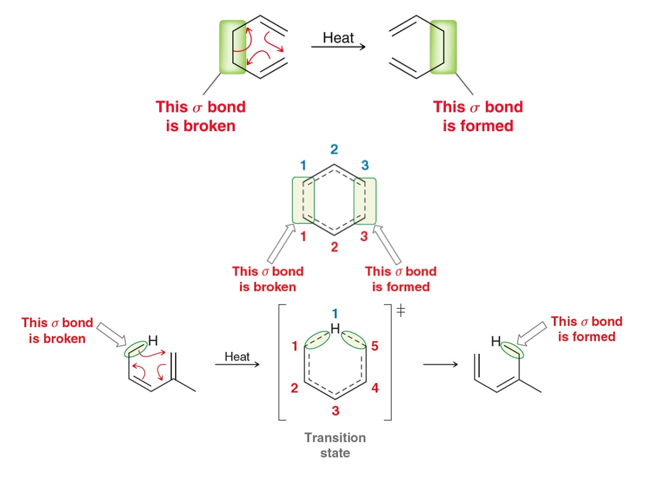
A pericyclic reaction in which one sigma bond is replaced with another The location of the π bonds changes as well Can be a [1,5] rearrangement or a [3,3]
Cope Rearrangement
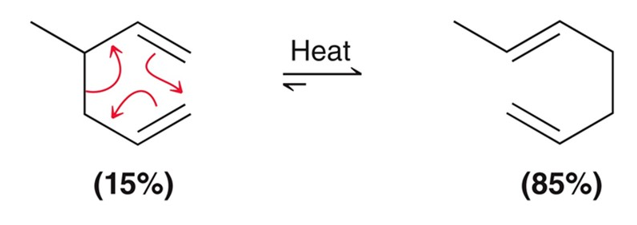
A [3,3] sigmatropic reaction in which all 6 atoms in the cyclic transition state are carbon atoms Remember, equilibrium favors more stable (substituted) alkene π bonds must be separated by exactly three σ bonds
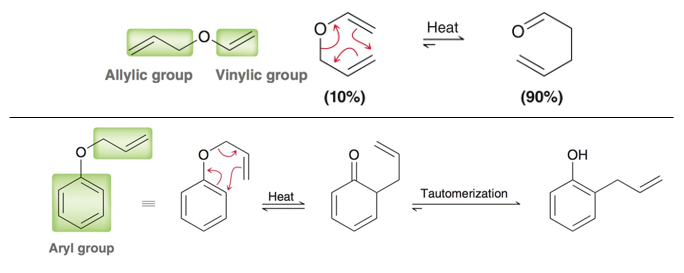
Claisen Rearrangement
A [3,3] sigmatropic reaction that is the oxygen analogue of a Cope rearrangement Commonly occurs with allylic-vinylic ethers Also with allylic aryl ethers Equilibrium favors more stable carbonyl bond (C=O)
UV-Vis Spectroscopy
Compounds with conjugated π systems absorb UV or visible light More conjugation means lower energy gap • Wavelength of light needed can shift closer to visible range because smaller energy gap, the greater the λmax The group of atoms responsible for absorbing UV-Vis light is known as the chromophore