Synoptic Questions
No description yet. This curated deck is ready for daily study.
Card preview (24)
• State why the equilibrium constant (Kp) for this reaction has no units.
• The amount in moles of products is the same as reactants • So the units of partial pressure cancel out
• A student plans to titrate butanoic acid solution with a solution of ethylamine. • Explain why this titration could not be done using an indicator.
• This is a weak acid and weak base / alkali titration • pH change is too gradual / not sharp at the equivalence point so colour change of indicator is difficult to judge
• When sodium hydroxide solution is added to aqueous propanoic acid, the solution formed acts as a buffer when between 5 cm? and 15 cmg have been added. • Explain why the pH stays approximately constant during this part of the experiment.
• OH- reacts with propanoic acid / H+ • Equilibrium for dissociation of CH3CH2COOH moves right to maintain [H+] / replace H+
• Methyl orange and universal indicator are not suitable indicators for the titration of solutions of propanoic acid with sodium hydroxide. • State the reason why each indicator is not suitable.
• Methyl orange - would not change colour at the equivalence point • Universal indicator - there is a range of colours during the titration / no distinct colour change at equivalence / end point
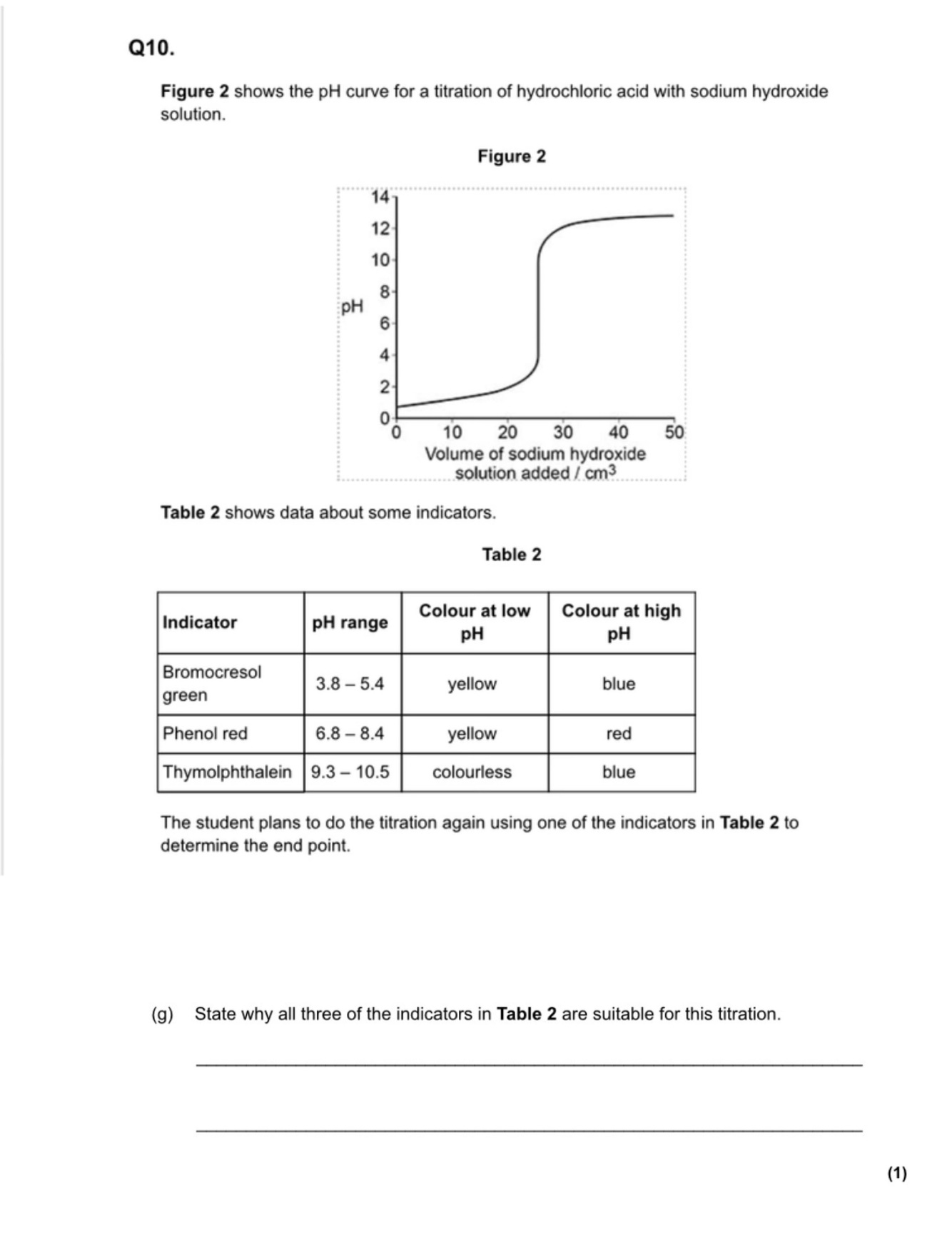
• All have a colour change / pH range within the steep / vertical part of the titration curve
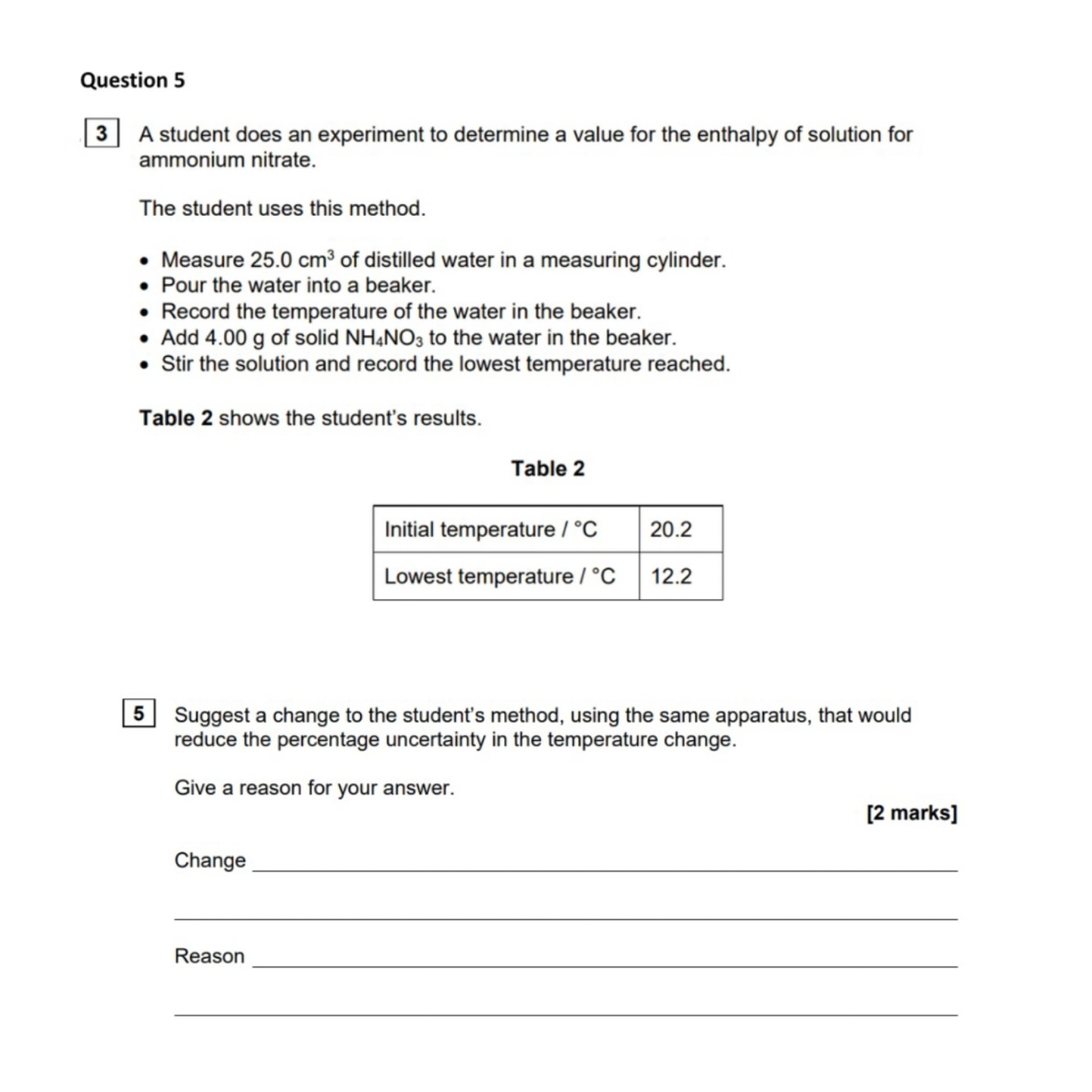
• Use a larger mass of NH4NO3 • So temperature change / decrease is greater
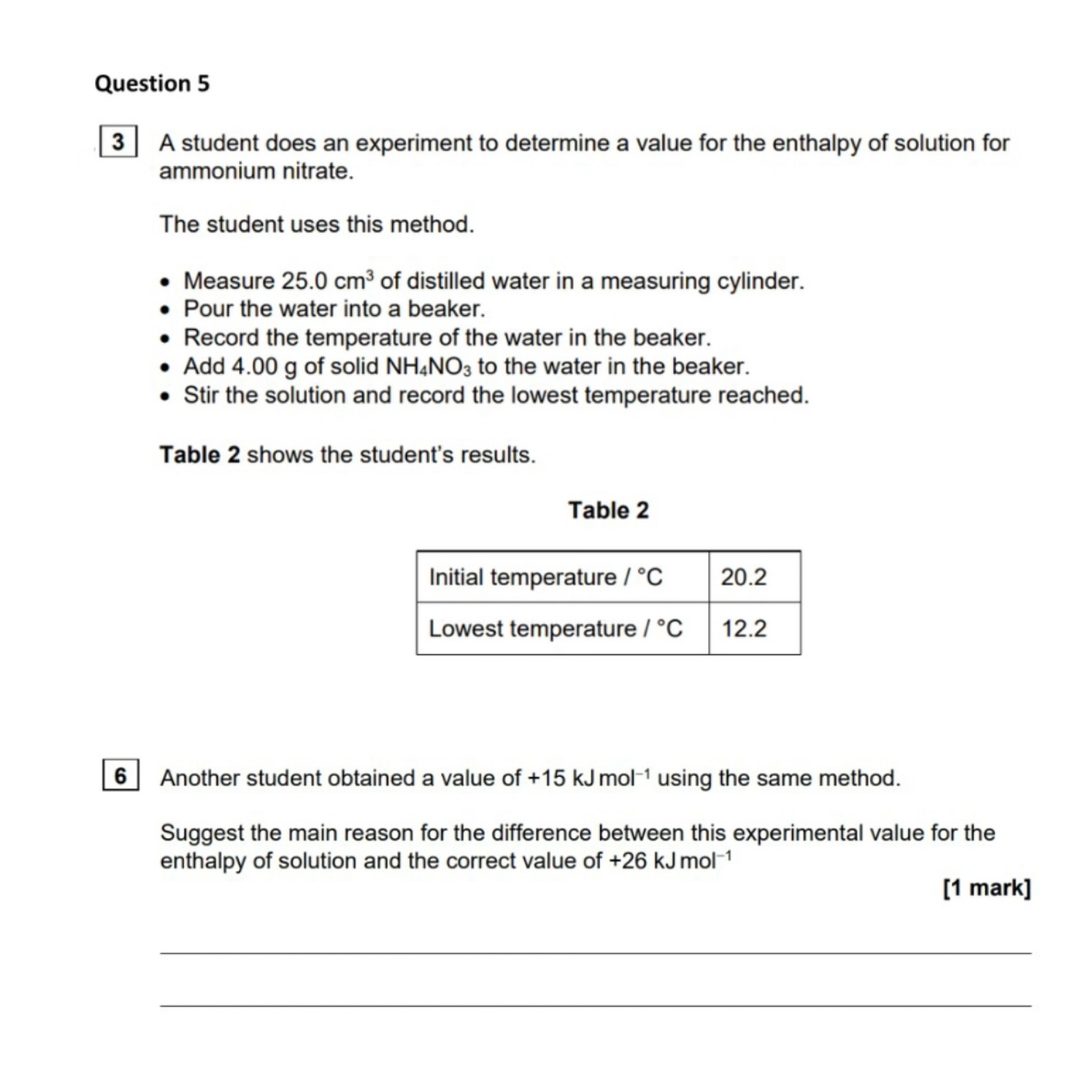
• Heat gain from the surroundings / incomplete dissolving
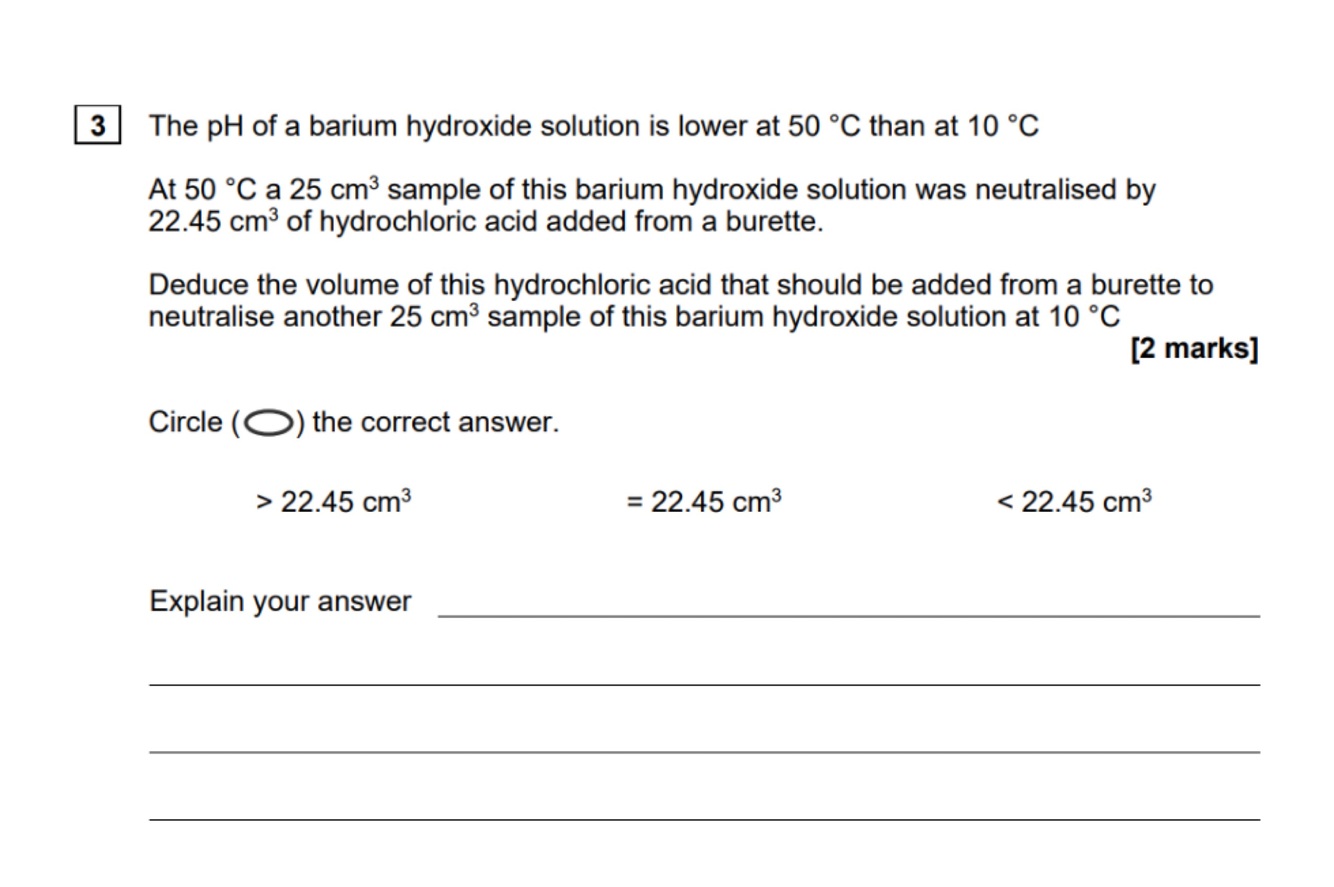
• 22.45 • The [OH-] is the same at both temperatures so the same number of moles
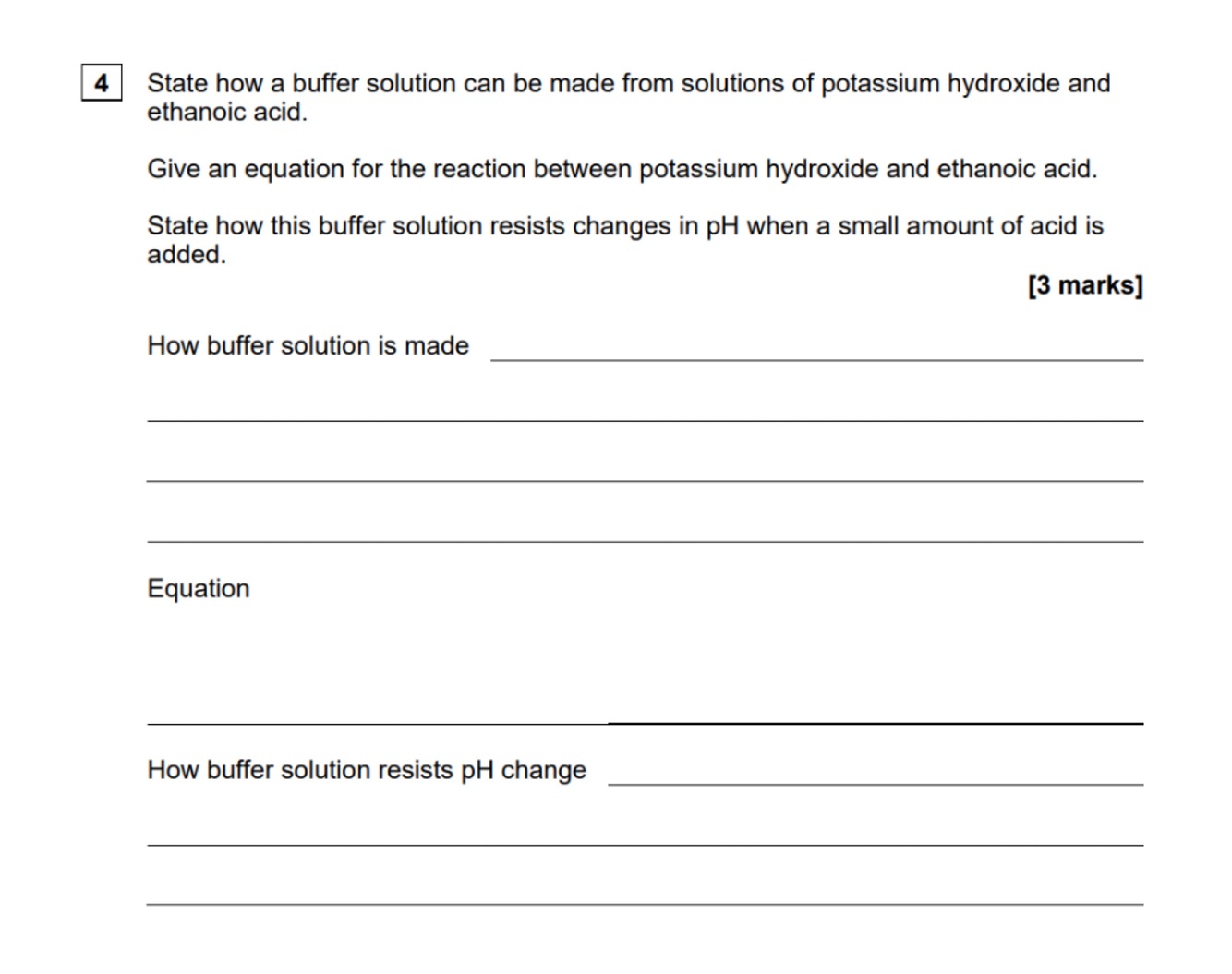
• How buffer solution is made: Add excess ethanoic acid to KOH • Or add enough KOH to the ethanoic acid so that the acid is partially neutralised • Or add enough KOH so that the acid contains a mixture of ethanoic acid and ethanoate ions • Equation: KOH + CH3COOH -> CH3COOK + H2O • How buffer solution resists pH change: CH3COO- from salt reacts with acid / H+
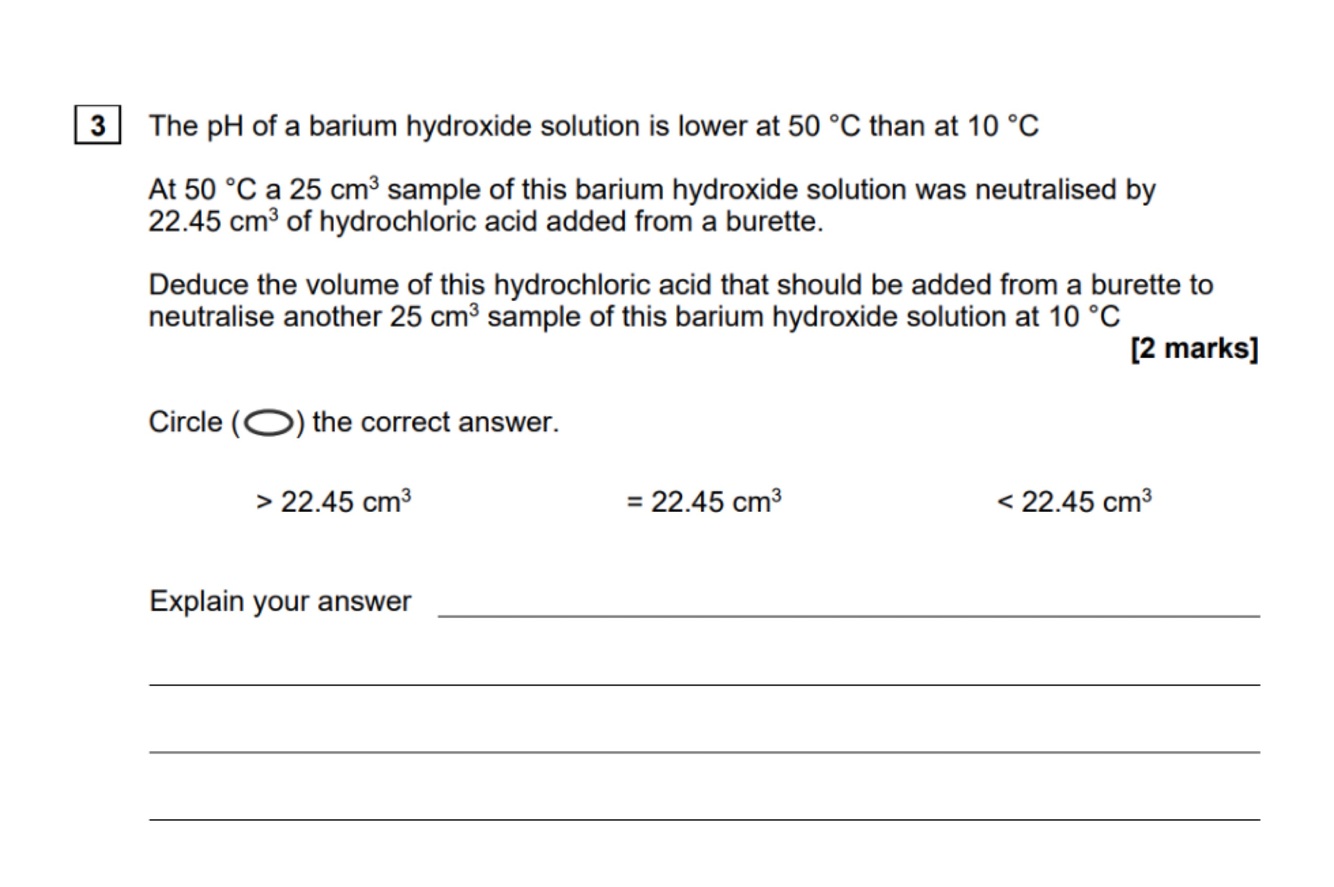
• 22.45 • Same [OH-]
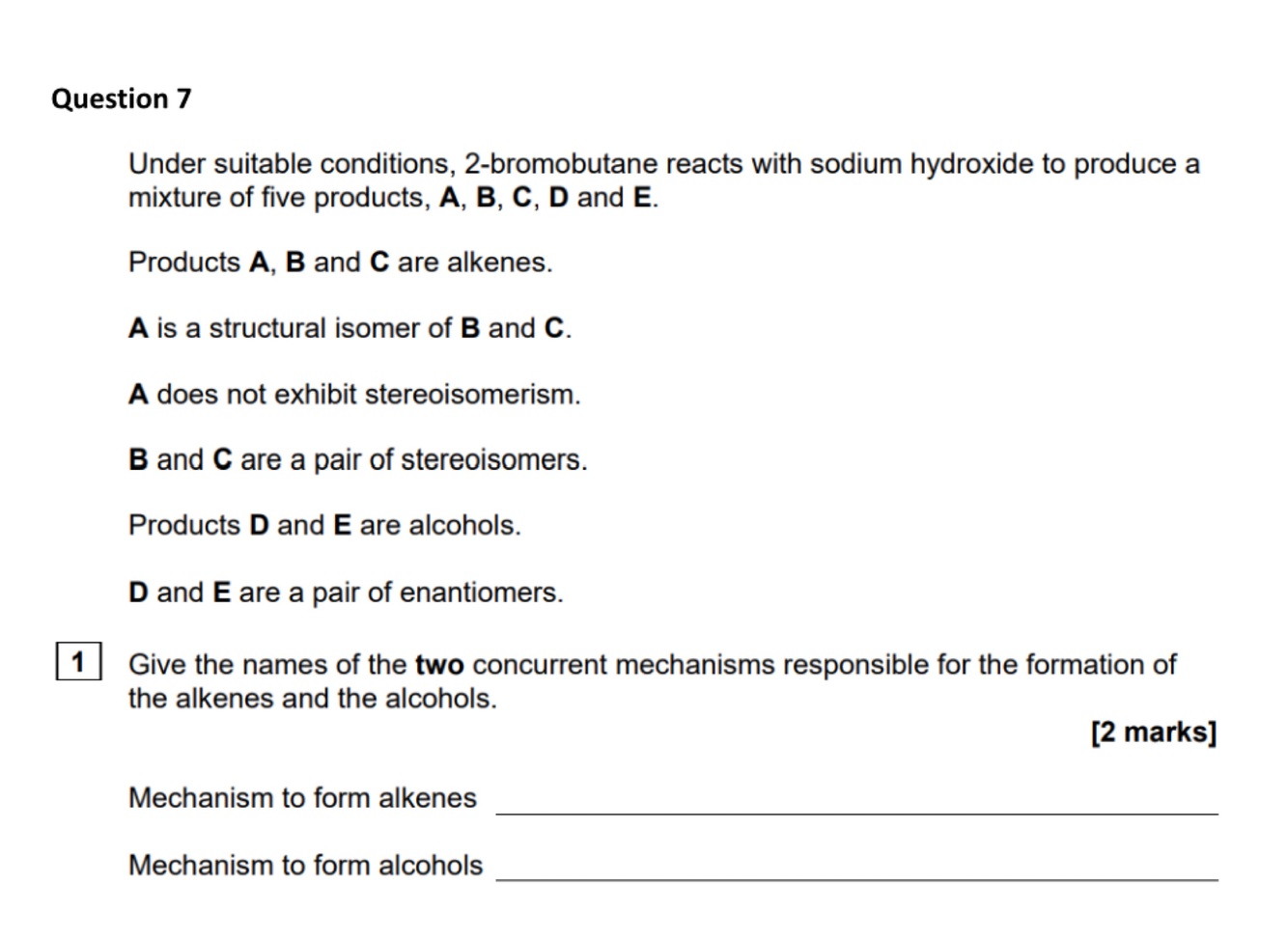
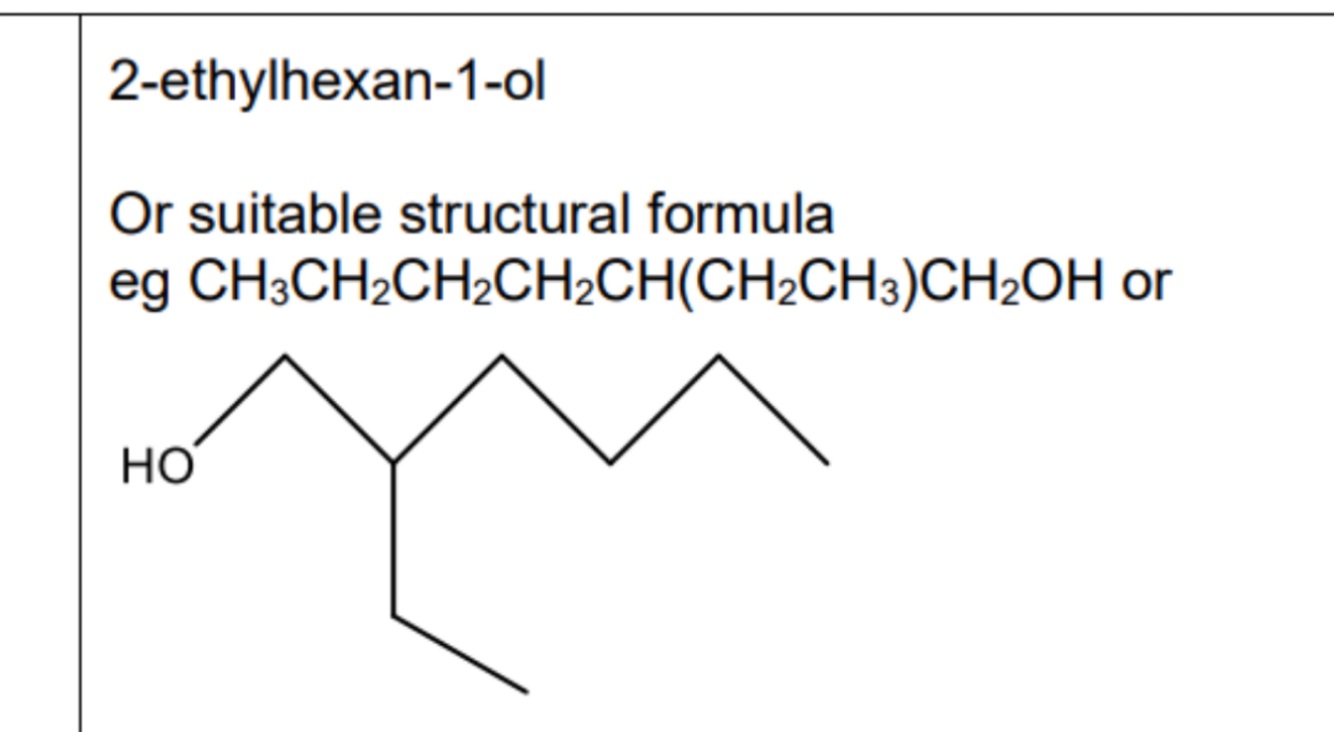
• Mechanism to form alkenes: elimination • Mechanism to form alcohols: nucleophilic substitution
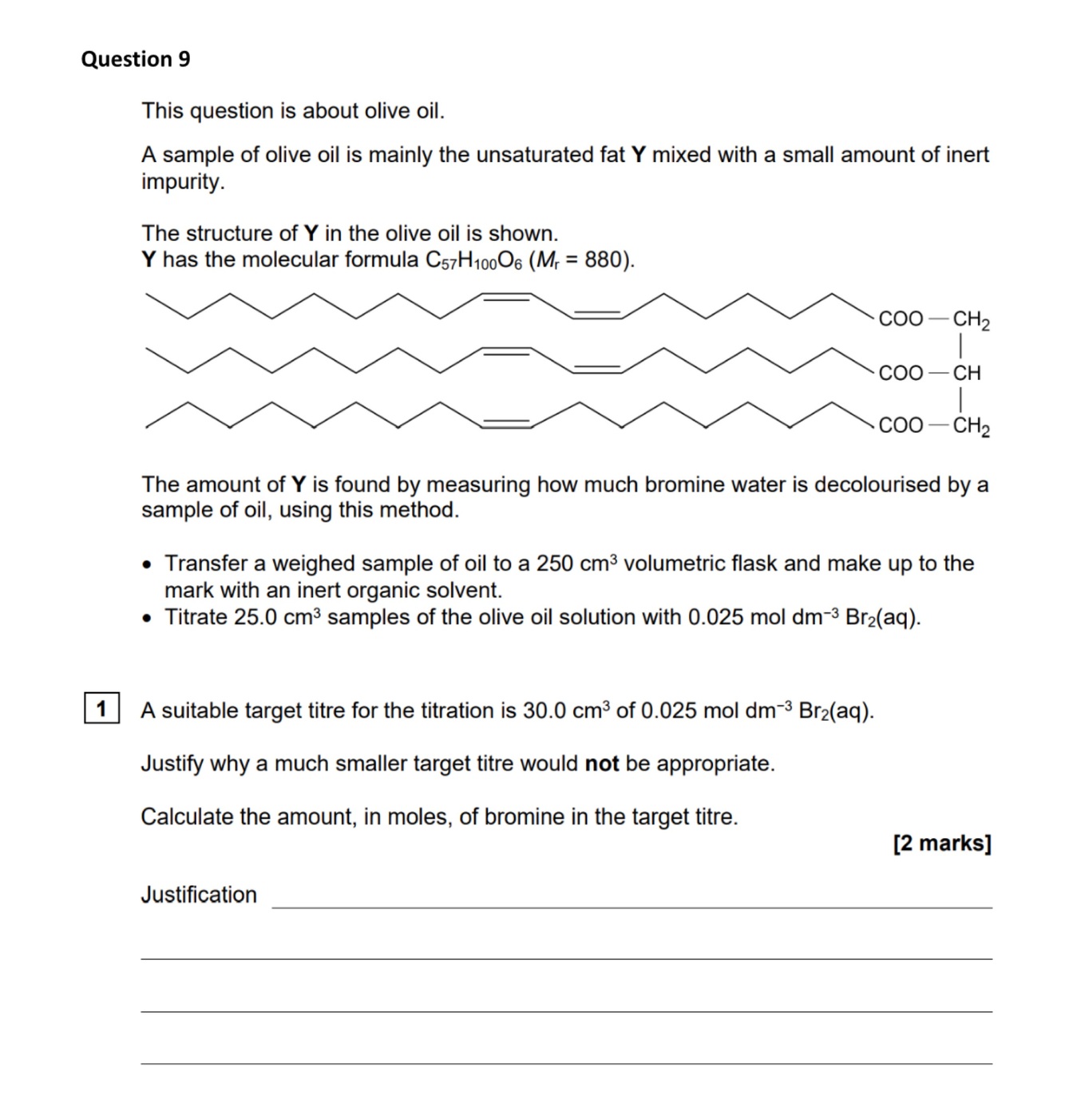
• A smaller titre will increase the percentage uncertainty
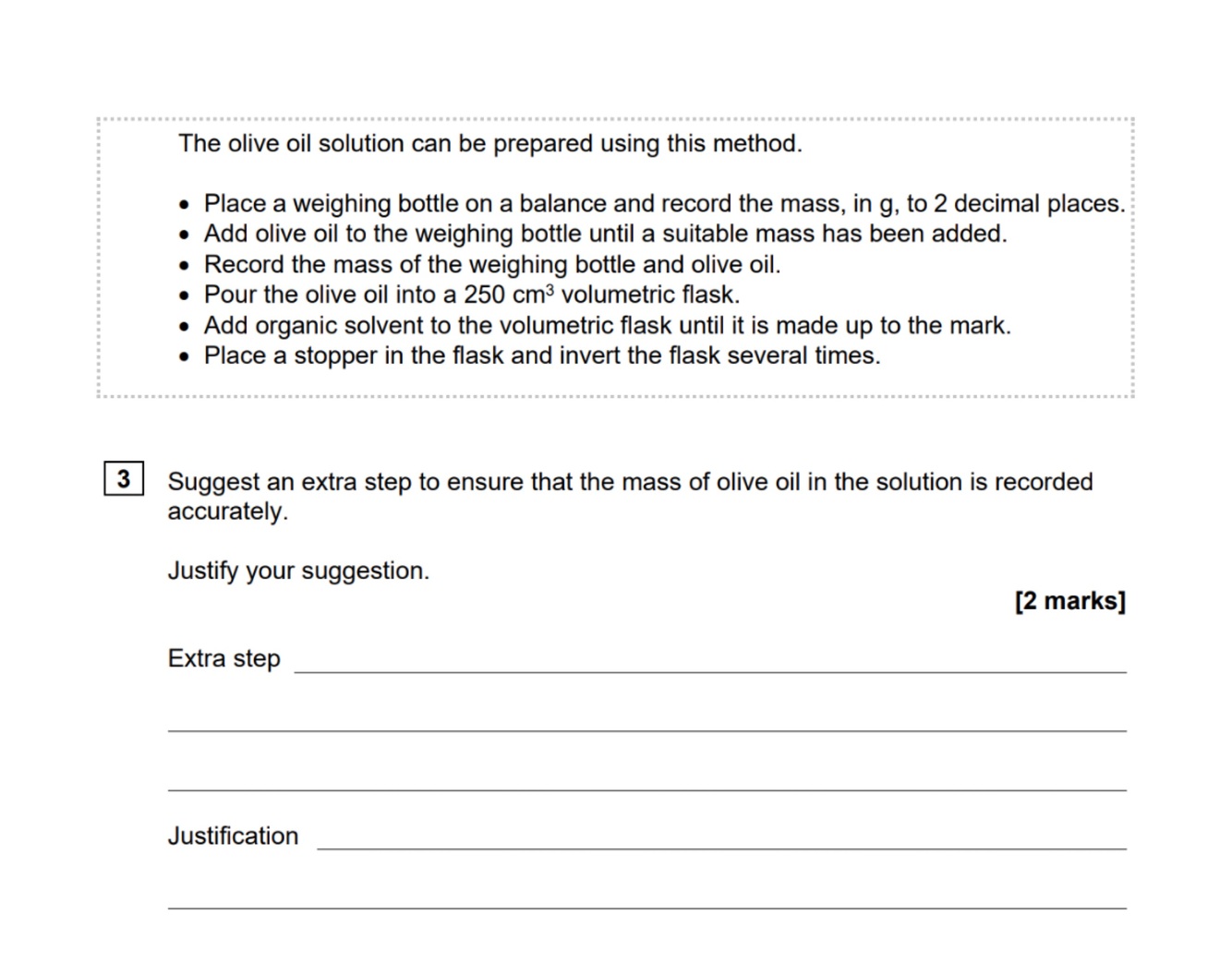
• Extra step: weigh the bottle after oil transfer and record the mass • Justification: Not all of the oil is transferred / so that the mass of oil left in the bottle is accounted for
• Define the mass number of an atom
• The mass number of an atom is equal to the number of protons and neutrons in the nucleus combined
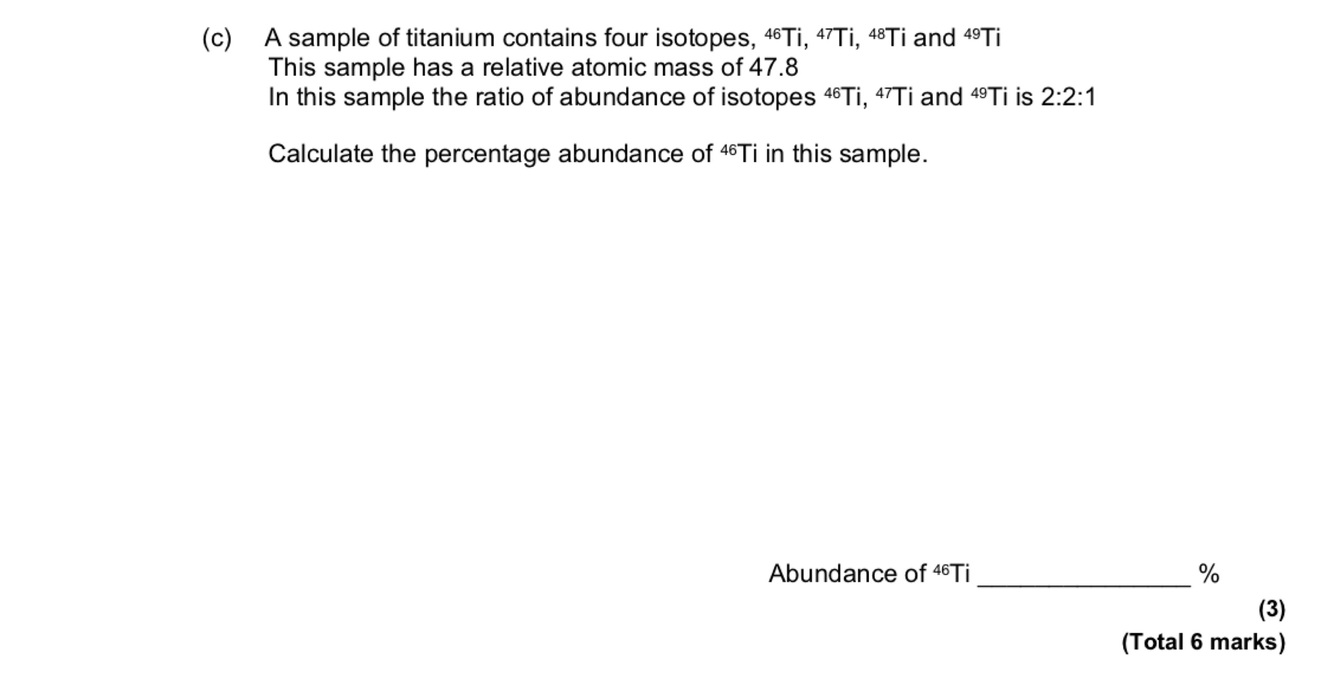
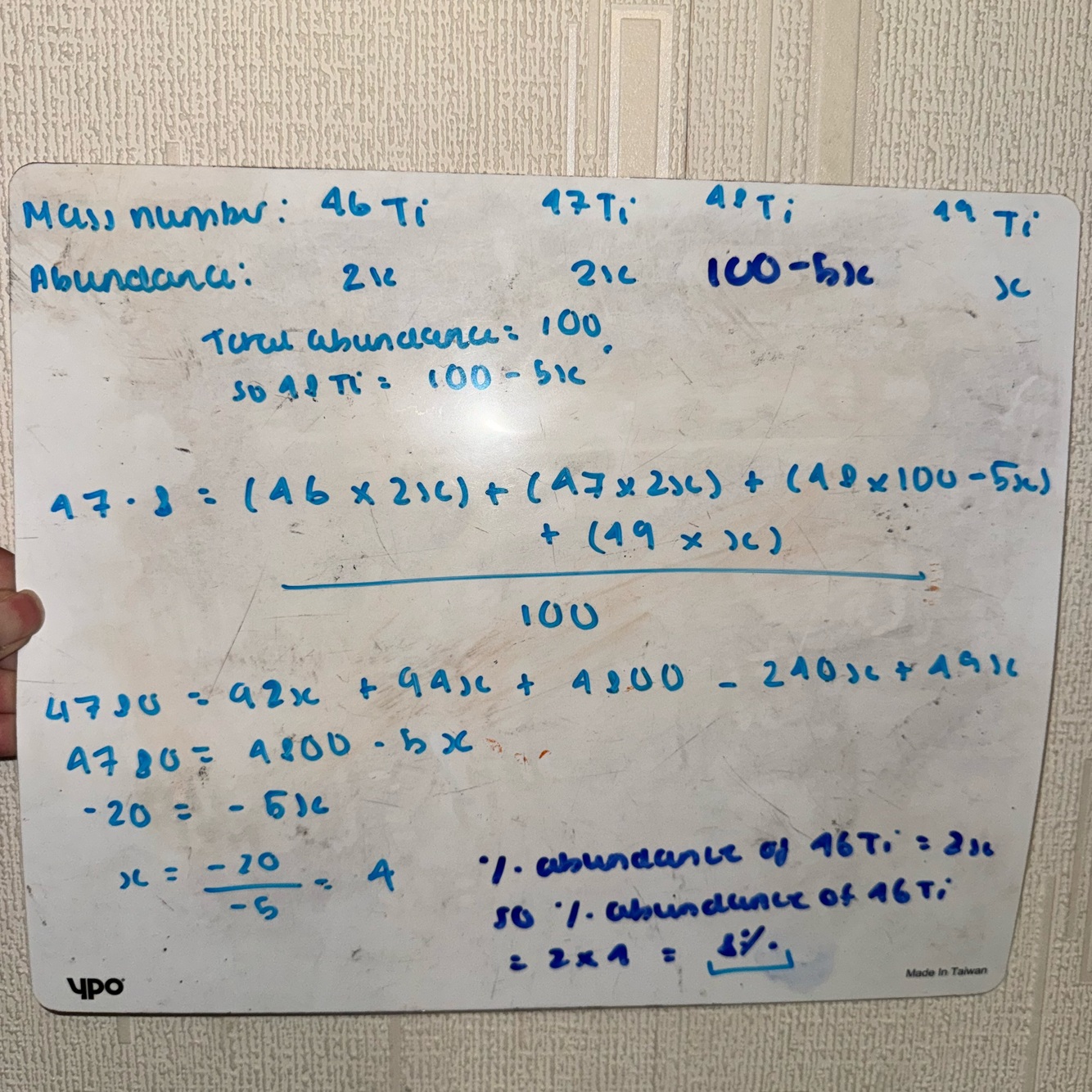
• By reference to the structure of, and the bonding in, silicon dioxide, suggest why it is insoluble in water (3 marks)
• It has a macromolecular structure • With lots of covalent bonds which are very strong • Water cannot supply enough energy to break the strong covalent bonds
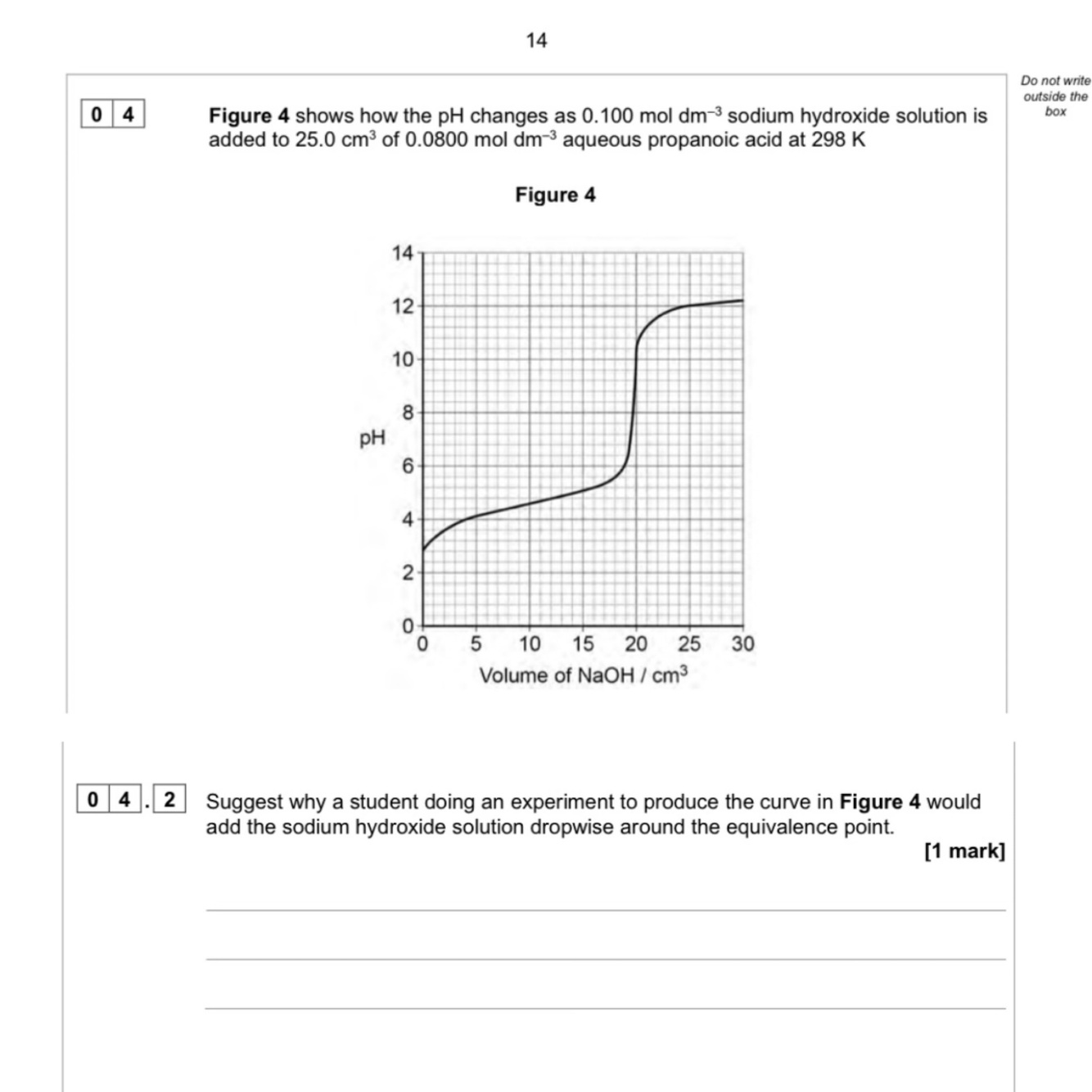
• As there is a large pH change for a small addition of alkali

• Mg
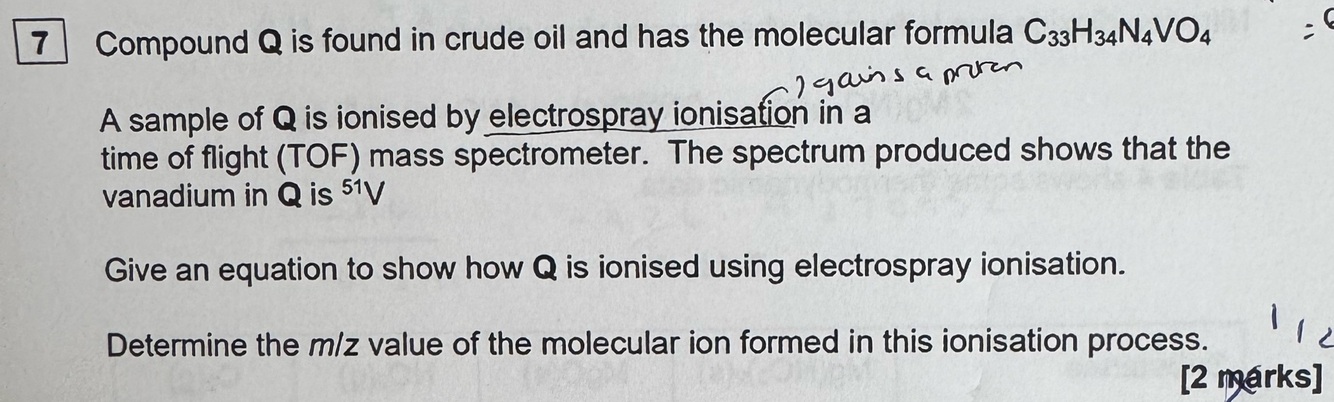
• Equation: Q + H+ → QH+
• Explain the shape of a BrF3 molecule
• Lone pairs / bond pairs / electron pairs repel each other to be as far apart as possible • Lone pairs / bond pairs / electron pairs are arranged to be as far apart as possible to minimise repulsion
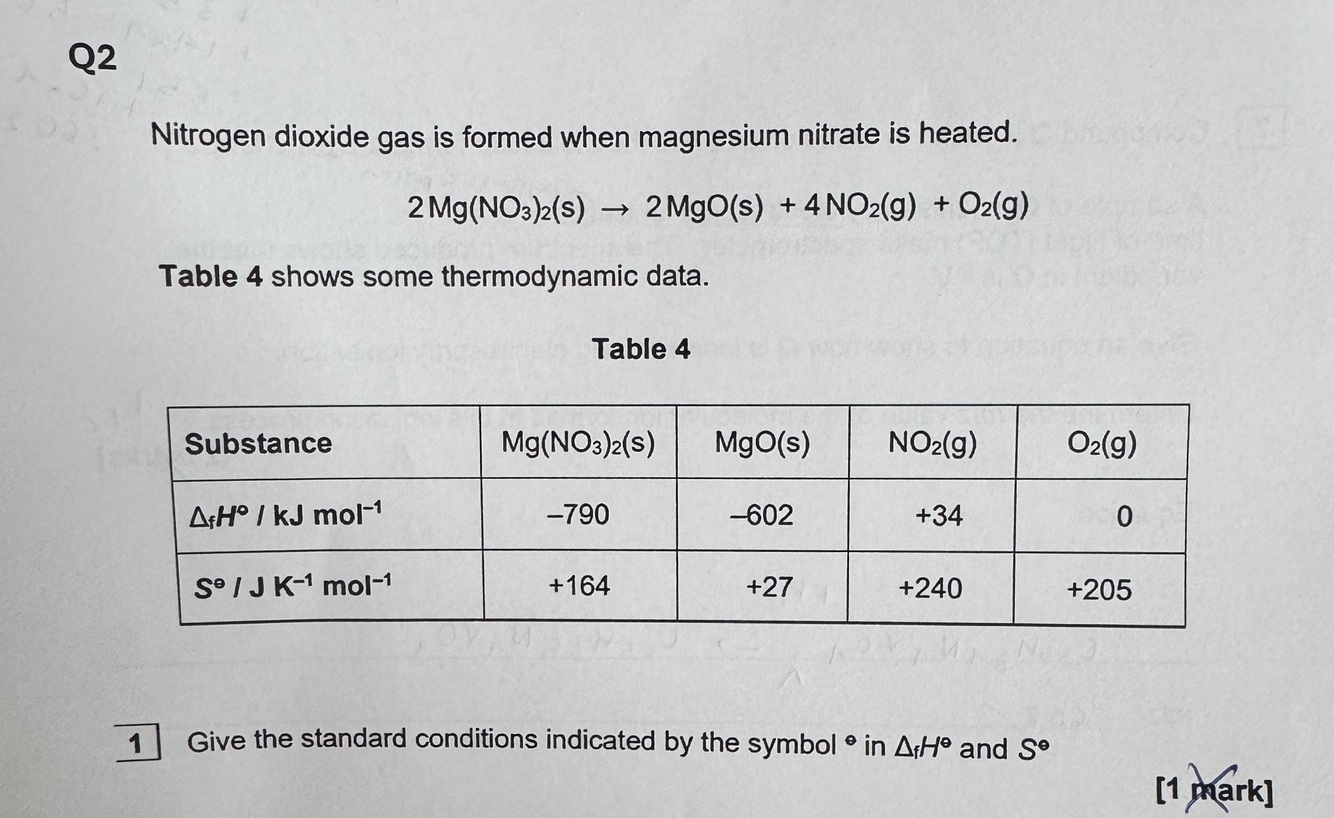
• Standard pressure/100 kPa AND 298K
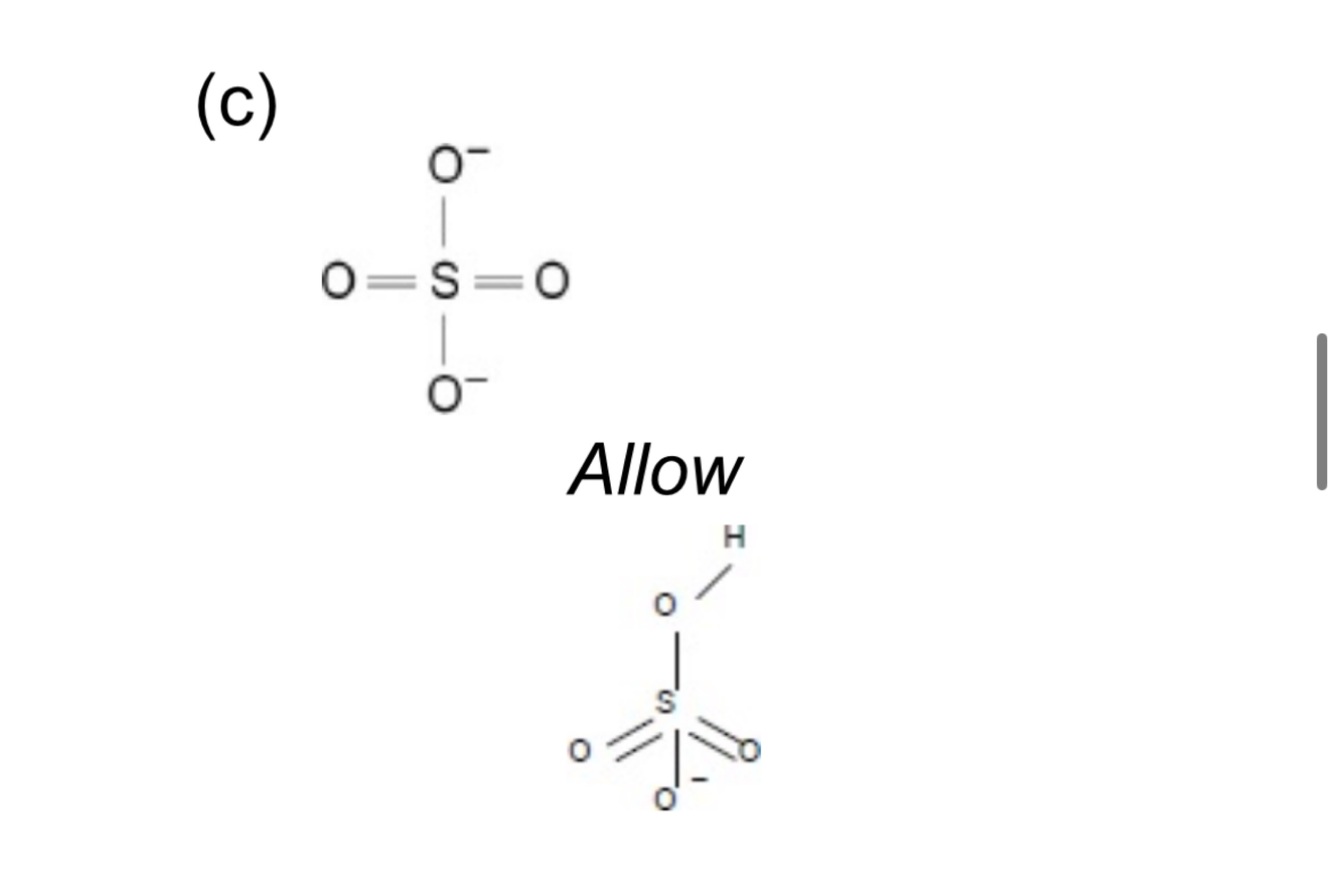
• Draw the displayed formula for the anion formed when sulfur trioxide reacts with water