NB7-2 - Touch and DLAs
暂无描述。系统推荐的高质量记忆内容,适合每天坚持背诵学习。
卡片预览 (15 张)
How is the neurological examination of proprioception done?
• Have patient close their eyes • Stabilize a joint in the body • With two fingers at either side of the body part, flex and/or extend it at the stabilized joint • Ask patient in which direction the body part was moved
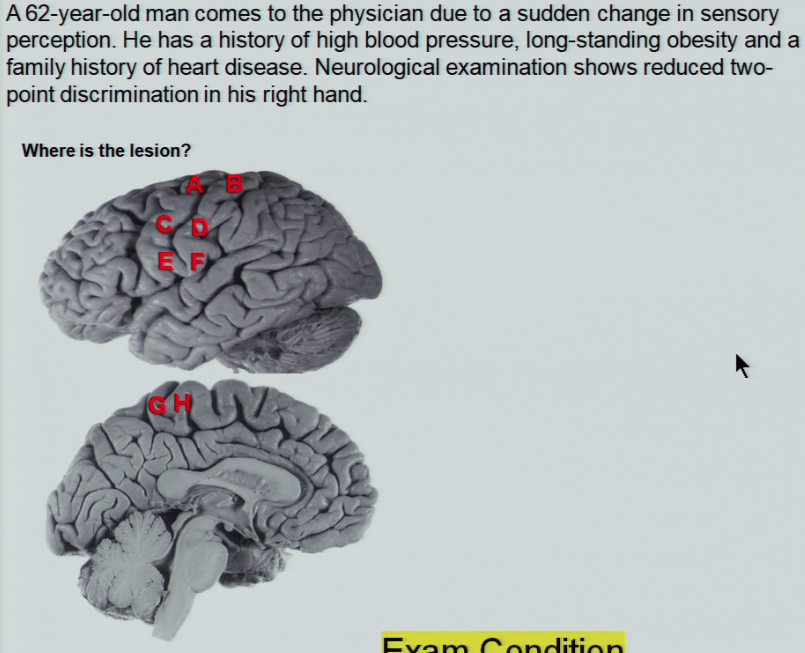
D
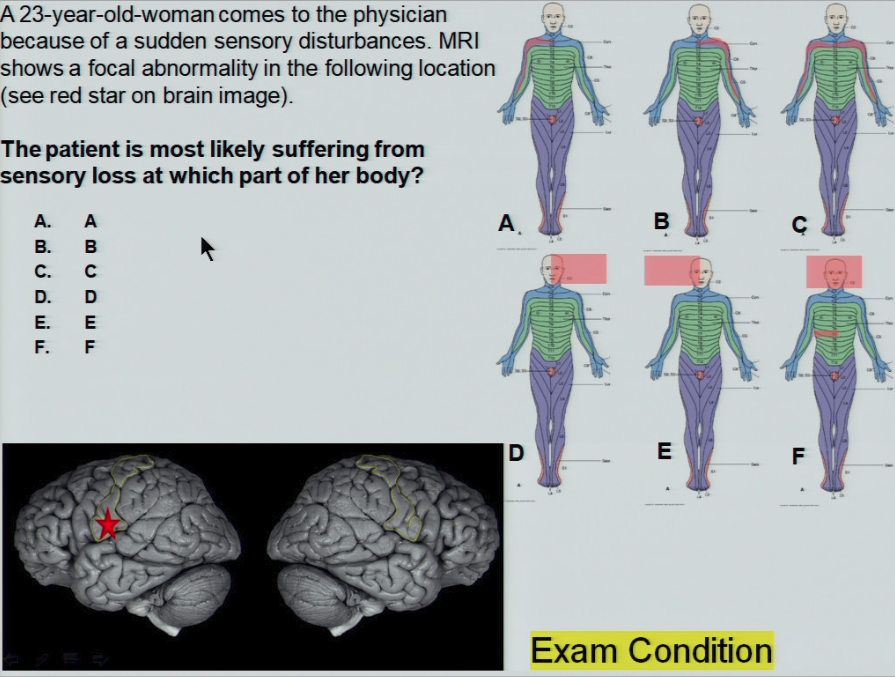
E
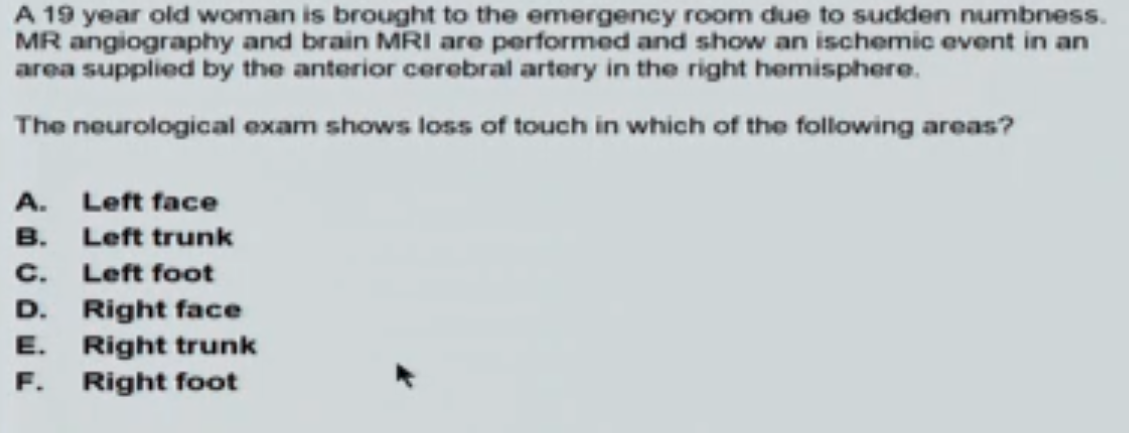
C
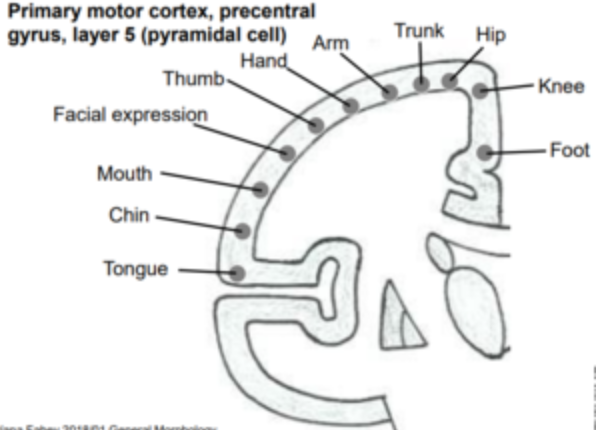
List the major components of the homunculus and where they’re located within the gyrus.
What are stereognosis and graphesthesia?
• Stereognosis is the ability to tell what an object is by feeling it • Graphesthesia is the ability to know the number (or anything really) that a person has traced on your body.
How can a persons higher sensory cortical activity be assessed?
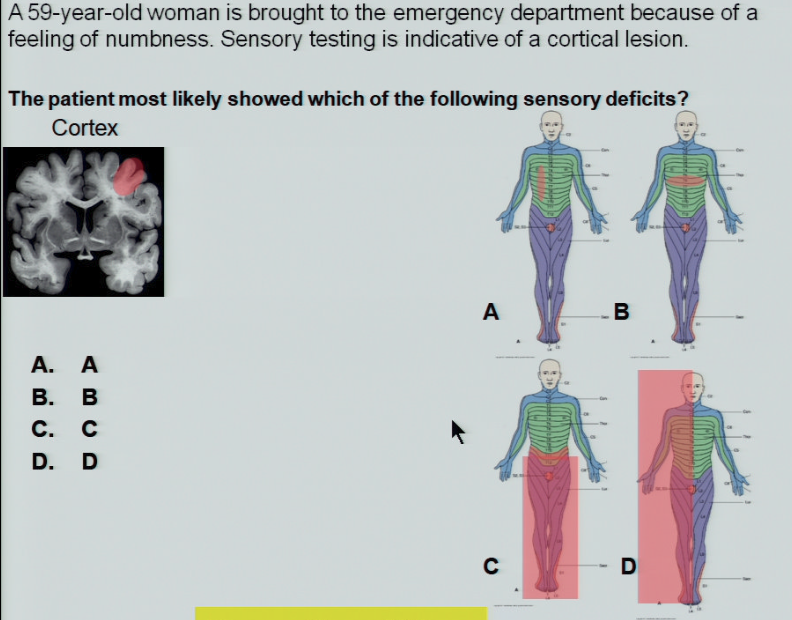
By testing for stereognosis and graphesthesia. These abilities require more than just a functioning post-central gyrus.
List the divisions and functions of the internal capsule.
• Posterior limb - neurons carrying sensory imformation to postcentral gyrus • Anterior limb - neurons from frontal cortex to pons and neurons from thalamus to frontal lobe • Genu (area where limbs meet) - neurons from cortex to spine
Which artery supplies the internal capsule?
MCA
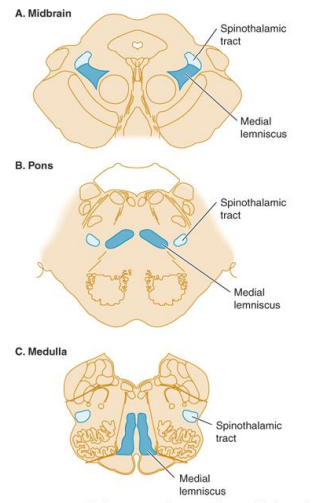
Picture where the spinothalamic tracts and medial lemnisci are located in the medulla, pons, and midbrain.
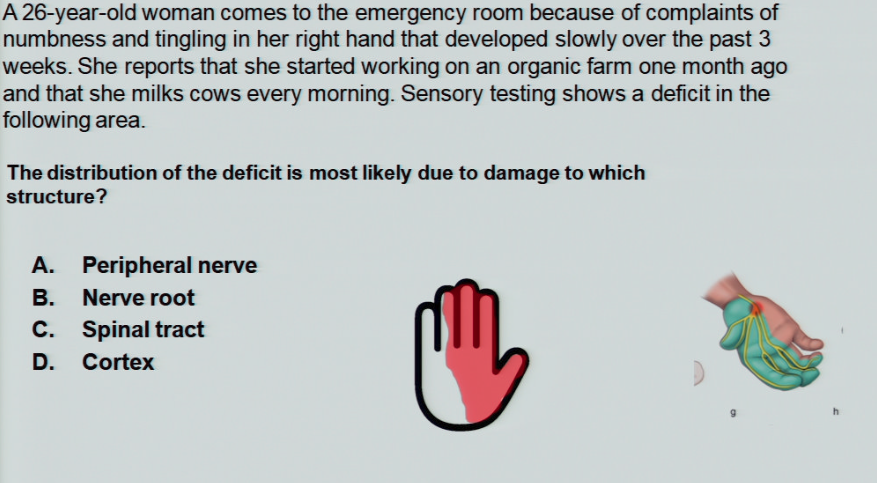
A
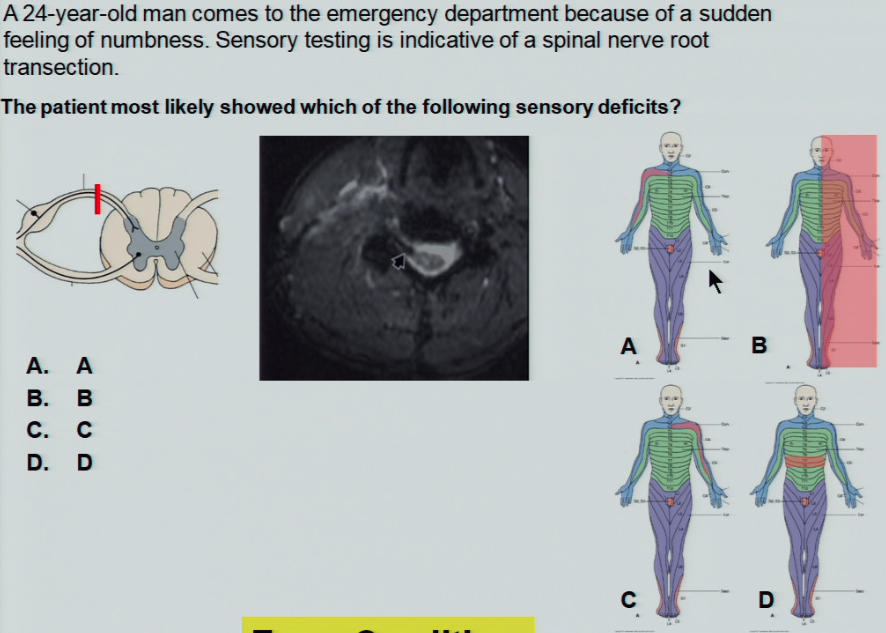
A
What is Tabes Dorsalis and what are its symptoms?
Tabes dorsalis is a syphilitic myelophathy (a demyelinating disease caused by a syphilis infection) that has its strongest affects in the dorsal root and cloumn. Its most prominent symptoms are ipsilateral paresthesia and/or reduced touch sensation in a dermatomal pattern. Other symptoms include gait disturbances (diminished proprioception), diminished patellar reflex, and/or short shooting pain.
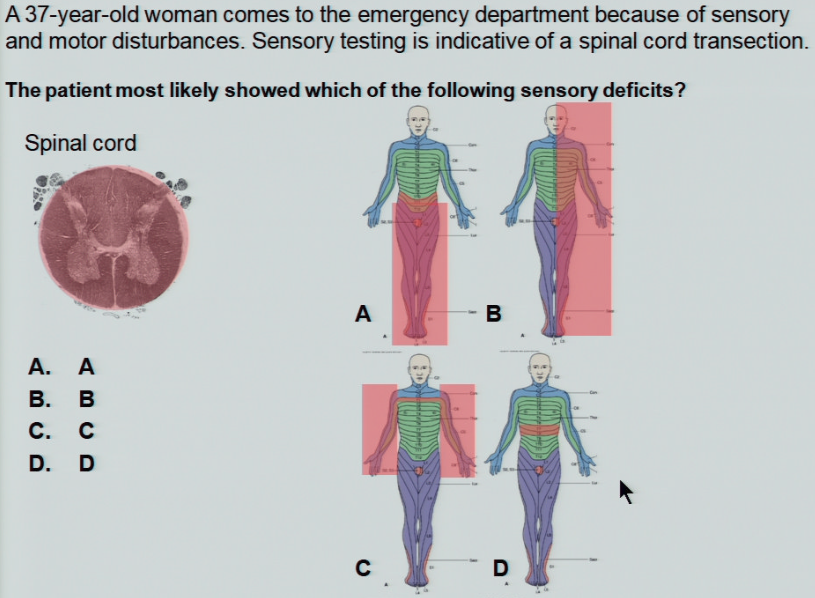
A
A