Chapter 25 Aromatics
No description yet. This curated deck is ready for daily study.
Card preview (24)
What was kerkule’s initial proposed model for benzene ?
• kerkule suggested a cyclic structure for benzene with 3 alternating carbon-carbon double bonds • kerkule proposed benzenes low reactivity was due to rapid equilibrium between 2 isomers
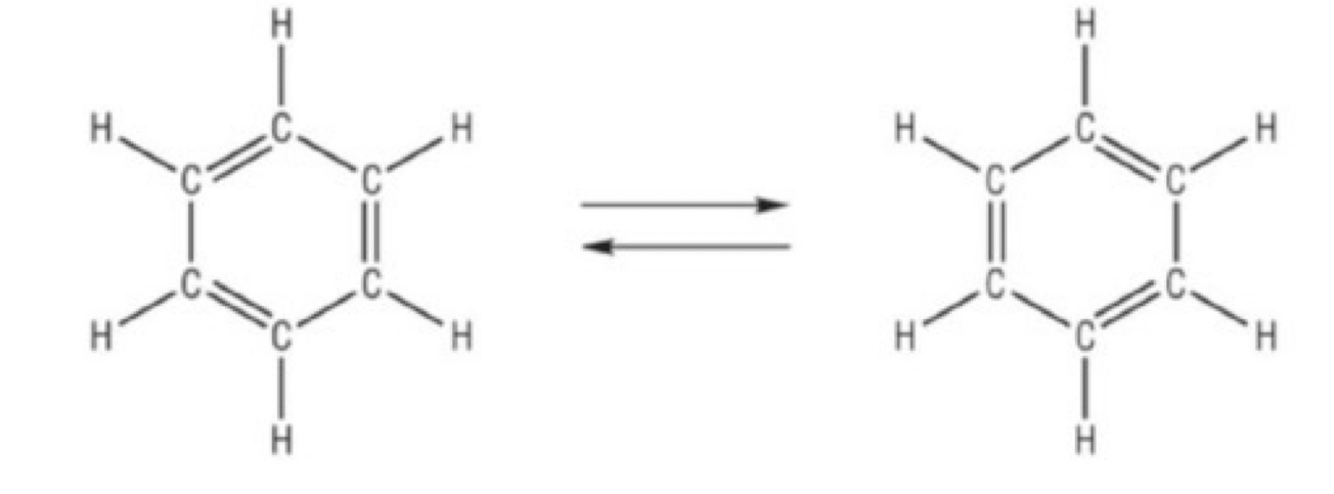
What were the problems with kerkules model ?
• the lack of reactivity - if benzene had C-C double bonds present then it should decolorise bromine in an electrophilic addition reaction, this didn’t happen. • isomers - compounds such as 1,2-dichlorobenzene should form isomers, but only 1 form exists • bond length - C-C and C-C double bonds have different bond lengths so benzene would be an irregular hexagon, however imaging shows benzene is a regular hexagon with the same bond lengths • hydration enthalpy - cyclohexene has a hydration enthalpy of -120kj/mol, this would imply that benzene had a hydration enthalpy of -360kj/mol, but in reality benzene had a hydration enthalpy of -208kj/mol
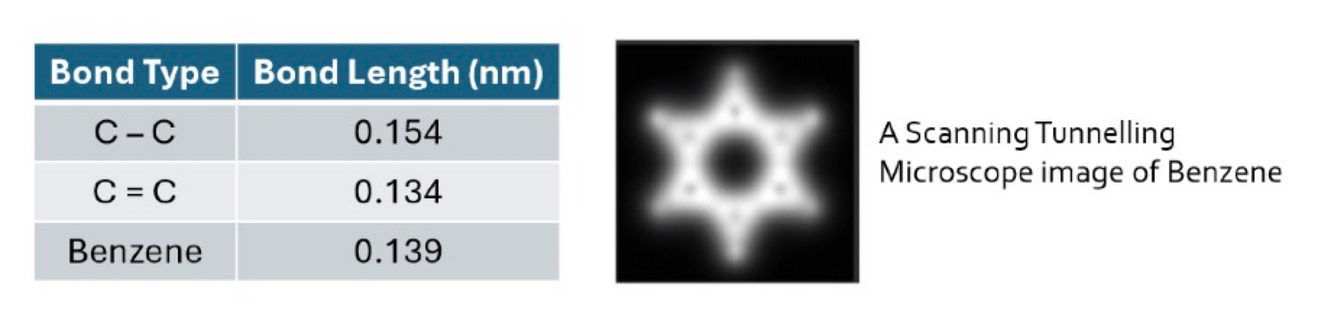
What is the current delocalised model for benzene ?
• each carbon creates 3 covalent sigma bonds - 2 with neighbouring carbons and 1 with hydrogen • the remaining electron is found in the p-orbital at a right angle above and below the carbon atom • the p-orbitals overlap sideways in both directions, this evenly creates a ring of delocalised pi electrons above and below the structure, creating a ring of electron density
What is an arene ?
• empirical formulae of CH
Why can’t benzene undergo electrophilic addition ?
• electrophile - electron pair acceptor • unlike alkenes benzene cannot undergo electrophilic addition, since it would disrupt the delocalised pi-electron ring and the product would be less energetically stable
Why does benzene instead undergo electrophilic substitution ?
• replaces hydrogen for another group, retaining the delocalised ring • C6H6 + X+ -> C6H5X + H+
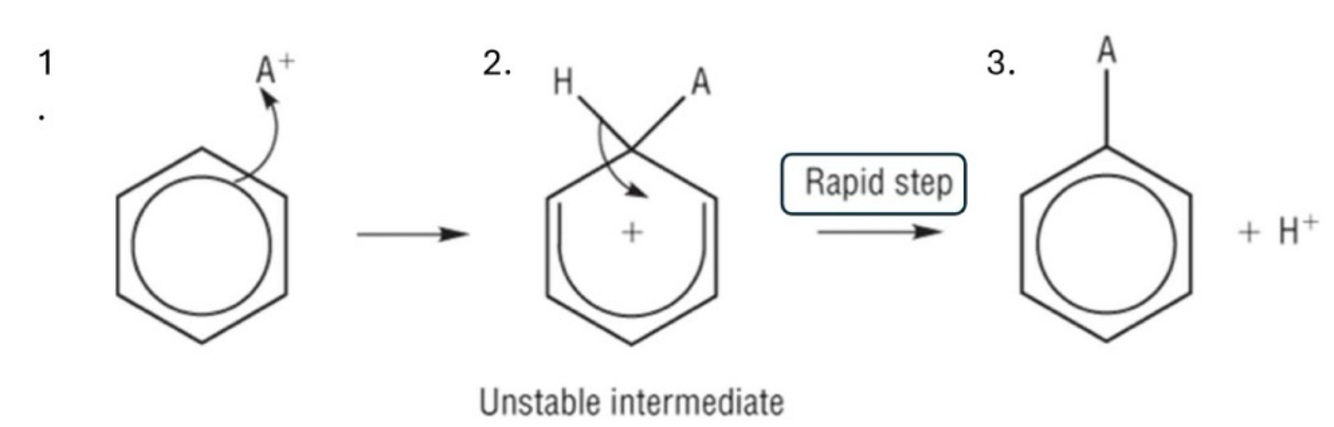
What are the 3 steps mechanism for electrophilic substitution ?
• the electrophile is attracted to the ring due to the high electron density caused by delocalised electrons • a pair of electrons from the ring are donated to the the electrophile to form a covalent bond • an unstable intermediate forms with an incomplete ring and a positive charge • the bond with H undergoes heterolytic fission to donate electrons to the ring structure • the stable ring structure returns leaving substituted product and a hydrogen ion
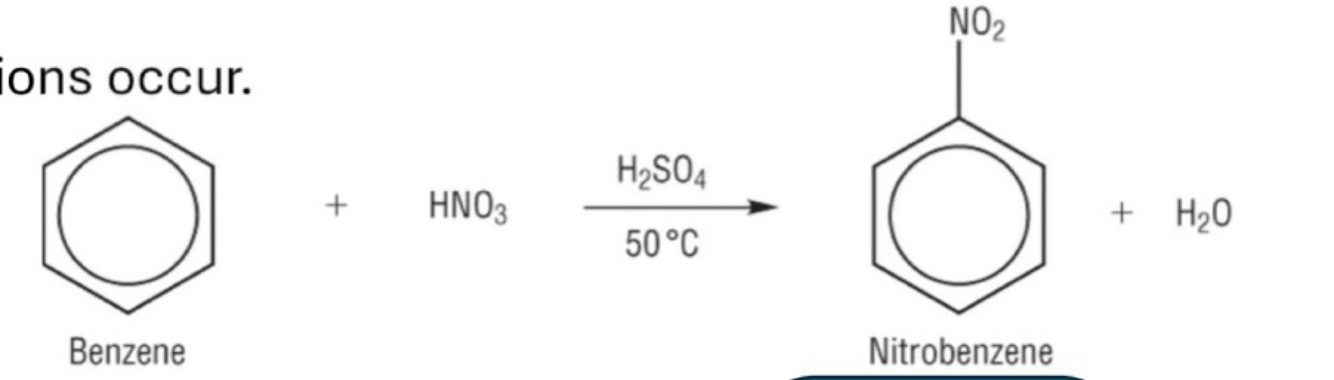
What happens in the nitration of benzene (conditions) ?
• The nitration of benzene substitute an N02 to the ring structure • reagent: conc. nitric acid (HNO3) • Catalyst: conc. sulfuric acid (H2SO4) • conditions: 50-55 celcius
How to make NO2 + ion ?
• H2SO4 + HNO3 -> HSO4- + H2NO3+ • H2NO3+ -> H2O + NO2+ • this leaves a water molecule in the overall equation
What are friedel-craft reactions ?
• friedel-craft reactions use halogen carriers (AlX3, FeX3 or Fe) as catalysts to substitute R-Cl groups to rings via: • halogenation - sub a halogen • Alkylation - sub an alkyl chain using haloalkanes • Acylation - sub a ketone chain using acyl chlorides, acyl chloride are same as carboxylic acids but have Cl instead of OH all reactions are performed under reflux in anhydrous condition
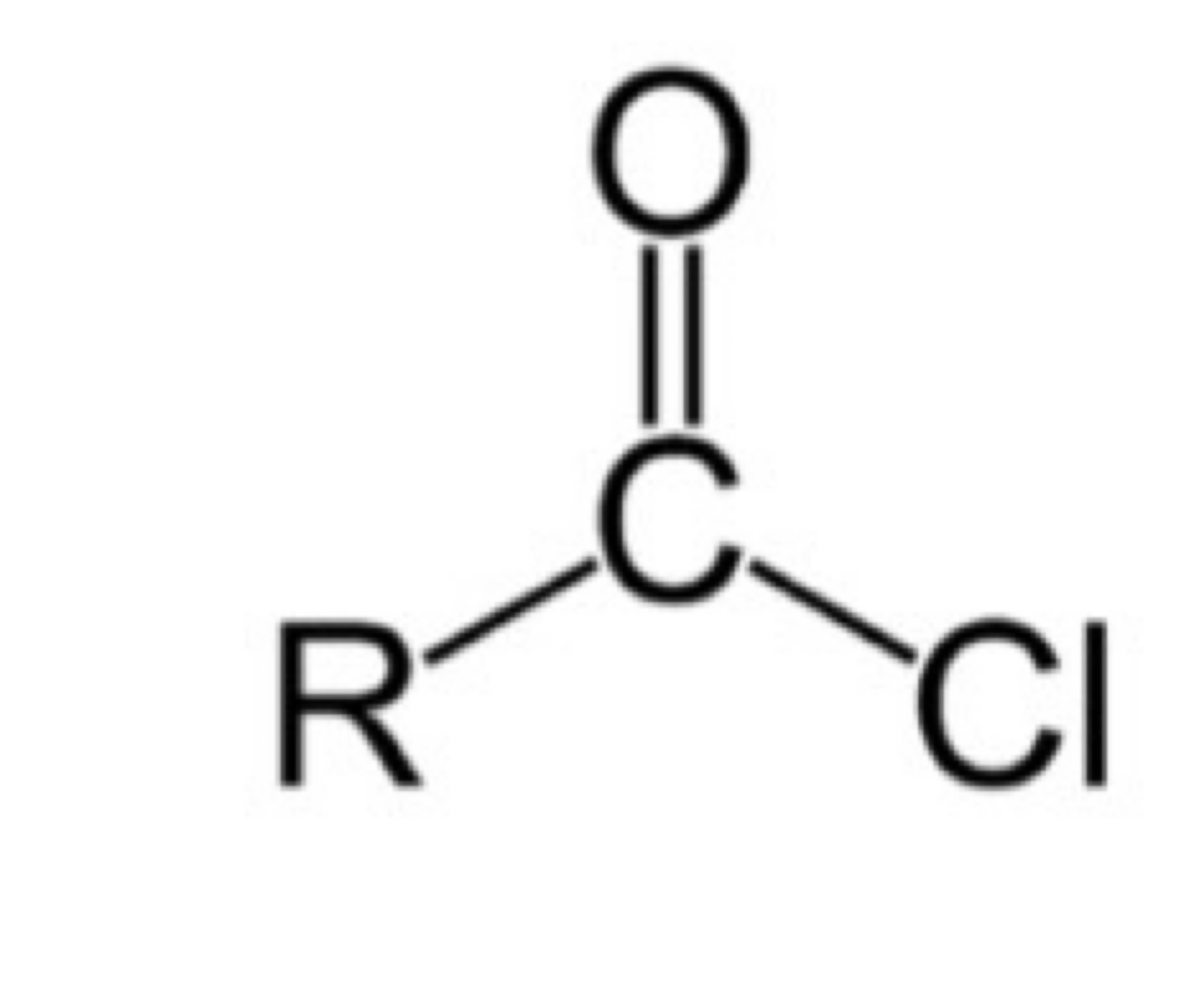
What are the steps in friedel-craft reactions ?
• electrophile formation: R-X + AlX3 -> R+ + AlX4- • electrophile attack: the electrophile attack the Benzene ring structure to substitute the R group for a hydrogen • Catalyst reformation: the H+ ion formed by substitution reacts with the chlorine donated to the halogen carrier to form HX
What happens in the bromination of benzene?
• benzene is too stable to react with non-polar bromine • Br2 + FeBr3 -> FeBr4- + Br+ , where Br + is the electrophile
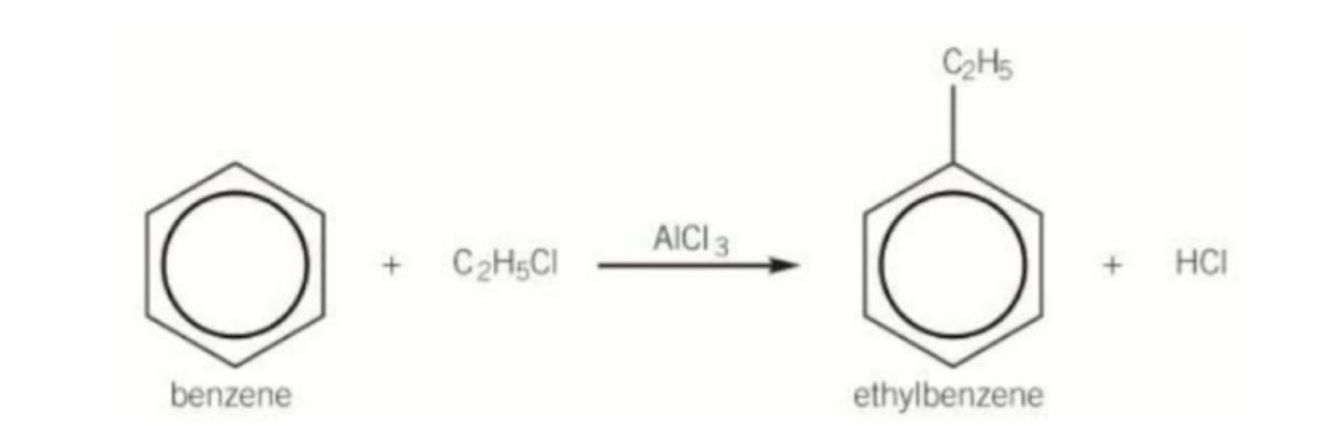
What is alkylation ?
• H atom in the ring is substituted by an alkyl group • react benzene with haloalkane in presence of of AlX3
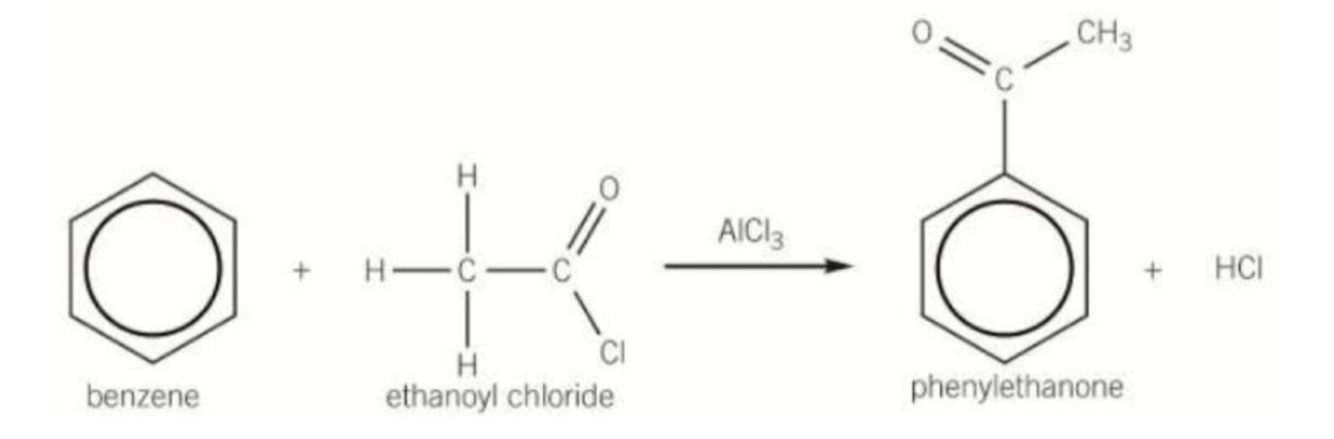
What is acylation ?
• benzene reacting with an acyl chloride with AlCl3 catalyst an aromatic ketone is formed
What are phenols ?
• Phenols are aromatic compounds that have an alcohol’s hydroxyl group attached to the ring • the hydroxyl takes position 1, with 1 OH group attached to benzene
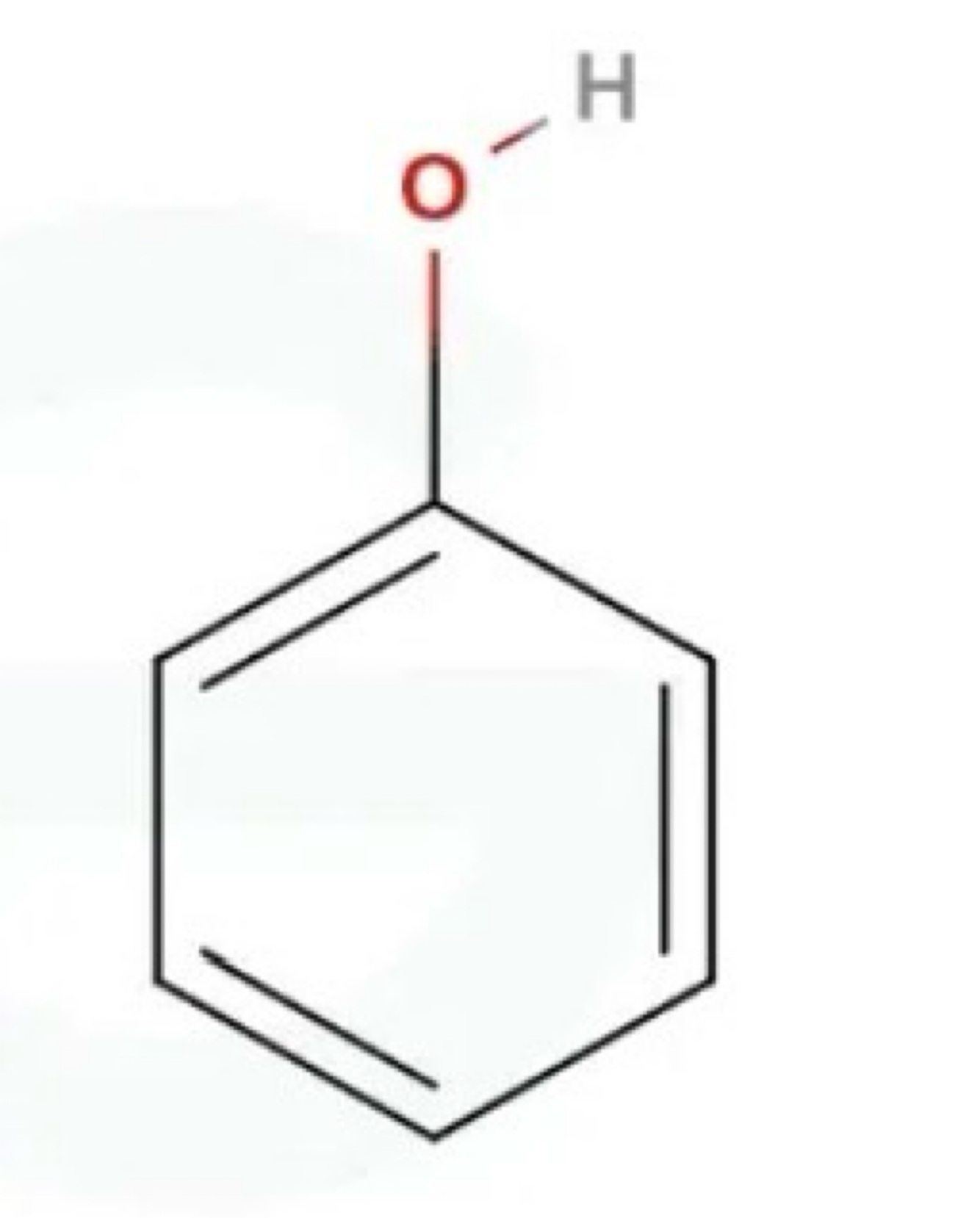
What is the structure of phenols ?
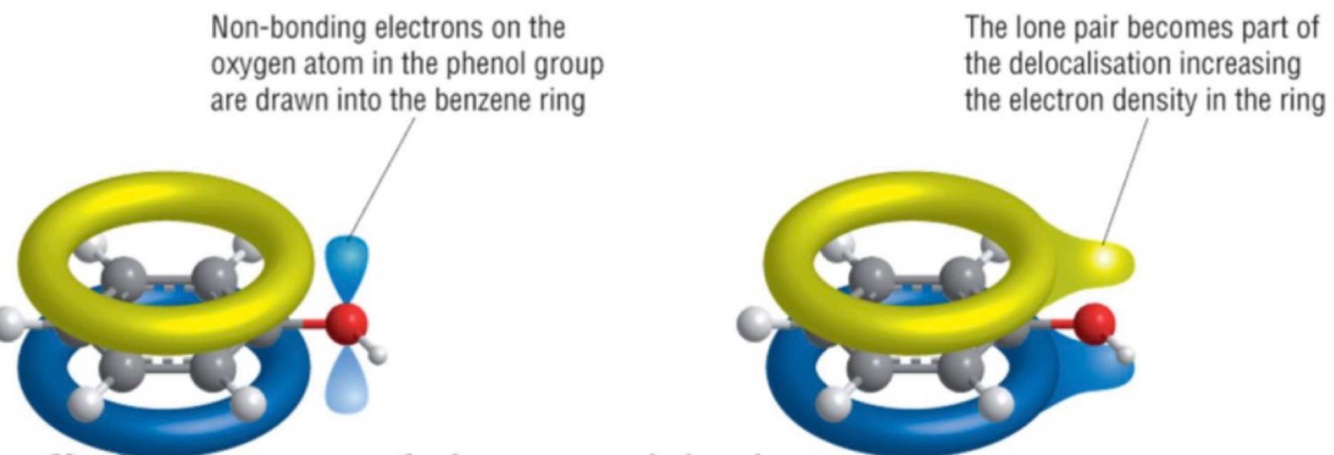
• oxygen atom in hydroxyl has 2 lone pairs of p-orbital electrons • as the ring is electron deficient one of the p-orbitals overlap into the ring structure to become delocalised • this increases the ring’s electron density, this allows electrophilic substitution reactions to occur more easily
What are the properties of phenols ?
• the p-orbital overlap into the ring weakens the O-H bond so phenol can donate a H+ • forms phenoxide ions (C6H5O) when dissolved in water this means phenol solutions are acidic: • more acidic than alcohols and less then CA • phenols and CA react with strong bases • only CA can react with weak bases
What is the phenol reaction with strong bases ?
• phenol + strong bases -> salt + water • phenol + metal -> salt + hydrogen
What is the bromination of phenol ?
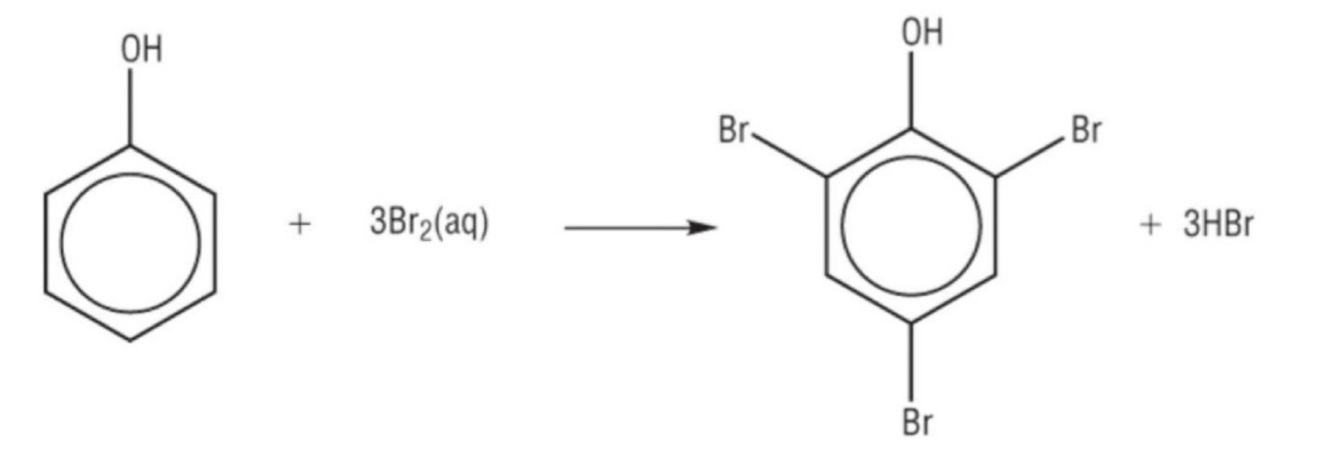
• phenols can react with bromine water by electrophilic substitution at RTP without catalyst
Why can bromination of a phenol occur ?
• the addition of p-orbital electrons to the ring structure from the oxygen atom of a phenol increases the electron density • the increase in electron density is enough to induce a dipole in a bromine molecule allowing substitution without a catalyst
How to name aromatic compounds (compounds with benzene) ?
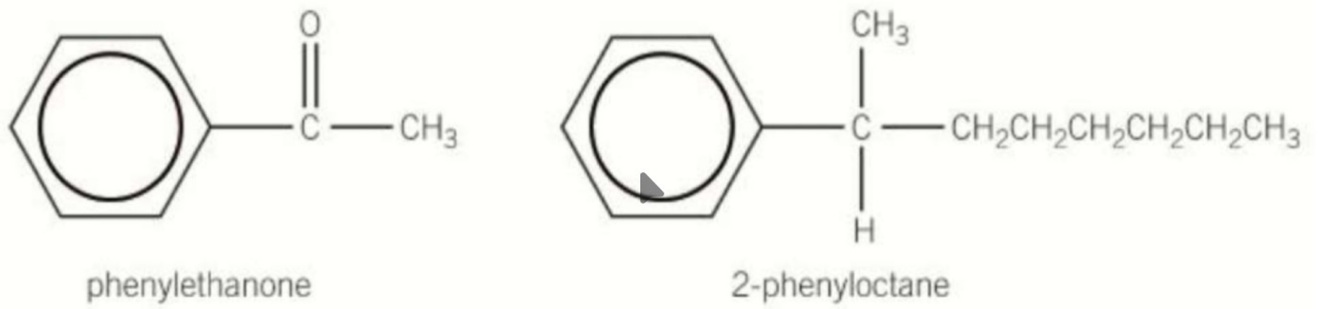
• in aromatic compounds benzene is considered the parent chain - e.g 1-chlorobenzene • UNLESS it is attached to an alkyl chain of length 7 or more or if it contains a functional group (not halogens or nitro groups) then it is considered a constituent group • prefix = phenyl
What is the directing effect ?
• the presence of substituted groups on the benzene ring will have an effect on the substitution of further groups, the directing effect • releasing electrons - increases electron density • withdrawing electrons - decreases electron density
How do electron releasing groups effect further substitution ?
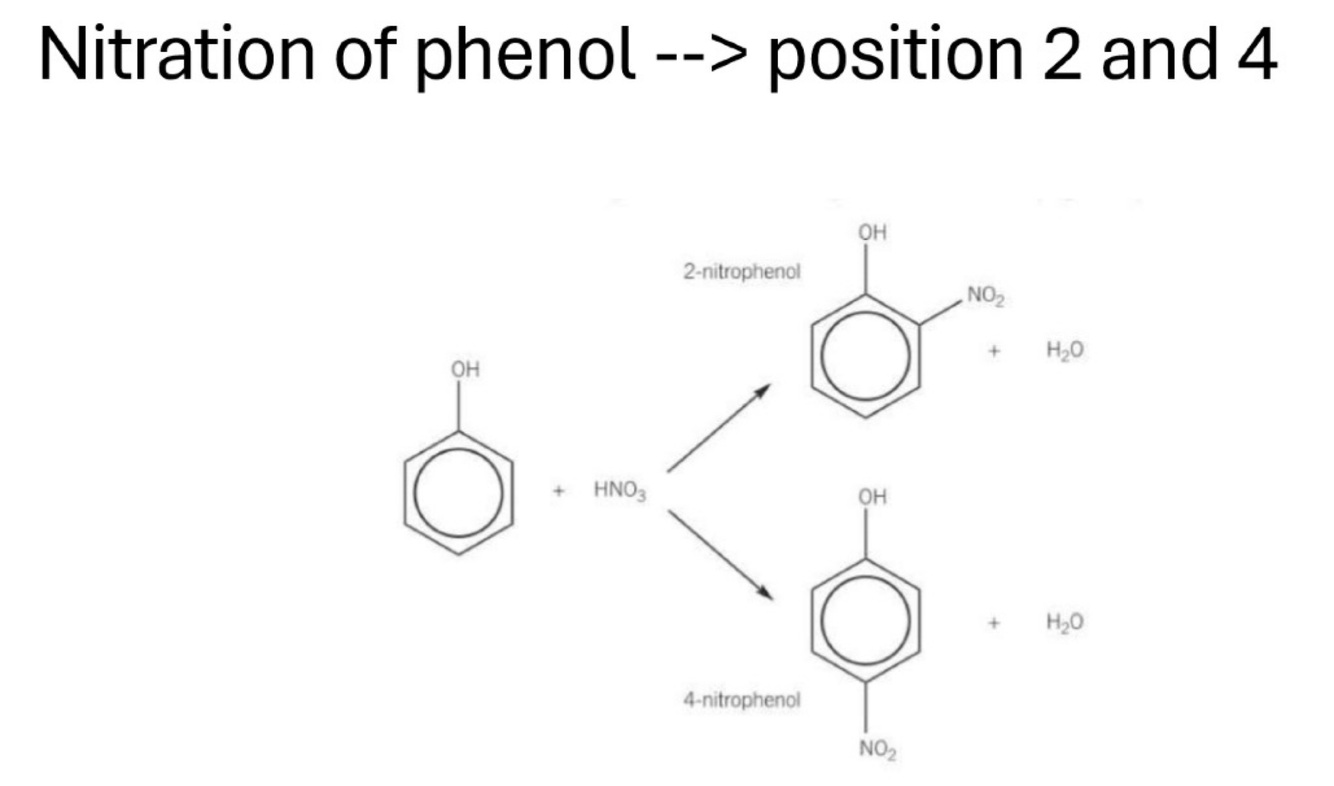
• side chains that increase electron density allow electrophiles to react quicker with benzene, activating groups • electron releasing groups direct further substitution to position 2 and 4
How do electron withdrawing groups effect further substitution ?
• side chains which decrease the electron density will slow reactions with an electrophile compared to benzene, so are deactivating groups • the group directs further substitution to position 3