Metal-Carbon π-Bond (C₃, C₄, C₅) / Metallocenes
No description yet. This curated deck is ready for daily study.
Card preview (24)
What are the resonance forms for the following anion
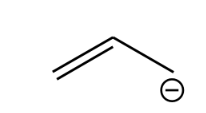

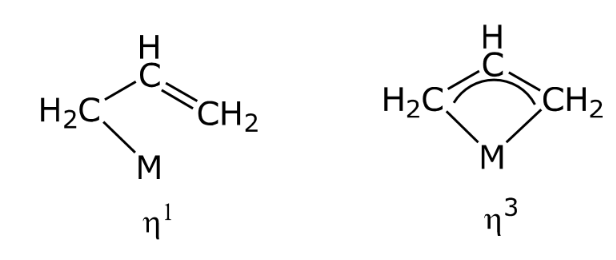
What are the two ways the following anion can coordinate
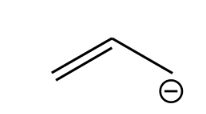
η¹ - metal acts as a 1E- donor η³ - metal acts as a 3E- donor (all 3 carbons are interacting with the metal)
There are 4 electrons in an allyl anion How are they arranged between the bonding, non-bonding and anti-bonding orbtials
2 in the bonding 2 in the non-bonding
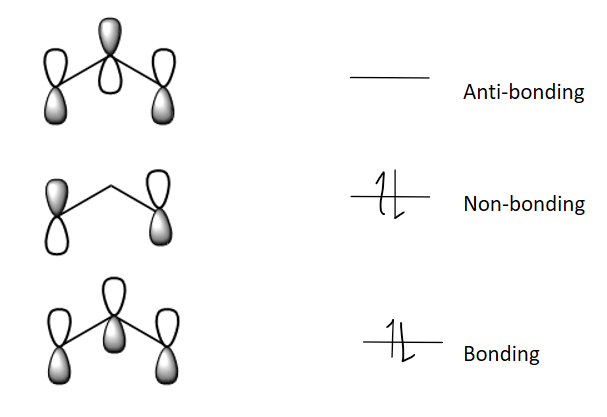
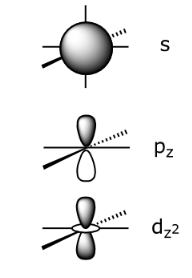
Which orbitals of the metal can the bonding molecular orbitals of the allyl ion interact with?
any s, pz or dz² orbital if they are in the same phase producing a sigma-bond
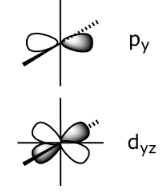
Which orbtials of the metal can the non-bonding molecular orbitals of the allyl ion interact with?
the py or dyz orbtials if they are in the same phase producing a pi-bond
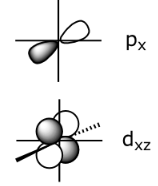
Which orbitals of the metal can the anti-bonding molecular orbitals of the allyl ion interact with
The px and dxz orbtials if the are in the same phase producing a pi bond
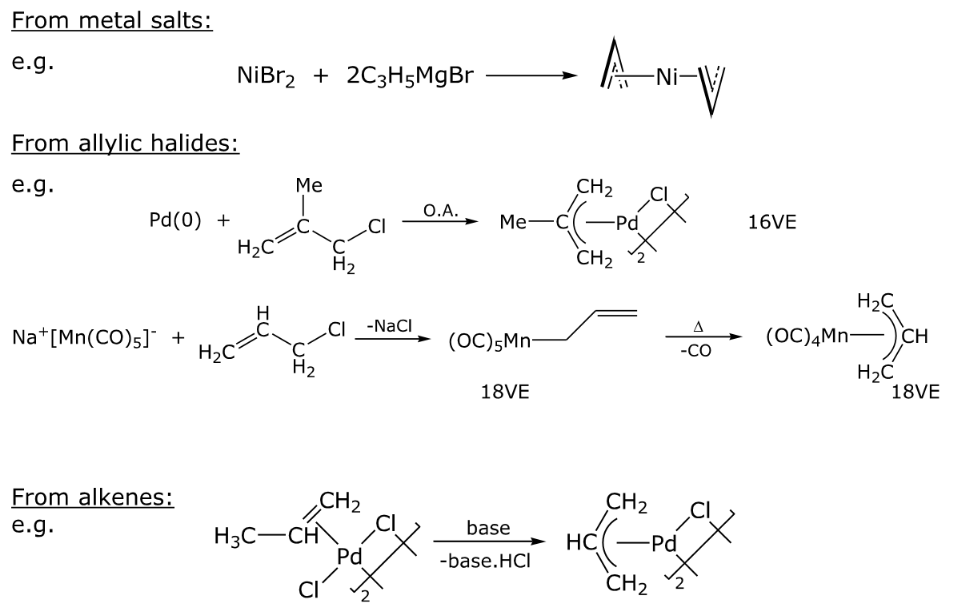
What are the 3 ways we can make metal-allyl complexes
• From metal salts • From allylic halides • From alkenes
How do metal-allyl complexes react?
• Nucleophilic attack • Alkene isomerisation • ligand displacement and insertion
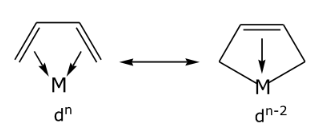
What two resonance states are possible for a metal-diene
RHS: diene has been reduced and metal has been oxidised
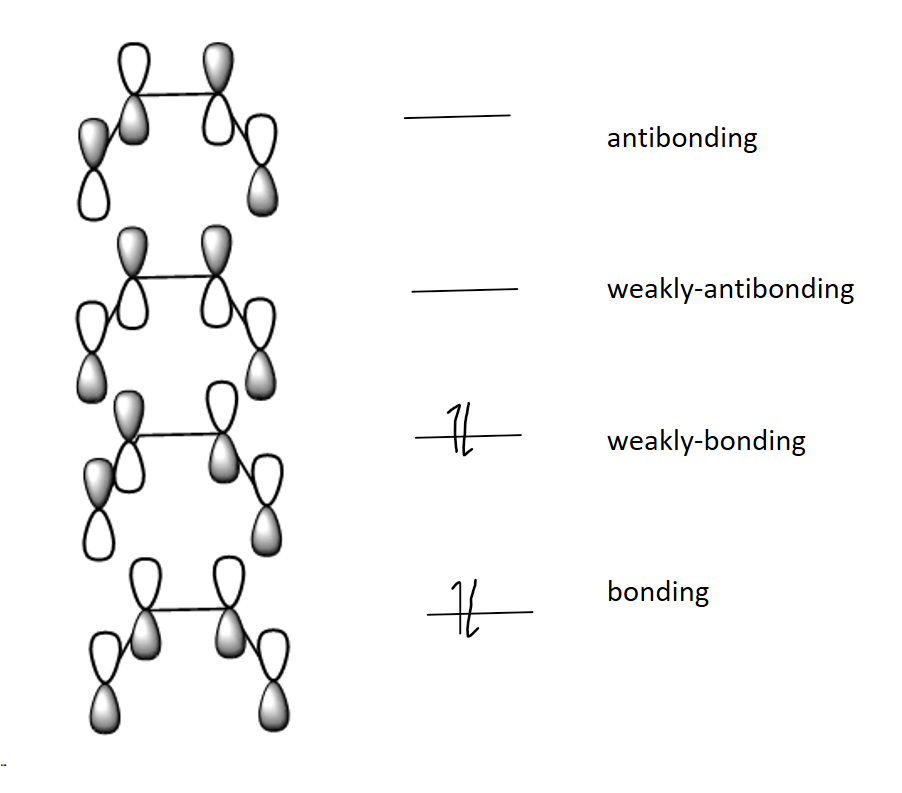
There are 4 electrons in the diene anion How are they arranged between the bonding, non-bonding and antibonding orbitals
• Two in the bonding orbital • Two in the weakly-bonding orbitals
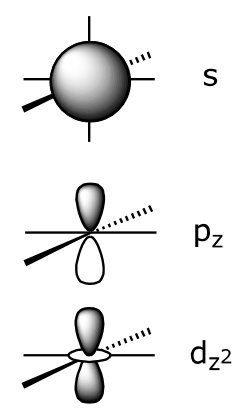
What type of metal orbitals can the bonding molecular orbitals of a diene anion interact with
the s, pz and dz² orbitals when all in the same phase will form a pi-bond
What type of metal orbitals can the weakly bonding molecular orbitals of a diene anion interact with?
the py and dyz orbitals when in the same phase will produce a pi-bonding
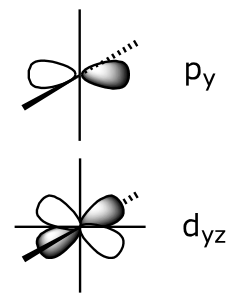
What type of metal orbitals can the weakly anti-bonding molecular orbitals of a diene anion interact with?
the px and dxz orbitals when in the same phase will produce pi bonding (back-donation from metal to ligand)
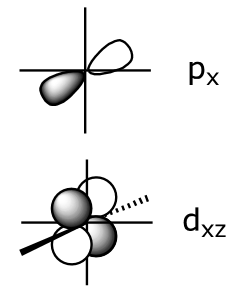
What type of metal orbital can the anti-bonding molecular orbtials of a diene anion interact with?
the dxy orbitals producing a δ-backbonding interaction
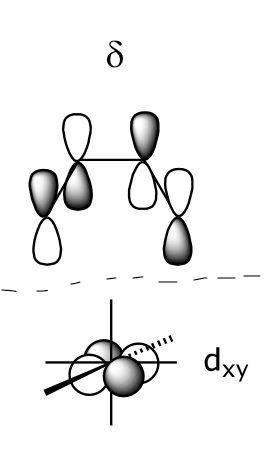
cyclobutadiene has 4 pi-electrons What is the arrangement of these electrons according to Huckel’s rules Why in reality is this not the case if it is not a ligand?
• It is expected to be antiaromatic, diradial (two unpaired electrons) as predicted by Huckel’s rules - sqaure shaped • The free molecule (not as a ligand) of cyclobutadiene in reality distorts to a rectangle, allowing two localised double and single bonds (no-longer degenerate)
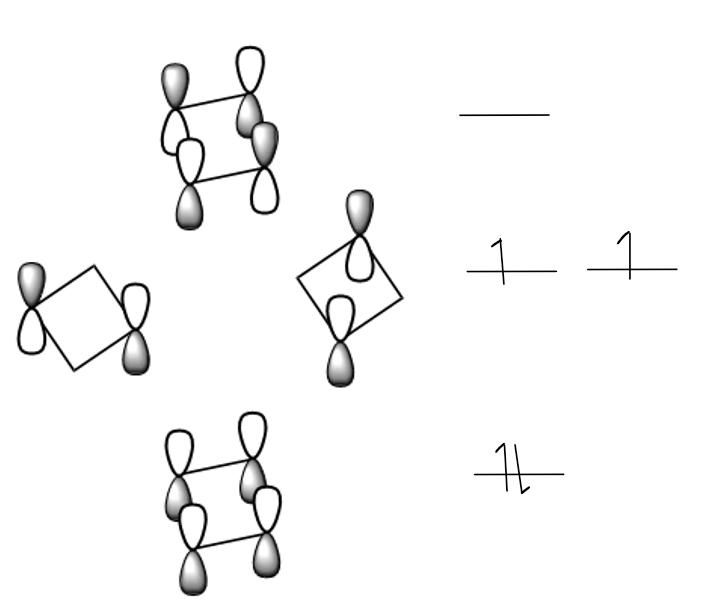
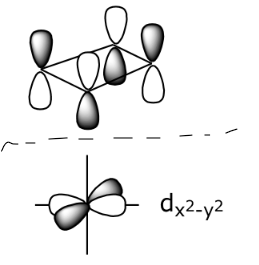
What type of metal orbital can the anti-bonding molecular orbitals of cyclobutadiene interact with
the dx²-dy² Forming δ-backbond interaction
How can you can synthesis a metal-diene complex?
• ligand substitution of other 2e- donors

What is the way you can synthesis a metal-cyclobutadiene complex?
Through make the cyclobutadiene in situ e.g. perhaps through a reduction of 4 membered rings called dehalogenation alkene dimerisation or ring contraction
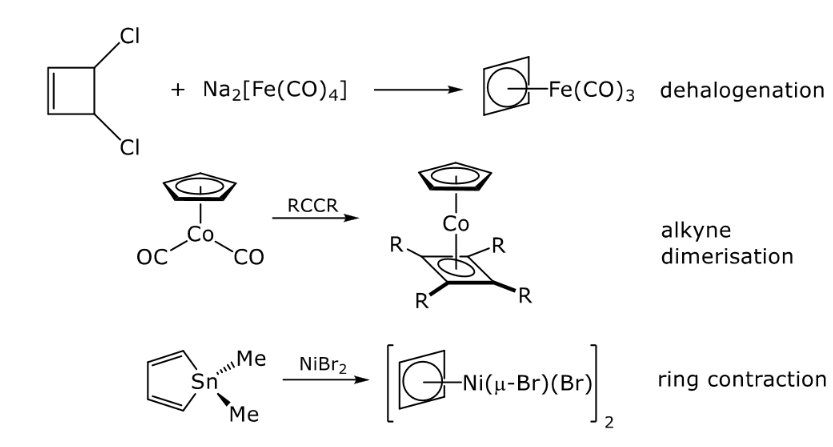
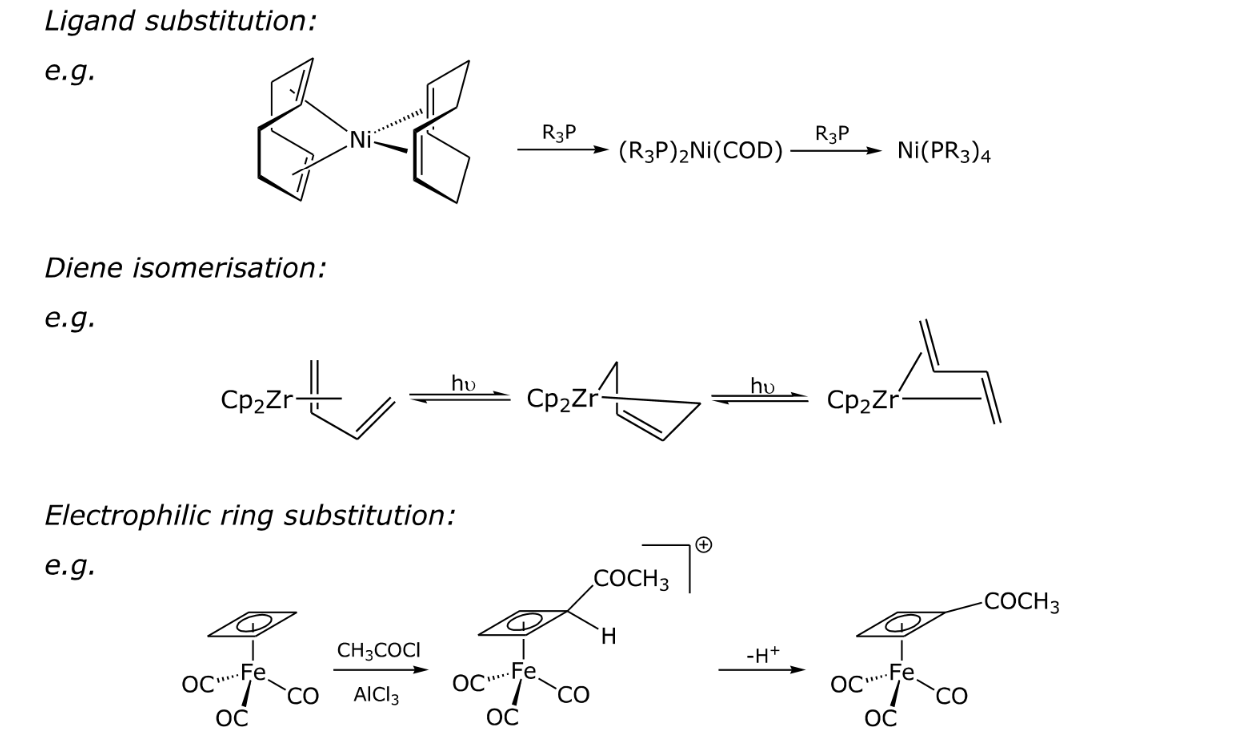
What are the ways in which dienes/cyclobutadienes can react?
• Ligand substitution (diene quiet easy to remove) • Diene isomerisation • Electrophilic ring substitution
Cp is the abbreviation for
C₅H₅⁻
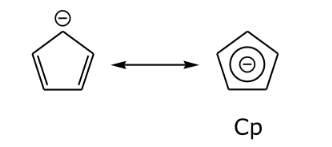
How many pi-electrons does the Cp anion have
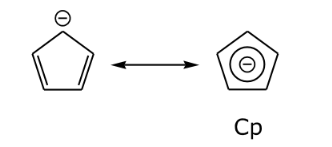
6 pi-electrons
What possible co-ordination states are there for the Cp ligand
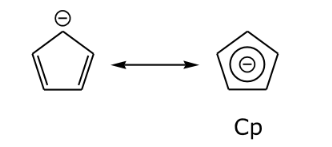
usually η⁵ (3 coordination sites) but also η¹ and η³
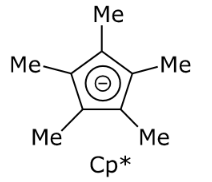
What is the CP* And what is special about it
Is a much stronger electron donor than Cp (and a poorer electron acceptor) so complexes with this ligand have their redox potential shifted to more negative values (i.e. easier to oxidise, more reducing)
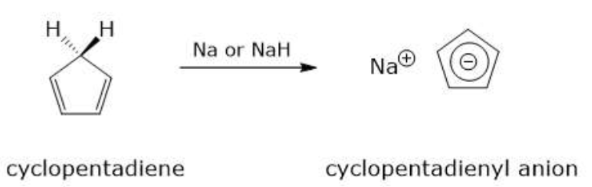
How can you form cyclopentadienyl anion from cyclopentadiene?
By reacting cyclopentadiene with a strong base (e.g. NaH)