Rate Equations
No description yet. This curated deck is ready for daily study.
Card preview (24)
• What is the rate equation?
• The rate equation relates mathematically the rate of reaction to the concentration of the reactants
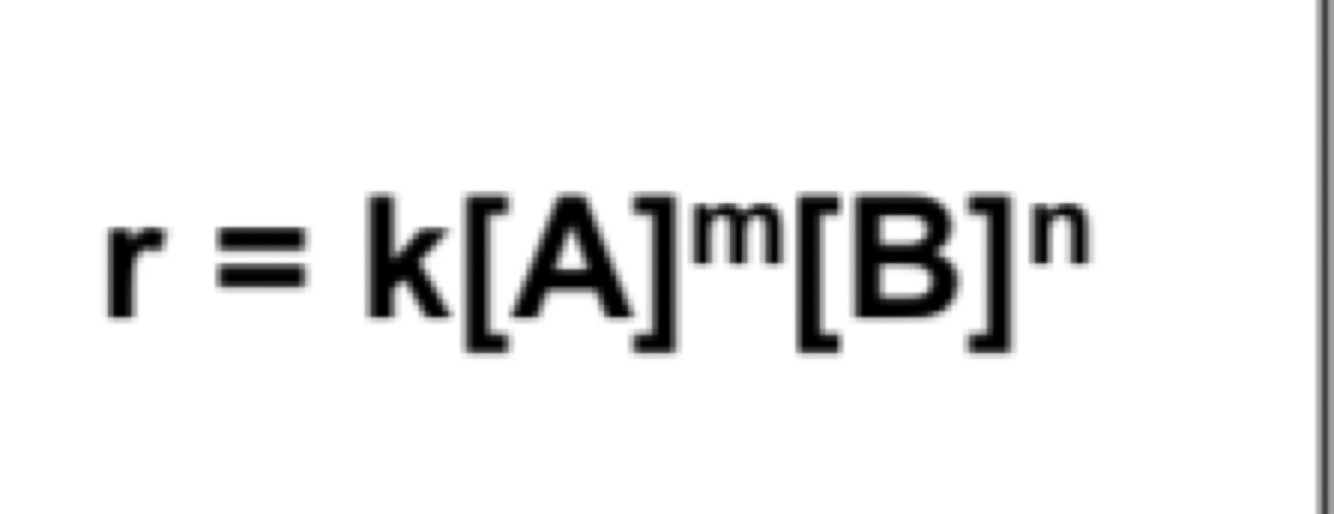
• r is used as a symbol for rate • The unit of r is usually mol dm-3 s-1 • The square brackets [A] means the concentration of A (unit mol dm-3) • k is called the rate constant • m, n are called reaction integers • Orders are usually integers 0 , 1 and 2 • 0 means the reaction is zero order with respect to that reactant • 1 means first order • 2 means second order • The orders are NOT the same as the stoichiometric coefficients in the balanced equation, they are worked out experimentally
• How to calculate the total order for a reaction?
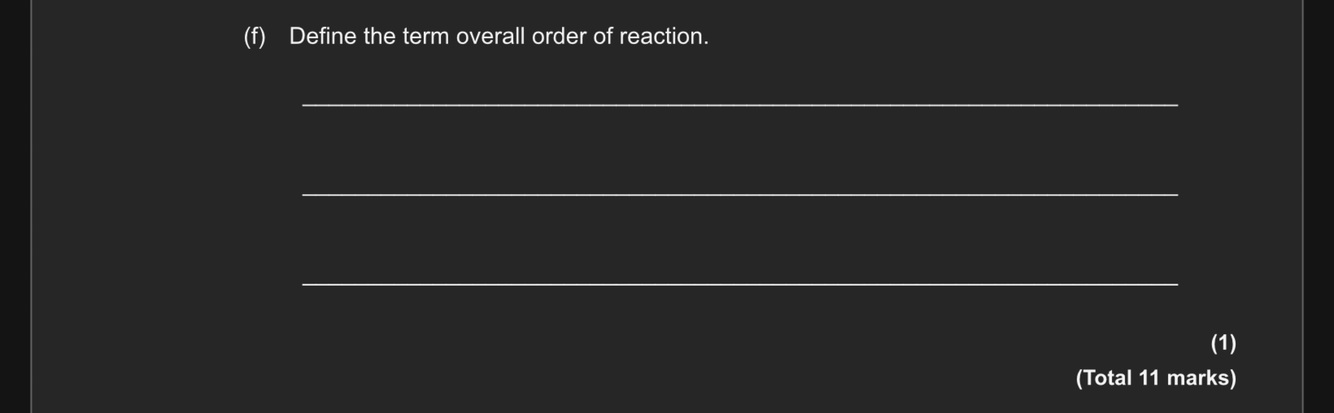
• The total order for a reaction is worked out by adding all the individual orders together
• Draw a graph to show A as orders 0, 1 and 2
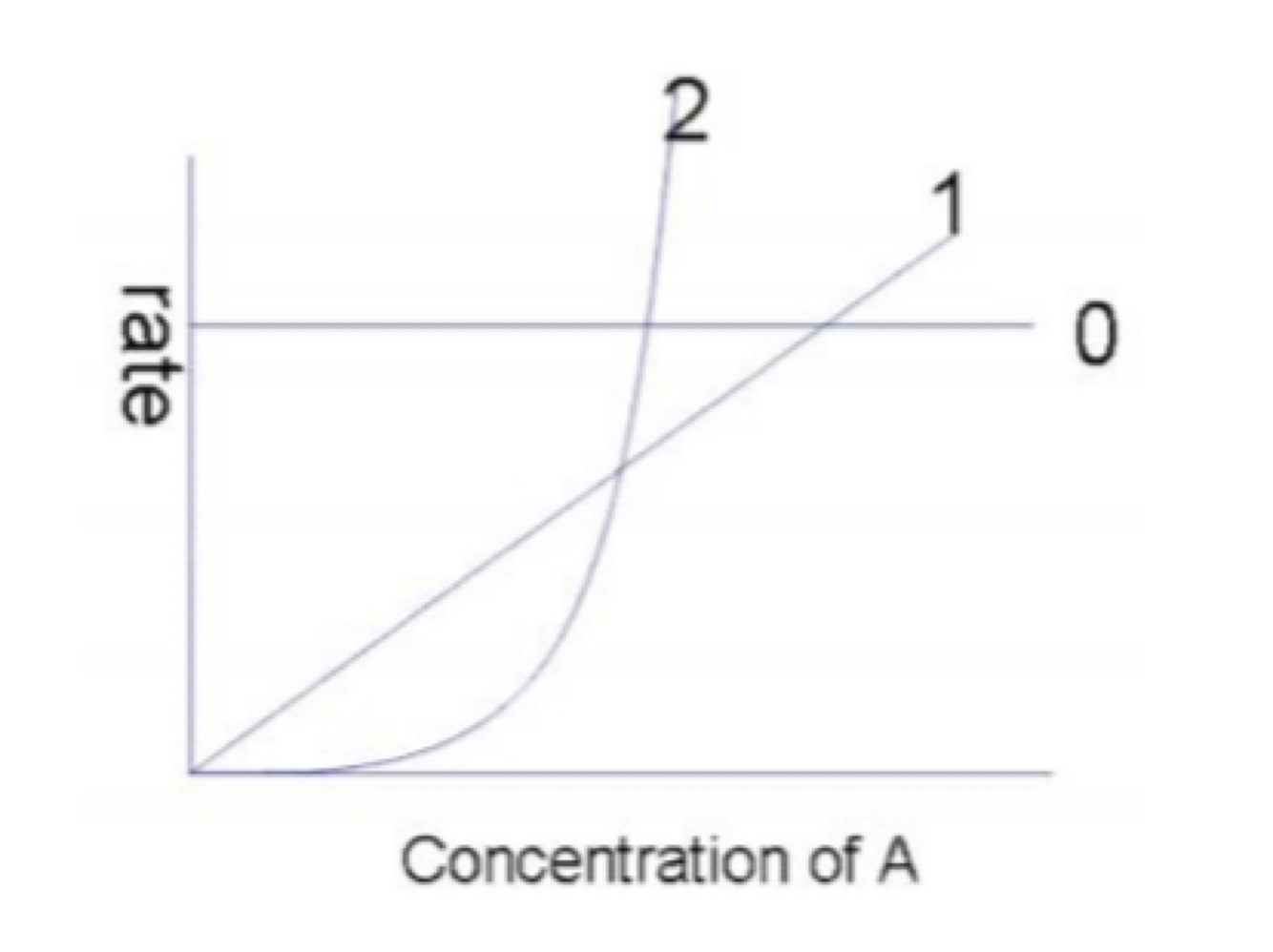
• What are the effects of each order on the rate of reaction?
• For zero order: the concentration of the reactant has no effect on the rate of reaction • r = k[A] °= k • For first order: the rate of reaction is directly proportional to the concentration of the reactant • r = k(A]’ • For second order: the rate of reaction is proportional to the concentration of A squared • r = k[A] ²
• What is the rate constant?
• The units of K depend on the overall order of the reaction • It must be worked out from the rate equation • The value of K is independent of concentration and time, it is constant at a fixed temperature • The value of k refers to a specific temperature and it increases if we increase temperature
• What are the units of k?
• For a 1st order overall reaction the unit of k is s-1 • For a 2nd order overall reaction the unit of k is mol-1 dm3 s-1 • For a 3rd order overall reaction the unit of k is mol-2 dm6 s-1
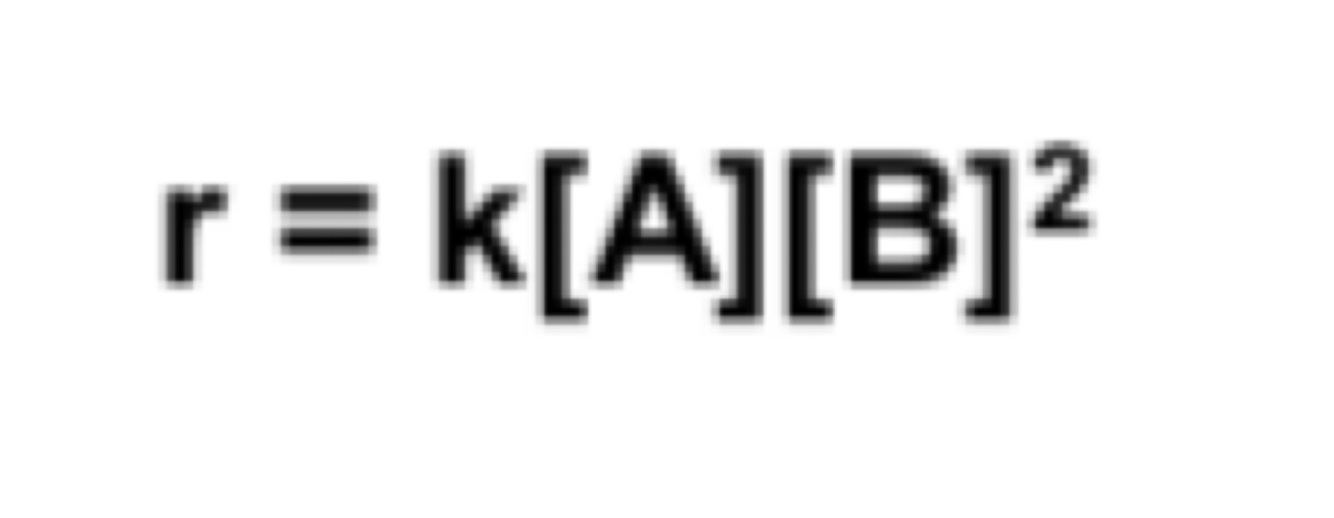
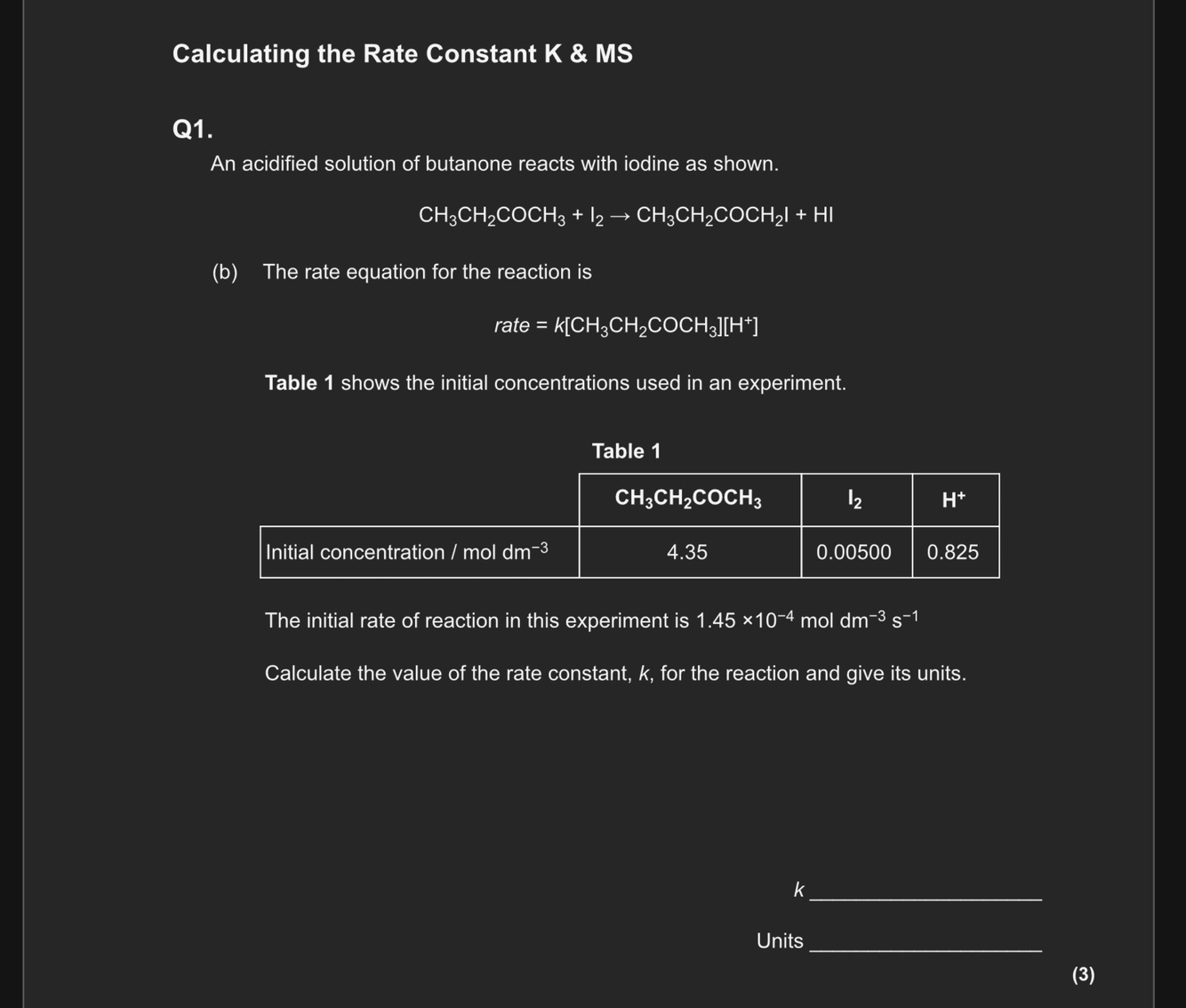
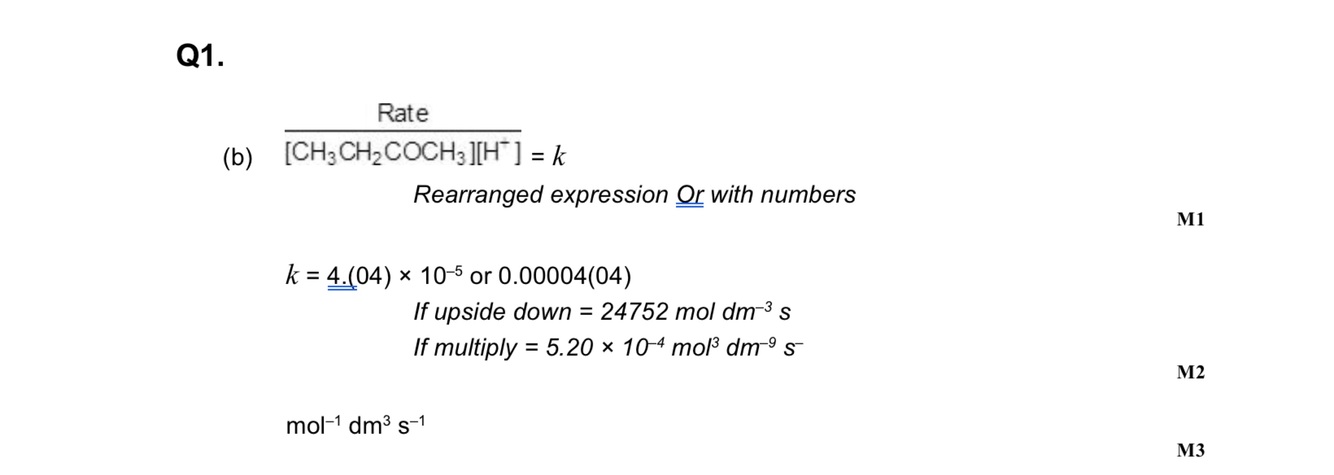
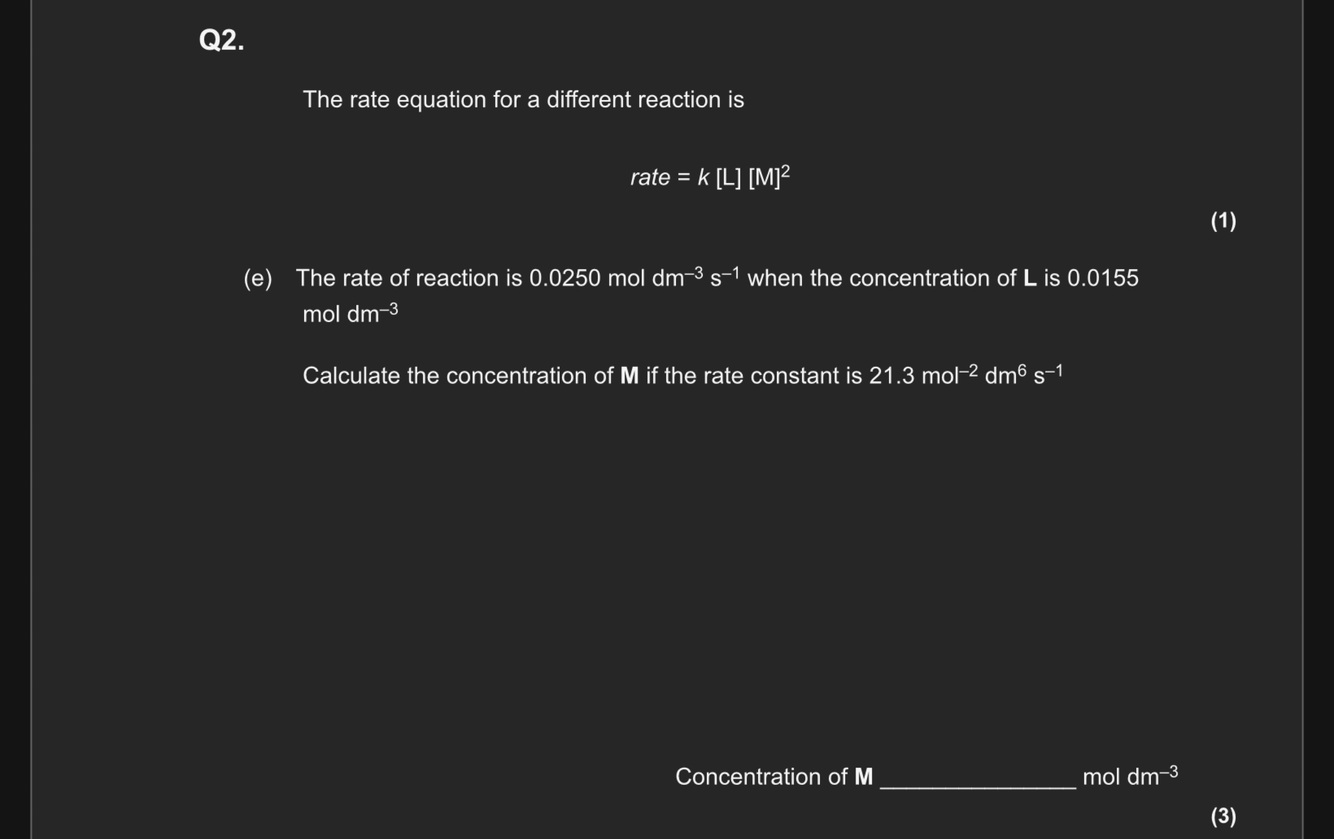
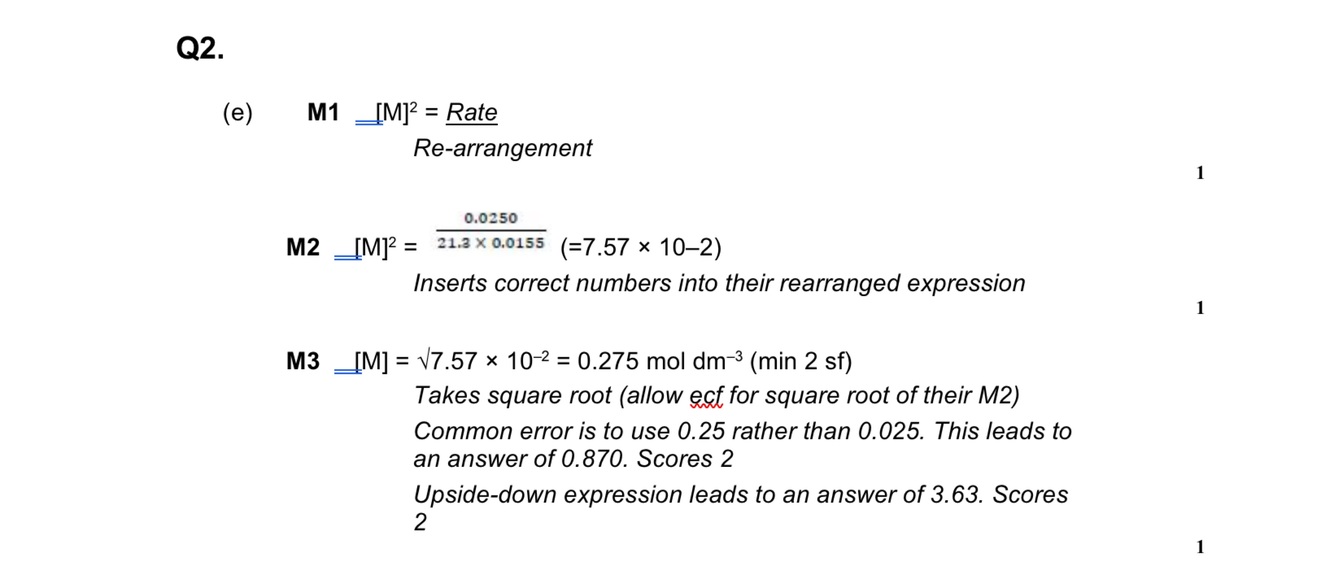
• Calculate the units of k


• Calculate the units of k




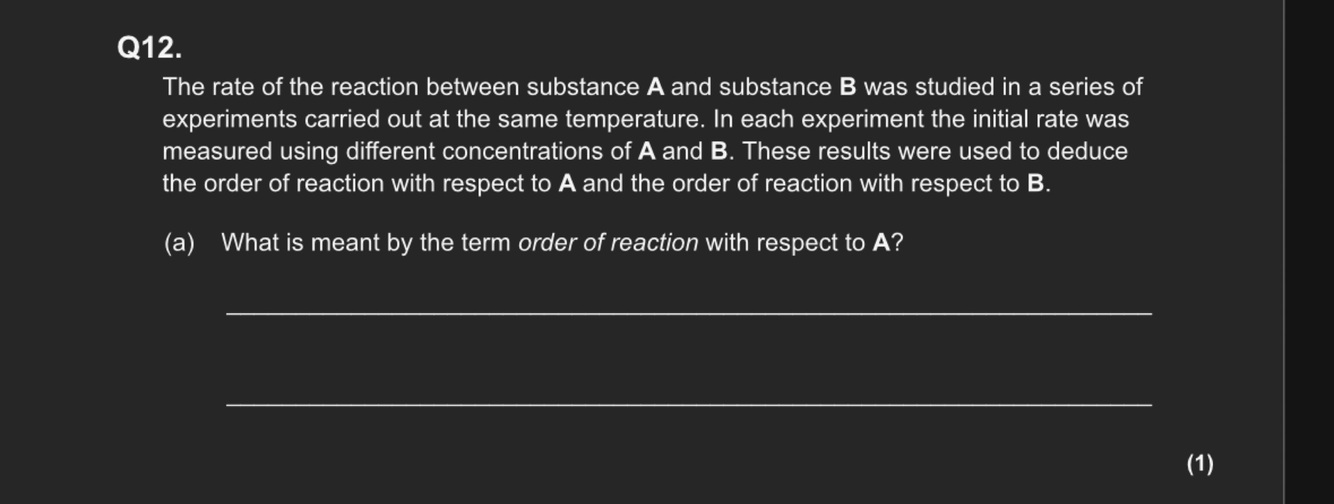
• Power of concentration term in rate equation
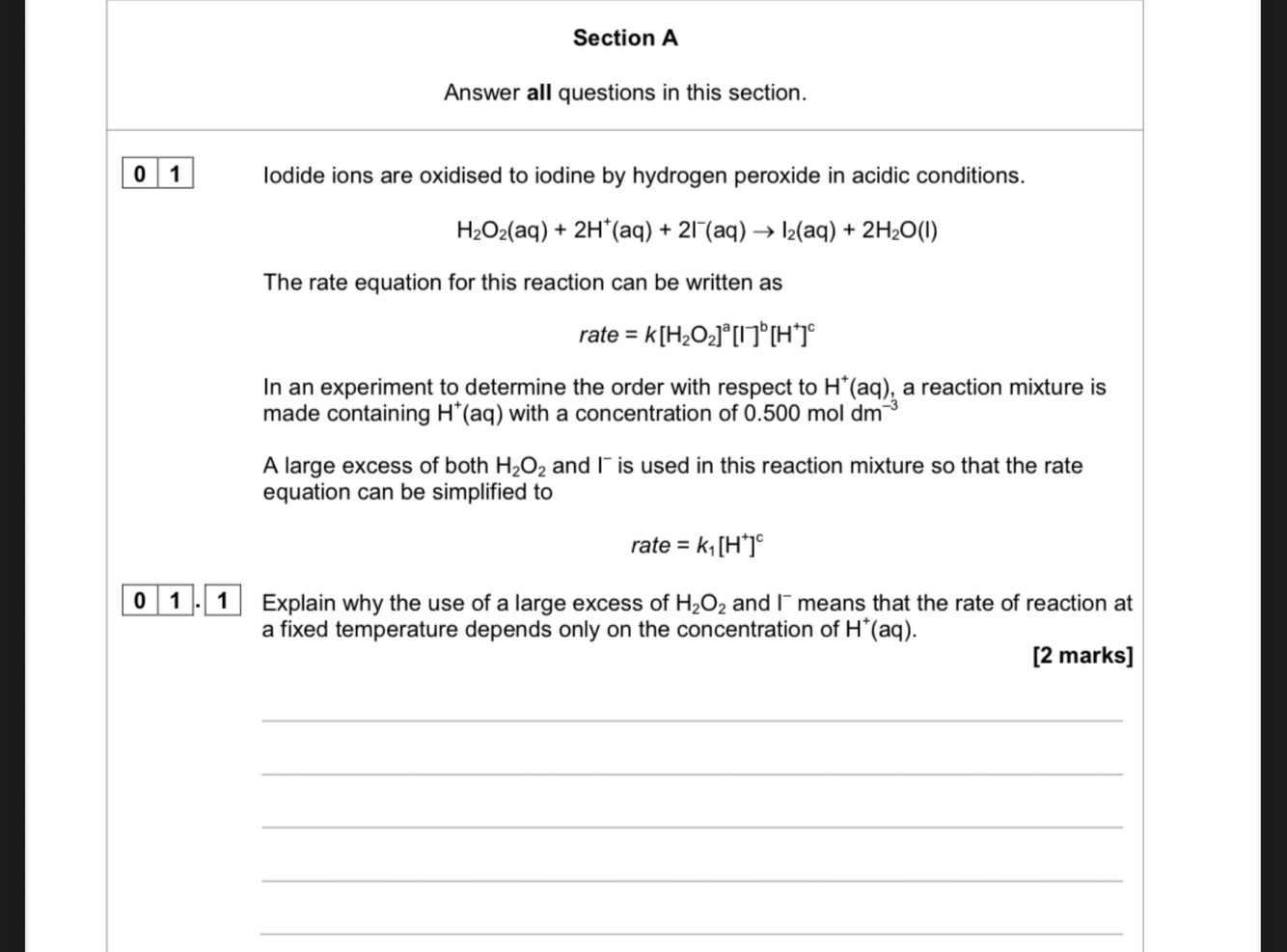
• The concentrations of H2O2 and I- are effectively constant so they have no effect on the rate of reaction
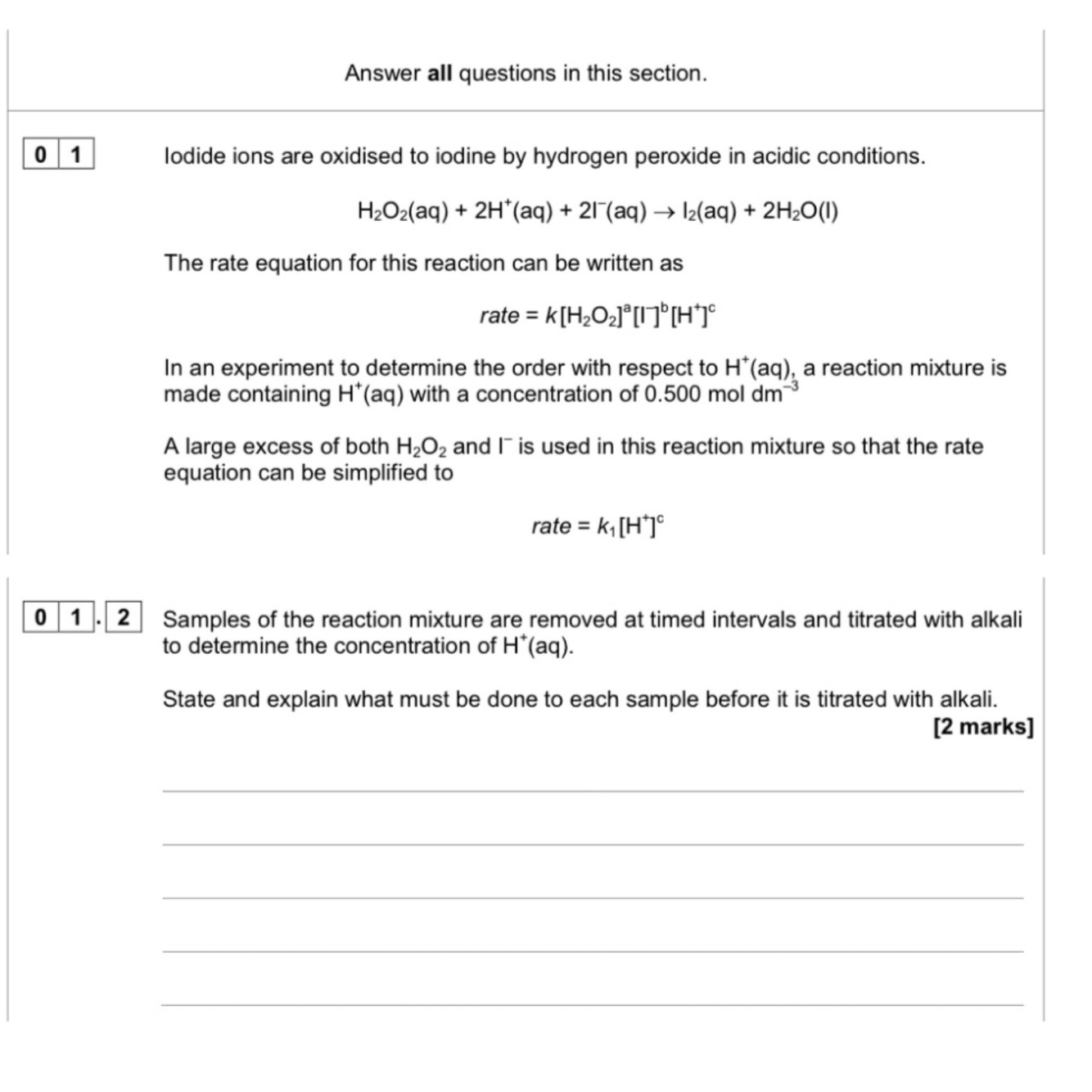
• Quenching the reaction (in effect stopping it) • By cooling it in an ice bath • Or by diluting it (doesn’t affect the moles of H+)
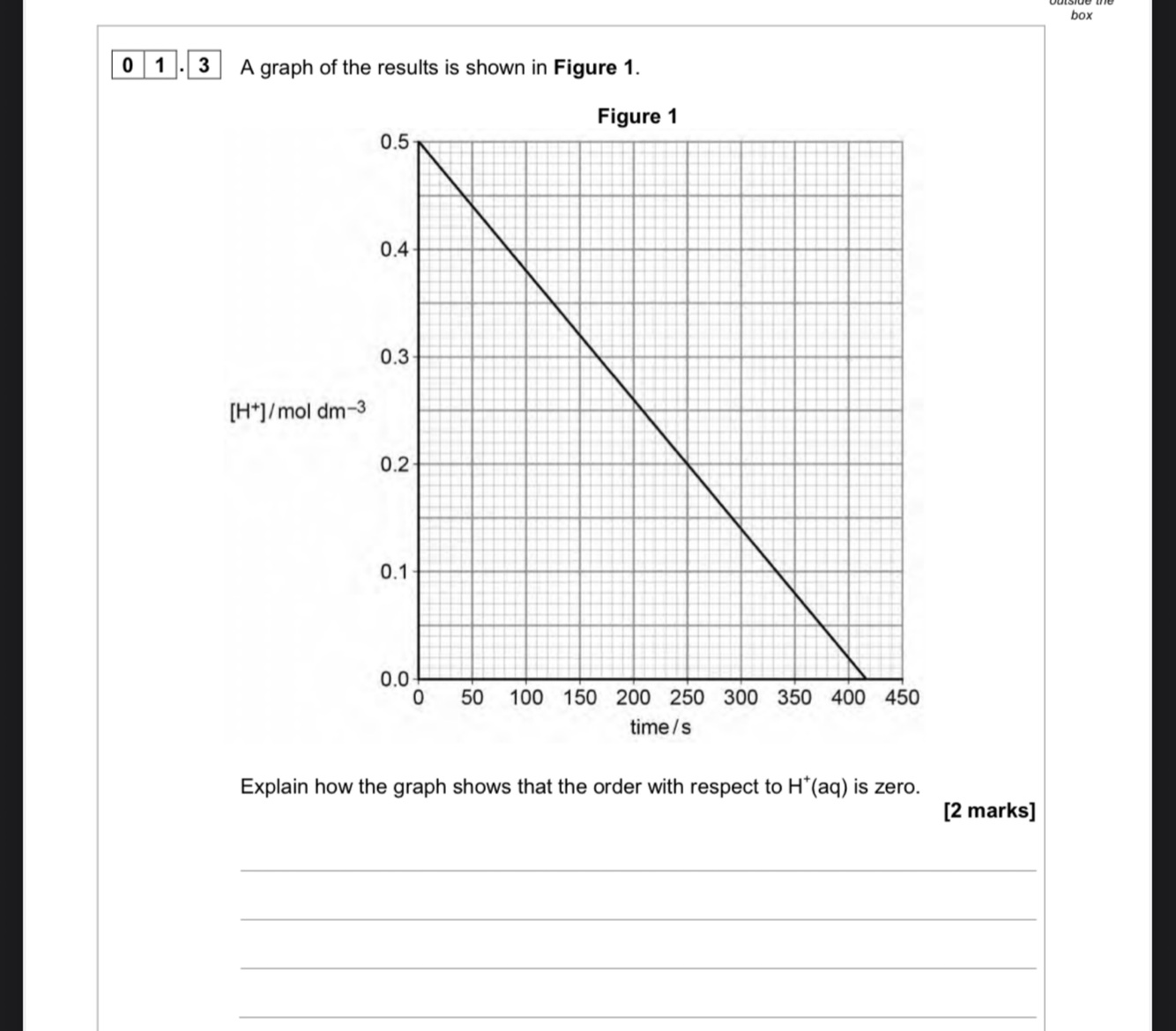
• There is a constant gradient as the concentration of H+ decreases
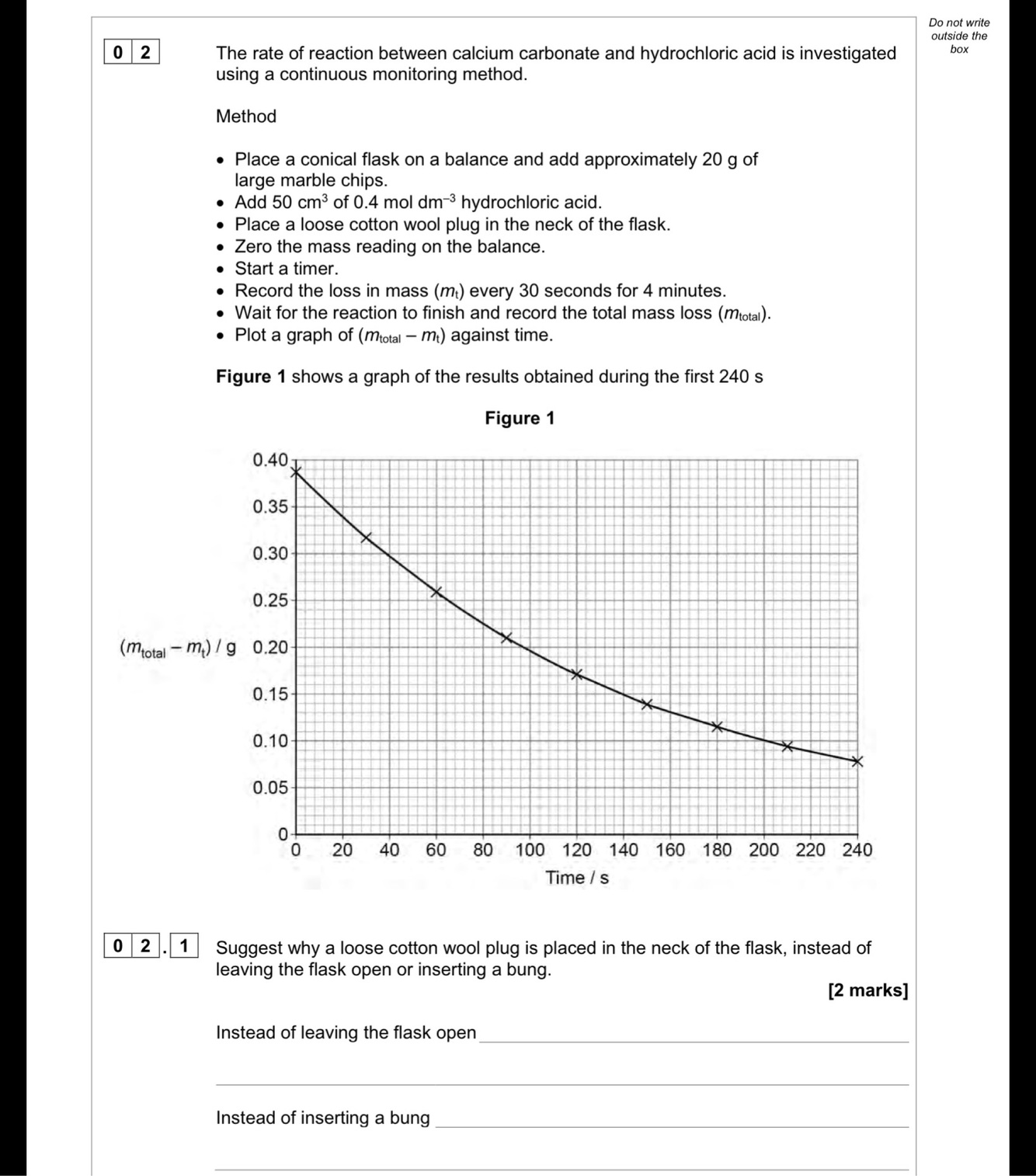
• Instead of leaving the flask open: avoids solution escaping • Instead of inserting a bung: allows CO2 gas to escape
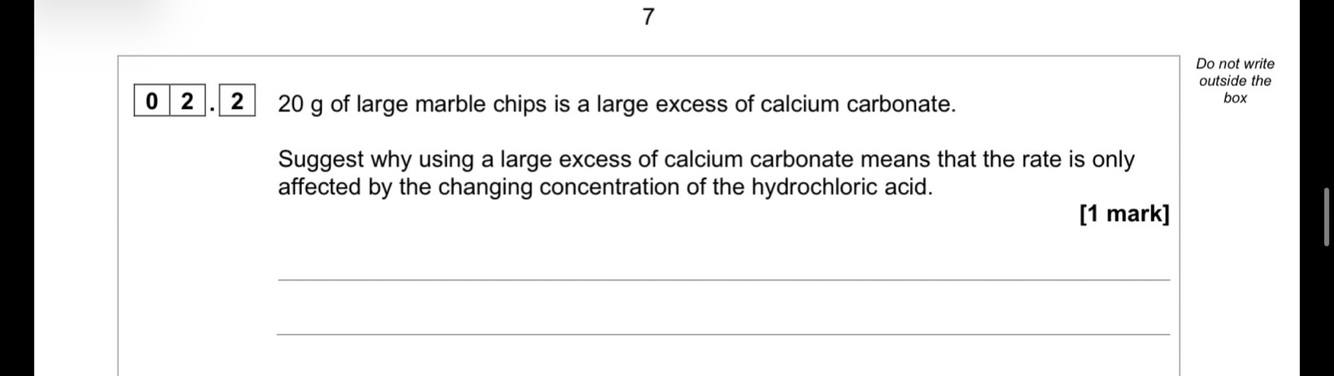
• So mass is effectively constant and rate is only affected by [HCl]
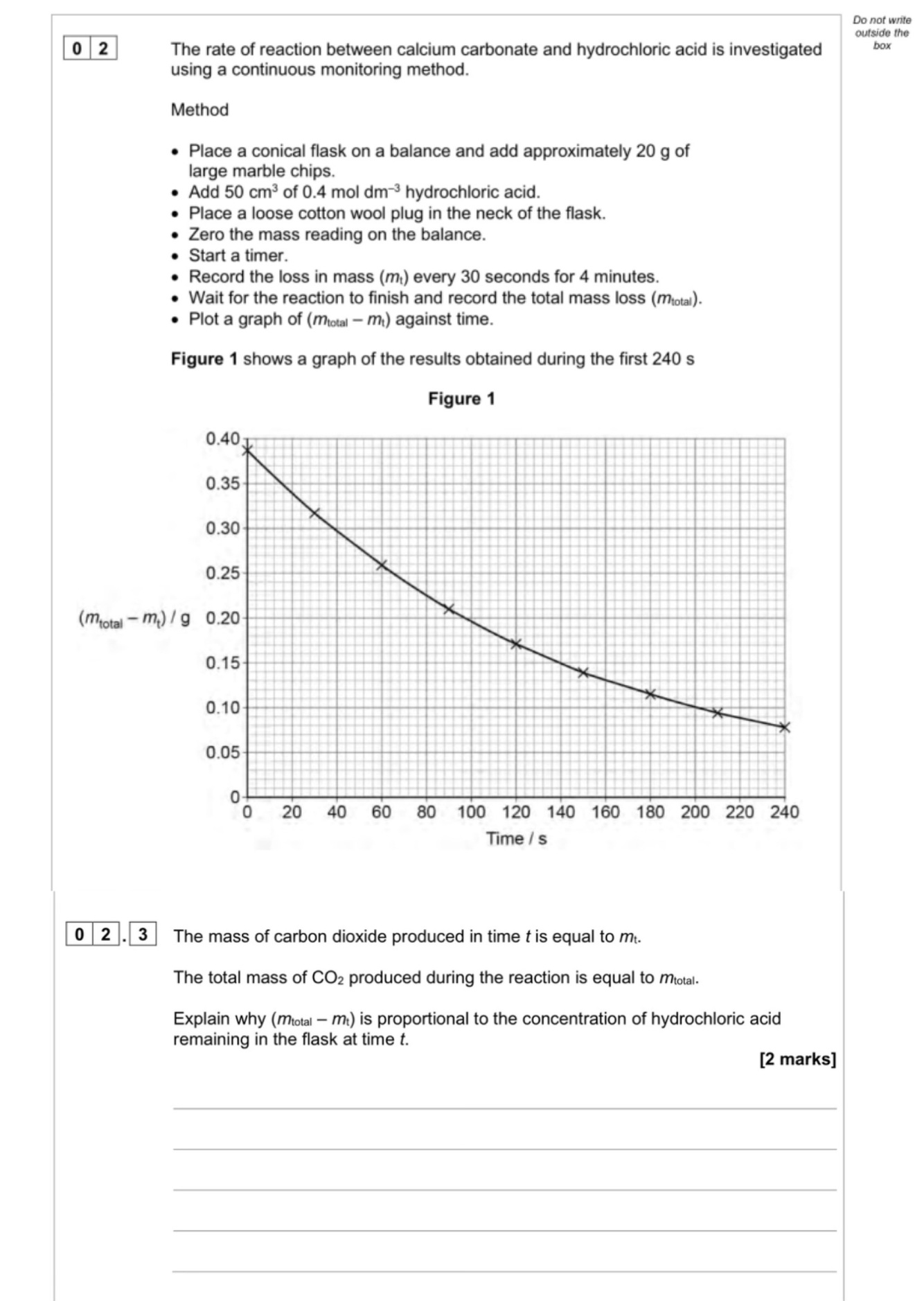
• The mass of CO2 produced (Mt) is proportional to the amount of HCl that has reacted • The mTotal is proportional to the total amount of HCl that was present initially • So mTotal- Mt is proportional to the HCl remaining
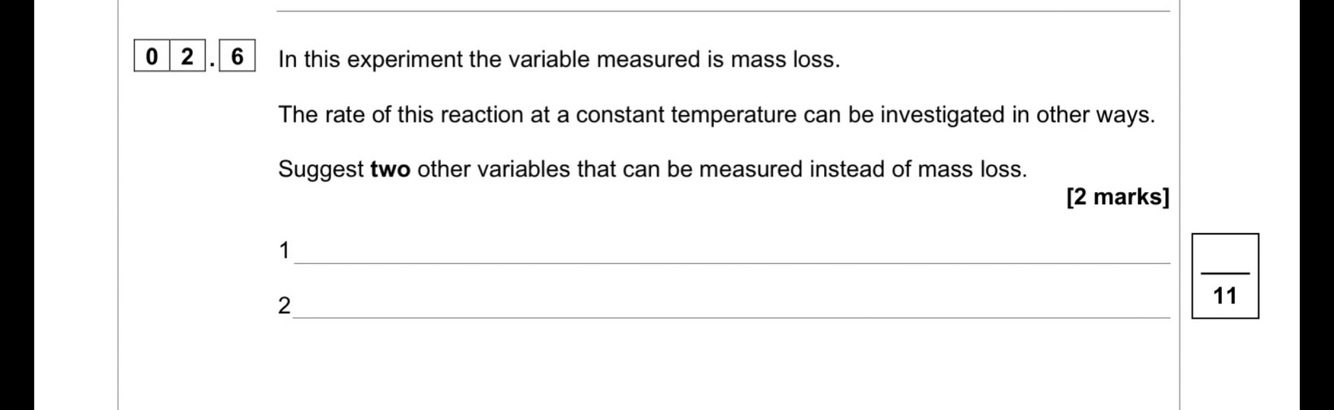
• Volume of gas • pH • Concentration of acid • conductivity
• What is the continuous monitoring method?
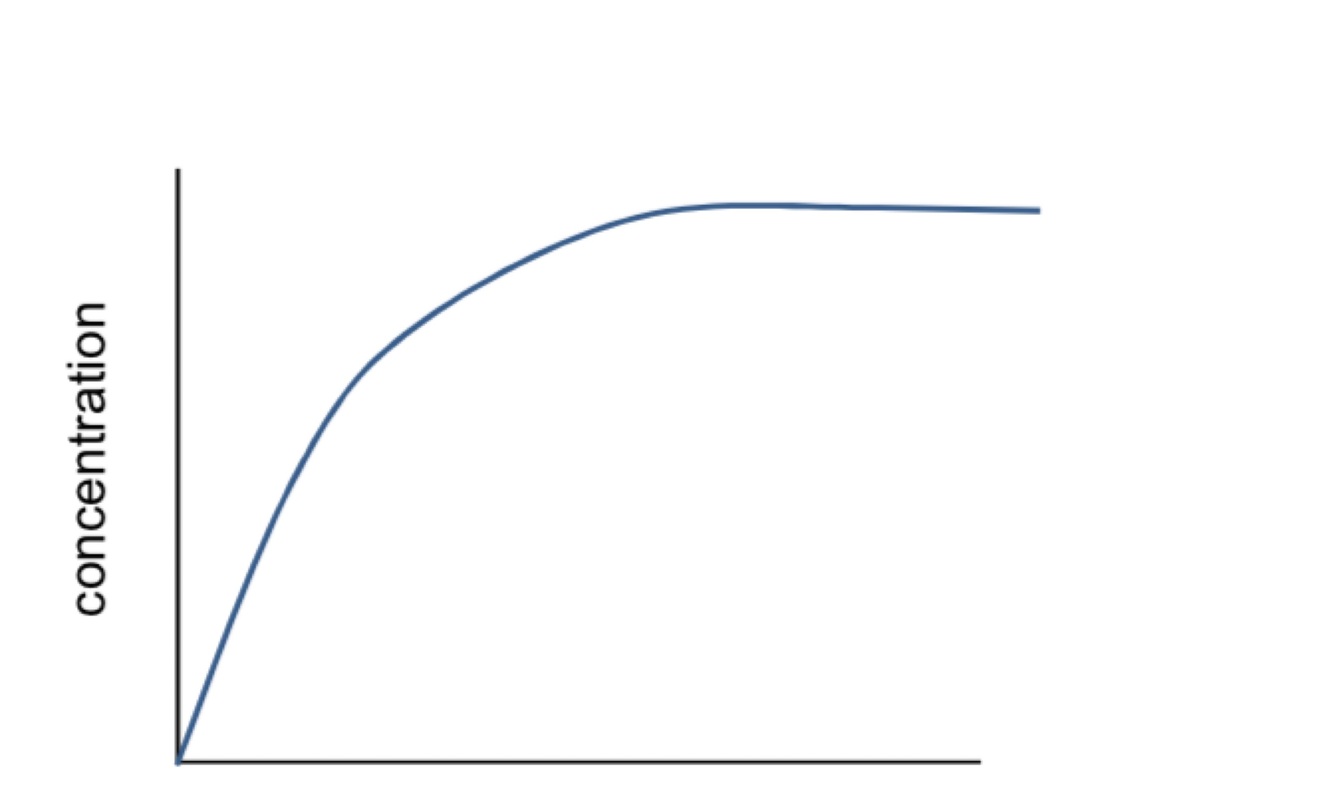
• When we follow one experiment over time recording the change in concentration we call it a continuous rate method • The gradient represents the rate of reaction • The reaction is fastest at the start where the gradient is the steepest • The rate drops as the reactants start to get used up and their concentration drops • The graph will eventually become horizontal and the gradient becomes zero, representing the reaction having stopped