CP and resistance training
No description yet. This curated deck is ready for daily study.
Card preview (17)
what is different in CP muscles
• structure • contractile and composition properties • central and peripheral neuromuscular activation patterns makes relative intensity greater
what is different in CP muscles
• structure • contractile and composition properties • central and peripheral neuromuscular activation patterns makes relative intensity greater
what muscles are most impacted in kids with CP
• hamstrings • dorsiflexors • plantar flexors • hip abductors upwards of 50% strength deficits
CP muscles of children with CP have high proportions of
• fat, collagen, and scar tissue - noncontractile tissues • 30% of tib ant, 100% gastroc, 400% soleus
knee flexors and extensors are [ ] in CP muscles
• fatigue resistant - indicates different fiber type • also greater functional limitations
greater fatigue resistance was predicted by
• greater levels of agonist spasticity, co-contraction, muscle weakness • this is explained by T1 muscle fibers, altered motor unit recruitment, decreased central drive
children with CP produce less [ ] than peers despite being more fatigue resistant
• force • still working at high intensity to achieve functional tasks and level of force likely insufficient to achieve/sustain tasks
[ ] is a strong predictor of function in CP
• strength - accounts for 69% of variance in function • more related to muscle performance and gait speed than muscle tone • reductions in strength were associated with negative indicators of function across scales spasticity has neglible effects on functional ability
muscles change the amount of force they can produced based on
• speed of contraction • power is maximized at moderate velocities • at maximal or no velocity, power = 0 • (isometric contraction –> F output max) if you mvoe quickly, you can’t produce maximal force
muscles change the amount of force they can produced based on
• speed of contraction • power is maximized at moderate velocities • at maximal or no velocity, power = 0 • (isometric contraction –> F output max) if you mvoe quickly, you can’t produce maximal force
rate of force development is diminished by [ ] in quadriceps of children with CP and [ ] in the gastroc
• 70% in quads, 200% in gastroc • need to generate F > body mass to move quickly - power generation is related to function and participation as is maximal strength due to altered motor unit, fiber type, sarcomeres
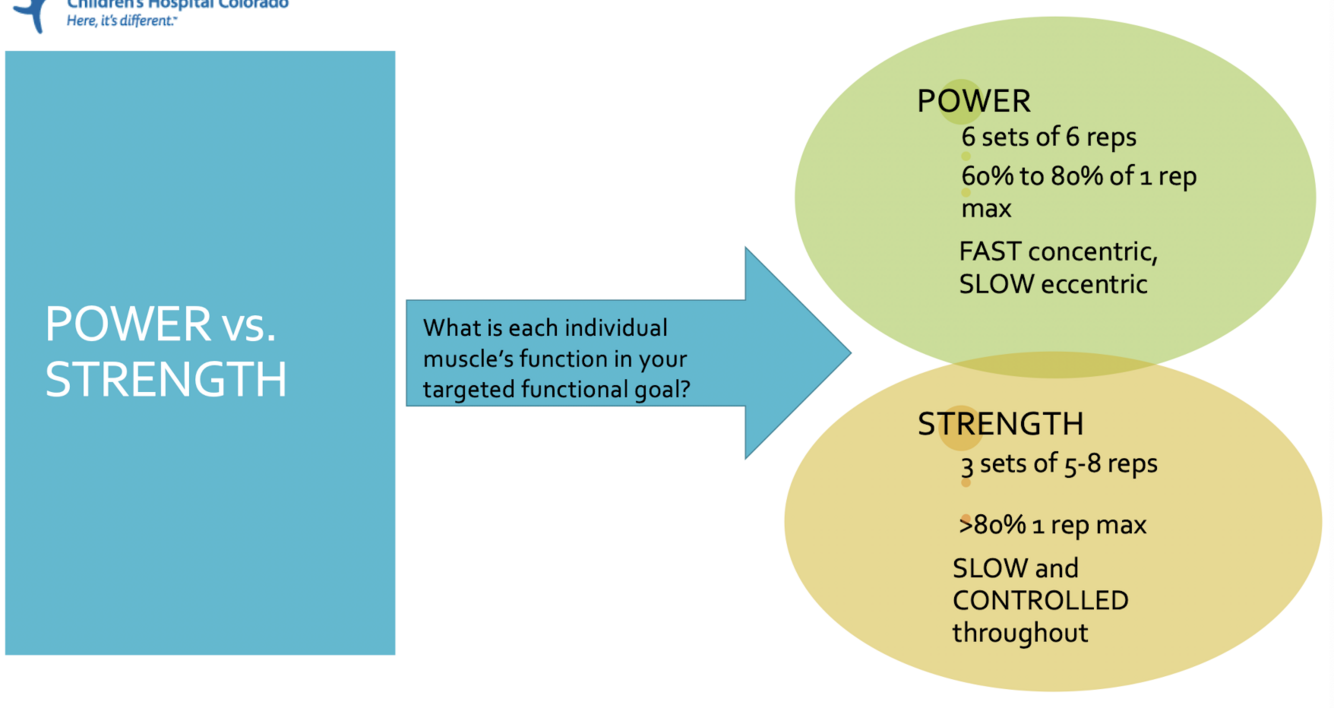
power training with CP
• traditional: 3x8 at 80% improved strength over a variety of speeds of contraction • velocity-dependent: resulted in impved functional performance - specificty matters! saw muscle structural alterations in targeted muscles
when treating kids with 14 weeks usual care, 14 weeks group power-based resistance training, 14 weeks usual care
• variables improved after resistance training but not usual care periods
[ ] is a primary driveer of functional limitation in people with CP
muscular weakness
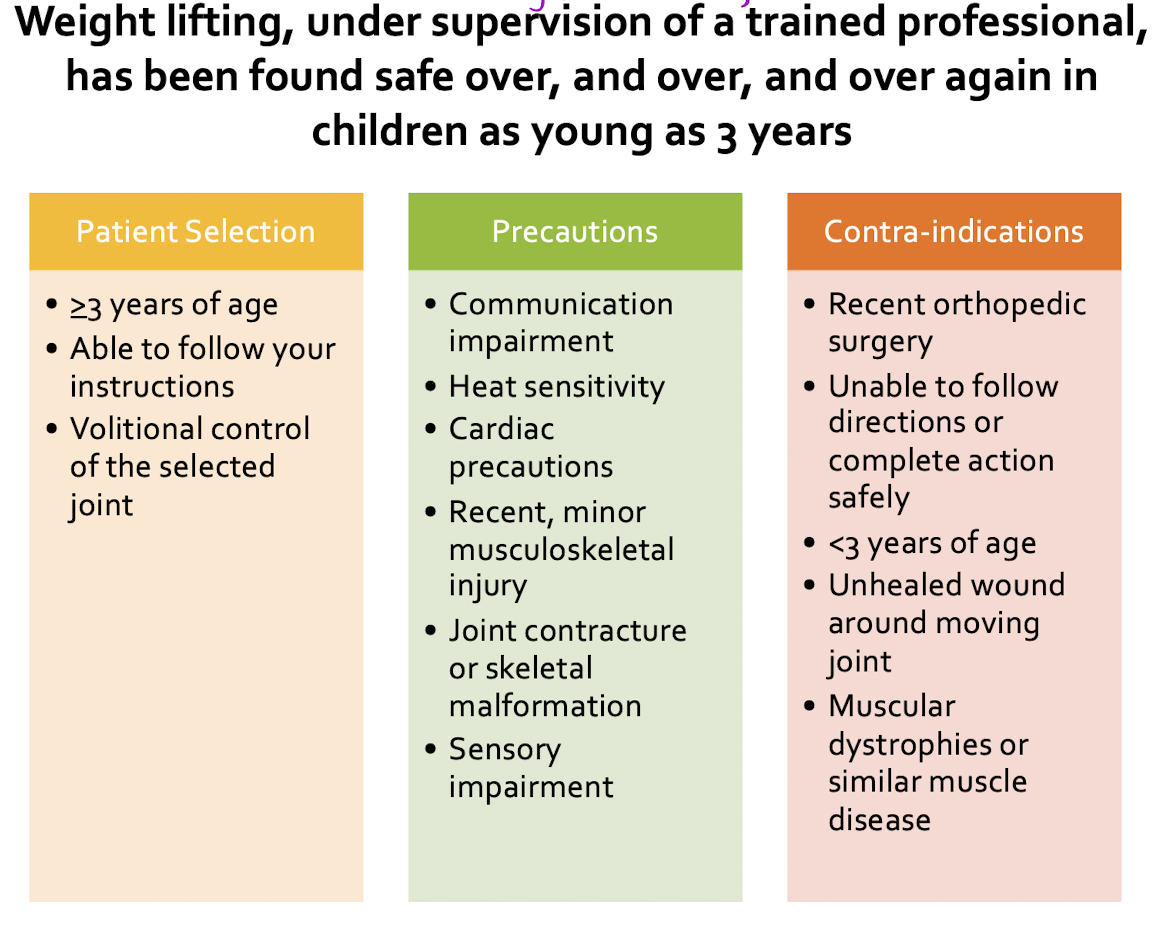
safety concerns with peds
power vs strength