Synthetic Polymers
No description yet. This curated deck is ready for daily study.
Card preview (17)
What are polymers and what are they comprised of?
• Polymers are large molecules of high molecular mass • Addition polymers are made of a large number of smaller molcules known as monomers which are joined together by covalent bonds • These monomers must contain a C=C bond before polymerisation occurs, which is why the monomers of most addition polymers are alkenes (though some have a group containing other atoms attached to them such as a chlorine of hydroxl group) • Examples of polymers include plastics, polysyrenes and nylon • Some are manufactured which are known as synthetic polymers while others are found in nature which are known as biological polymers
How do addition polymers form?
• Monomers will join together in a process known as addition polymerisation • Addition polymers only form with monomers that contain a C=C bond • When an addition polymer is formed, one of the bonds in the C=C bond of each monomer will break and a bond will be formed with the adjacent monomer • The process of addition polymerisation usually occurs under high pressures and with catalysts • You name addition polymers by adding ‘poly’ to the name of the monomers - if propene was used as the monomer the addition polymer would be called polypropene
How do you draw the repeating units of addition polymers?
• Draw the monomer without the double covalent bond (some groups of the monomer are drawn in slightly differently) • Place brackets around it but extend the bonds out past the brackets • Place an ‘n’ next it on the bottom right
How do you draw the repeating unit of polyethene?
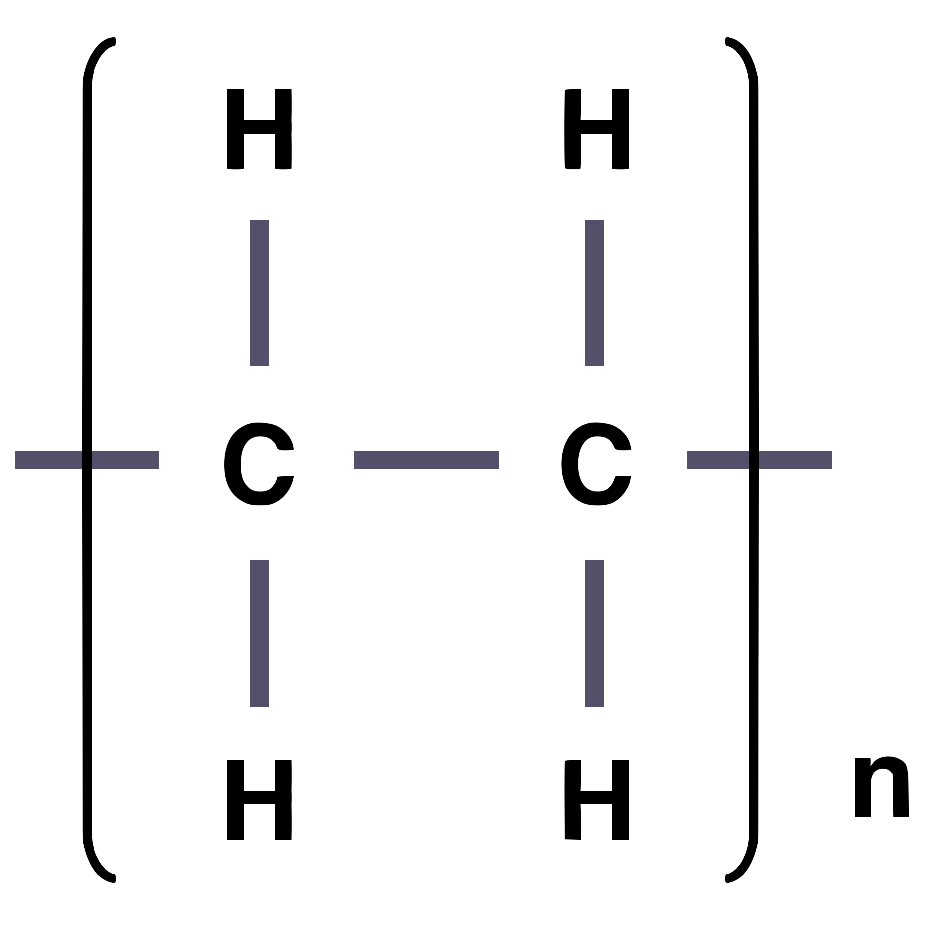
How do you draw the repeating unit of polypropene?
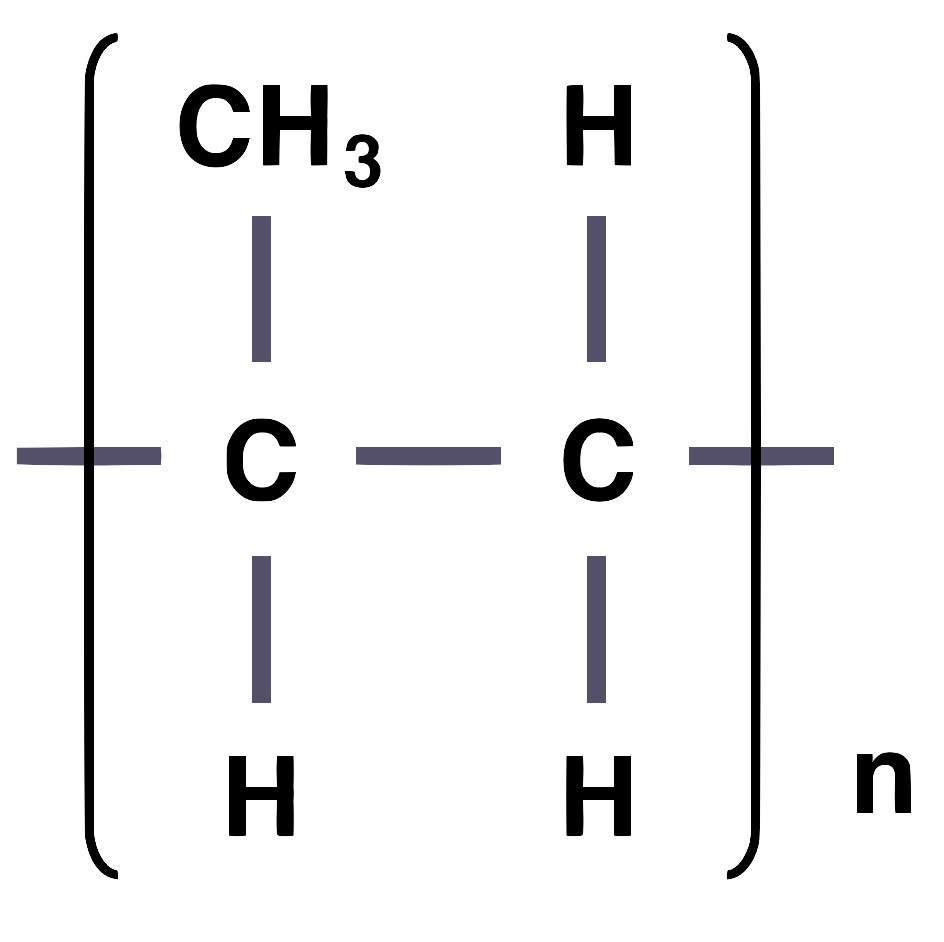
How do you draw the repeating unit of polychloroethene? Chloroethene is ethene where one of the hydrogens is subsistuted with chlorine
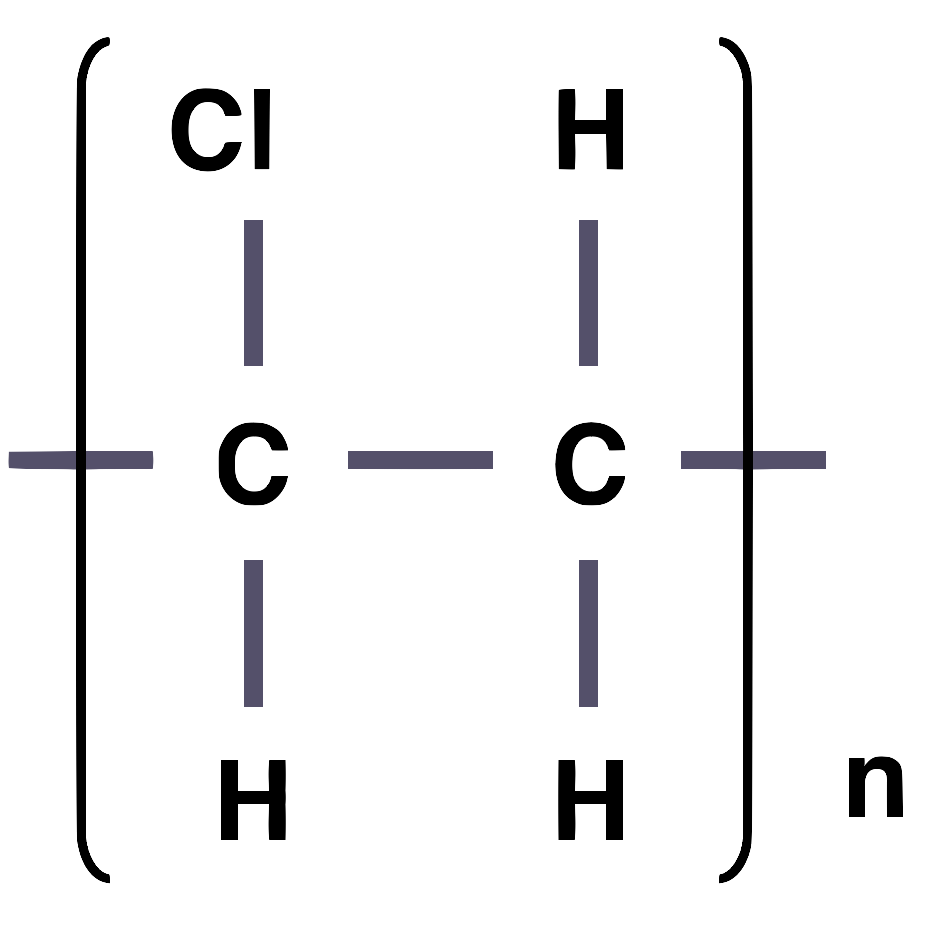
How do you draw the repeating unit of polytetrafluoroethene? Tetrafluoroethene is ethene where each hydrogen is subsistued by fluorine
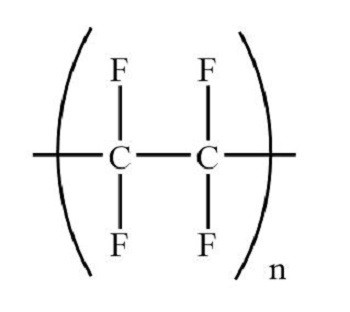
How do you deduce the monomer from an addition polymer?
• Identify the repeating unit • Change the single carbon bond to a double bond • Remove the extension bonds from each end and move the ‘n’ to the left of the monomer
What properties do additional polymers have which creates problems with the disposal of them in terms of placing them in landfills and what are these problems?
• The strong single carbon bonds makes polymers very unreactive and chemically inert • This means that they are not able to biodegrade, so will fill up landfills quickly and can be consumed by animals
What are the problems associated with the disposal of addition polymers in terms of incinerating them?
• They release alot of heat energy as well as carbon dioxide which contributes to climate change when burnt • Addition polymers such as polychloroethene will release hydrogen chloride when burnt which is toxic • If incinerated via incomplete combustion, carbon monoxide will be produced which is also toxic Addition polymers can be recyled but the process is very expensive as the polymers must be seperated
What are some general properties of addition polymers?
• High melting and boiling point • Large molecules with a high mass • Flexible, ductile and malleable
What are diols and what are dicarboxylic acids?
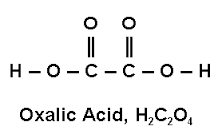
• A diol is an alcohol with two functional groups, one on each end • A dicarboxylic acid is a carboxylic acid with two functional groups, one on each end The displayed formula of ethanedioic acid (oxalic acid) is shown as an example
What is a condensation polymerisation reaction and how does it produce condensation polymers/polyesters?
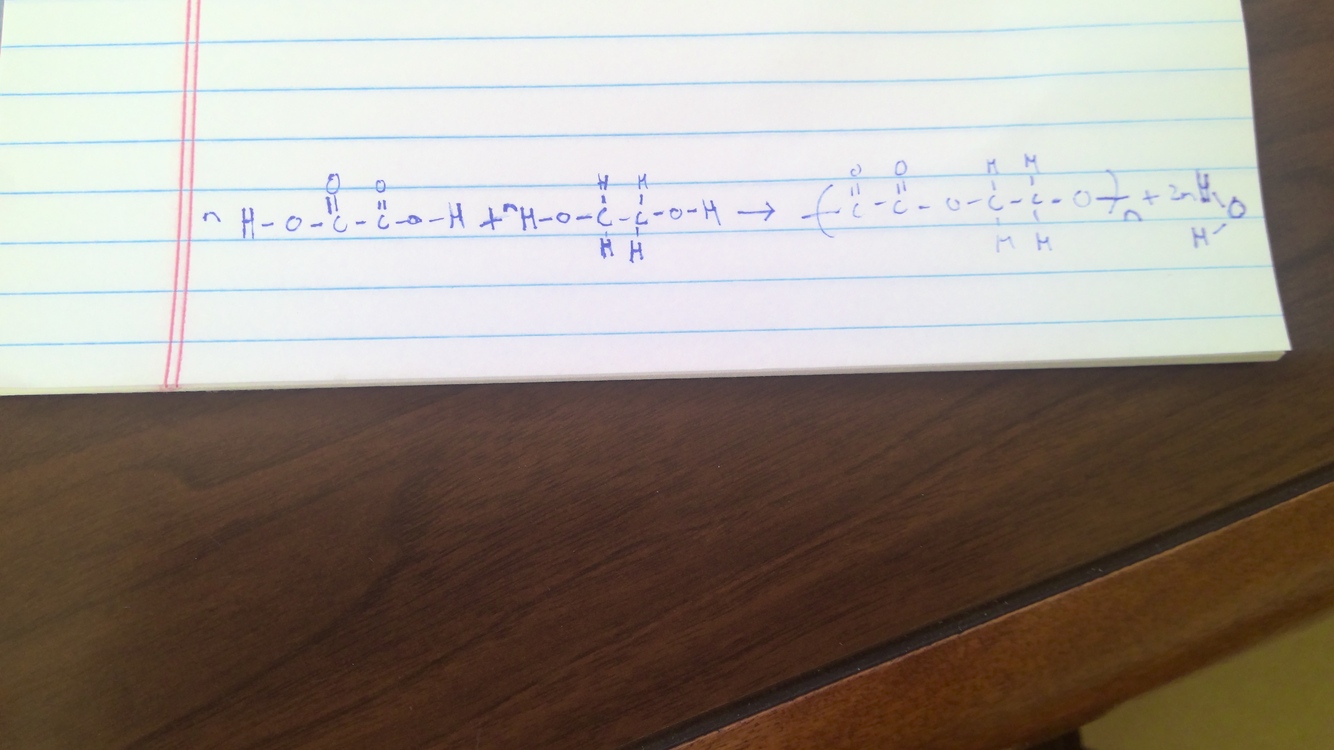
• Condensation polymerisation has the monomers of a diol and a dicarboxylic acid • In each linkage between the two, the polymer and a molecule of water will be produced • When linking, the functional groups at the end of one monomer link with the functional group at the end of the other monomer (in a similar way to an esterification reaction) • This creates long chains of alternating, bonded monomers, forming the condensation polymer • The polymers formed from these reactions are called polyesters
How do you draw the repeating unit of a polyester?
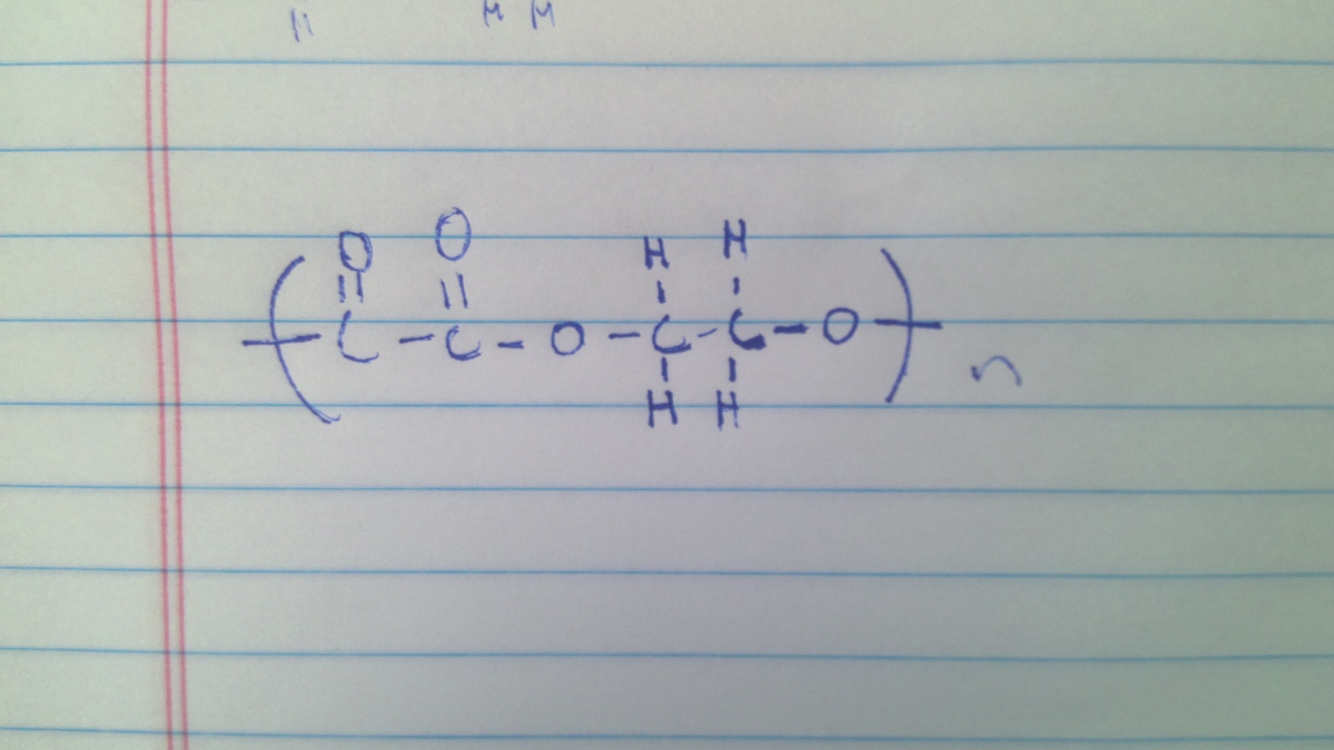
• Draw the ester that would be formed but with functional groups on either end • Exclude the O-H on the end of the dicarboxylic functional groups and the H on the end of the dialcohol functional groups which are lost in the linkage • Add brackets, the extension bonds and the ‘n’
What is the repeating unit for the polyester which forms from the reaction of ethanedioic acid and ethanediol?
Draw the reaction between ethanedioic acid and ethanediol
Often the non-functional group parts will be represented by a box or as structural formula (e.g. CH₂) as they are unimportant
What are biopolyesters and what specific property do they have?
• They are specific types of polyesters synthesised from organic material such as plant oils • They are, of course, types of condensation polymers • They are able to biodegrade naturally in the environment after their intended purpose