Transition Metals
No description yet. This curated deck is ready for daily study.
Card preview (24)
Define a Transition Metal
An Element which forms at least one stable ion with partially filled D-Sub Shell of electrons Found within the d block
Where are Transition Metals located in the periodic table
part of the D-Block In the middle (Ti- Cu)
What are some physical properties of transition metal (4)
Metallic Good Conductor son heat and electricity High Melting and boiling points Strong,Shiny and Hard
What are some Uses of: 1) Iron 2) Titanium 3) Copper
1) Vehicle Bodies, To reinforce concrete 2) Aeronautical Parts Very strong and light 3) Cheap Wiring and plumbing
What’s are the chemical properties of transition Metals (4)
Variable Oxidisation States Coloured Compounds/ Ions in solution Good Catalysts Forms Complex ions
Define the Term Complex Ion (2)
Central transition metal ion Surrounded by ligands that are coordinately bonded (covalently) to it
Give examples of transition metal catalysts and the processes they Catalyse (3)
Iron - Haber Process Vanadium (V) Oxide - Contact Process Manganese (IV) Oxide - Decomposition of hydrogen peroxide
Which sub shell is emptied first when transition metals form ions
4s orbital
Define the Term Ligand (4)
An ion or molecule with at least 1 lone pair of electrons that donates the electrons to a transition metal ion to form a coordinate bond & create a transition metal complex
Define the Term Unidentate ligand
A Ligand that donates 1 electron pair to form 1 coordinate bond to the central metal ion (only 1 lone pair to donate)
Define the Term bidentate ligand
A Ligand that donates 2 pairs of electrons to form two coordinate bonds to the central metal ion ( 2 lone pars to donate)
Define the Term Multidentate ligands
A Ligand that donates 3 or more electron pairs to form 3 or more coordinate bond to the central metal ion
Give some examples of monodentate ligands (4)
Cl- H2O NH3 CN-
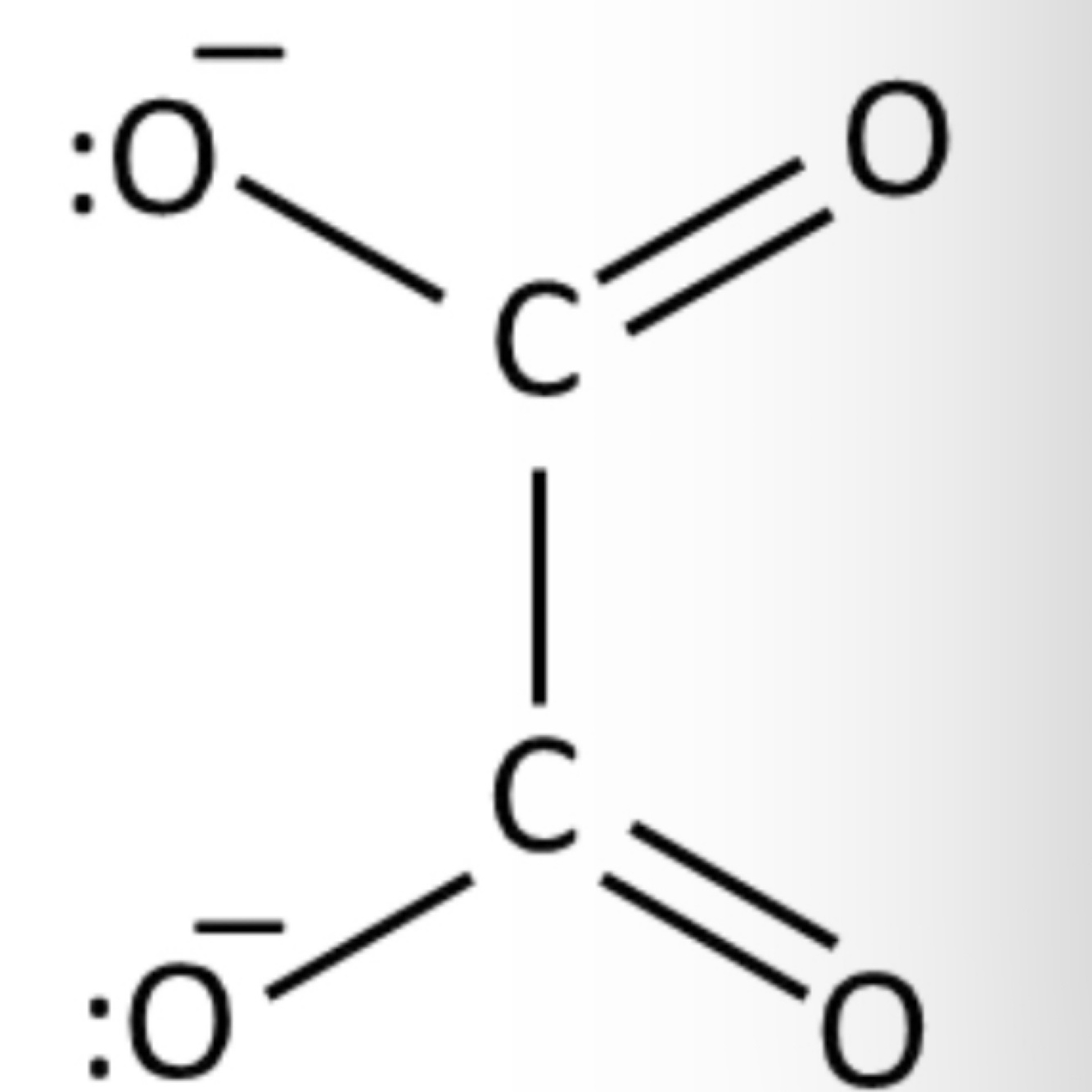
Draw Ethanedioate ligand
Bidentate Ligand
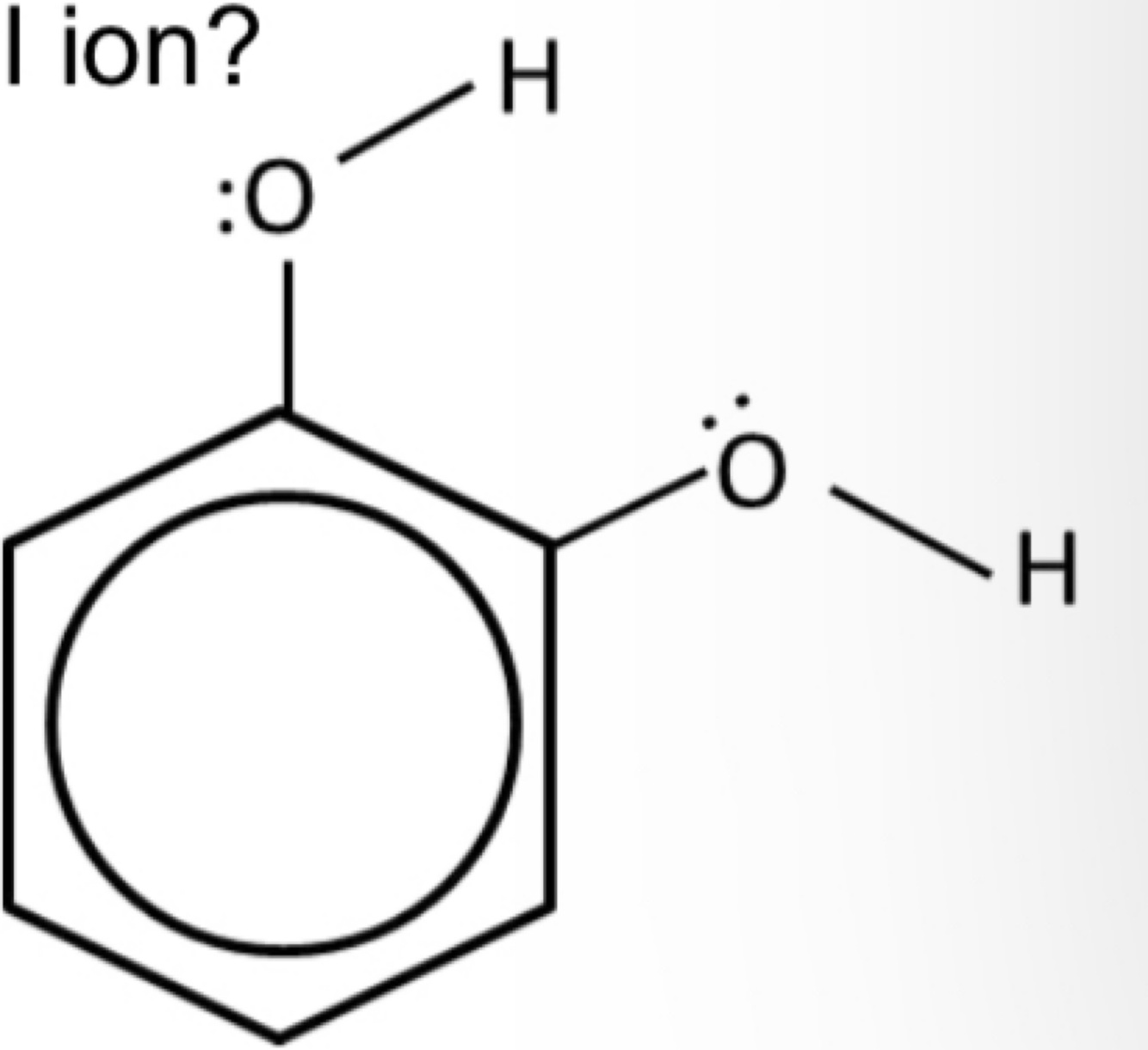
Draw Benzene-1,2-diol Ligand
Bidentate Ligand
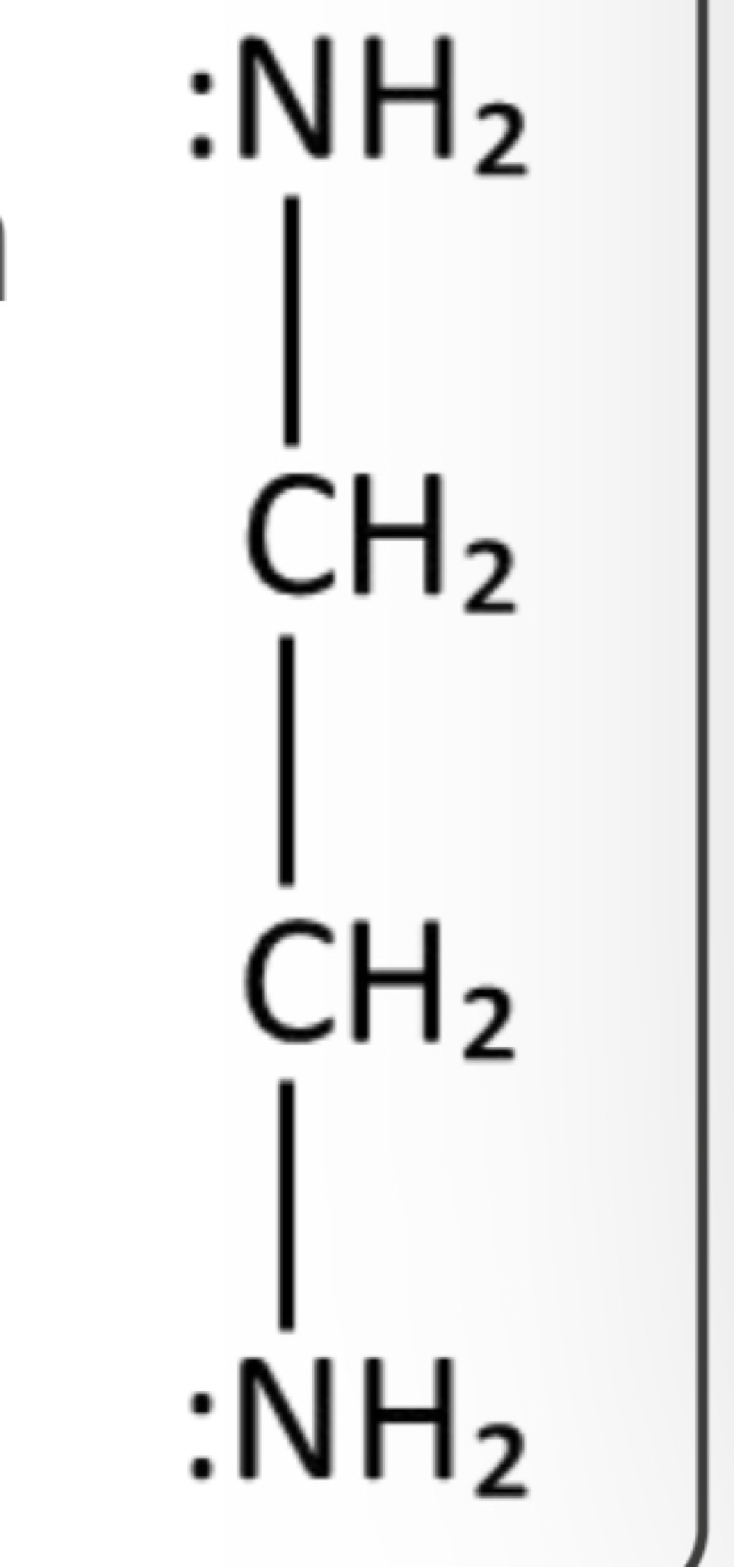
Draw an ethane-1,2-diamine ligand
Bidentate ligand
Define the term coordination Number
The number of coordinate bonds the metal ion has formed to surrounding ligands
What is the Chelate Effect (3)
Chelate Complexes with mulidentate ligands are favoured over ligands that are monodentate or bidentate ligands more lone pairs per molecule as it is a entropically favourable reaction more moles of molecules on products then reactants
Explain the Chelate effect on ions in terms of entropy and the reaction that is occurring
Number of molecules increases when multidentate ligands displaces other ligands that form fewer coordinate bonds with the central metal ion per molecule so the products has more moles of molecules then products entropically favorable
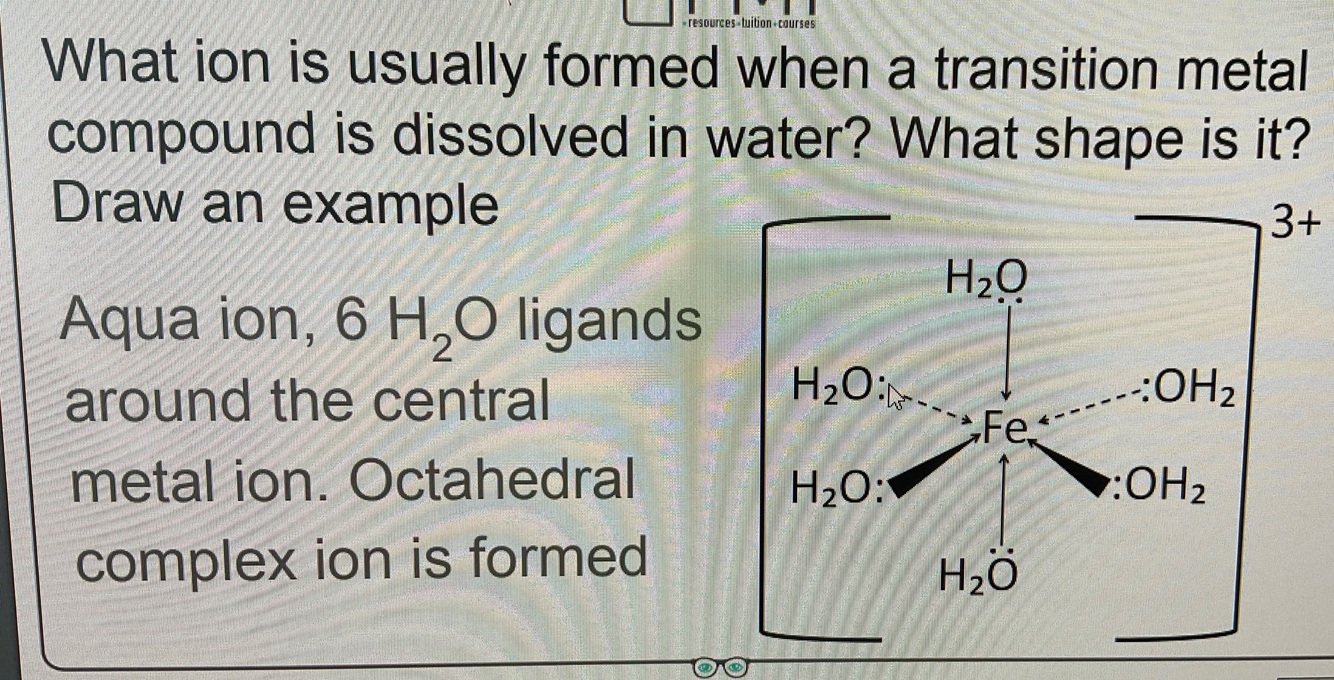
What ion is usually formed when a transition metal compound is dissolved in water Draw an example What is its Shape
If a transition metal ion has 2 ligands, which shape is it usually
Linear 180 Degrees
If a transition metal ion has 4 ligands What shapes can it be
Tetrahedral Square Planar
What shape is a complex ion if it has 6 ligands
Octahedral
How can Complex ions display E-Z isomerism (geometric) What shapes does it apply to
Square Planar or Octahedral shapes Where the metal complex has 2 or more ligand types If the two high priority ligands are on the same side of the molecule this forms an E or cis- isomer (Reflection on x=O) If the two high priority ligands are on opposite sides of the molecule this forms an z or trans- isomer (Reflection on y=O)