CH 4-2 Addition Rule and Multiplication Rule
No description yet. This curated deck is ready for daily study.
Card preview (13)
What rule is used to find P(A or B)?
Addition rule
What rule is used to find P(A and B)?
Multiplication rule
What term describes any event combining tow or more simple events?
compound event
What is the formula for the addition rule?
P(A or B) = P(A) + P(B) - P(A and B)
What is used to find the probability that either event A occurs or event B occurs as the single outcome of a procedure?
Addition rule
What is used to find the probability that event A and event B occurs?
Multiplication rule
What term describes when events A and B cannot occur at the same time?
disjoint or mutually exclusive
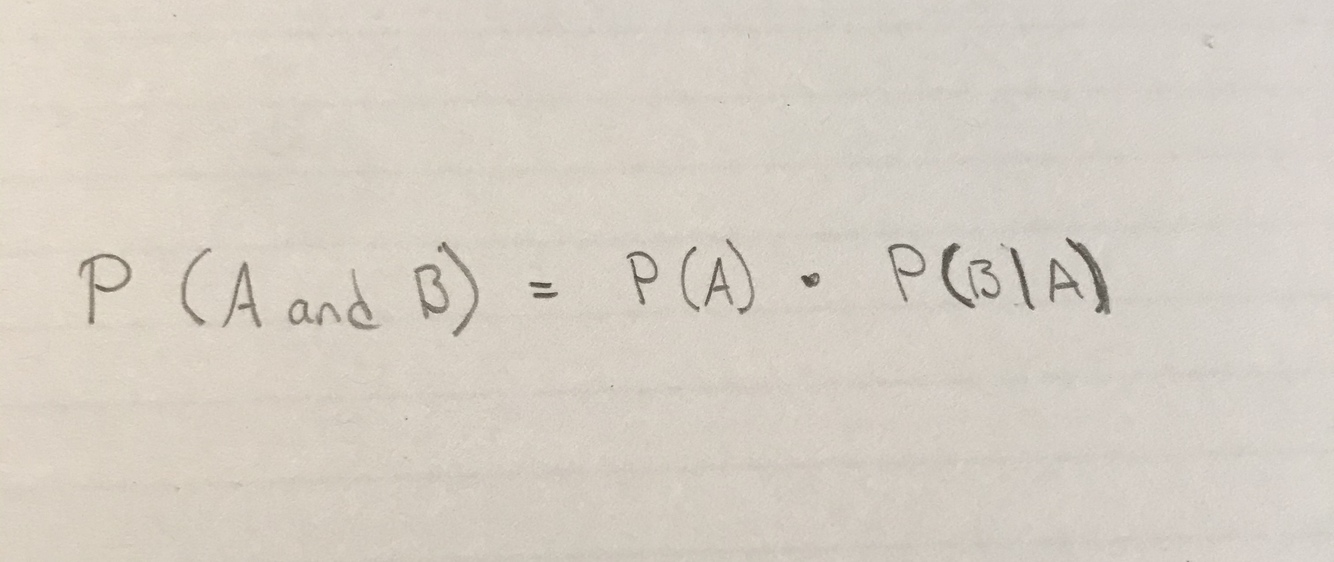
What is the formula for the Multiplication rule?
Two events A and B are ________ if the occurrences of one does not affect the probability of the other.
Independent
If A and B are not independent, they are said to be: __________
dependent
Sampling with replacements: Selections are _________ events
Independent
Sampling without replacement: Selections are _________ events
dependent
When can you treat dependent events as independent?
When sampling wihtout replacement and the sample size is no more than 5% of the size of the population