Digestive System
No description yet. This curated deck is ready for daily study.
Card preview (24)
Mucosa of the Alimentary Canal
Consists of three layers of tissue: • Muscous membrane - protection, secretion and absorption • Lamina propia - loose connective tissue which supports blood vessels and contains lymphoid tissue • Muscularis mucosa - think outer layer of smooth muscle that provides involutions of hte mucosa laywer (ie. gastric glands and villi)
Digestive Processing of Vitamins
• Stomach - B12 absorbtion • Small intestine - Water solualble vitamins absorbed into capillaries, fat soluable into lacteals of villi. • Large instestine - bacteria synthesize vitamin K, absorbed in the colon
Function of saliva
• Contains amylase an enzyme which beings the breakdown of complex sugars including starches (carbs) into disaccharide maltose. • Lubriation of food • Cleaning & lubrication of mouth • Non-specific defence (lysoyme & immunoglobulins) • Taste
Intestinal Juice
1500ml produced per day. Contains: • water • mucous • mineral salts Has a pH of approximately 7.8
The Esophagus
• Pharynx above and diaphragm below. • Contains upper (prevents air into esophagus) and lower (prevents gastric acid into the esophagus) sphincters
Cephalic Phase of Gastric Juice Secretion
Occurs before food reaches the stomach. Due to reflex stimulation of vagus nerves (parasympathetic)
Chemical Digestion in the Small Intestine
Chyme is mixed with: • Pancreatic Juice • Bile • Intestinal Juice Disgestion of all nutrients is completed. • Carbohydrates–> monosaccharides • Proteins–> amino acids • Fats –> Fatty acids and glycerol
Liver
Largest gland in the body. Totally enclosed in a layer of peritoneum. Consists of four lobes. • right (small) & left lobes (large) • caudate & quadrate lobes (posterior)
Inactivation of hormones in the liver
Include: insulin, glucagon, corisol, aldosterone, thyroid and sex hormones.
Digestive Processing of Proteins
• Hydrocloric acid in the stomach (pepisnogen–>pepsin) • Enterokinase digestion in the small intestine • Into the blood via capillaries in the villi
Digestive Processing of Carbohydrates
• Salivary amylase in the mouth • Hydrochloric Acid in the stomach • Pancreatic amylase in the small intestine • Absorption into blood via villi
Muscous Membrane
Libricates the walls of the tract and provides them from damage from enzymes.
Name the parts of the periteneum
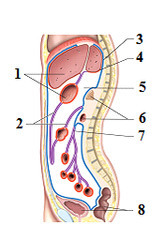
INSERT PHOTO HERE
Accessory Organs of the Digestive System
• 3 pairs of salivary glands • The Pancreas • The Liver and Biliary tract
Parts of the Alimentary Canal
• Mouth • Pharynx • Esophagus • Stomach • Small Intestine • Large Instestine • Rectum & anal canal
Intrinsic Factor (a protein)
Necessary for the absorption of B12 from the ileum.
Catabolism
Process of breaking down large molecules into smaller ones
Intestinal Phase of Gastric Juice Secretion
When partially digested food reaches the small instestine, endocrine cells in the intestine produce two hormones Secretin Cholecystokinin which slow down the production of gastric juice and reduce gastric motility.
Small Intestine Digestion of Carbohydrates
Pancreatic amylase converts all digestible polysaccharides (starches) not acted upon by the salivary amylase to disaccharides.
Anabolism
Process of building up or synthesizing large molecules from smaller ones. Process requires ATP.
Name the Parts of the Small Intestine
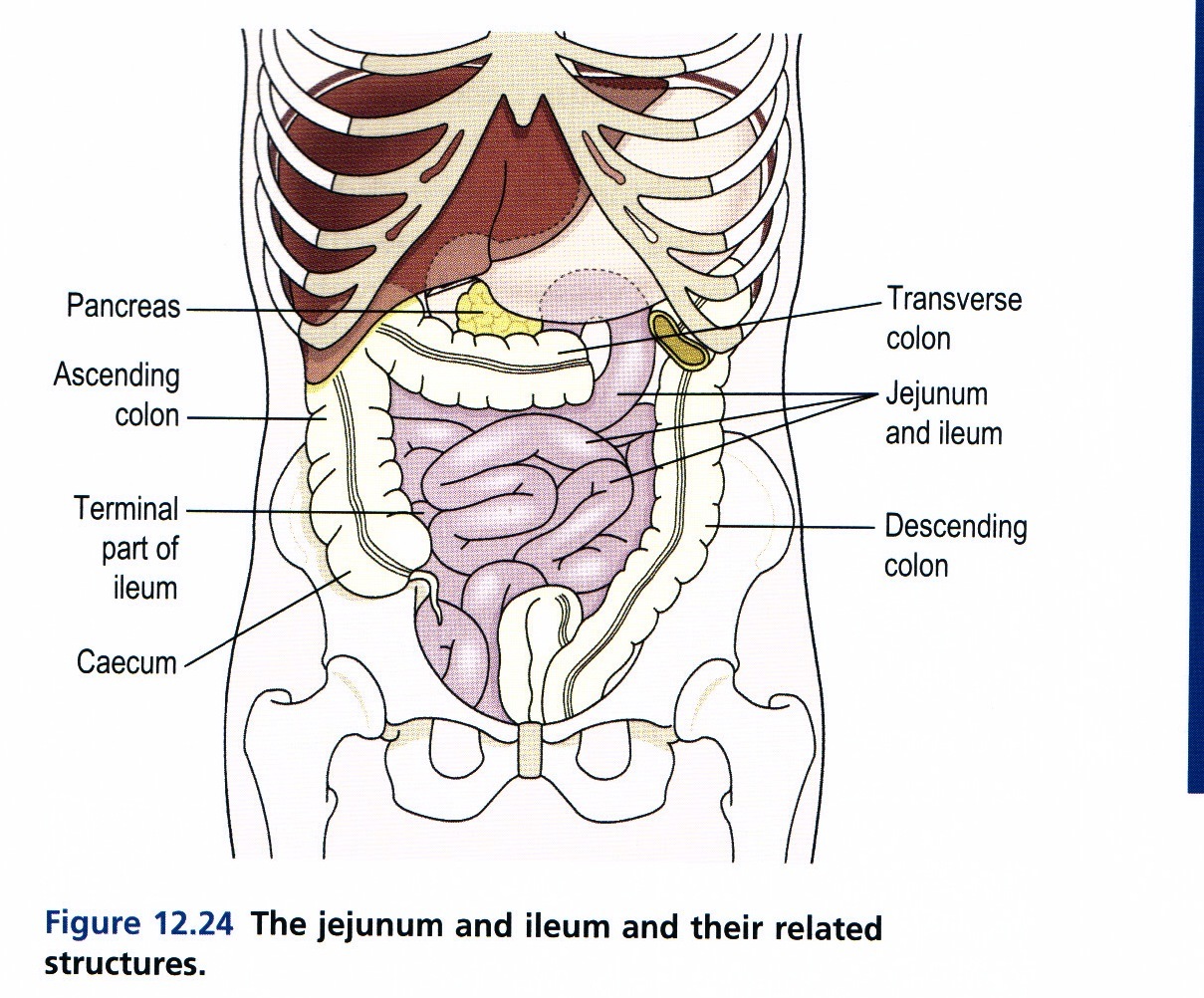
Microbial Activity in the Large Intestine
Heavily colonized with bacteria which synthesize vitamin K and folic acid. Microbes are normally harmless but can cause problems if tranferred to other parts of the body.
Gluconeogenesis
When the body makes glucose from non-carbohydrate sources such as amino acids, and glycerol
Ileocaecal Valve
Link between the small and large intestine.