Chapter 13: Alcohols
No description yet. This curated deck is ready for daily study.
Card preview (24)
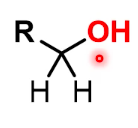
Primary Alcohol
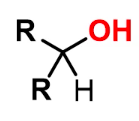
Secondary Alcohol
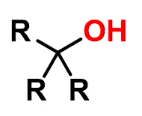
Tertiary Alcohol
What is miscibility?
No matter the proportions of a compound that is added to water, it will completely dissolve in all aspects
What is solubility?
A compound can dissolve in water up to a certain threshold
What alcohols are miscible in water?
Small alcohols - methanol, ethanol, propanol, butanol
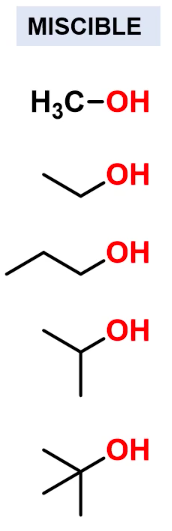
What alcohols are soluble in water?
Alcohols with less than 5 C per OH (greater than 5 will be insoluble)
What increases oxidative state (oxidation)?
Loss of electrons because electrons have negative charge
What is the process of gaining electrons?
Reduction Electrons are negative so gaining electrons will decrease the oxidative state
Is this a reduction or an oxidation reaction?
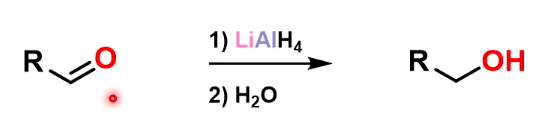
Reduction because aldehyde (+1) is reduced to an primary alcohol (-1) Gaining 2 electrons
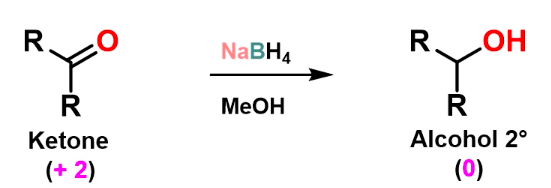
Is this a reduction or oxidation reaction?
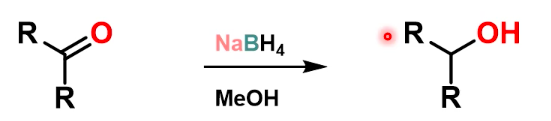
Reduction because a ketone (+2) is reduced to a secondary alcohol (0) Gaining 2 electrons
Can you synthesize tertiary alcohols through reduction?
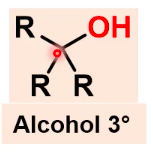
No because reduction in this case is the addition of H2 - one H goes to the carbon atom and the other goes to oxygen Can’t add a H to the carbon because it is already tertiary
What is this compound?
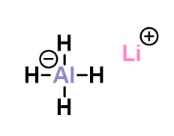
Lithium Aluminum Hydride (LAH) Used with H2O to reduce aldehydes and ketones into alcohols
What is this compound?
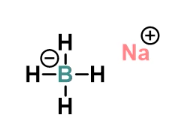
Sodium Borohydride Used with MeOH to reduce aldehydes and ketones into alcohols
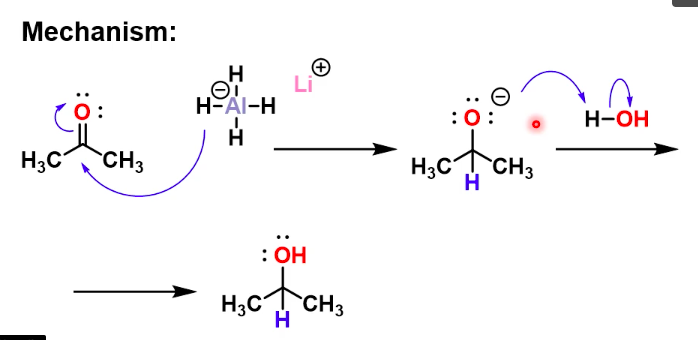
What is this reaction and what is the mechanism?
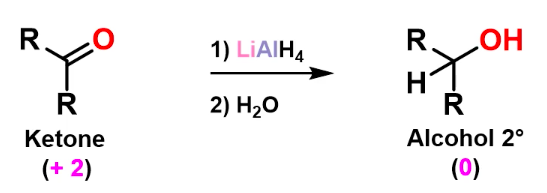
Reducing a ketone to a secondary alcohol using Lithium Aluminum Hydride (LAH) and water
Name the reagent
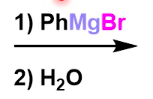
Grignard Reagent R, Mg, and a halogen Produces a tertiary alcohol
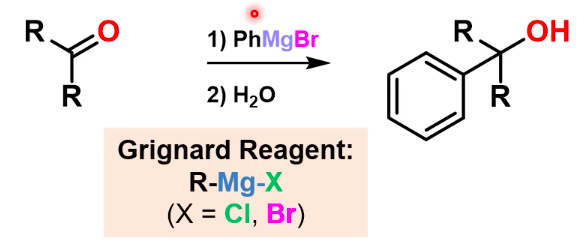
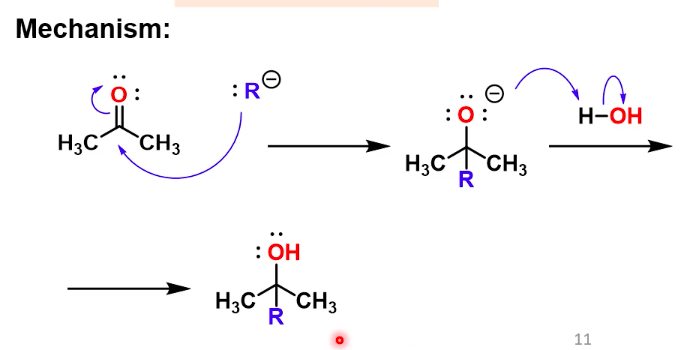
What is the mechanism when using a grignard reagent/addition?
Similar to reducing an aldehyde or a ketone to an alcohol with LAH/water or sodium borohydride/MeOH except an R group is added to the product to form a tertiary alcohol
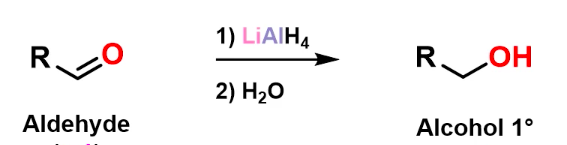
A reduction of an aldehyde to an alcohol will result in a _____
Primary alcohol
A reduction of a ketone to an alcohol will result in a _____
Secondary alcohol
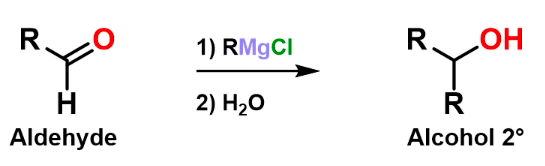
A Grignard Addition to an aldehyde will result in a _____
Secondary alcohol
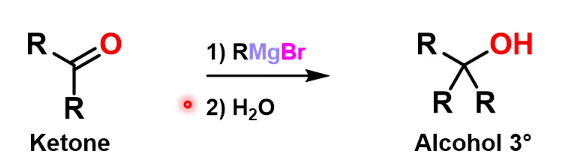
A Grignard Addition to a ketone will result in a _____
Tertiary alcohol
Why can’t a primary alcohol be synthesized from a grignard addition of an aldehyde or ketone?
An R group is added to the alcohol through Grignard addition and aldehydes/ketones already have R groups
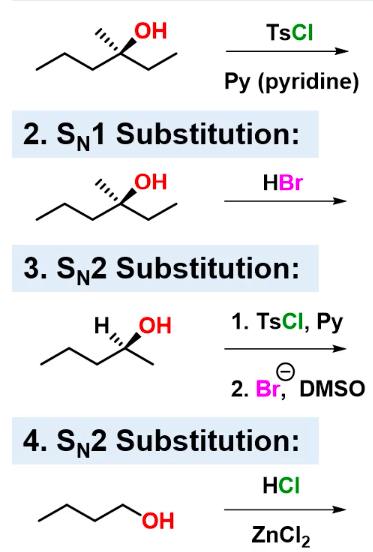
How do you convert OH into a good LG for substitution and elimination reactions?
Use TsCl/py to form Tosylate (OTs) or use H-BR to convert OH to H2O
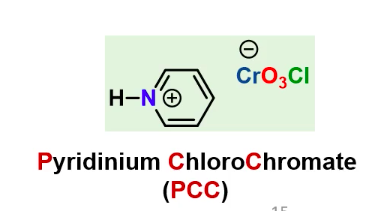
What reagent is used in the oxidation of a primary alcohol to an aldehyde?