Antidotes and Antivenoms
No description yet. This curated deck is ready for daily study.
Card preview (12)
What class of drug is Atropine (Atropen)?
Anticholinergic
What class of drug is Pralidoxime?
ACh esterase antidote
What class of drug is Naloxone?
Opioid receptor antagonist
What is the mechanism of action of Atropine (Atropen)?
Muscarinic receptor antagonist (competitive antagonism), binds to the muscarinic receptors that are in PSNS and stops ACh from binding to these receptors. This in turn blocks the action of the symptoms of organophosphate poisoning caused by the overstimulation of the parasympathetic nervous system
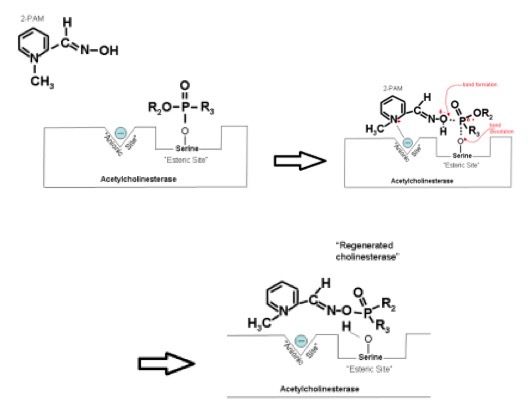
What is the mechanism of action of Pralidoxime?
Reactivates acetylcholineesterases which have been deactivated by the binding of the organophosphates, clearing the accumulation of acetylcholine in the synaptic clefts. Biggest effect at the NMJ
What is the mechanism of action of Naloxone?
Competitive antagonist of opioid receptors in CNS and PNS. Half-life of 1-1.5 hours, so must be re-administered if its effects diminish before that of the opioid.
What are the side effects of Atropine (Atropen)?
Reverses the effects of acetylcholine in the PSNS, so can cause the following symptoms in various body systems (similar to SNS stimulation): • Dry mouth • Tachycardia • Blurry vision • Photophobia • Constipation • Urinary retention • Flushing Delirium Fever
What are the side effects of Pralidoxime?
• Mild neuromuscular blockade • Cholinergic symptoms • Nausea • Weakness • Diplopia (double vision) • Blurry vision
What are the side effects of Naloxone?
• Acute withdrawal syndrome: • Anxiety, agitation, tachycardia, confusion • Rare, severe side effects: • Seizure, pulmonary oedema, ventricular arrhythmia
What are the indications for use of Atropine (Atropen)?
If atropine is required for organophosphate poisoning pralidoxime should also be given. • Adult, IV, repeated every 5–10 minutes as necessary until patient is atropinised (should abolish all secretions), then infusion titrated against clinical effects Because atropine is a competitive inhibitor, high doses may be required in severe poisoning and use in these circumstances can be complicated.
What are the indications for use of Pralidoxime?
If aging (permanent irreversible bonding of the organophosphate and the cholinesterase) has occurred, then not even pralidoxime will be able to disrupt the bond between the two molecules
What are the indications for use of Naloxone?
Naloxone challenge is used for diagnosis of opioid overdose: • Administer 200mg IV → check for withdrawal symptoms → 30 sec later 600mg → observe for 5 min • If withdrawal is seen within 5 minutes, there is opioid intoxication • Piloerection (goosebumps) • Restlessness • Yawning • Sweating • Lacrimation • Vomiting Naloxone challenge is required to check if patient is opioid free before starting rehab drugs