Glass ionomer cement
No description yet. This curated deck is ready for daily study.
Card preview (24)
what are the two types of glass ionomer cements?
• conventional GI • resin modified GI
what are the uses of glass ionomer cements?
• dressing (temp material) • fissure sealant • endodontic access cavity temporary filling • luting (e.g. for crowns) • orthodontic cement • restoration of deciduous teeth • restoration of permanent teeth • base or lining under permanent restoration
what are the components of GICs?
• acid - polyacrylic acid and tartaric acid • base - silica, alumina, calcium fluoride, aluminium fluoride, aluminium phosphate, sodium fluoride
what does adding strotium and lithium salts to GICs do?
increase the radiopacitiy of the material so it is more visible in radiographs
how does the silica to alumina ratio affect GICs?
the more silica, the more translucent the material and the better the aesthetics
what are the two different variations that GICs can come in?
• anhydrous materials - acid is freeze dried and added to the powder, the liquid added is distilled water • encapsulated materials - consistent power to liquid ratio and more consistent properties
what size of powder particle is required for luting cement to give a low film thickness?
<20um
how does a smaller powder particle size affect the properties of GIC?
• quicker setting reaction • more opaque cement
how does the molecular weight of the acid affect the GIC?
• the higher the molecular weight, the better the mechanical properties of the set material • the higher the molecular weight, the more viscous and diffucult to mix the GIC is
what is the setting reaction for GIC?
M = metal A = polyacid

what are the three phases of the setting reaction of GICs?
• dissolution • gelation • hardening
what happens in the dissolution phase of the setting reaction of GICs?
• acid is in solution • H+ ions from acid attach to the glass surface • Ca, Al, Na and F ions are released • silica gel is left around the unreacted glass
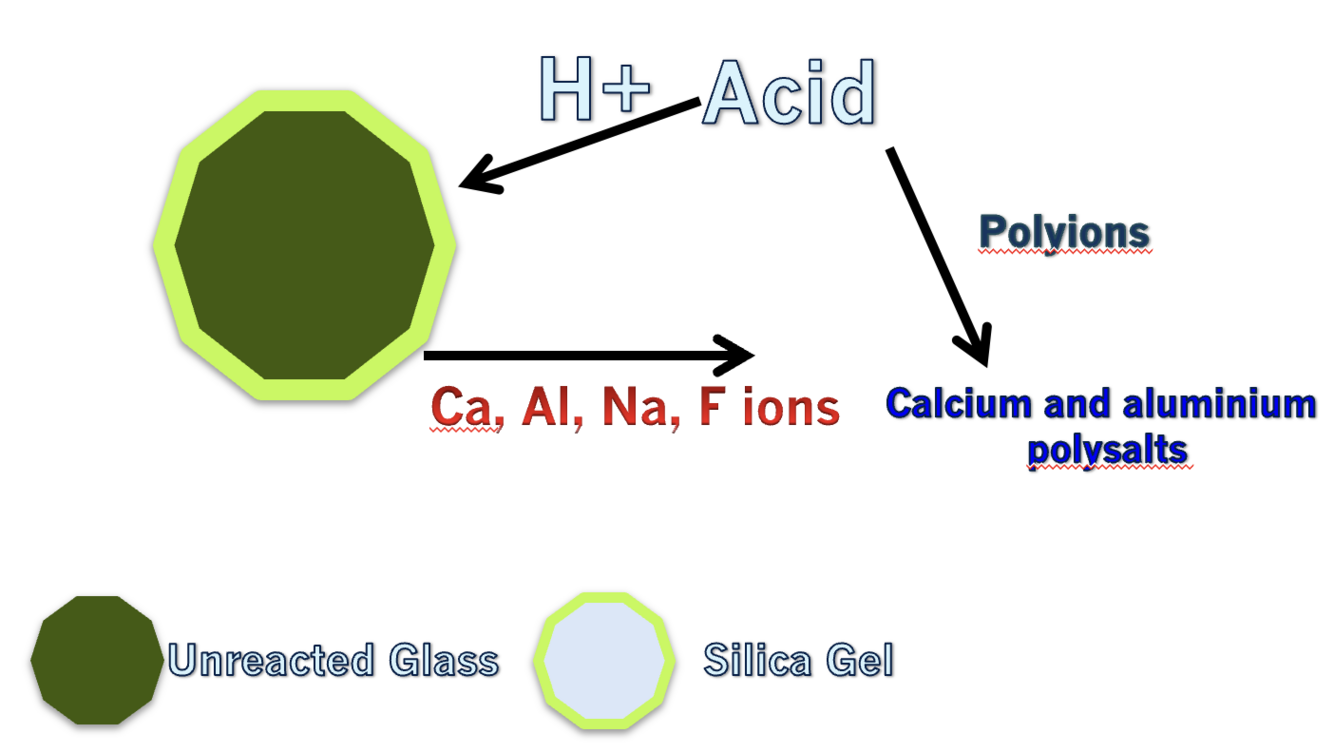
what happens in the gelation phase of the setting reaction of GICs?
• bivalent calcium ion crosslinking with the polyacid by chelation with carboxyl groups cause the initial set of the material (2 crosslinks) • takes several minutes to initial set • formation of calcium polyacrylate • the material will appear hard in the mouth but is not fully set
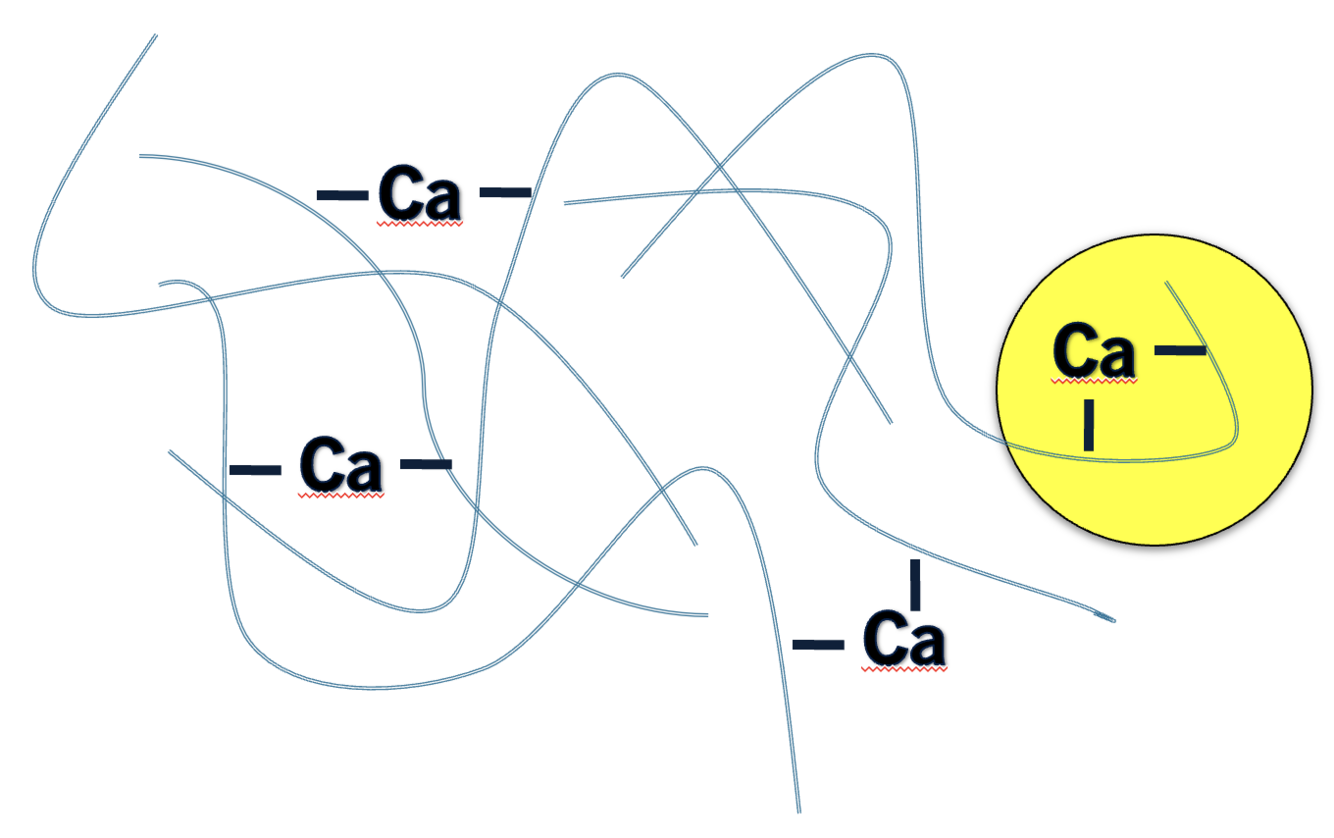
what happens in the hardening phase of the setting reaction of GICs?
• trivalent aluminium ions ensure good crosslinking and increases the strength (3 crosslinks) • aluminium polyacrylate forms after a long time - does not start for 30 mins and can take over a week to complete • greatly improves the mechanical properties of the set material
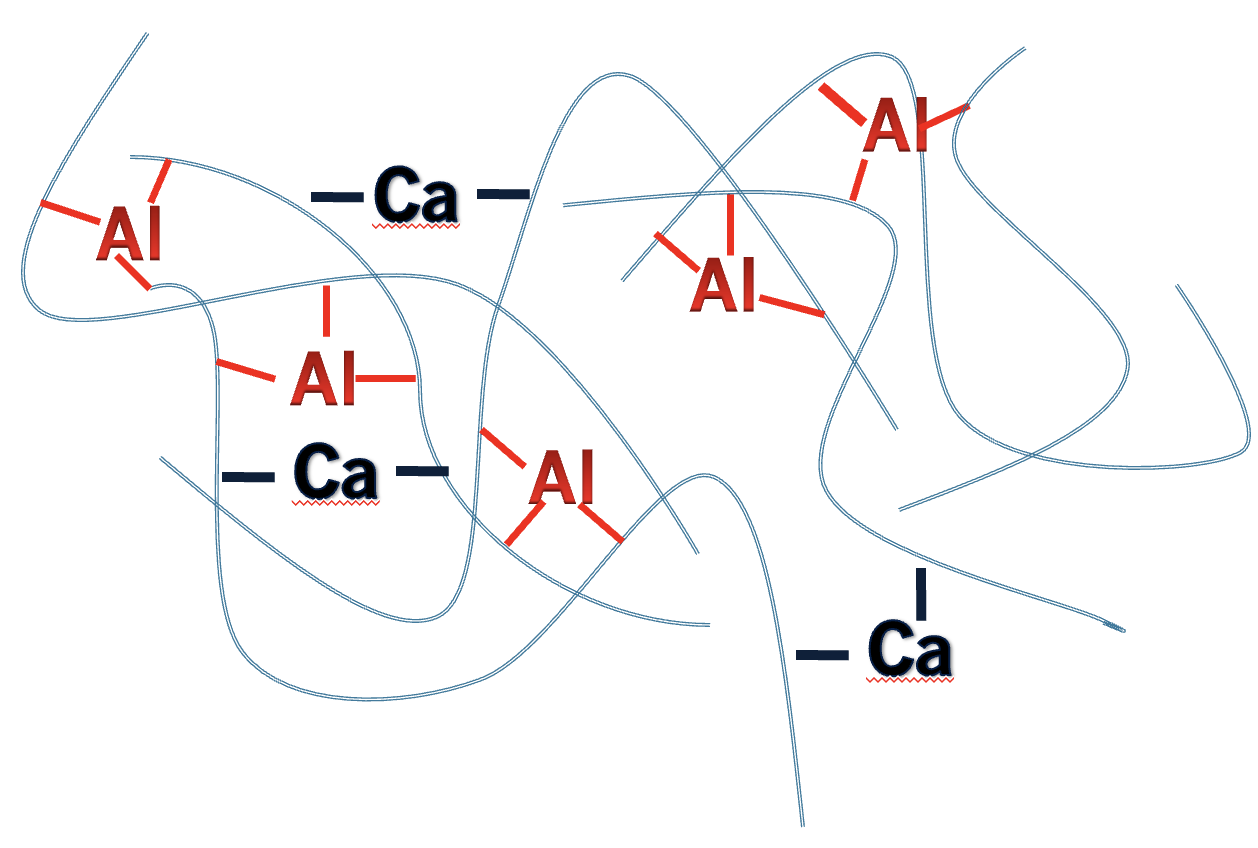
what can happen when the GIC is contaminated?
• aluminium ions diffuse out of material and becomes less hard - mechanical properties are reduced • excessive drying means water will be lost • saliva contamination can cause absorption of water • leads to a weak material which will be rough, break up and have poor aesthetics
how can GIC be protected after placement?
• varnishes e.g. copal ether, acetate • resins e.g. dentine/enamel bonding agents, unfilled Bis-GMA resins • greases or gels e.g. vaseline (can be removed quickly by lips or tongue)
what component of GIC improves the handling?
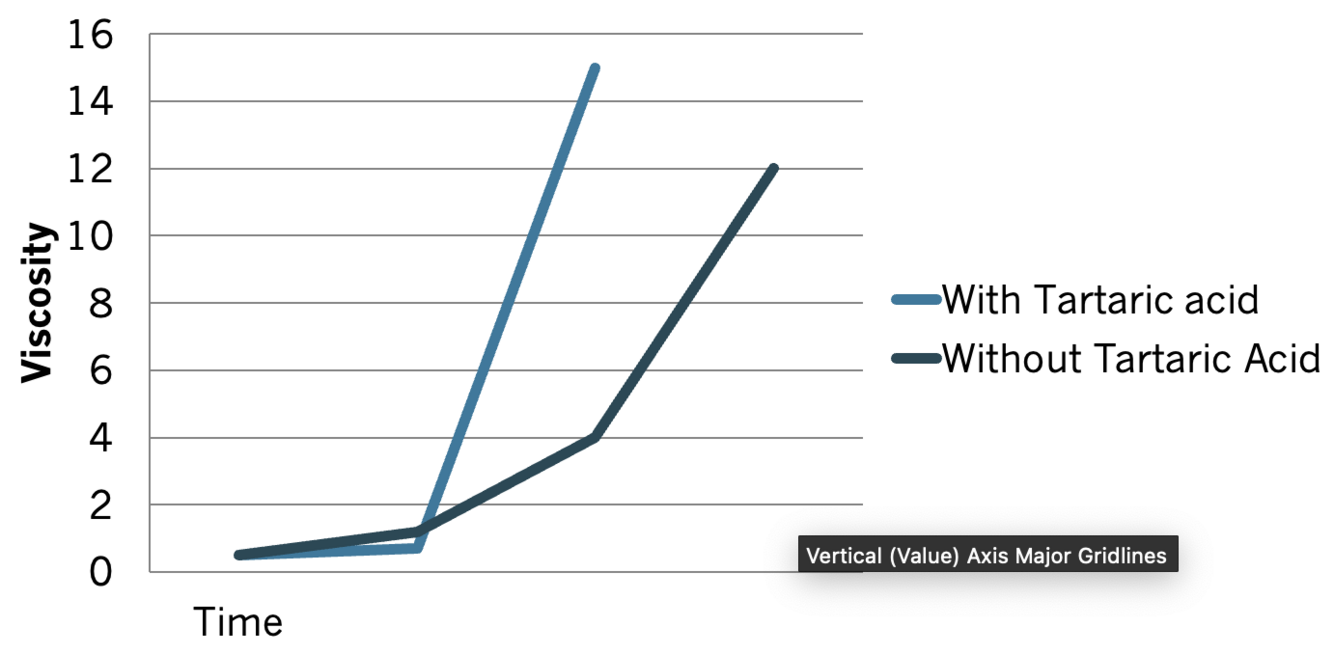
Tartaric acid improves ease of use with a long working time and a short setting time
describe is the adhesion properties of GIC? 3
• can bond to enamel and dentine without the need of an intermediate material • bond strength is not high compared to composite on etched enamel • good sealing ability with little leakage around margins
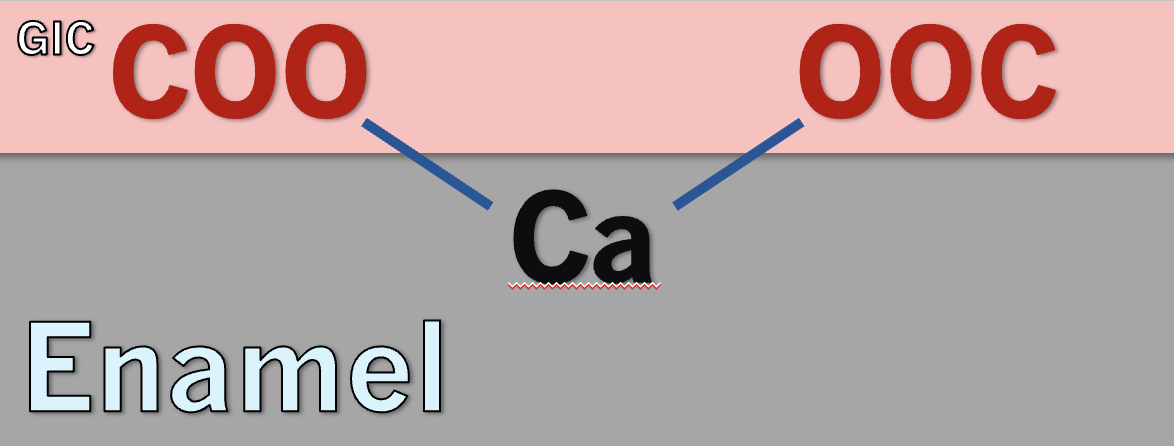
how does GIC bond to the teeth?
chelation reaction between carboxyl groups in the cement and Ca on the tooth surface
what does a good bond of GICs require?
• a clean surface • a conditioned surface (little/no tissue removes to get a clean smooth surface)
what are some of the disadvantageous properties of GIC compared to composite?
• poor tensile strength - brittle • lower compressive strength than composite • poorer wear resistance than composite - susceptible to abrasion • lower hardness than composite • higher solubility than composite - long term erosion by acids • moisture susceptible when first placed • poor aesthetics • susceptible to acid attacks and drying out over itme • possible problems bonding to composite
what are some of the advantageous properties of GIC?
• good thermal properties - expansion similar to dentine • no contraction on setting unlike composite • less susceptible to staining and colour change after setting than composite • good chemical bond to enamel and dentine • low microleakage • releases fluoride • lower modulus
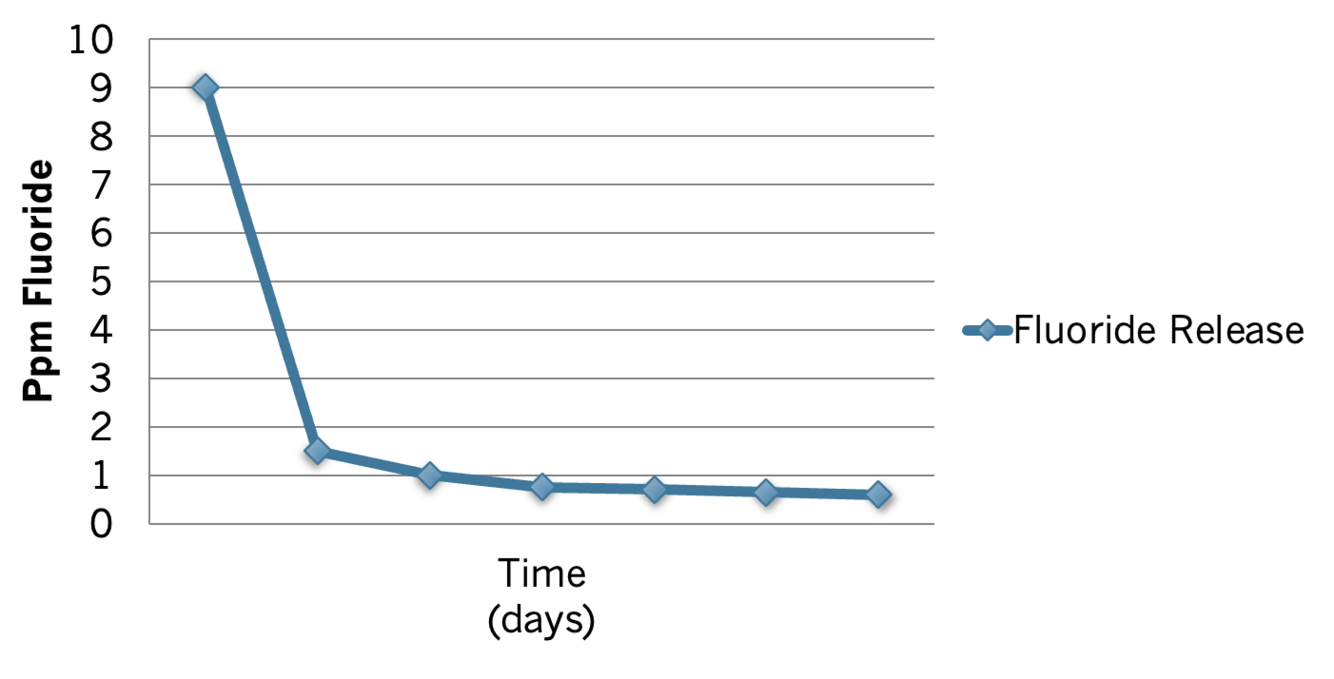
describe the fluoride releasing property of GICs
• releases fluoride without damaging their structure • has a high initial fluoride release but diminishes very quickly over the first week • GICs can take up fluoride when the F concentration around them is higher (toothpaste) • they can release fluoride again when the ambient concentration falls
what is the difference between resin modified GIC and conventional GIC?
RMGIC is light cured, has improved physical properties and better aesthetics - composites properties added to GIC