aromatic chemistry
No description yet. This curated deck is ready for daily study.
Card preview (14)
explain why the cyclohexatriene structure for benzene was proved wrong and the aromatic ring was instead accepted explain the properties of benzene
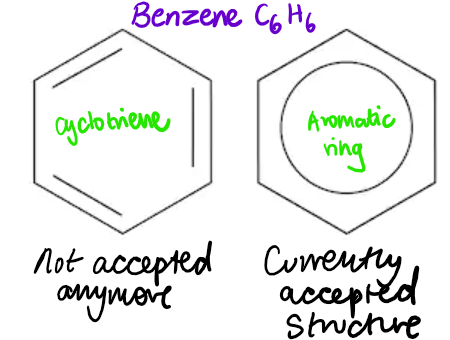
• the length of a C to C single bond is longer than the C to C double bond. however all the C to C bonds in benzene are of equal length (benzene is a perfect hexagon) • this is possible because the 6 C atoms evenly share the 6 e- within the aromatic ring • x-ray crystallography was used to show this • benzene participates in fewer addition reaction than you would expect if the cyclotriene structure was correct • instead, benzene mostly participates in substitution reactions • benzene does not decolourise bromine water as you would expect unsaturated compounds to do • thermodynamic evidence (using enthalpy of hydrogenation) • real ΔH hydrogenation of benzene is less exothermic than expected • the more exothermic a reaction, the more unstable the reactant • this means benzene is more stable than expected • there is only one possible structure of 1,2-dibromo benzene. if cyclohexatriene structure was correct, there would be isomers
name this compound
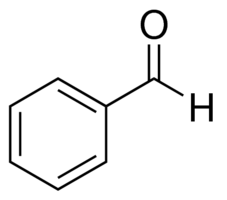
benzaldehyde
name this compound
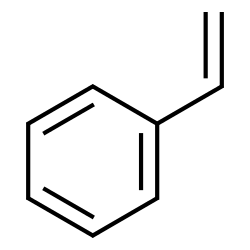
alkenes can’t be named as a branch so the aromatic ring is named as a phenyl branch instead name = phenyl ethene
name this compound
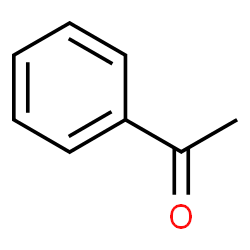
if one of the functional groups can’t be named as a branch, the aromatic ring should be named as a phenyl branch instead name = phenyl ethanone
explain the physical properties of benzene
• insoluble in water • no polar functional groups so H bonds can’t be formed with water • boiling point similar to hexane because Mr is the similar so strength of VDW forces between molecules is similar also (same amount of energy needed to separate both molecules) • melting point of benzene is higher than that of hexane hwoever • benzene molecules are very flat so can pack more closely together than hexane molecules in solid state • surface area in contact between benzene molecules is higher = stronger VDW forces • colourless liquid at room temp
explain how arenes can be synthesised
• fractional distillation of crude oil produces excess long chain hydrocarbons • catalytic cracking of long chain hydrocarbons using zeolite catalysts produces arene because -C-C- bonds are broken via heterolytic fission (bond is broken unevenly)
what is the test for aromatic compounds?
sooty flames are produced when combusted (because arenes combust incompletely to produce C particulates )
give the addition reactions arenes participate in
• hydrogenation gets rid of the aromatic ring • C6H6 + 3H2 → C6H12 • Ni or platinum catalyst required • free radical substitution to produce halocyclohexanes • UV light needed and Halogen
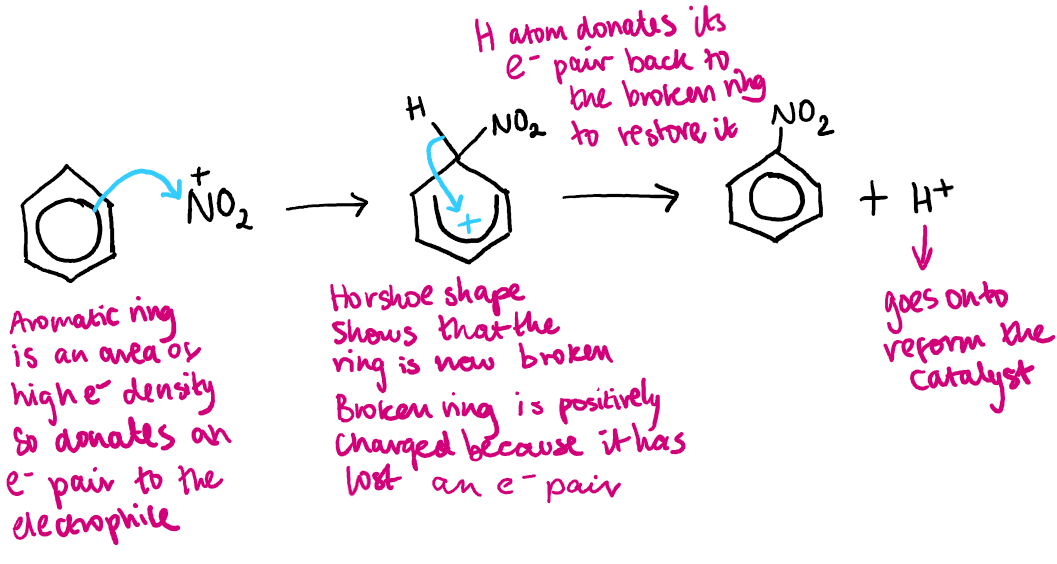
outline the mechanism and conditions needed for the nitration of benzene also name the mechanism give the reagent required and show how the electrophile is made and the catalyst is reformed
• name of mechanism = electrophilic substitution • conditions: • concentrated H2SO4 catalyst • 50 degrees celsius • reagent: • conc HNO3 • forming the electrophile • HNO3 + H2SO4 → N+O2 HS-O4 + H2O • reforming the catalyst : • H+ + HS-O4 → H2SO4
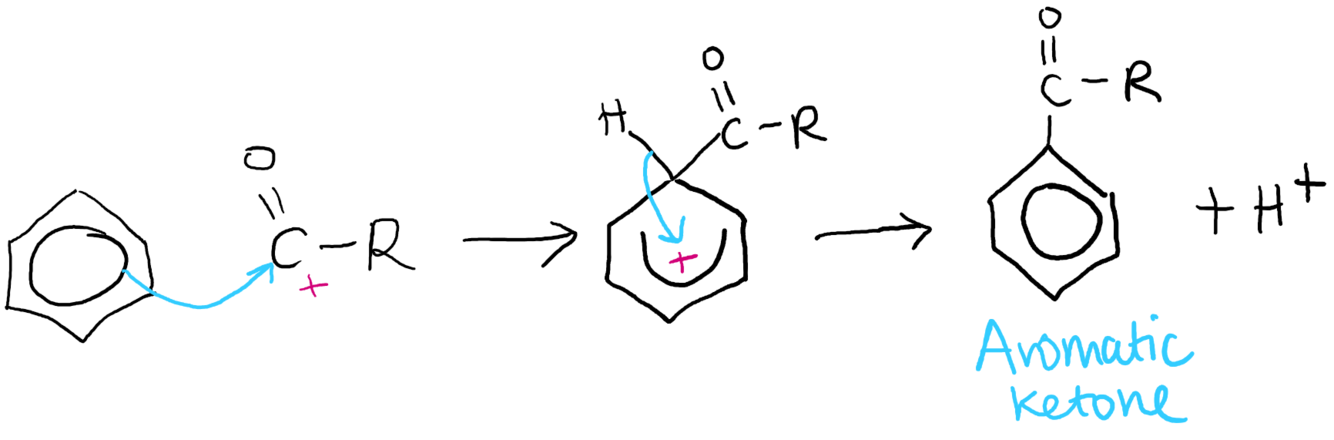
outline the mechanism for the Friedel-Crafts acylation name the mechanism state the reagents and conditions required give reactions to show how the electrophile has been formed and how the catalyst is reformed in the end
• electrophilic substitution • reagent = acyl chloride • catalyst = AlCl3 • making the electrophile (can be deduced by lookig at the branch of the benzene product) • RCOCl + AlCl3 → RC+O + Al-Cl4 • anhydrous conditions required • reforming the catalyst • H+ + Al-Cl4 → AlCl3 + HCl
what are the uses of nitro arenes?
explosives to make aromatic amines which are used as dyes
what are the uses of aromatic compounds in general?
medicine synthesis polymers
give the reagents required for the reduction of nitrobenzene to phenyl amine
reducing mixture made from Sn and HCl
most unsaturated compounds participate in addition benzene participate in substitution reactions instead of addition reactions explain why
substitution reaction preserves the aromatic ring whereas addition reaction would get rid of the ring the aromatic ring provides stability to benzene