Alcohols
No description yet. This curated deck is ready for daily study.
Card preview (24)
What is the functional group for alcohols
-OH Hydroxyl group
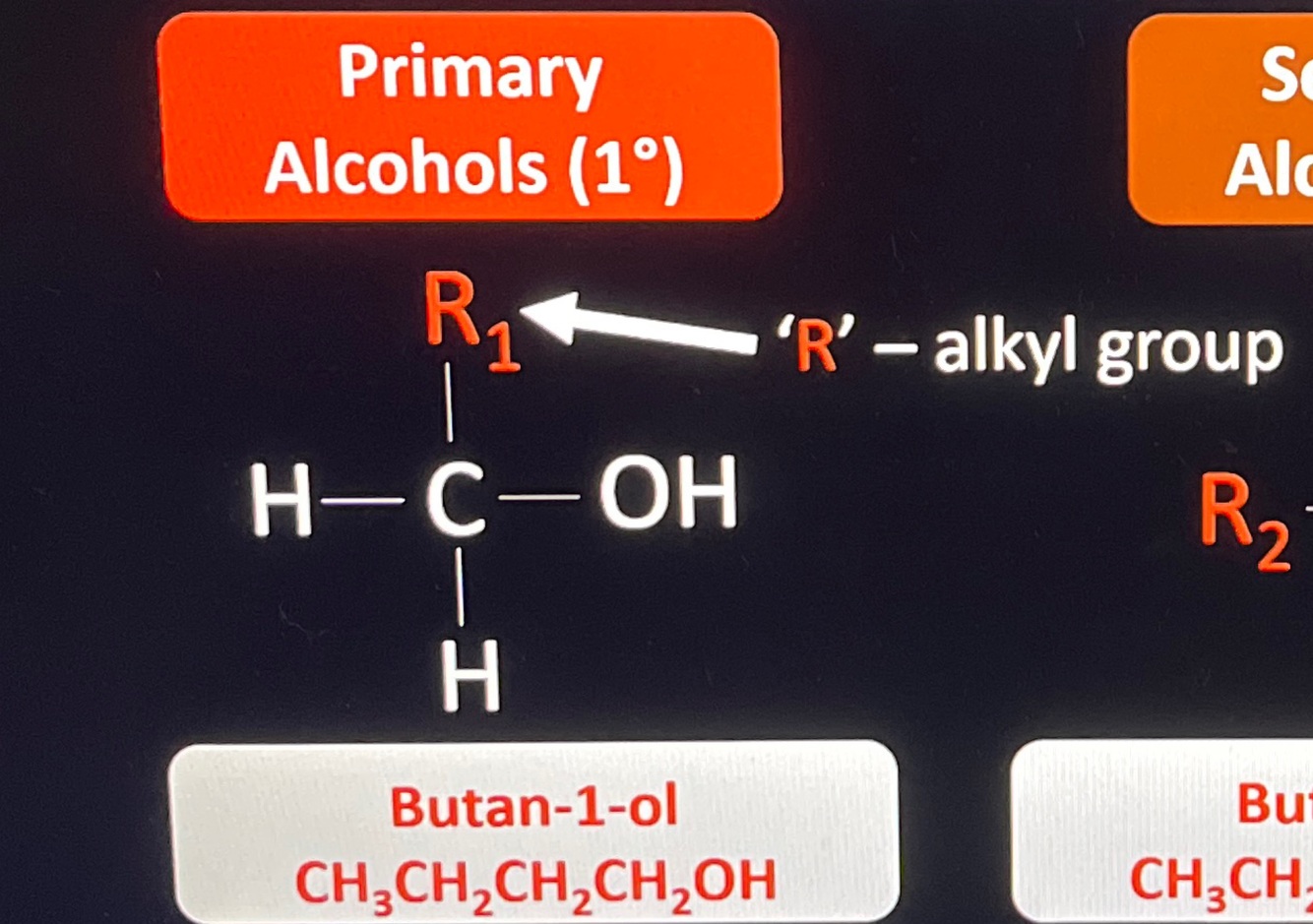
What is a primary alcohol
An alcohol with 1 alkyl group attached to the same carbon which the -OH is attached to
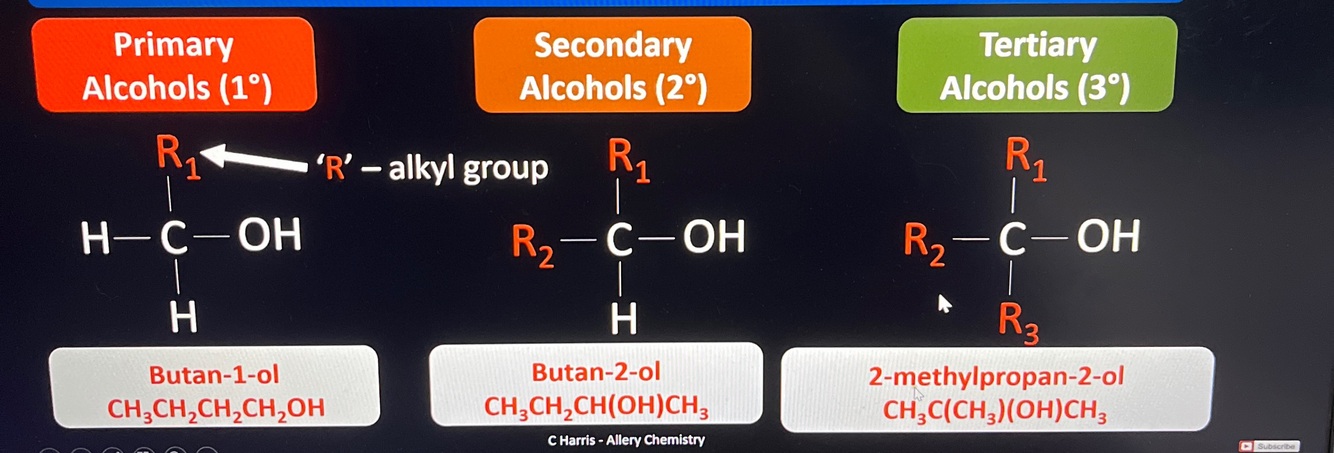
What is a secondary alcohol
An alcohol with 2 alkyl groups attached to the same carbon which the -OH is attached to
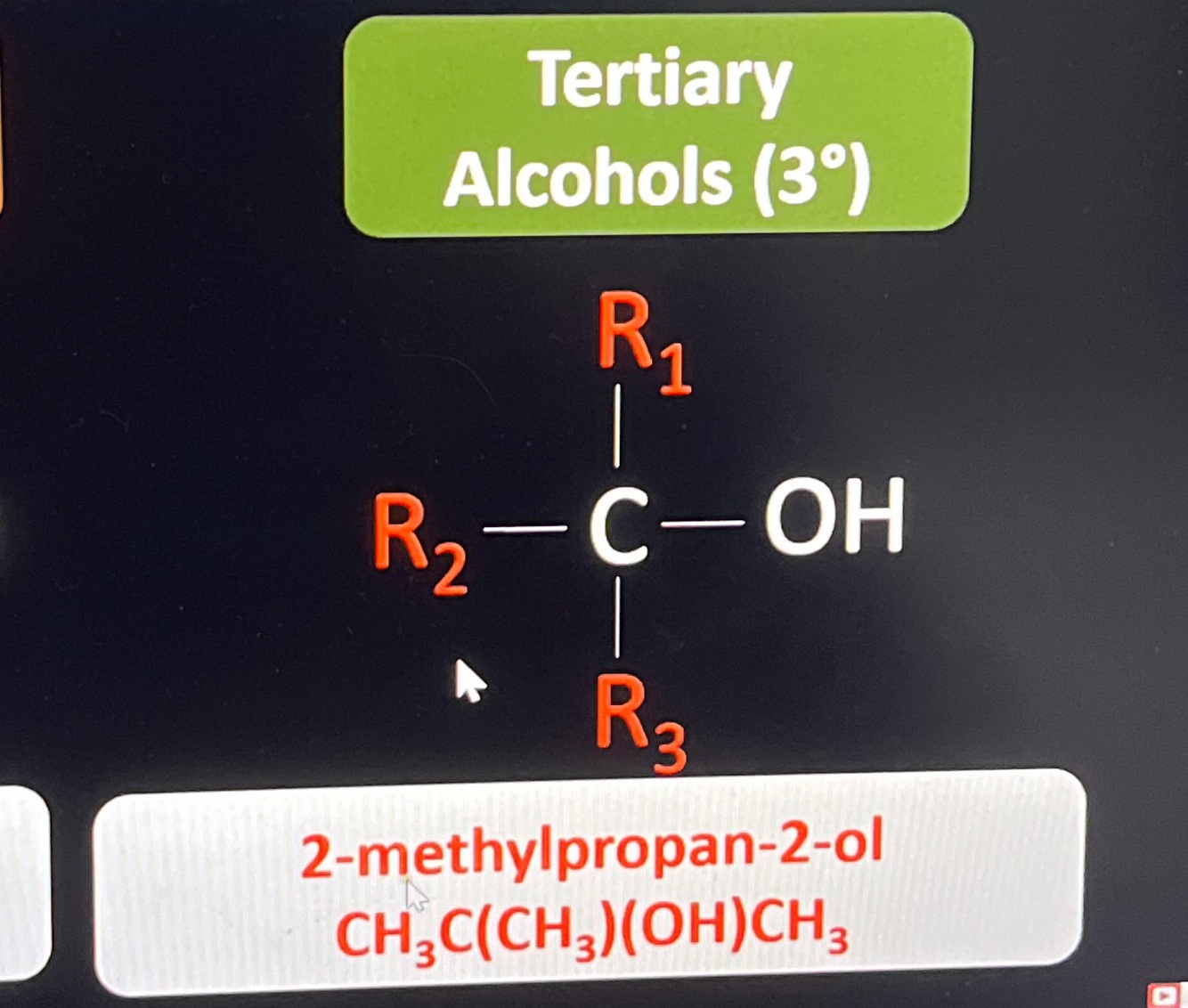
What is a tertiary alcohol
An alcohol with 3 alkyl groups attached to the same carbon which the -OH is attached to
How can we sustainably make an alkene from an alcohol
Dehydrate an alcohol which is produced via the fermentation of glucose from plants in the presence of an acid catalyst
What do we call the process of eliminating water from a molecule
Dehydration
What is the benefit of dehydrating an alcohol which is produced via the fermentation of glucose from plants to produce an alkene rather than extracting them from crude oil
Crude oil is non-renewable therefore this process is not sustainable. Plants are renewable and so that process is sustainable
How can we form an alcohol from an alkene
Hydrate the alkene in the presence of an acid catalyst
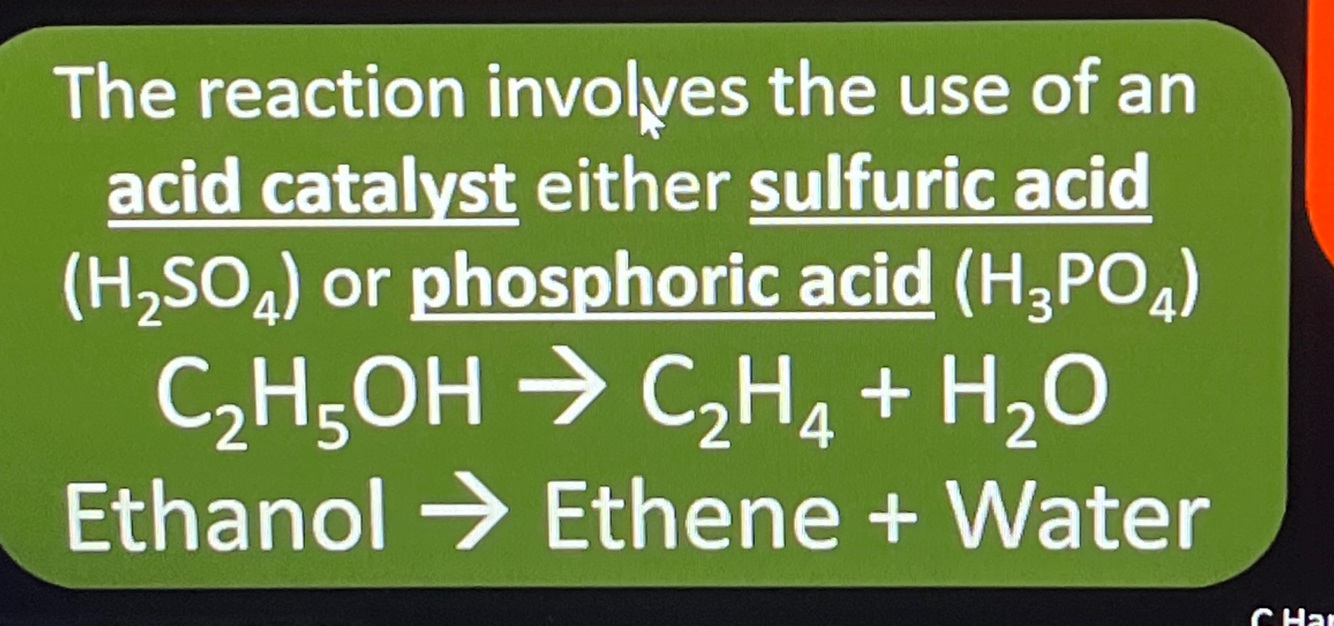
Give an equation for the dehydration of ethanol to produce an alkene
Must be done in warm conditions (under reflux) and in the presence of concentrated sulfuric acid
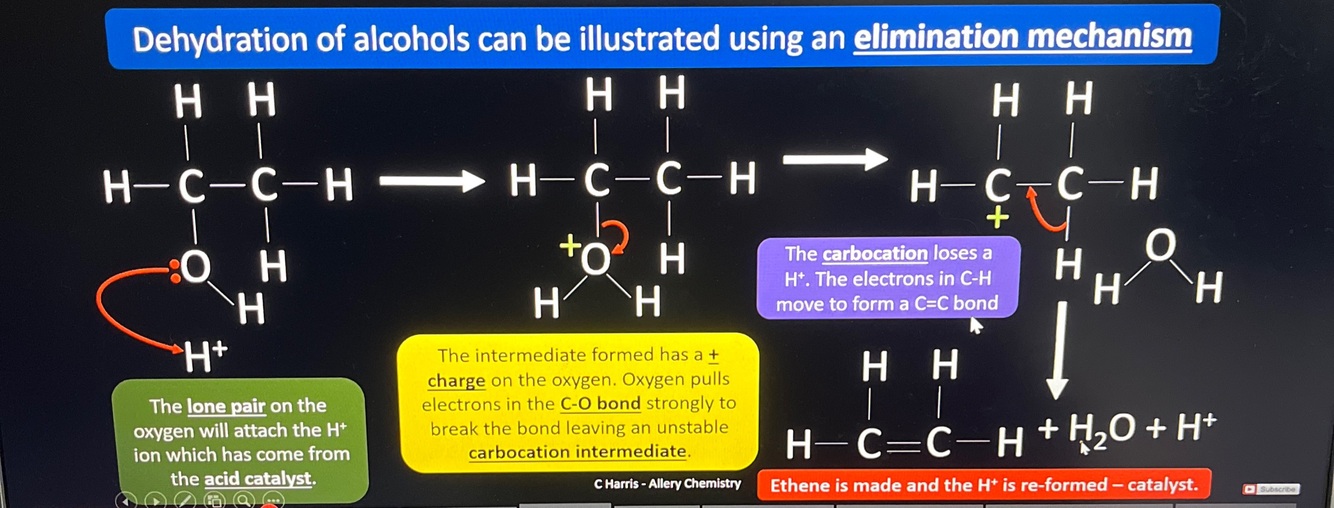
What is the mechanism by which the dehydration of alcohols to form an alkene occurs
Acid catalysed elimination
What can alkenes which are produced by the dehydration of alcohols be used for. What is the benefit of this over an alternative method
Used to produce addition polymers without using monomers derived from crude oil.
Outline the mechanism for the formation of ethene via the dehydration of ethanol
Elimination
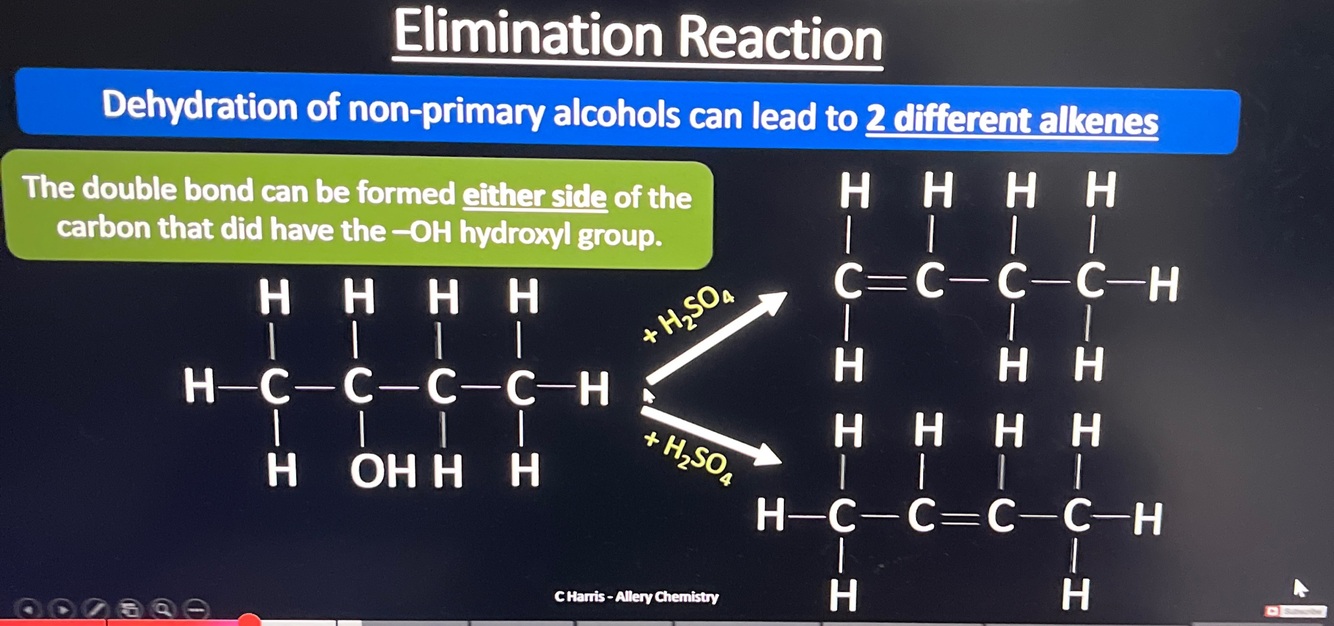
What can occur when we dehydrate secondary or tertiary alcohols to form an alkene
May form 2 different alkenes due to the ability for the double bond to occur on either side of the OH group
When we dehydrate an alcohol, the mixture is impure. What are the components of this impure mixture
Alkene Alcohol Water Acid
How can we separate an impure mixture produced from the dehydration of an alcohol
Distillation
What is distillation
The separation of chemicals by boiling point
What can we do to further purify an impure mixture produced from the dehydration of an alcohol which has already been distilled
We can use a separation funnel to separate aqueous and organic layers The addition of a drying agent ( to remove any H2O)
What is the desired product from the dehydration of an alcohol
A pure alkene
What are the 3 steps in producing cyclohexene from an alcohol
Distillation Separation Purification
What alcohol is cyclohexene produced from
cyclohexanol
What is the reagent and conditions required for the dehydration of an alcohol to form an alkene, and what is the name of the mechanism
Elimination Reagent: Hot Concentrated sulfuric acid Conditions:180 degrees C (under reflux),
Outline step 1 in the production of cyclohexene from cyclohexanol
Step 1: Distillation: • Add concentrated sulfuric acid and cyclohexanol to a round bottomed flask. • Add several anti-bumping granules to allow for a smooth boiling process • Use a heating mantle to warm the reactants up to 83C (B.P of cyclohexanol) • Chemicals with B.P less than 83C will evaporate, enter the condenser ,cool down and condense back into a liquid • Product is then collected in a conical flask, yet this product will still have small amounts of impurities such as unreacted cyclohexanol and water
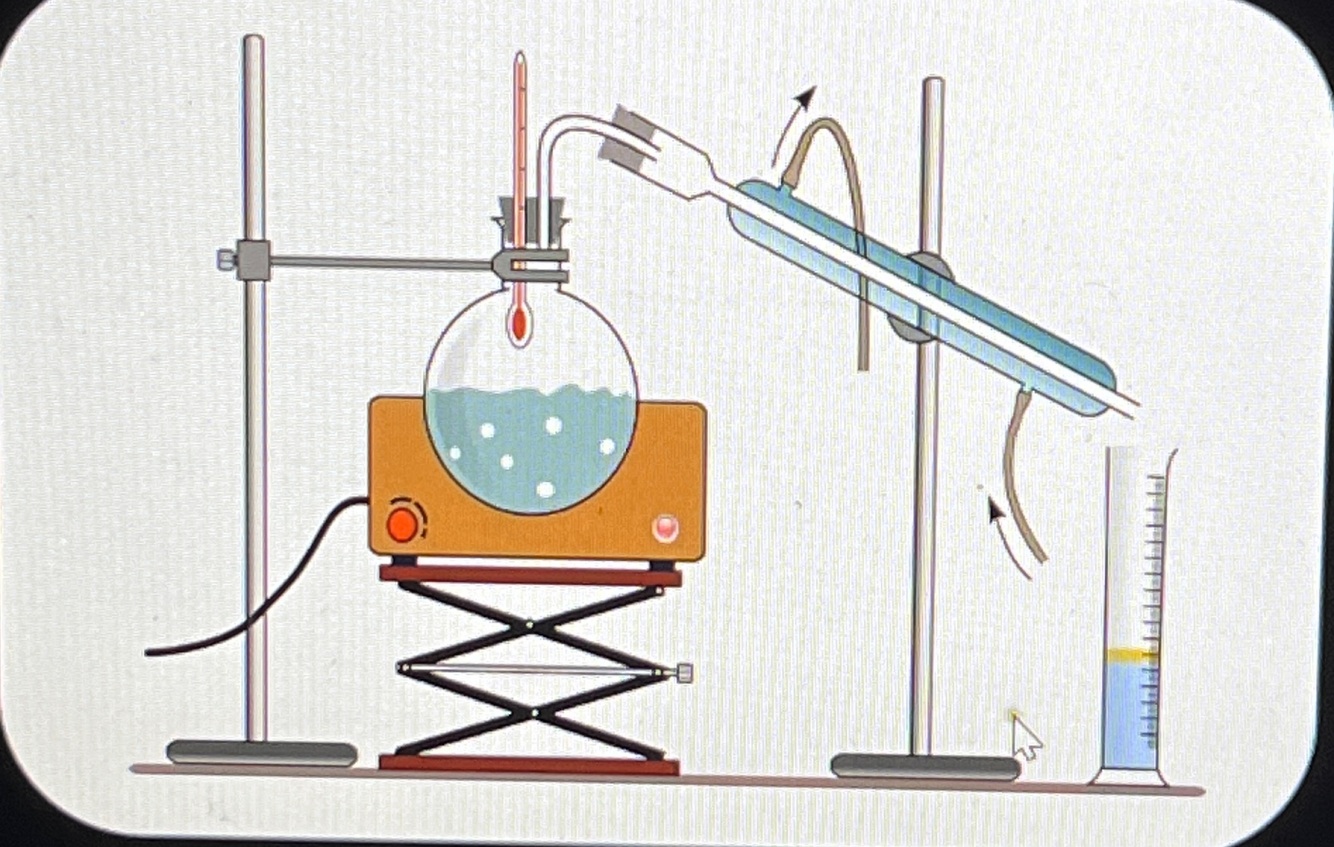
What is the purpose of adding anti bumping granules during distillation
Allows for a smooth boiling process by preventing large bubbles from forming
What is the boiling point of cyclohexanol
83 degrees C