circulatory system
No description yet. This curated deck is ready for daily study.
Card preview (24)
what are the components of blood
plasma, red blood cells, white blood cells, platelets
what is the function of red blood cells
• carry and remove CO2 • haemoglobin reacts with oxygen from lungs to form oxyhaeomoglobin, transports oxygen to working muscles. in sport: high red blood cell count means high aerobic capacity, very good for endurance. low rbc count means anemia, not enough iron, lack energy
what is the function of white blood cells
• fight infection, kill germs, defend against pathogens • engulf/create antibodies in sport: if athlete is ill, may be unable to train/compete. wbc fight infection
what is the function of plasma
• transports everything around body (RBC, WBC, platelets, hormones, nutrients) in sport: vital as move RBC around, so move oxygen to working muscles to provide energy
what is the function of platelets
• enables blood to clot • prevent blood loss at a cut (travel to area, form scab, protect from infection) in sport: vital if cut, quick recovery
what are the types of blood vessels
arteries, veins, capillaries
what is the function of arteries
carry blood away from the heart under high pressure (usually oxygenated)
what is the function of veins
carry blood toward the heart under low pressure (usually deoxygenated)
what is the function of capillaries
allows gaseous exchange to occur between the blood and mucles
what are basic structures of arteries
• thick, muscular wall • small lumen (increases during exercise)
what are the basic structures of veins
• thin wall • wide lumen • valves to stop backflow
what are the basic structures of capillaries
• link between arteries and veins • very thin wall (one cell thick) • tiny
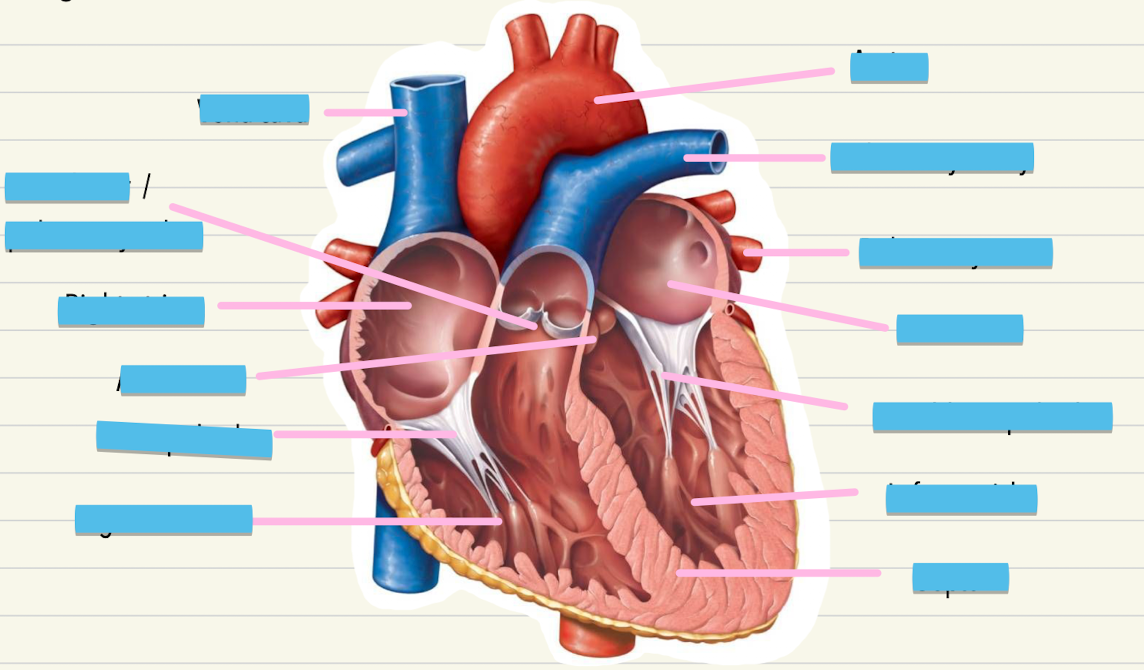
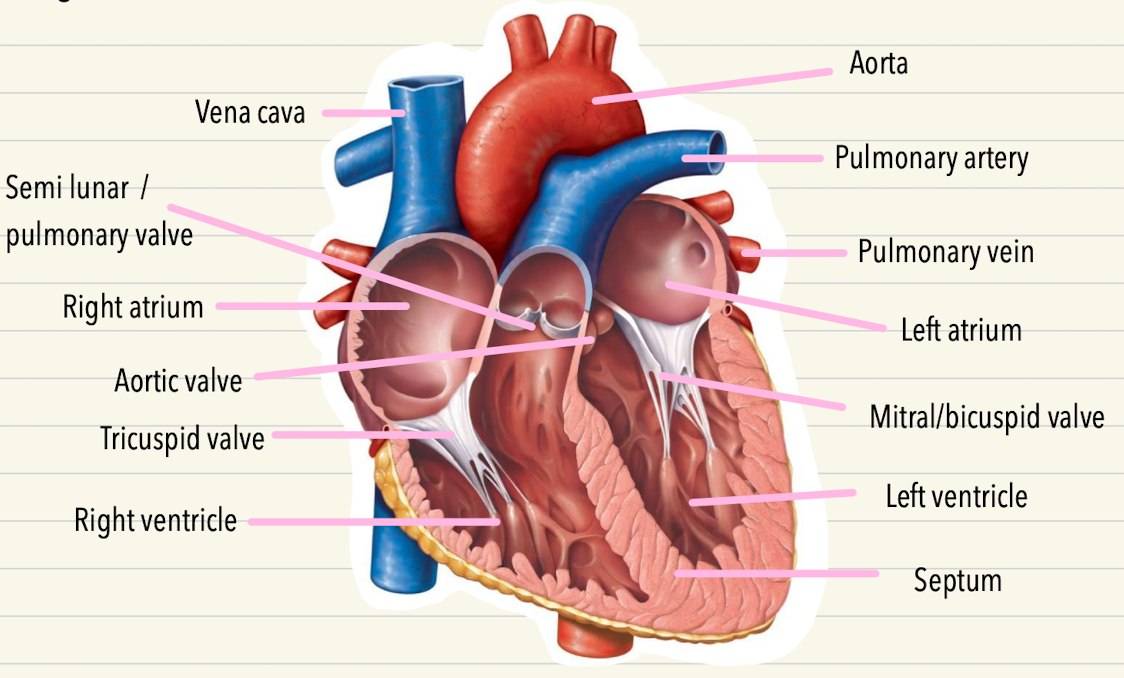
what is the vena cava
vein bringing deoxygenated blood back to heart
what is the aorta
artery moving oxygenated blood away from the heart. it has thicker walls to maintain high BP and moves blood further
what is the pulmonary artery
moves deoxygenated blood from the right ventricle to lungs
what is the pulmonary vein
moves oxygenated blood from the lungs to the left atrium
what is the function of valves
prevent the backflow of blood
what is the septum
the wall that divides the two sides of the heart
what is the right atrium
receives deoxygenated blood from the vena cava
what is the left atrium
receives oxygenated blood from the pulmonary vein
what is the right ventricle
receives deoxygenated blood from the right atrium and pumps it to the lungs
what is the left ventricle
receives oxygenated blood from the left atrium and pumps it to the rest of the body
what are the steps in the cardiac cycle
• deoxygenated blood flows into right atrium via vena cava • deoxygenated blood ejected from right atrium • into right ventricle. it relaxes to fill with blood then contracts, • sending blood to the lungs via pulmonary artery under high pressure • gaseous exchange occurs in the alveoli and blood is now oxygenated • oxygenated blood carried via pulmonary vein (under lower pressure) back to heart, to left atrium • left atrium relaxes and fills with blood • oxygenated blood then moves to left ventricle. left ventricle then contracts, • sending oxygenated blood to the rest of the body via aorta under high pressure