5. Ionic bonding
No description yet. This curated deck is ready for daily study.
Card preview (18)
What is an ion?
An atom which has lost or gained electron(s)
Why do metals lose electrons to form positive ions?
To obtain a full outer shell
How many electrons do metals lose to form ions?
The number of valence electrons that they have. e.g Na loses 1 Mg loses 2
What charge do metal ions have when they lose electrons?
They take on the corresponding positive charge as the number of electrons they lose. e.g Mg loses 2 electrons to become Mg2+
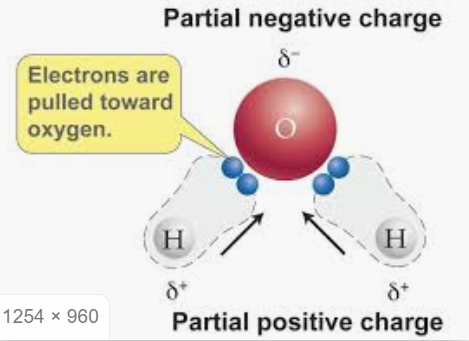
Why is water a “polar” molecule?
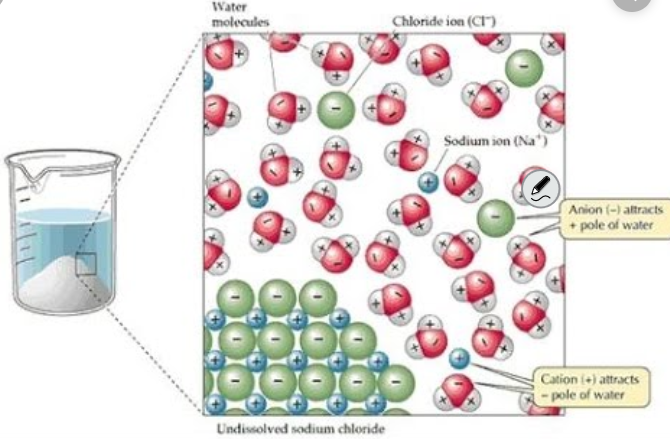
Why are many ionic compounds soluble in water?
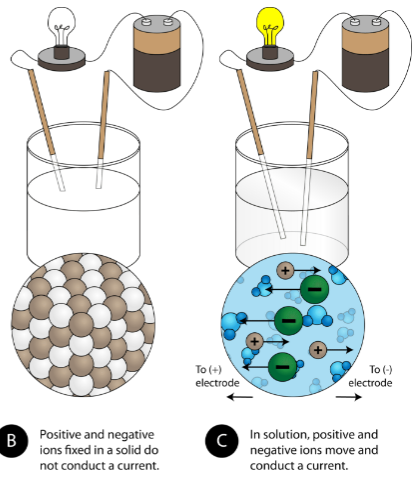
Do ionic substances conduct in • Solid state • Solution • Liquid state
• No • Yes • Yes
Why do ionic substances conduct in solution but not in solid state?
The ions are free to move in solution but are trapped in the lattice in the solid
Do ionic compounds have low or high melting points?
High
Why do ionic compunds have high melting points?
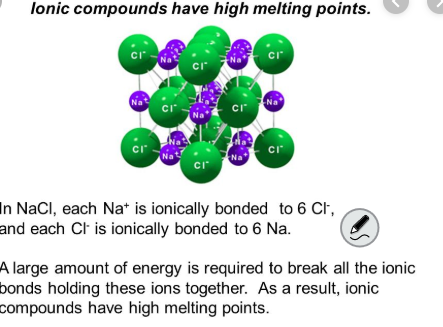
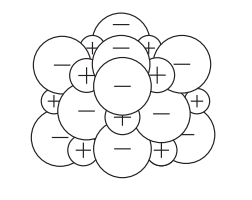
What is meant by a lattice?
A regular, repeating, 3-D structure.
Recognising an ionic lattice
What is electrolysis?
The breaking apart of ionic compunds using electricity
Apparatus for electrolysis of an ionic compound
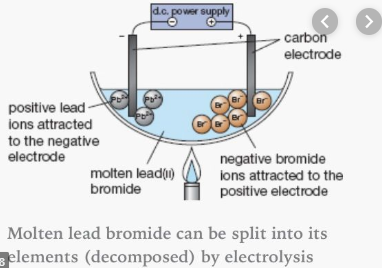
Why must a DC (direct current) power supply be used?
To ensure discrete products at each electrode
What reaction happens at the -ve electrode during electrolysis?
Positive ions are reduced (gain electrons)
What reaction happens at the +ve electrode during electrolysis?
Negative ions are oxidised (lose electrons)
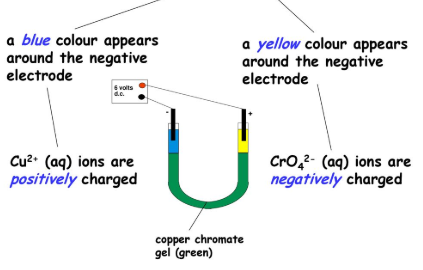
Which experiment shows that ions are capable of moving towards opposite electrodes?