week 3
No description yet. This curated deck is ready for daily study.
Card preview (24)
function of lungs
• ventilation - transport O2 to alveoli and transport CO2 from tissues to atmosphere
respiratory tree
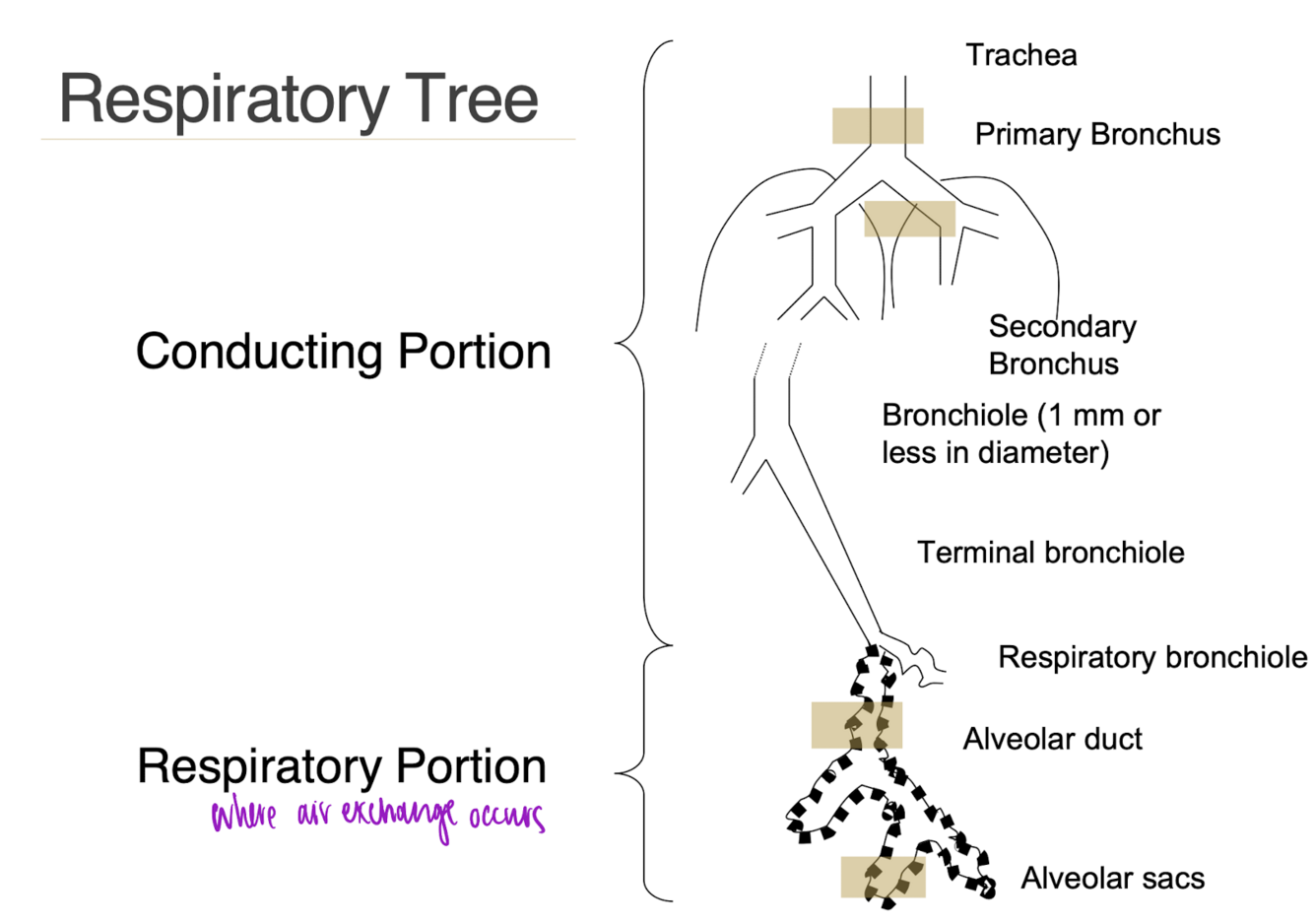
ventilation =
• ventilation = TV x RR • (tidal volume x respiratory rate) • TV and RR increase with activity
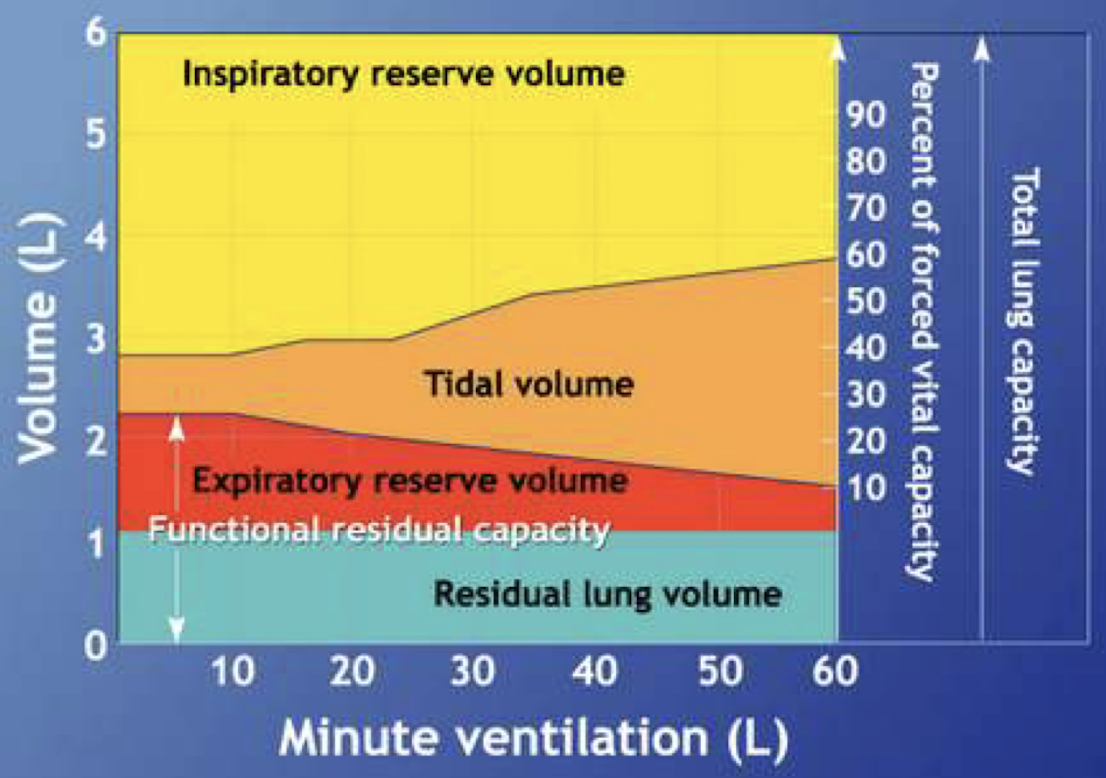
changes in titdal volume with increase VE
• TV increase at expense of inspiratory reserve volume (IRV) and expiratory reserve volume (ERV)
chronic obstructive pulmonary disease (COPD)
• major types - affect 21 million in US • 3 million emphysema • 11 million chronic bronchitis • 4th leading cause of death
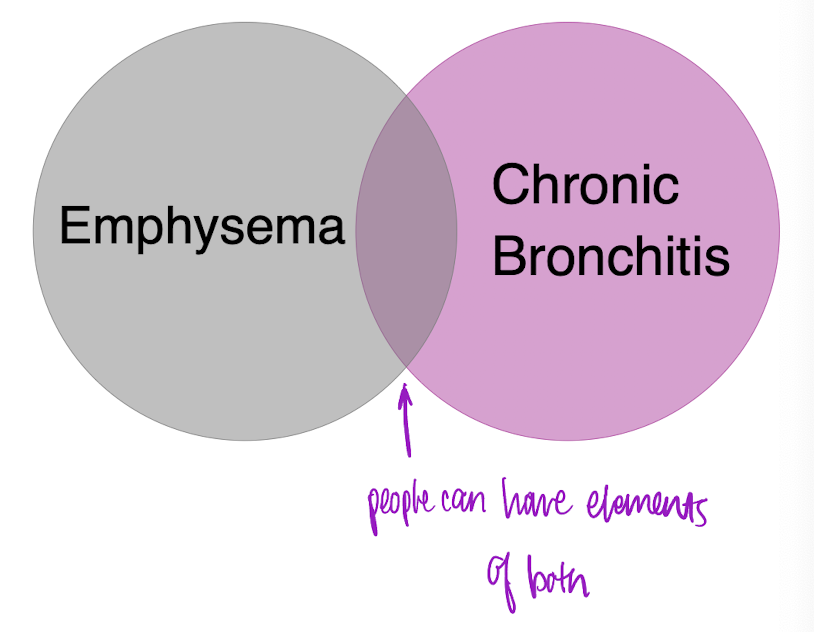
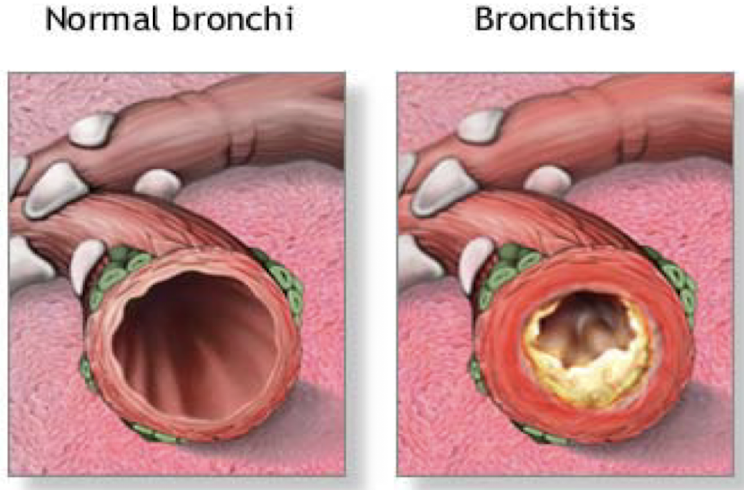
chronic bronchitis
• over production of mucus causes an occlusion of airways - makes O2 exchange difficult • blue bloaters - shutdown of systems not oxygenated, skin takes on blue tint
emphysema
• pink puffers - O2 sats higher than chronic bronchitis • destruction of elastic fibers in lungs • after expiration, fibers and alveoli unable to bound back - barrel chest • inhibition of alpha 1-antitrypsin leads to destruction of elastic fibers surrounding alveoli • mostly due to long term smoking - damaged airways (80-90%) • some hereditary parts
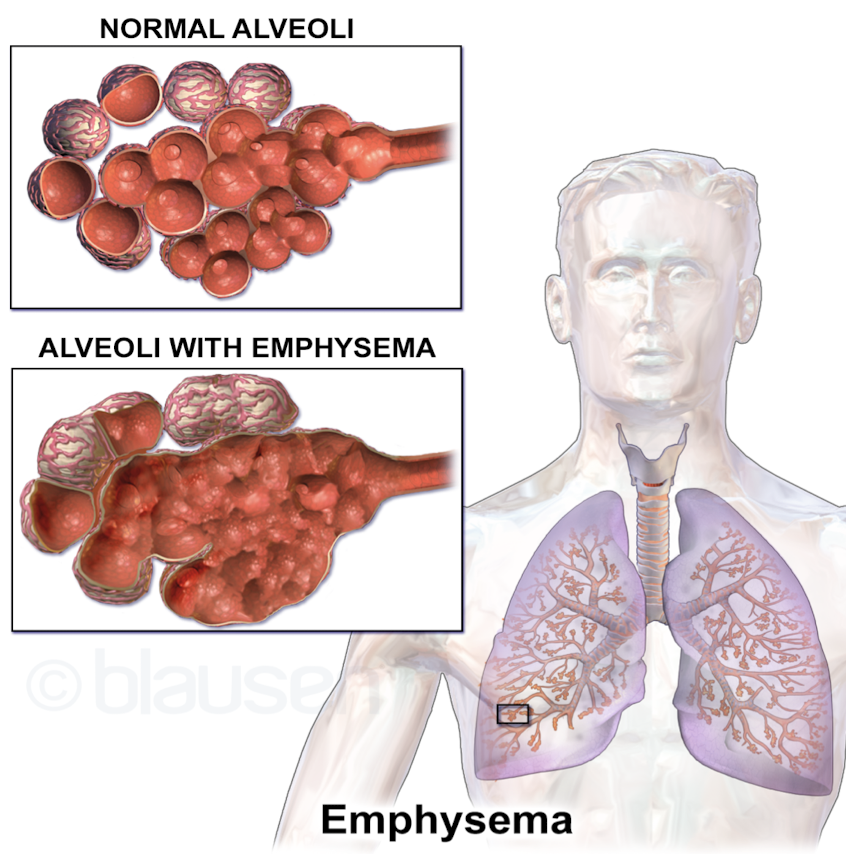
signs/symptoms of COPD
• shortness of breath • dyspnea on exertion • orthopnea (only able to breathe in upright position) • wheezing • increased RR • peripheral cyanosis • digital clubbing • pursed-lip breathing • malaise • chronic cough • barrel chest • weight loss • use of accessory muscles of respiration • prolonged expiratory period (with grunting) • decreased FEV1/FVC ratio - due to blockage, decreased ability to forcefully expel air quickly as proportion to total lung capacity • anxiety/depression
how PTs assess lung function
• O2 saturation • cyanosis • pulmonary function tests (FVC, FEV1, FEV1/FVC) pulmonary function tests differential for lung function
how PTs assess lung function
• O2 saturation • cyanosis • pulmonary function tests (FVC, FEV1, FEV1/FVC) pulmonary function tests differential for lung function
exercise in COPD
• obstructive disease impedes lung emptying (requires more time) • increased breathing leads to hyperinflation and small tidal volumes • impairment of gas exchange • decreased efficiency
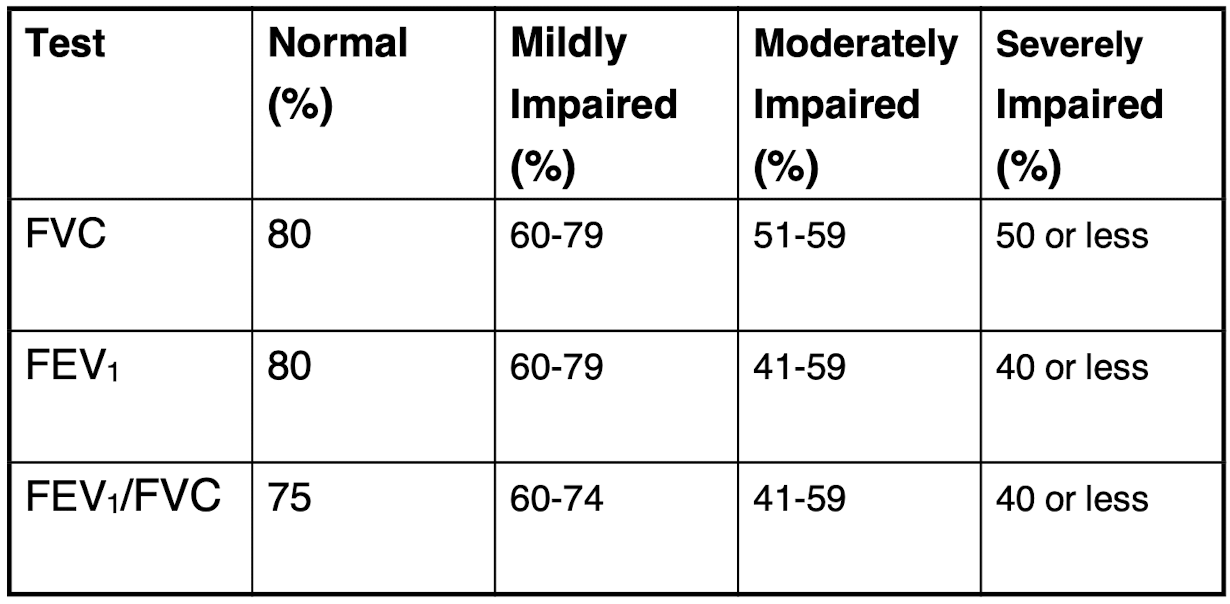
pulmonary function test criteria for determination of pulmonary degree of impairement in patients with COPD
effects of exercise training for COPD
• CV reconditioning • desensitazation to dyspnea • improved ventilatory efficiency • increased muscle strength • improved flexibility • improved body composition • better balance • enhanced body image
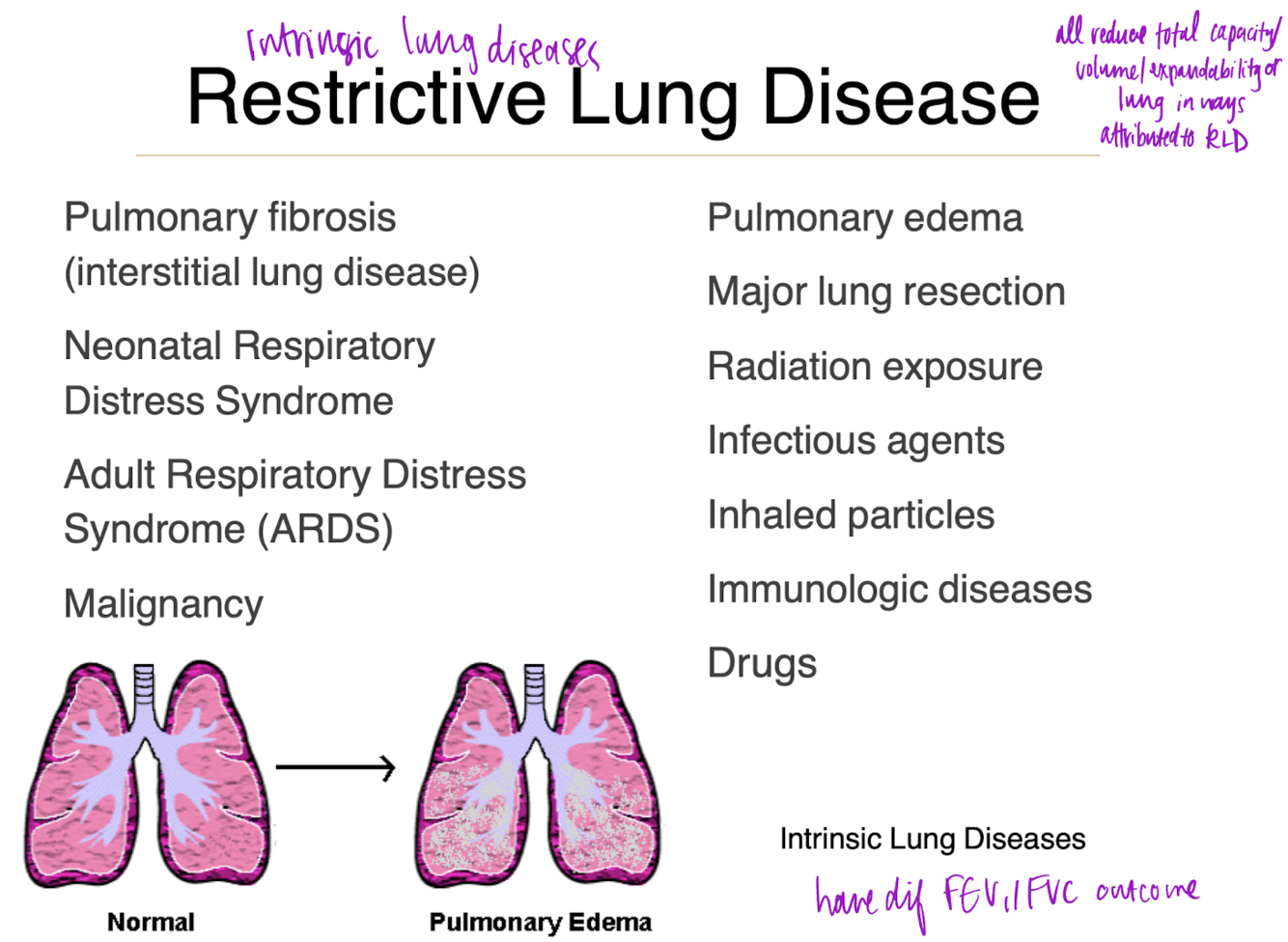
restrictive lung diseases
• diminished lung volumes • etiologies • neuromuscular disorders (DMD, ALS, guillian barre, SC disorders) - not muscle to support lung function • chest wall disorders: kyphoscoliosis, ankylosing spondylitis, obesity, compression fractures • pleural disorders: fibrosis, effusion
some pathologies/conditions affecting the pulmonary circulation
• body position • stenosis or incompetence of heart valves • congestive heart failure (CHF) • pulmonary congestion/edema: edema backs up into lungs due to pressure and interferes with O2 transfer • pulmonary embolus
supplemental O2
• if oxygen saturation is < 88%, then oxygen supplementation is necessary to improve survival and cognition • less clear on O2 need with exercise • do know that patients need exercise to improve functional capacities, even if O2 drops some - greater support for allowing O2 to drop transiently for short periods to achieve exercise benefits
patient is in bed and might need to use the bathroom soon, just not right now. how can you start HI strength training while patient is still in room
• bed mobility • STS
patient has poor safety awareness but is able to STS without UE support. how do you integrate safety and education while challenging to failure during STS exercise?
• slow down • use UE support
patient is “too tired” and keeps requesting breaks
• coordinate with OT • limite to 1 minute break between sets • combo - mix in squats while walking • add in patient ed
patient with knee OA has trouble with standing exercises. how can you integrate HI strength during session?
• more open chain activities • assist in concentric phase (eccentric usually less painful) • smaller ROM STS • patient ed • intervals/circuits
patient “too old and tired for this”
• switch exercises between sets • pt ed and pt goals - never too old to get stronger, data • family involvement
muscle strength vs power
• strength: amount of force a muscle or group of muscles can generate at a given velocity • power: amount of work a muscle or groups of muscles can produce per unit of time
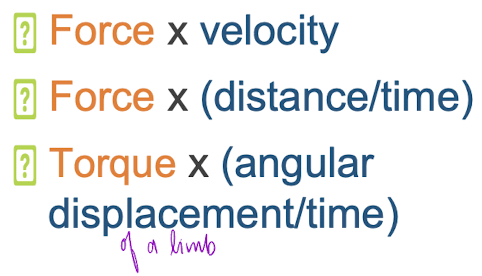
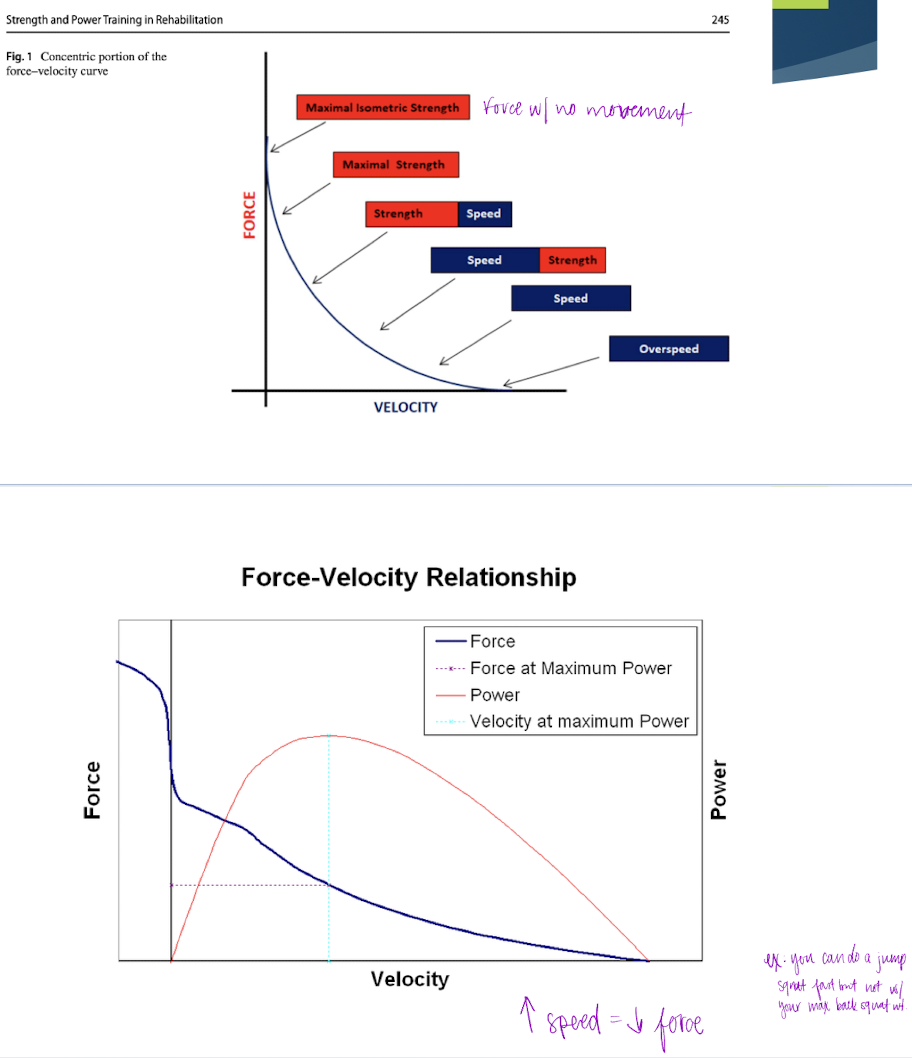
force vs velocity relationships
as you increase speed, you reduce force
contributions to muscle power
• maximal rate of force development (RFD) • force production at slow and fast contraction velocities • stretch shortening cycle performance (efficiency) • coordination of movement pattern and skill