chapter 20 acids and bases
No description yet. This curated deck is ready for daily study.
Card preview (20)
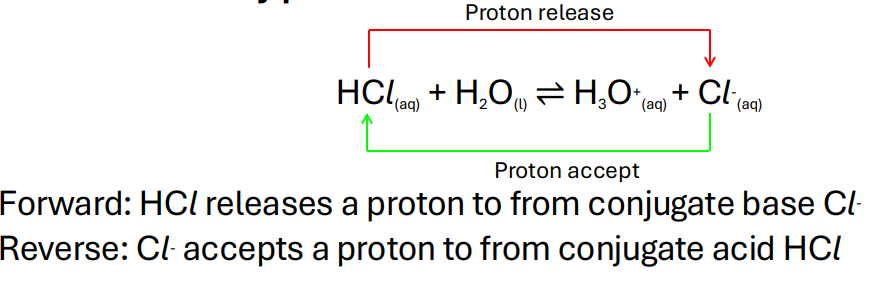
how does the Bronsted-Lowry model define bases and acids ?
• They are described by their role in proton (H+) transfer • acids are proton donors • bases are proton acceptors
what are conjugate acid-base pairs?
• a conjugate acid-base pair contains 2 species that can be intrerconverted by proton transfer
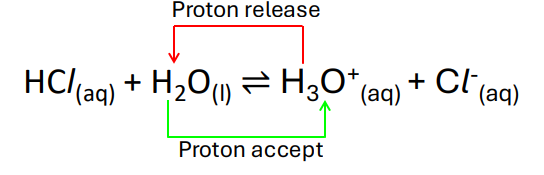
what is the role of hydroxonium ions in conjugate pairs ?
• hydroxonium ions are a part of a conjugate acid-base pair with water
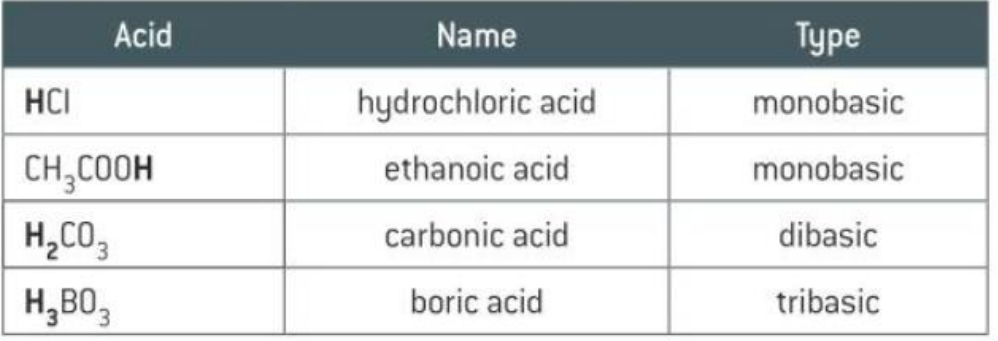
what are the different types of Acids ?
acids are defined by the number of H+ ions that are released * monobasic - one H+ e.g HCl * dibasic - 2 H+ e.g H2SO4 * tribasic - 3 H+ e.g H3PO4
how to represent reactions of acids using ionic equations
The ionic equation for the reaction of magnesium with Dilute HCl and Dilute H2SO4 is the same

what are some of the types of reactions acids undergo?
• Metals: Redox reactions = salt + hydrogenn • carbonates: Netralisation = salt + water + CO2 • Bases/alkalis: Neutralisation = salt + water
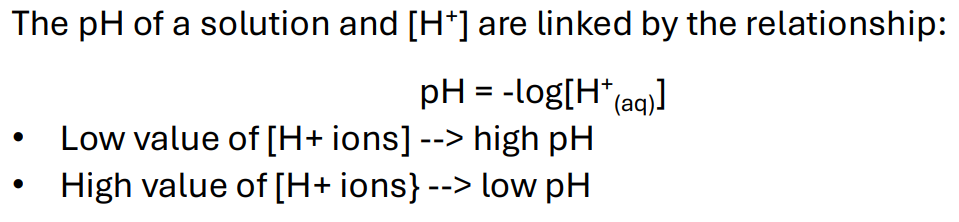
what is the equation of pH ?
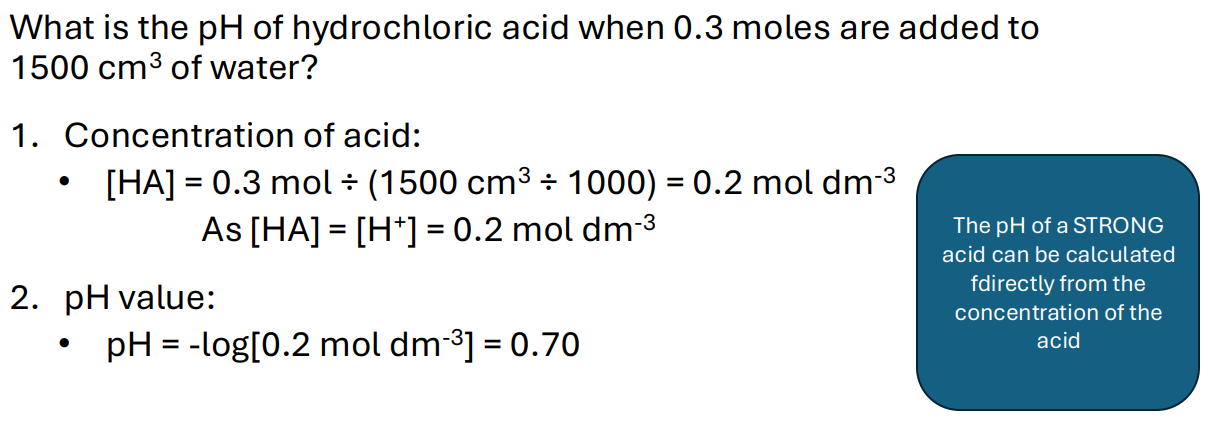
how to calculate the pH of strong acids ?
• Since strong acids completely dissociate, this means [HA] = [H+] e.g
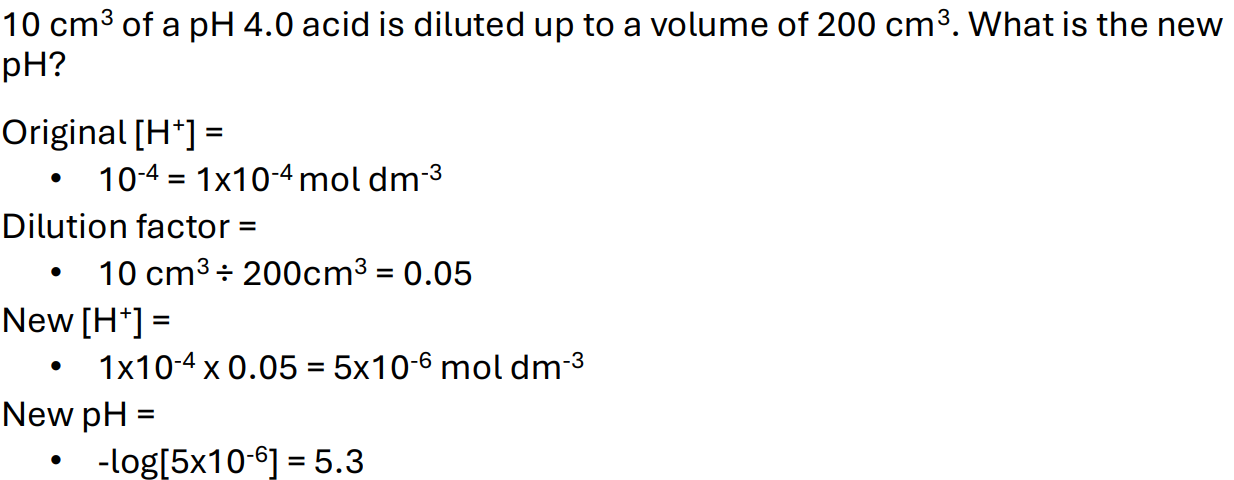
how to calculate the pH with dilution factors ?
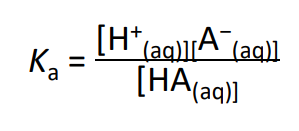
what is the acid discociation constant Ka ?
• since weak acids partially discociate in solution, they form an equilibrium which can be represented by Ka • the larger the Ka the more the equilibria liies to the right therefore the lower the pH units: mol dm-3
what is pKa?
• Values for Ka are very small so it easier to give the negative log instead as this makes pKa easier to compare • small pKa values mean stronger acids*
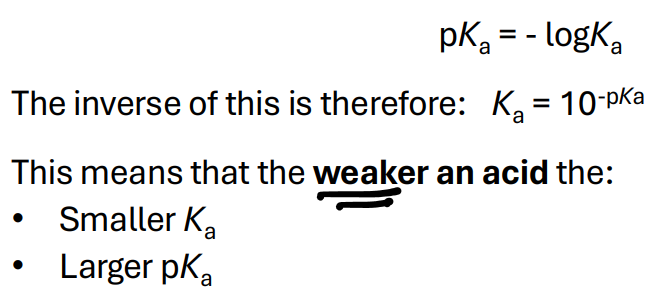
what are the 2 approximations needed for calculating pH of weak acids?
• HA discociates into equal [H+] and [A-] (small [H+] from H2O) • the change in [HA] is negligible so [HA]eqm = [HA]start
what is the new Ka equation after the weak acid approximations?
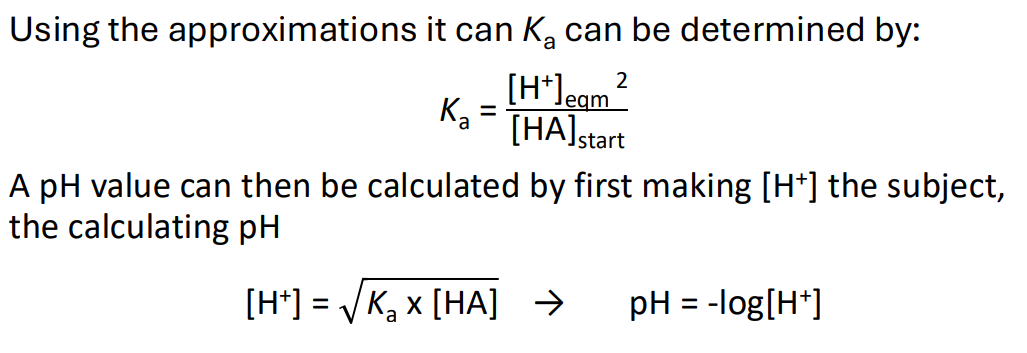
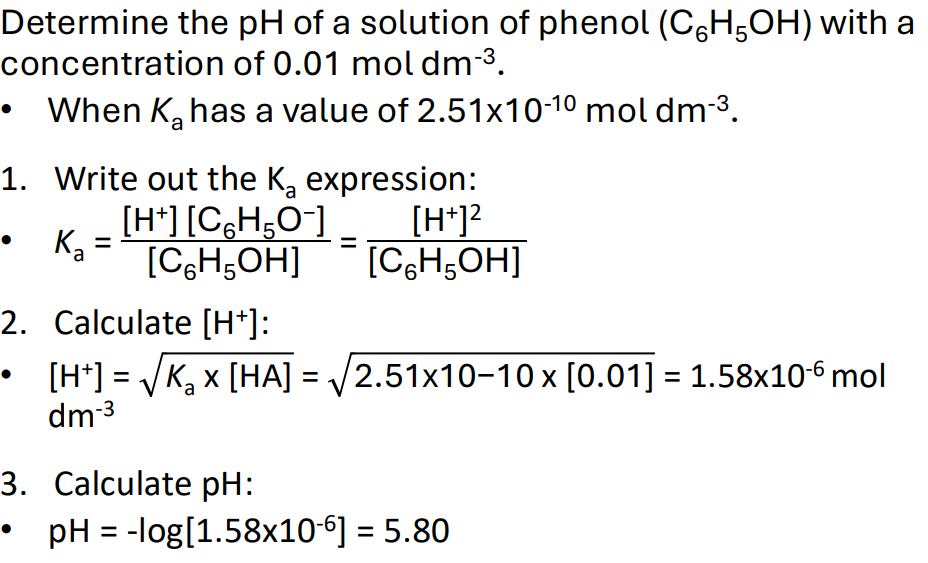
what is an example of determining pH of a weak acid ?
how to determine Ka experimentally ?
• prepare a standard solution for weak acid of known conc • measure pH of standard solution using pH meter
what are the problems with Ka calculations ?
• at pH values > 6 water dissociation is significant, this means it doesn’t work for vert weak acids or very dilute solutions • if [H+] is significant there will be difference between [HA]eqm = [HA]start, this means doesn’t work with stronger weak acids or very dilute solutions
what is the Ka equation of water ?
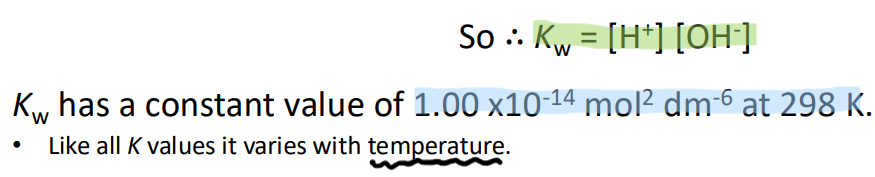
• as the dissociation of water is small [H2O] remains constant • this leads to: Ka x [H2O] = [H+][OH-]
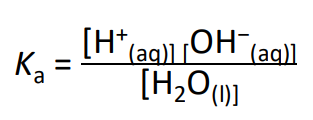
what is the ionic product of water Kw
• as [H2O] and Ka are constant they form the constant Kw
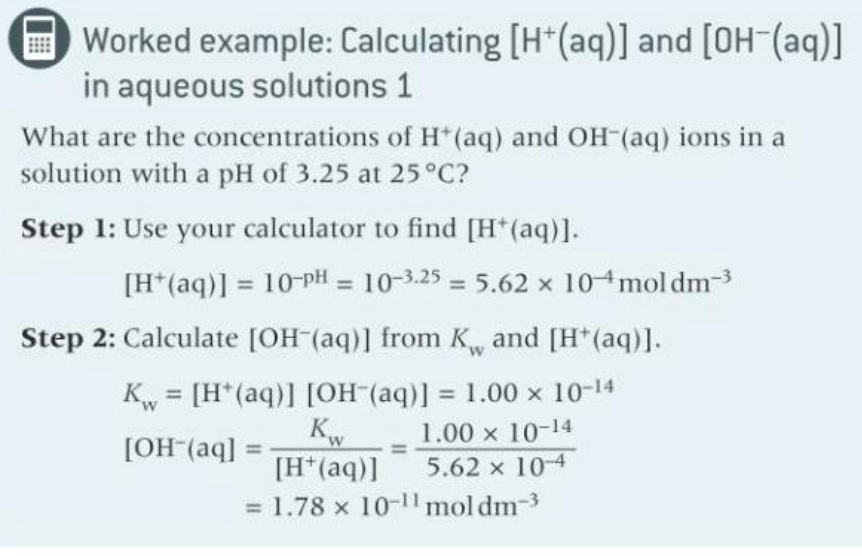
what is an example of calculating [H+] AND [OH-] using Kw
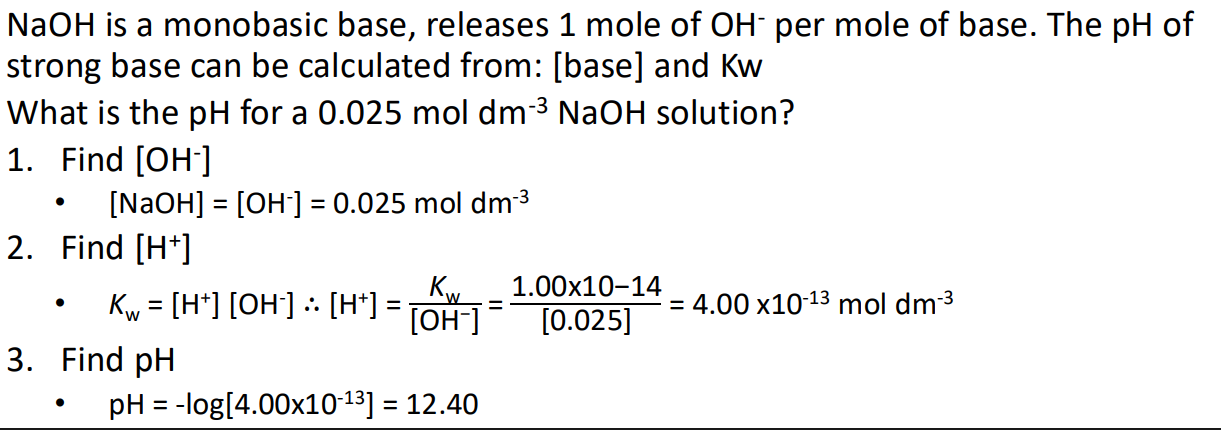
how to determine pH for strong bases?