Module 6 Organic Chemistry and Analysis
No description yet. This curated deck is ready for daily study.
Card preview (24)
Carbonyl Compounds Which functional groups are carbonyl compounds found in?
• Aldehydes (COH) • Ketones (O)
True or false Aldehydes can be derived from any carbon within the parent chain
False - they are only found on the ends
Is C=O polar/non-polar, explain your reasoning
• Polar • O is more electronegative than C
Why is C-H non-polar despite C and H having different electronegativities?
The electronegativities are very similar
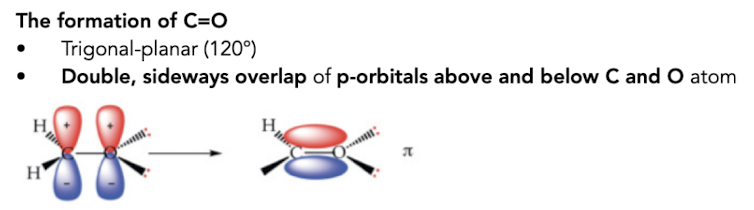
Which shape and bond angle do carbonyl groups form?
• Shape: Trigonal planar • Bond Angle: 120°
Describe and explain how a carbonyl group is formed
Suffix of aldehyde
‘al’
Suffix of ketone
‘one’
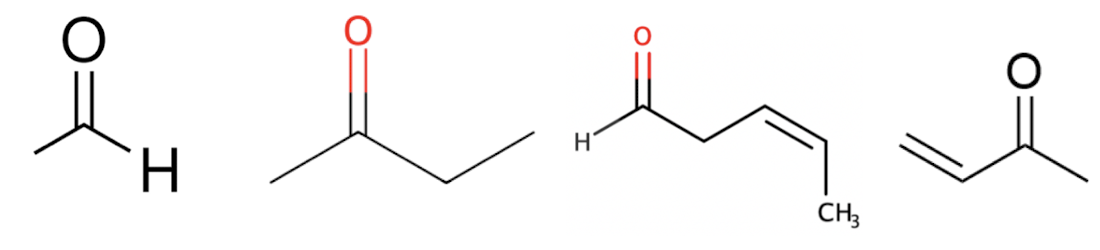
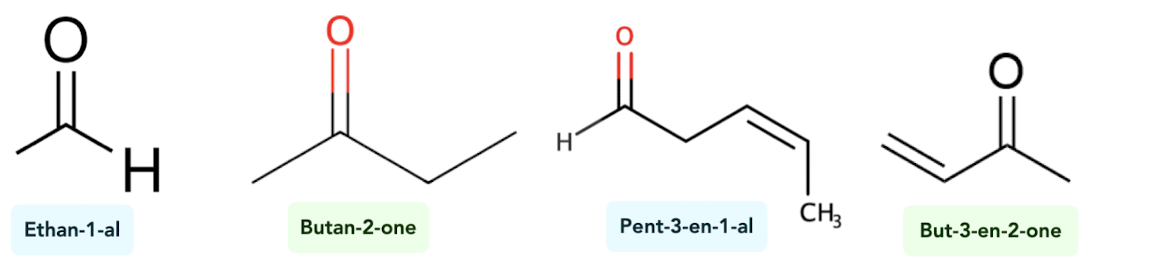
Name the following compounds
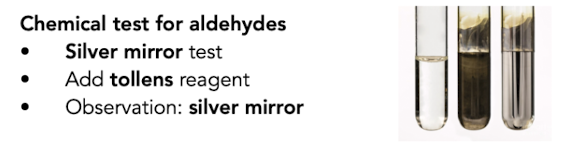
Chemical test for aldehydes
Chemical test for carboxylic acids

Chemical test for any carbonyl compound

What is the name of the test used to test for aldehydes?
Silver mirror test
Which reagent is used to test for aldehydes?
Tollens reagent
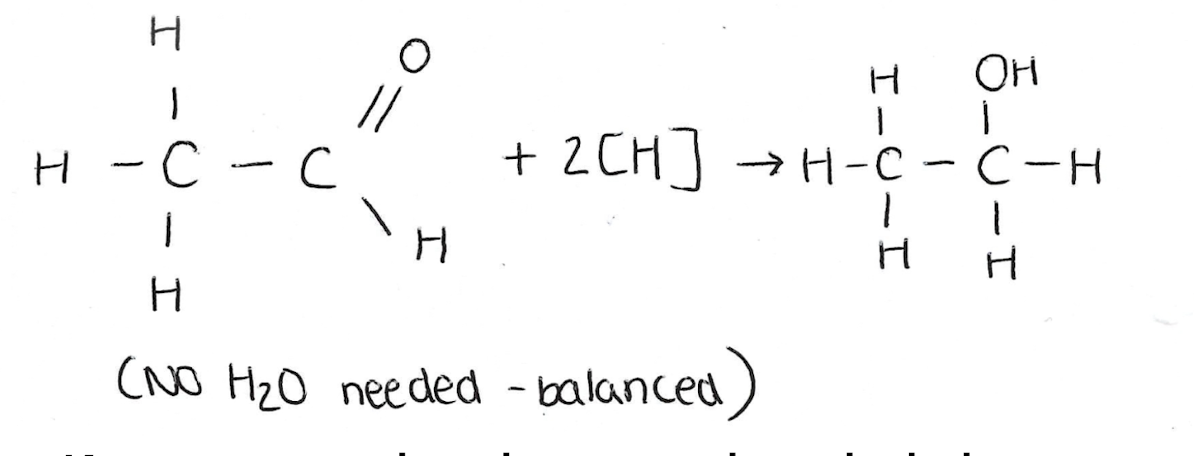
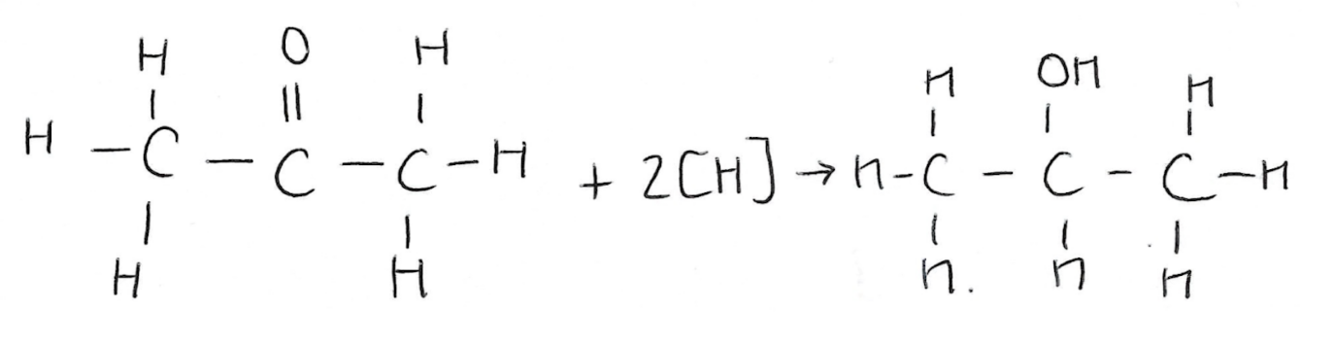
Aldehydes can be reduced to (1) and ketones can be reduced to (2)
(1) Primary alcohols (2) Secondary alcohols
Write an equation for the reduction of ethanal
Write an equation for the reduction of propan-2-one
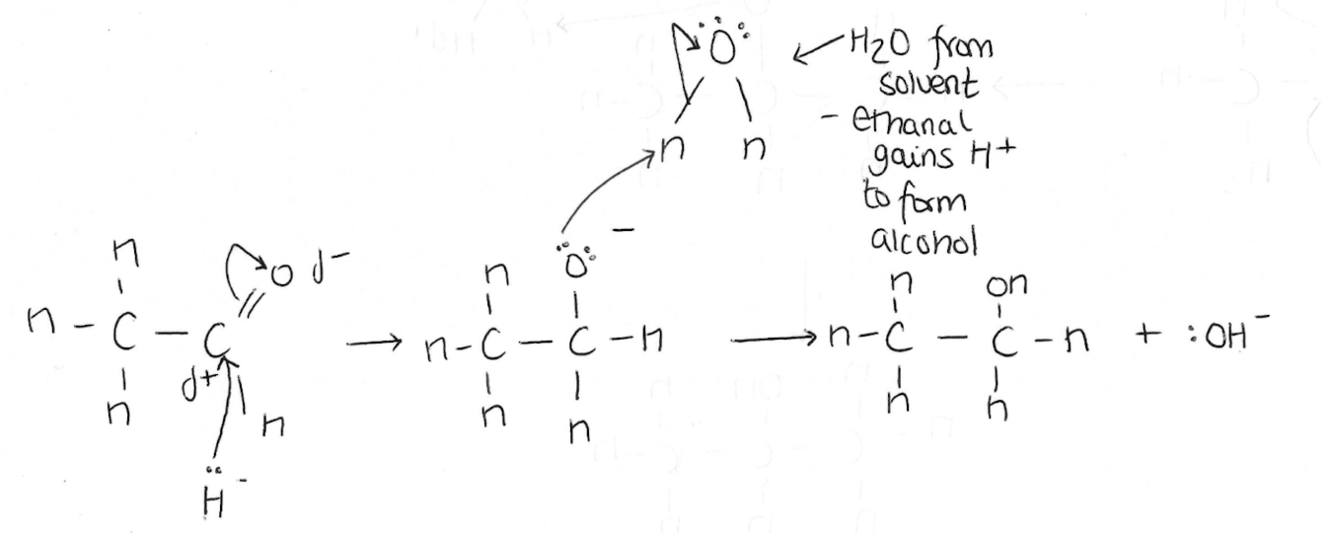
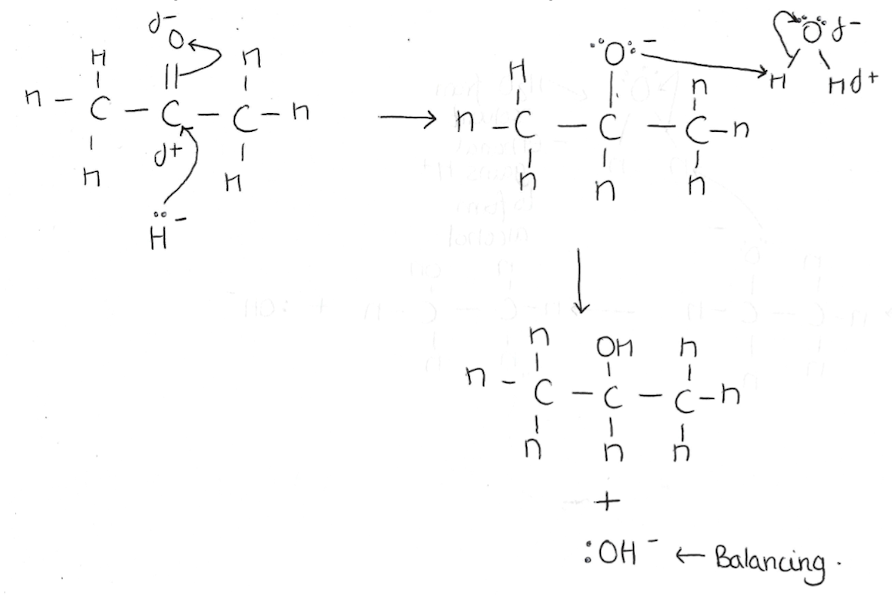
Name of mechanism involving reduction of aldehydes/ketones
Nucleophilic addition
Nucleophilic addition Conditions
In solvent/aqueous conditions
Nucleophilic addition Reagent
NaBH₄
Nucleophillic addition What does [H] represent?

Outline the mechanism for the reduction of ethanal. Include the name of the mechanism in your answer.
AND Nucleophilic addition
Outline the mechanism for the reduction of propan-2-one. Include the name of the mechanism in your answer.
AND Nucleophilic addition
Nucleophillic addition Dot and cross diagram for [H]
Answer should also include square brackets with negative/-1 charge