Chapter 5A - Equilibrium Reactions
No description yet. This curated deck is ready for daily study.
Card preview (20)
Why can some reactions not reach completion?
• products collide and react to reform the reactants
What is an irreversible reaction?
• reaction goes to completion e.g. fuel combustion
In what ways is an irreversible reaction indicated?
• arrow in equation points in one direction • concentration of reactants in a concentration vs time graph reaches zero.
Is this a reversible or irreversible reaction?
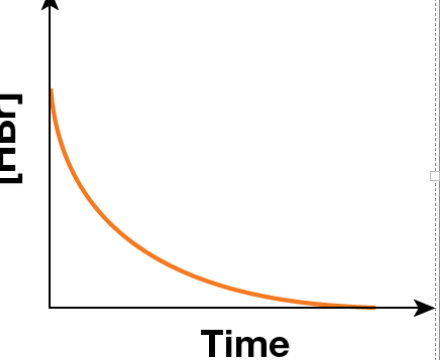
Irreversible
What is a reversible reaction?
• reaction doesn’t go to completion • reaction can precede in the forwards and backwards direction if conditions favourable • closed systems only
In what ways is a reversible reaction indicated?
• arrow points in both directions • concentration of reactants in a concentration time graph is greater than 0 and constant once equilibrium established.
Is this reaction reversible or irreversible?
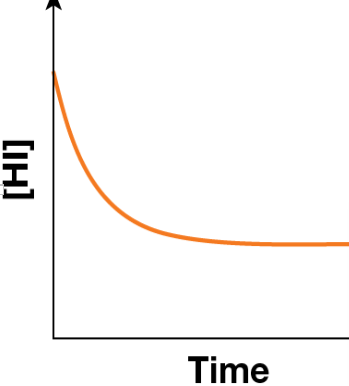
Reversable
Define rate of reaction
How much product is formed over a given amount of time
Define extent of reaction
Proportion of reactants that have been converted into products (yield)
Is the extent of reaction same for all reactions?
• Different conditions have different extents • Does not indicate reaction rate
How can extent be determined experimentally?
• measuring reactants/products at equilibrium • using concentration fraction to calculate equilibrium constant (K) where magnitude of K indicates extent
What are the conditions that indicate dynamic equilibrium is reached ?
• reactant/product amount is constant • net concentrations of reactants/products don’t change over time • temperature of system is constant • pressure of system is constant
What is dynamic equilibrium?
Rate of forwards reaction = rate of backwards reaction * Reactions have not ceased, occurring simultaneously
What are the considerations regarding Dynamic Equilibrium?
• Equilibrium can only be reached in a closed system if reaction involves gas • Equilibrium can be reached in chemical reactions or changes of state
How can equilibrium reactions be represented?
• concentration-time graphs • rate-time graphs
What are concentration-time graphs?
• displays concentration of reactants and products over time • concentration changes in ratio
What are rate - time graphs?
• displays the rate for both the forwards and reverse reactions
What happens to the rate of forwards reaction before a system reaches equilibrium?
• Rate decreases overtime • Decreased amount of reactants
What happens to the rate of the reverse reaction before a system reaches equilibrium?
• Rate intially increases • Increased presence of products
Define Yield
Amount of product obtained in reaction