1 - Principles of chemistry (g) Covalent bonding
No description yet. This curated deck is ready for daily study.
Card preview (11)
How is covalent bonding formed? What two types of elements is it between?
It is formed by two non-metal elements sharing pairs of electrons.
What is covalent bonding in terms of electrostatic forces?
Covalent bonding: a strong attraction between a shared pair of electrons and two nuclei.
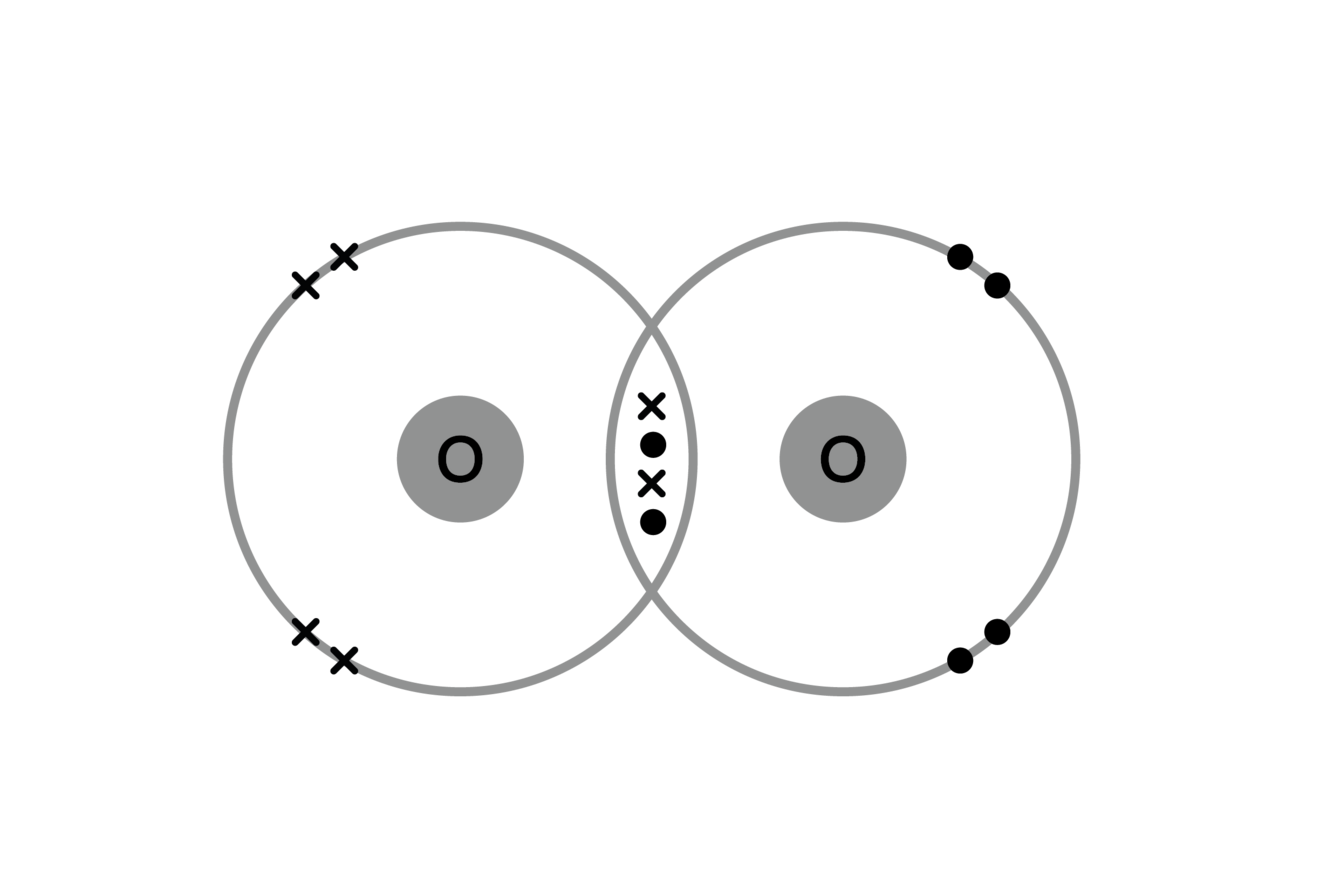
How would you draw a dot and cross diagram for a diatomic molecule, e.g. oxygen?
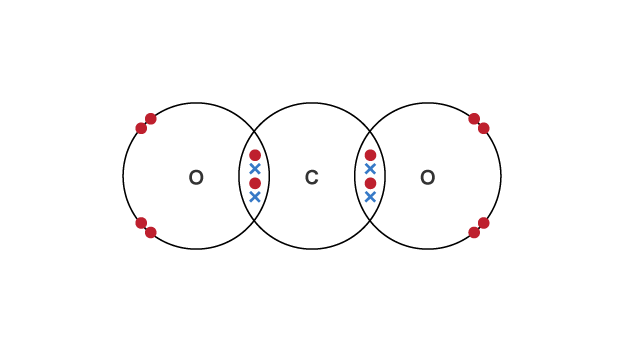
How would you draw a dot and cross diagram for an inorganic molecule, e.g. CO₂
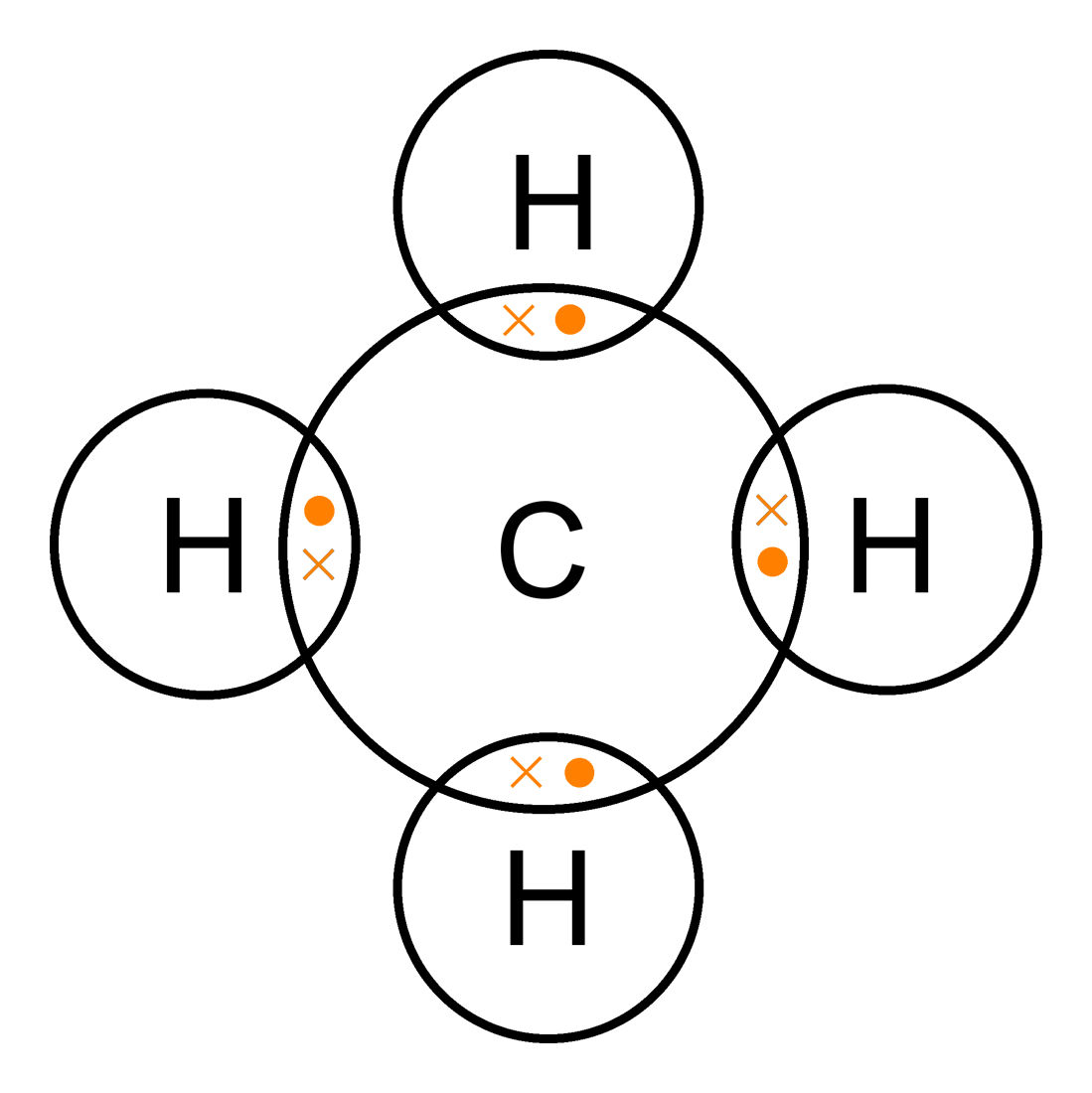
How would you draw a dot and cross diagram for an organic molecule containing up to 2 carbon atoms, e.g. Methane (CH₄)
Why are simple molecular structures gases, liquids or solids with low melting and boiling points?
Weak intermolecular forces hold together the molecules in the structures, which require little energy to overcome, and therefore the substance has a low melting and boiling point.
Why will the melting and boiling points of a simple molecular structure increase with increasing molecular mass? (In general)
As the molecular mass is higher, it will have more molecules. This means it will have more intermolecular forces. Even though these forces are weak between each particle, it is still more forces that need to be overcome to melt/boil the substance, so it requires more energy and has a higher melting and boiling point, the higher the molecular mass.
Why are substances with giant covalent structures solids with high melting and boiling points?
Giant covalent structures have many strong covalent bonds that require a lot of energy to break.
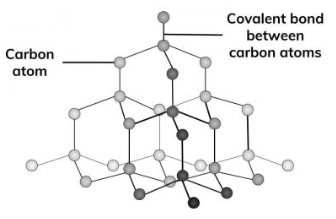
Why is diamond non-conductive? Why is it hard?
Diamond is non-conductive because it is made of carbon atoms. Each of the carbon’s four outer electrons is used up in the lattice, as each carbon atom is bonded to four other carbon atoms. This means there are no delocalised electrons to move and carry current, so it is non-conductive. Diamond is hard because it has many strong covalent bonds between its millions of atoms
Why is graphite soft? Why is it conductive?
Graphite is soft because there are only weak forces of attraction between layers, so the layers can slide over each other without breaking bonds. Graphite is conductive because each carbon atom is only bonded to three other carbon atoms. This means that one of the four of carbon’s outer shell electrons in unbonded and is a delocalised electron, so it can move and carry current.
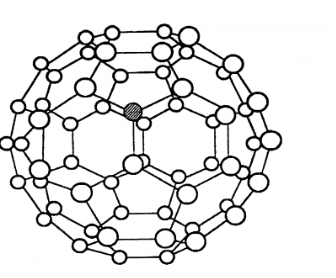
Why does C₆₀ fullerene (buckminsterfullerene) have a low melting and boiling point? Why can’t it conduct?
It forms molecules of 60 carbon atoms, but the molecule has weak intermolecular forces of attraction between them, which require little energy to overcome. Therefore, C₆₀ fullerene has a low melting and boiling point. Even though only 3 of carbon’s bonds are used, and other electrons are delocalised, these electrons cannot jump between different molecules, and so C₆₀ fullerene is non-conductive.