Chapter 9 (Enthalpy)
No description yet. This curated deck is ready for daily study.
Card preview (17)
What is the definition of enthalpy ?
Enthalpy is defined as the total heat content within a system
How to calculate enthalpy change ?
ΔH = H(products) - H(reactants) - because energy has to be conserved this change in energy has to be transferred, this takes place between system and your surroundings
What are exothermic reactions ?
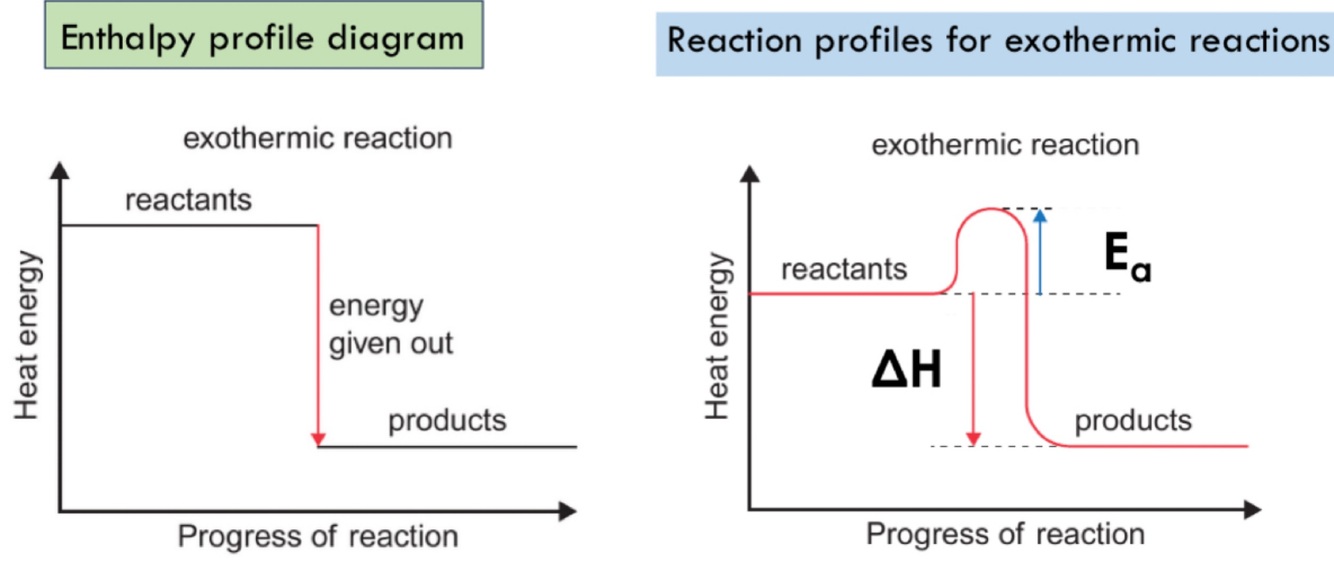
• transfer energy to their surroundings, this can be identified be an increase in temperature of the surroundings • ΔH = negative
What does the enthalpy and reaction profile looks like for an exothermic ?
What is an endothermic reaction?
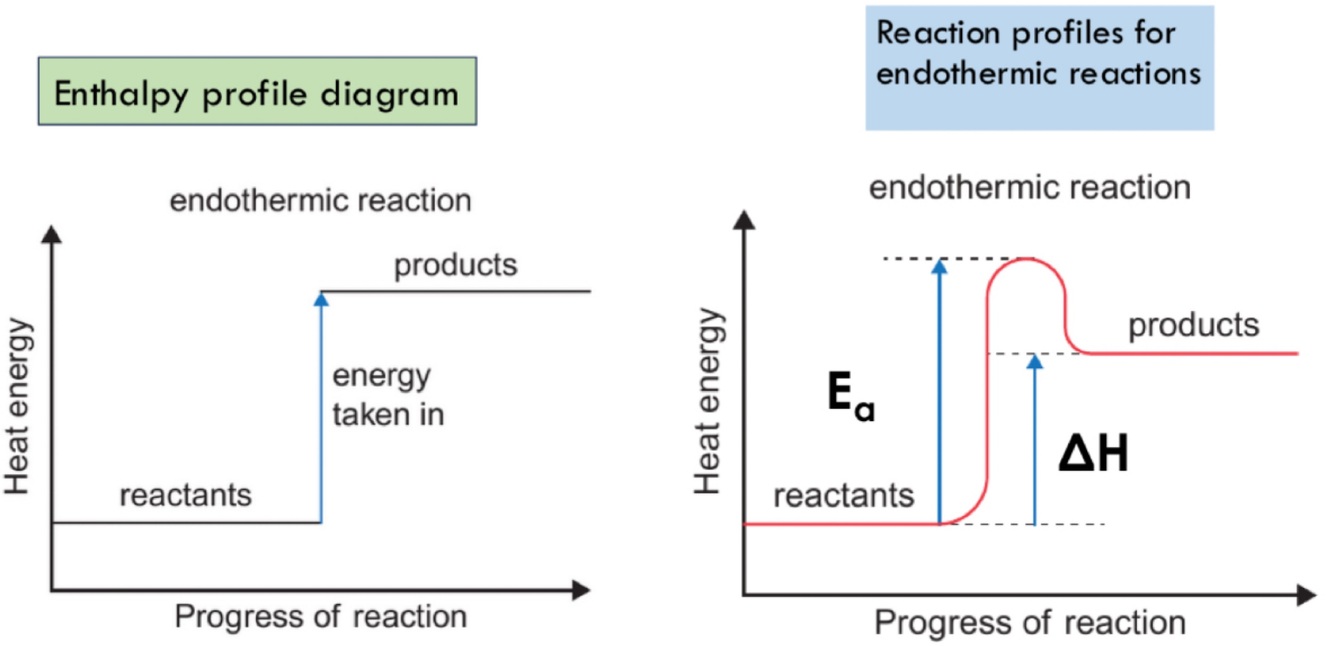
• Energy transfer from surroundings to the system • ΔH = positive
What does the Enthalpy and reaction profile look like for endothermic reactions ?
What are the standard conditions ?
• standard pressure: 100 kpa • standard temperature: 298K • standard concentration: 1 mol dm-3 • standard state: the physical state of a substance under standard conditions
What is the standard enthalpy changes of a reaction ΔHr ?
enthalpy change that accompanies a reaction in the molar quantities stated in an equation, under standard conditions with all reactants and products in their standard state
What is the standard enthalpy changes of formation ΔHf ?
Enthalpy change when 1 mole of a compound is formed from its elements, under standard conditions with all reactants and products in their standard state
What is the standard enthalpy change of formation of an element ?
• The formation of an element has to be 0 kj mol -1 • because you are forming an element from an element
What is standard enthalpy change of combustion ΔHc ?
Enthalpy change when 1 mole of a substance reacts completely with oxygen, under standard conditions with all reactants and products in their standard state
What is the standard enthalpy change of neutralisation ΔHneut ?
• enthalpy change that accompanies a reaction of an acid and base to form 1 mole of H2O under standard conditions with all reactants and products in their standard state • always -57 Kj mol-1
How to calculate heat energy in a temperature change ?
• Δq = mc Δt • where Δq is the change in energy • m is the mass • Δt is the change in temperature
How to determine enthalpy change of combustion ?
• Record the volume of water (use density to calculate) • record the mass of fuel before and after heating • record the temperature change of water • use q = mct (convert to kj) • find the moles of fuel burnt
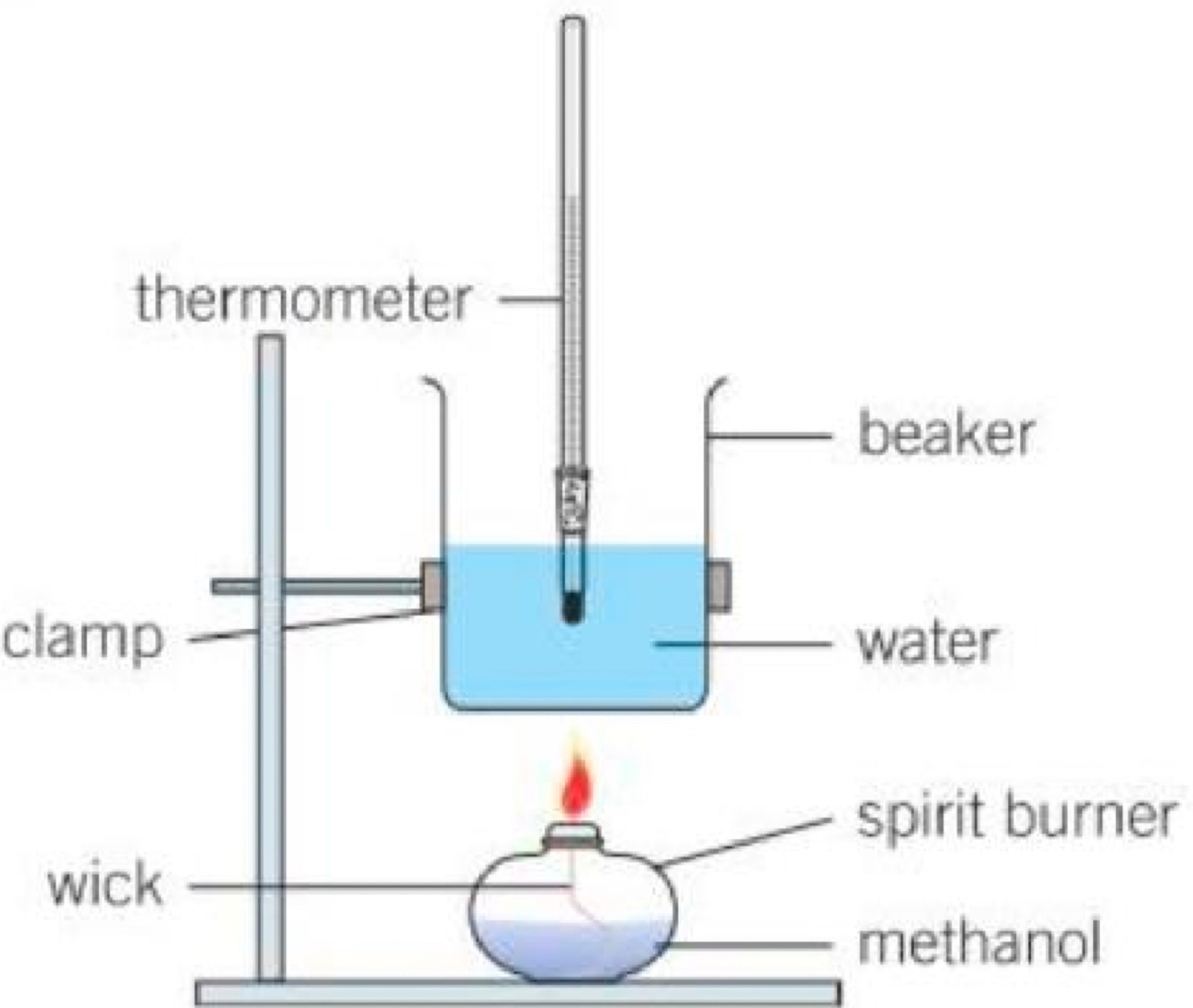
What are possible sources of error in the spirit burner ?
• heat transferred to beaker / surrounding air instead of H2O heat loss to surroundings • soot formed on beaker - incomplete combustion • draughts (winds) effect flame • evaporation of fuel - ethanol vaporises very easily - weigh as soon as possible after extinguishing the flame • non-standard conditions
What is the definition of bond enthalpy and average bond enthalpy ?
• Energy required to break 1 mole of a specified type of bond in a gaseous molecule • this value depends on the bond environment • average bond enthalpies are used for bonds that occur in different molecules (different environments)
What are the limitations of average bond enthalpy ?
• using average bond enthalpies rather than the actual energy involved to make and break • the energy of individual bonds will be slightly different • average enthalpy is in gaseous state, so if something is liquid you need to take into account the enthalpy change for condensing from gas to liquid