3 - Physical chemistry (b) Rates of reaction
No description yet. This curated deck is ready for daily study.
Card preview (12)
How can rate of reaction be calculated?
Rate of reaction = amount of reactant used or amount of product formed / time The units of rate of reaction is usually in grams per minute (g/min)
How would you investigate the rate of reaction between marble chips and hydrochloric acid?
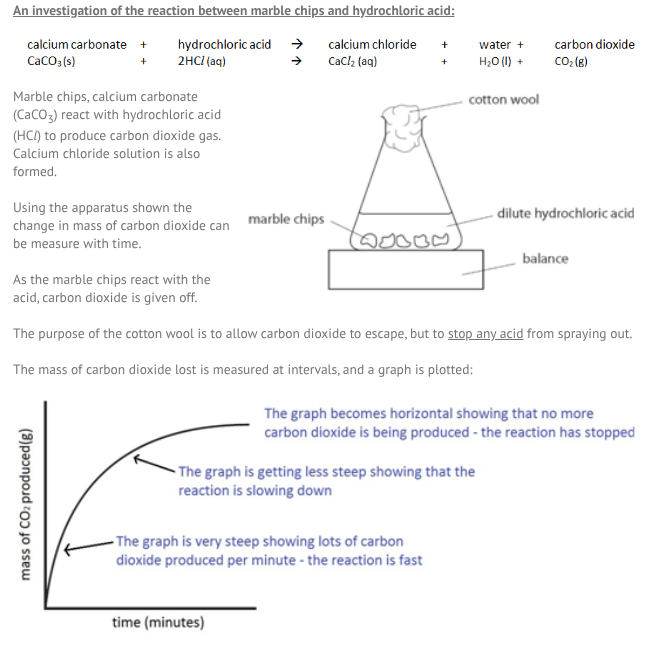
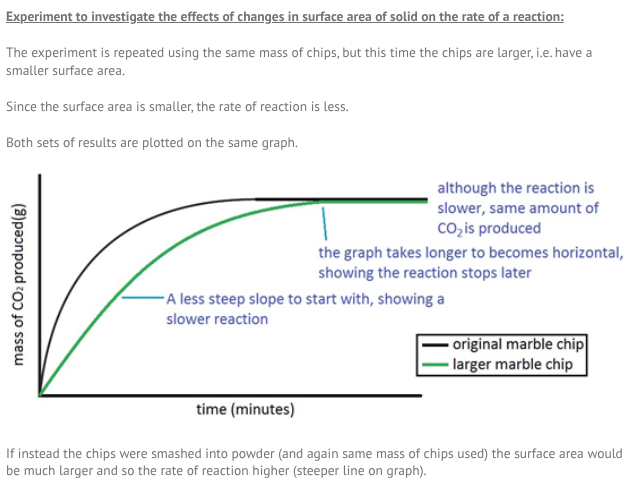
How would you investigate the effects of changes in surface area of a solid on the rate of reactions?
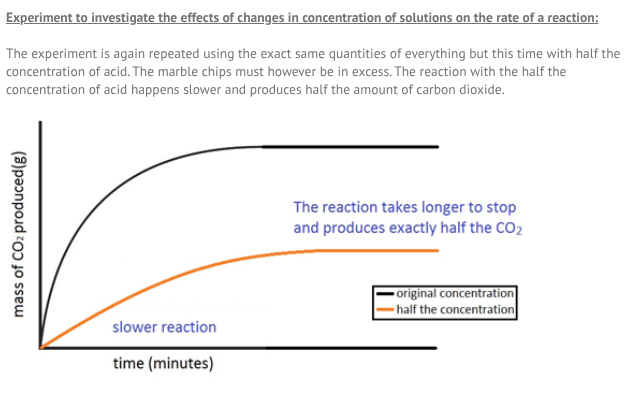
How would you investigate the effects of changes in concentration of solutions on the rate of reaction?
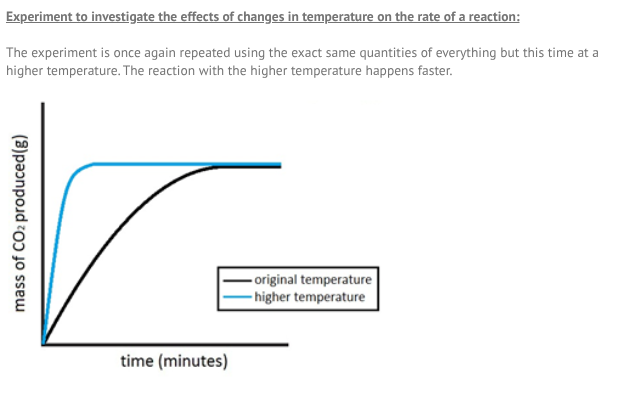
How would you investigate the effects of changes in temperature on the rate of a reaction?
How would you investigate the effect of using a catalyst on the rate of reaction?
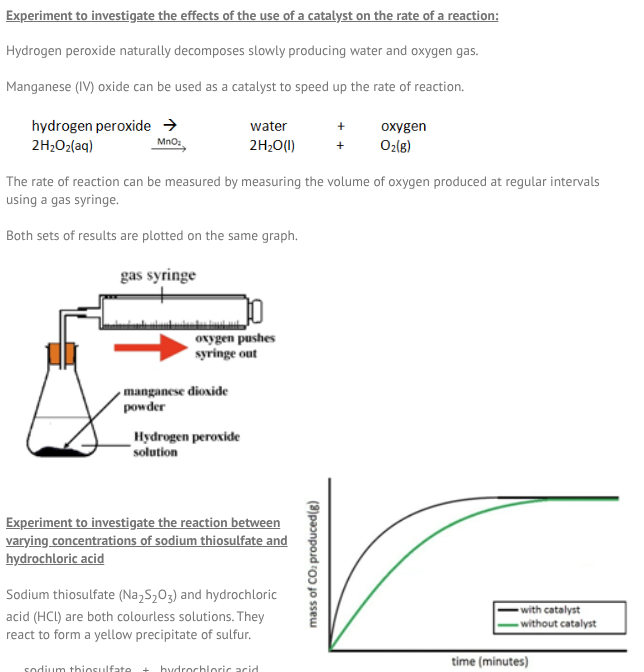
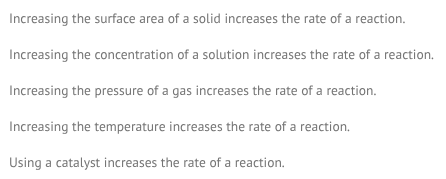
How does increasing: The surface area of a solid The concentration of a solution The pressure of a gas The temperature Or the use of a catalyst Affect the rate of reaction?
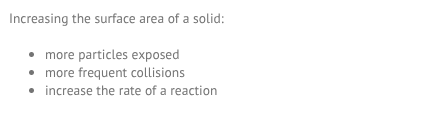
Why does increasing the surface area of a solid increase the rate of reaction?
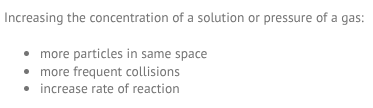
Why does increasing the concentration of a solution or the pressure of a gas increase the rate of reaction?
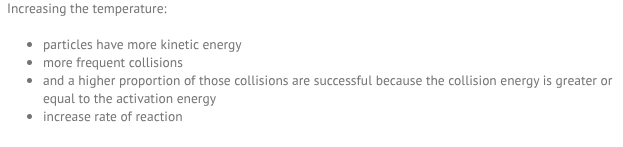
Why does increasing the temperature increase the rate of reaction?
What is a catalyst?
A substance that increases the rate of reaction, but is chemically unchanged at the end of the reaction.
How does a catalyst work?
It provides an alternative pathway with lower activation energy.