Mass Spectrometry Fragmentation Mechanisms
No description yet. This curated deck is ready for daily study.
Card preview (24)
LO
• Revision of key learning outcomes o Ionisation o Mass spectrum Molecular ion, isotopic mass o General principles of fragmentation • Accurate mass • Fragmentation o Simple fission Charge localised on heteroatom Cleavage beta-position from heteroatom • To be able to interpret the fragmentation of simple mass spectra • To be able to confirm the identity of substances • To be able to facilitate the identification of unknown substances
What is the molecular ion?
Generally, the largest m/z
What must you look for with the molecular ion?
• **Look for unusual losses M+.-4 to M+.-14 ** o Dot indicates odd number of electrons o .H, H2, .H & H2,… o (Loss of He, Li, Be, B, C, …CH, ..CH2 does not occur due to the high amount of energy required for this) o .CH3 this is a common loss (loss of 15 mass units)
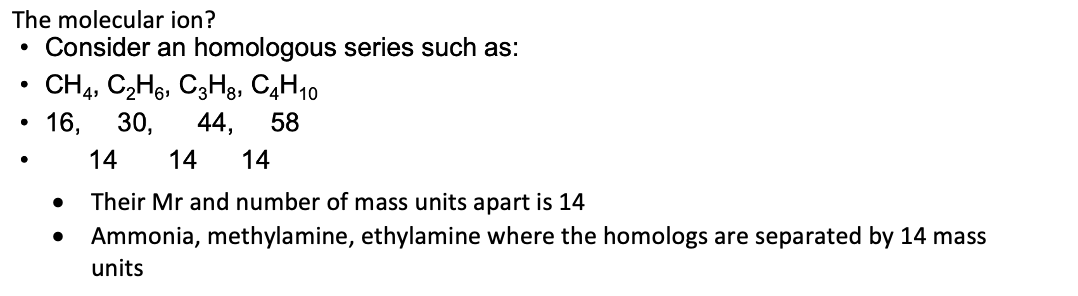
The molecular ion
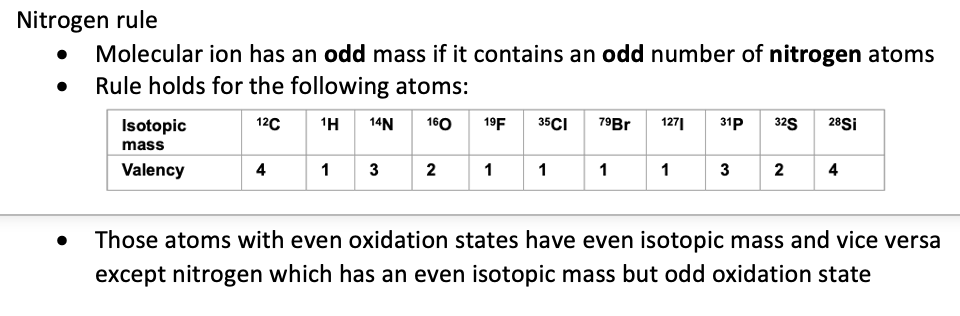
The nitrogen rule
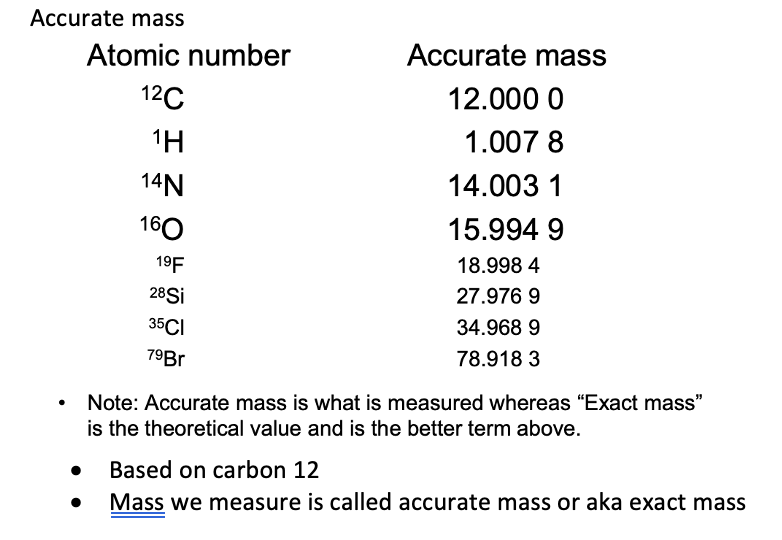
Accurate mass
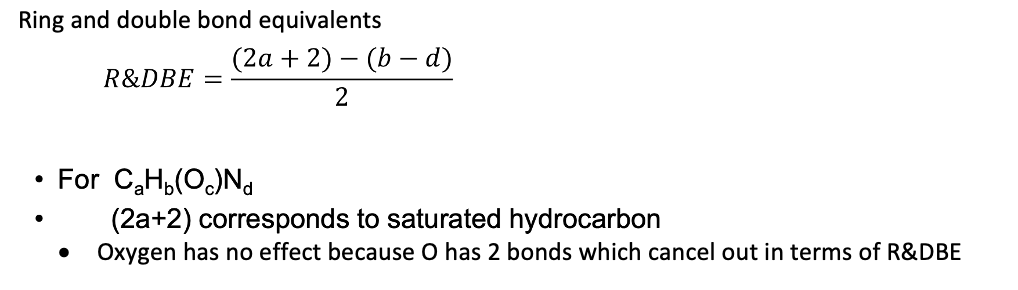
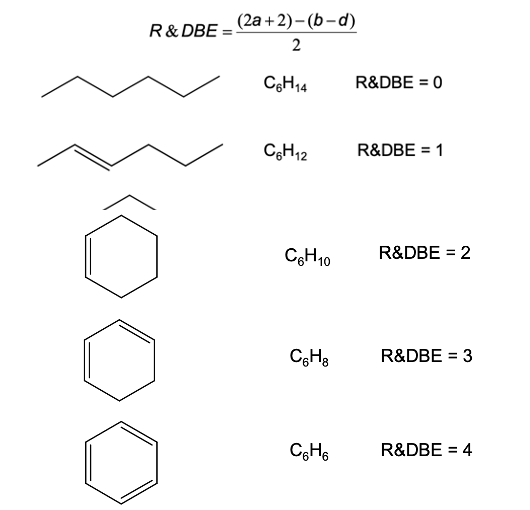
How to calculate the Ring and double bond equivalents
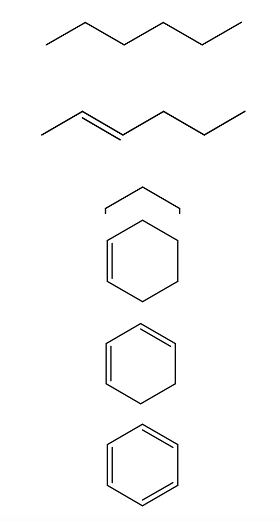
Calculate the ring and double bond equivalences for the following examples
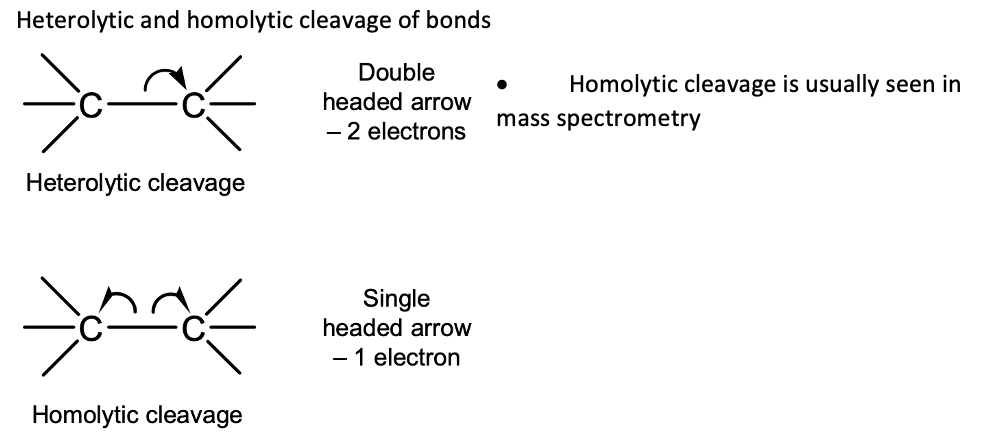
Tell me about the Heterolytic and homolytic cleavage of bonds
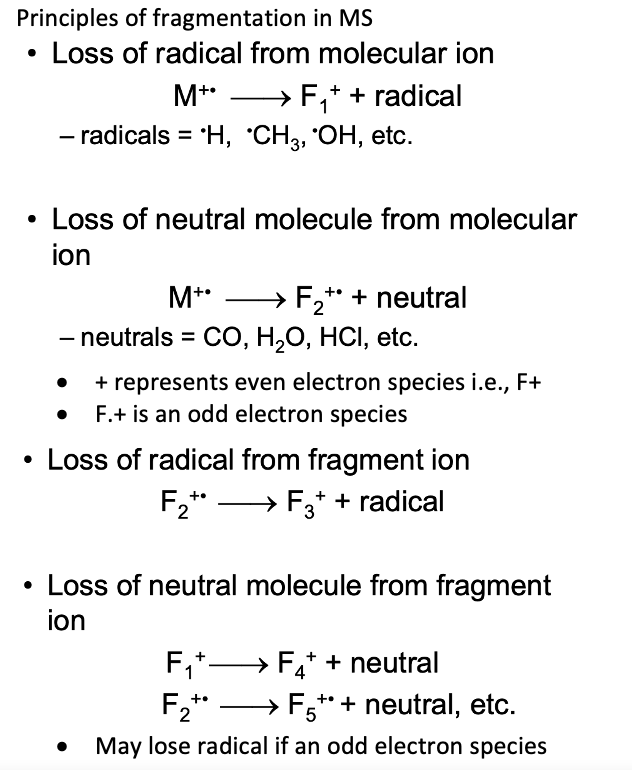
How would the following circumstances be written following the principles of fragmentation: * Loss of radical from molecular ion * Loss of neutral molecules from molecular ions * Loss of radical from fragment ion * Loss of neutral molecule from fragment ion
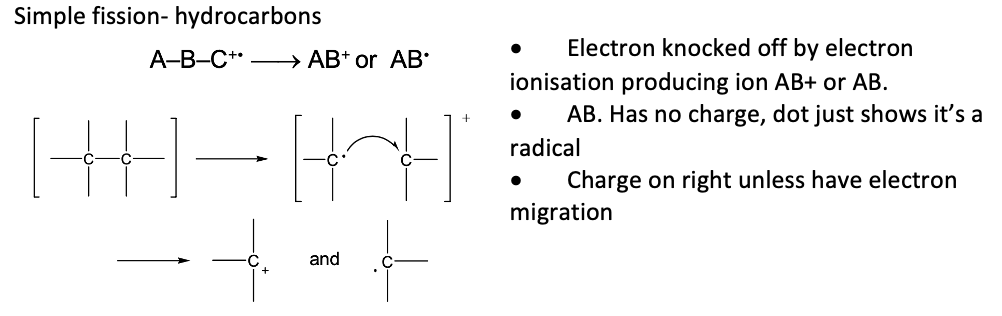
Simple fission and hydrocarbons
Identify the simple hydrocarbon
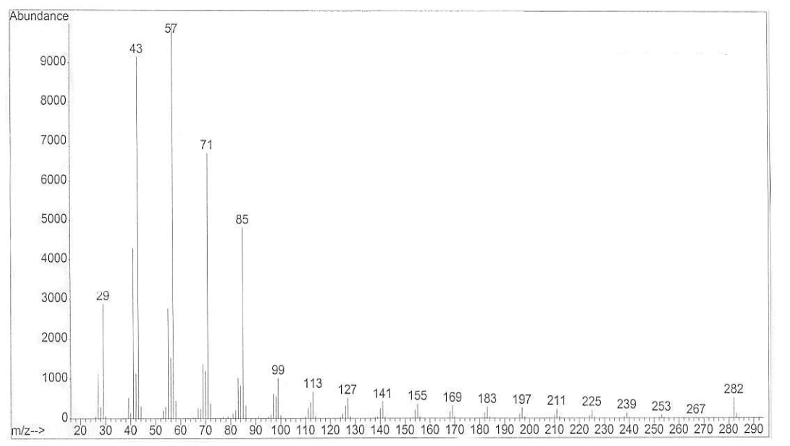
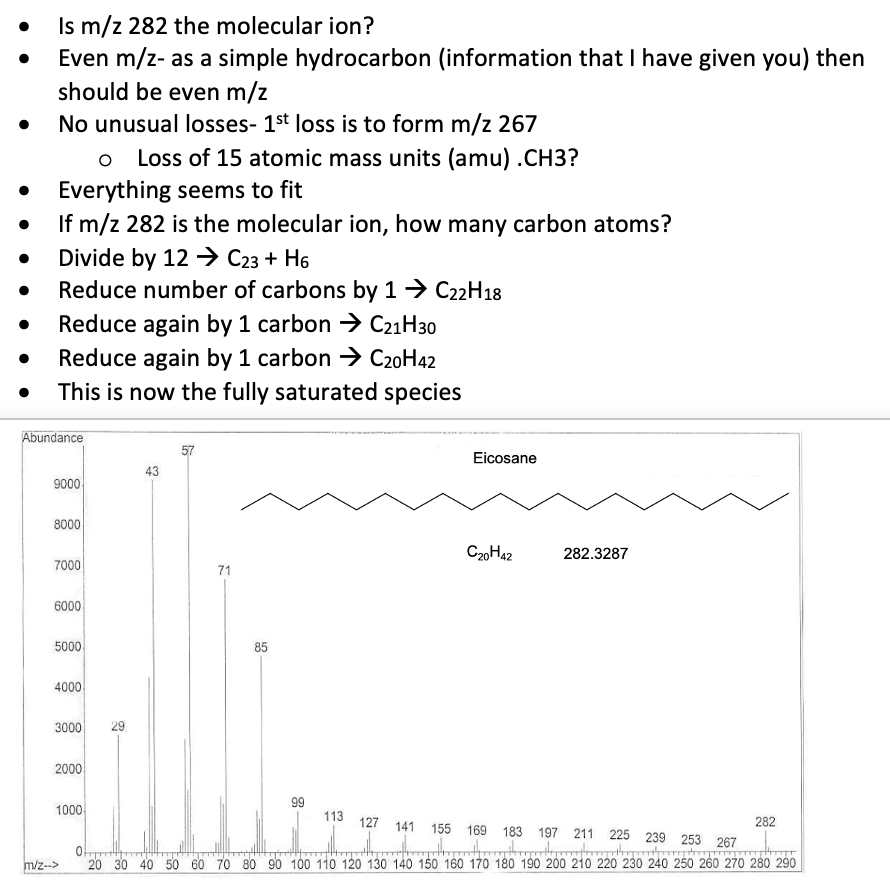
Identify the simple hydrocarbon
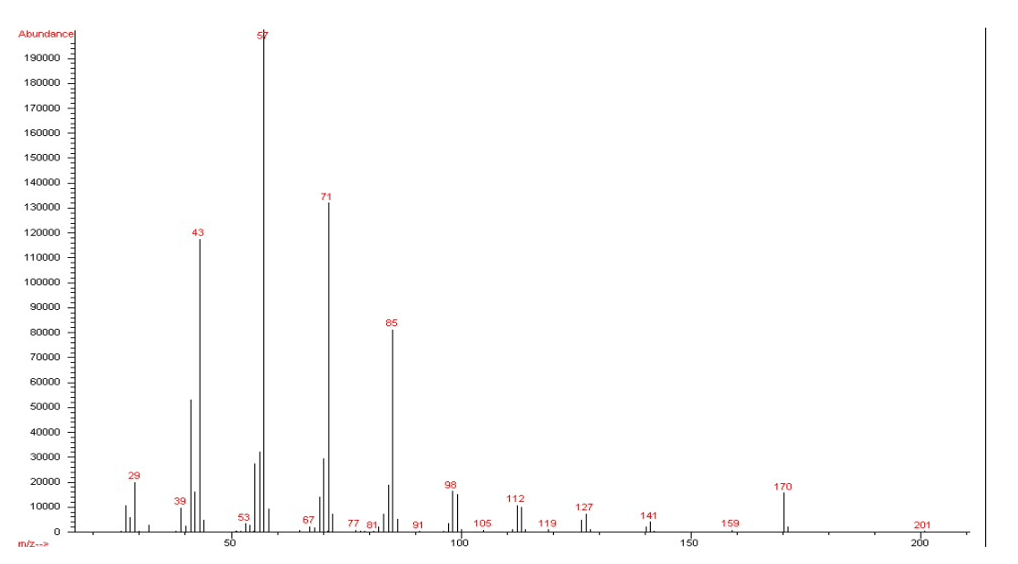
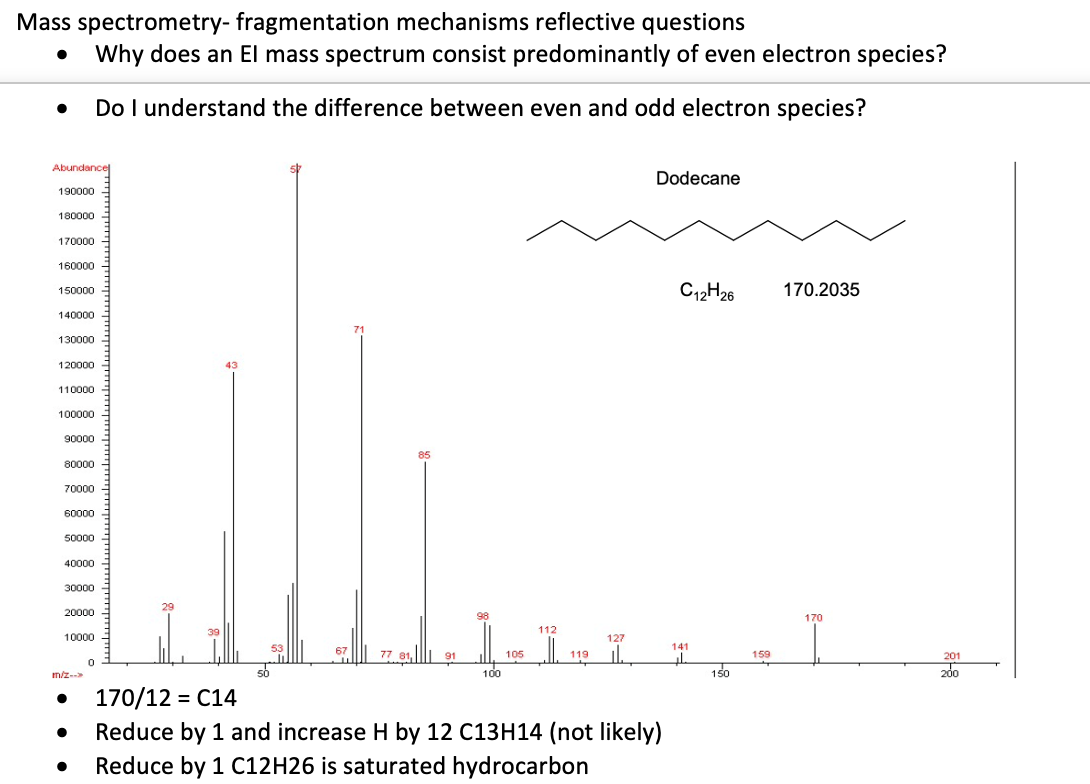
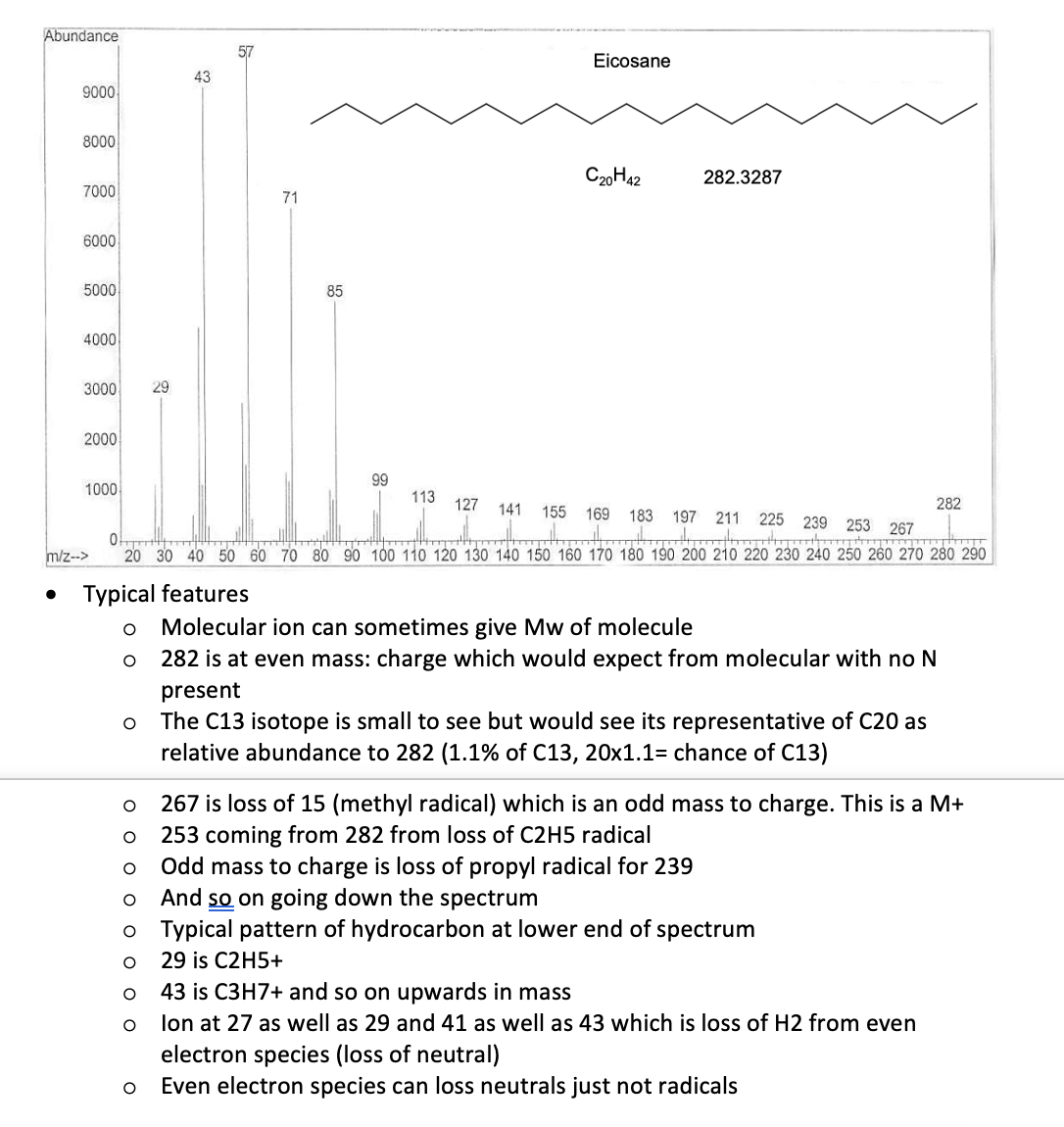
Typical features to observe in a mass spectra
LO
• Fragmentation- simple fission o Charge localised on heteroatom o Cleavage beta-position from heteroatom • Fragmentation rearrangements o Ether re-arrangement o McLafferty re-arrangement • Summary
Simple fission- heteroatomic compounds
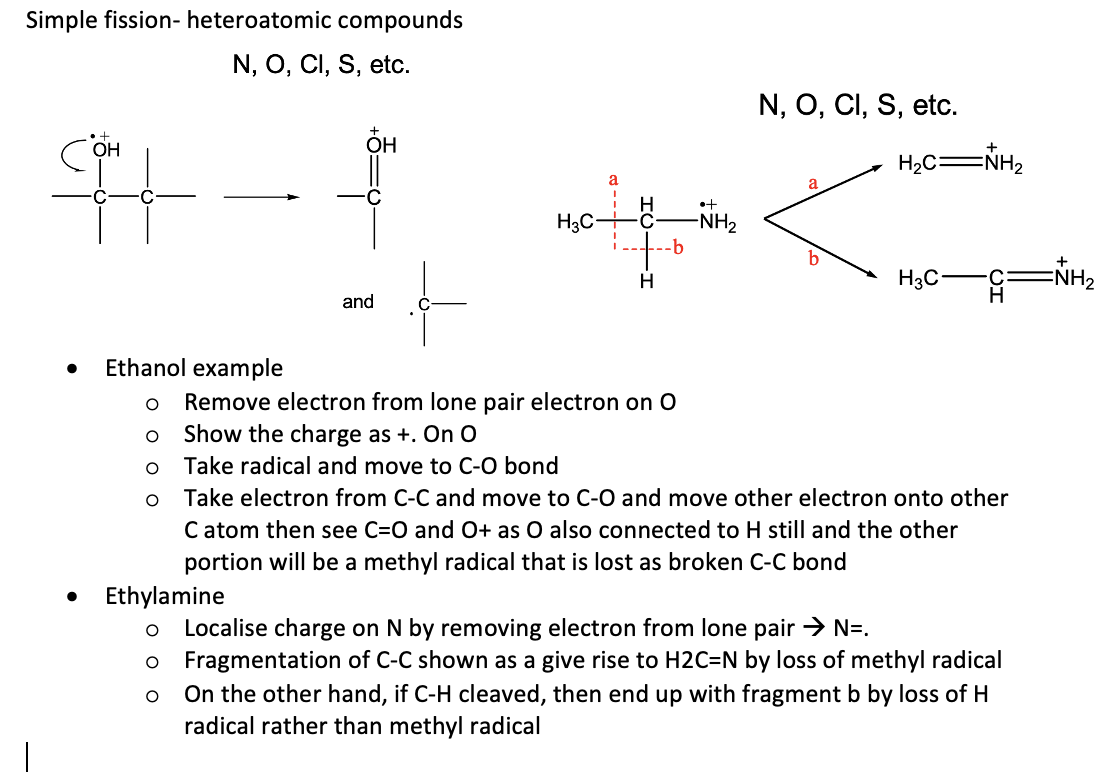
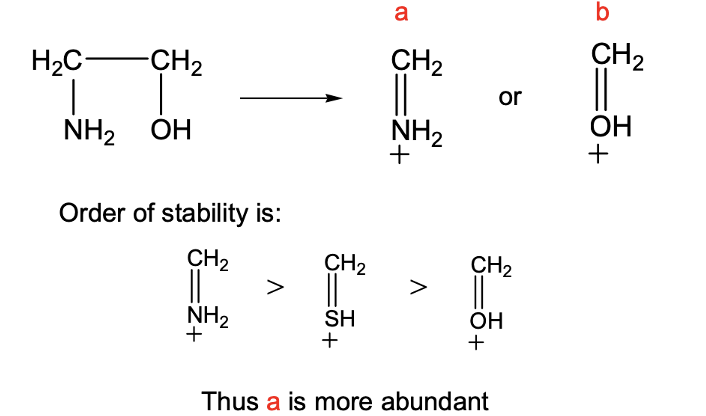
• if have N and O in same molecules o Localise charge on N or O o If on N then end up with species a and if charge on O then end up with species b o Both can occur but N is more stable so a is more abundant o Mass spec looks at relative abundance
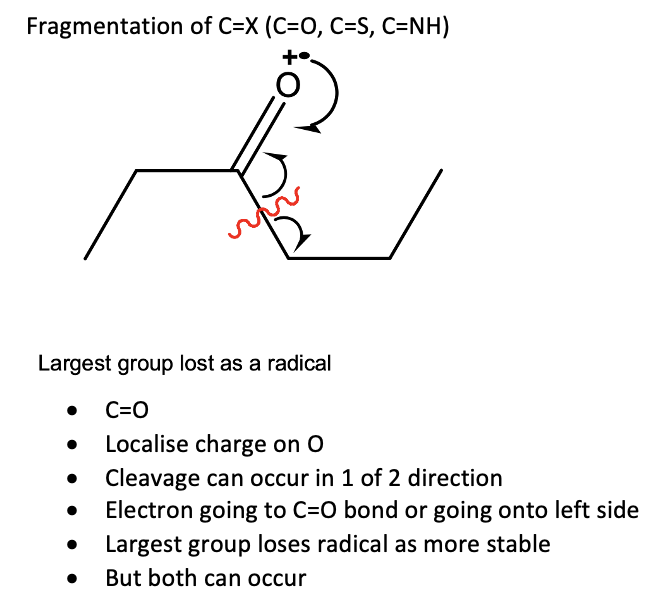
Fragmentation of C=X (C=O, C=S, C=NH)
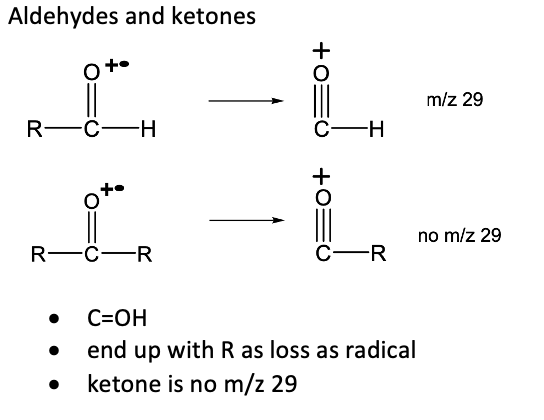
Aldehydes and Ketones
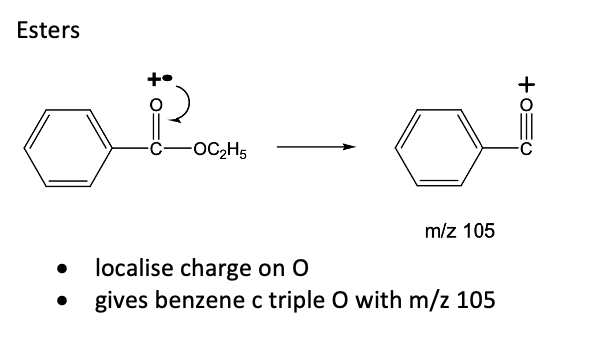
Esters
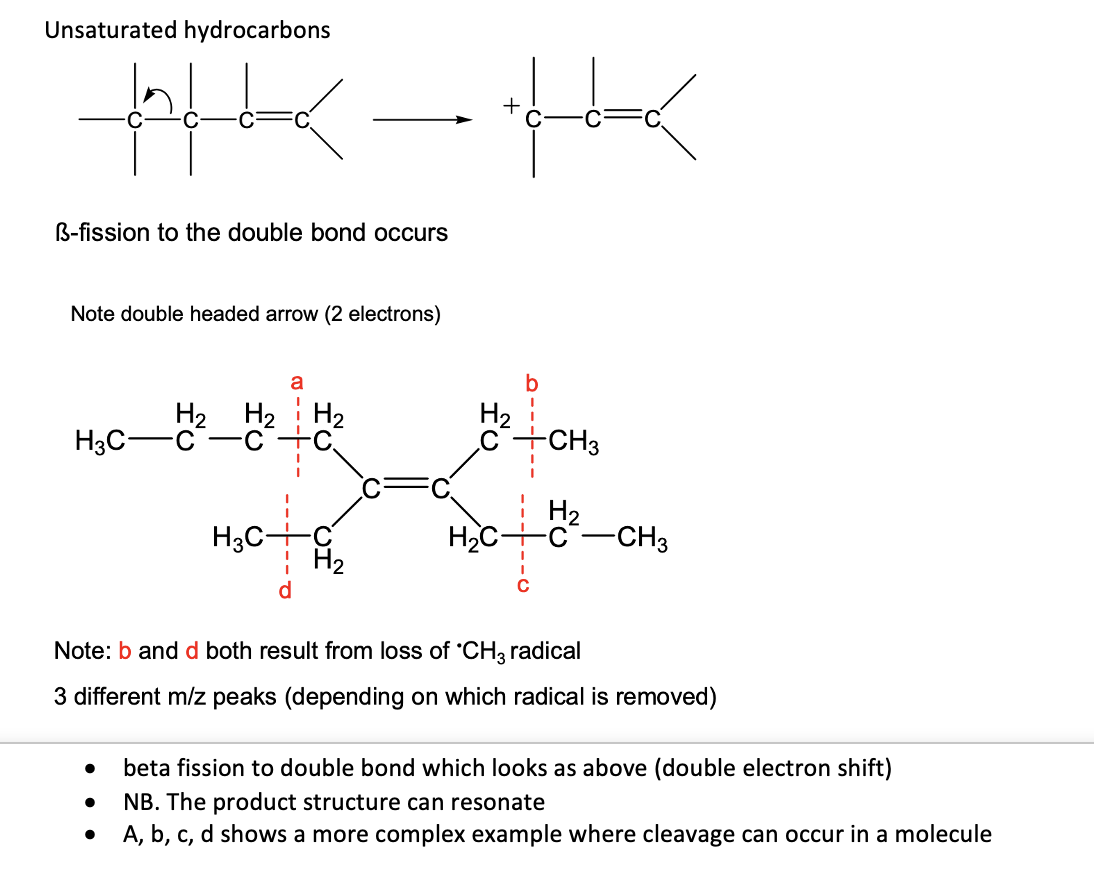
Unsaturated hydrocarbons
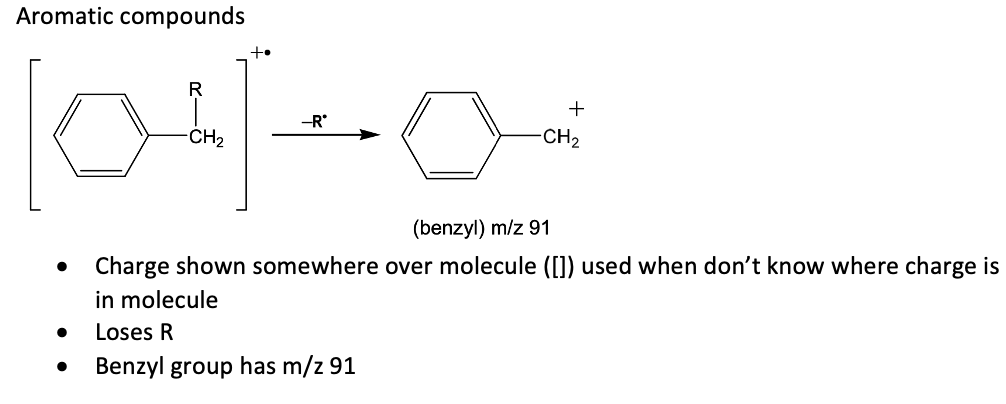
Atomatic compounds
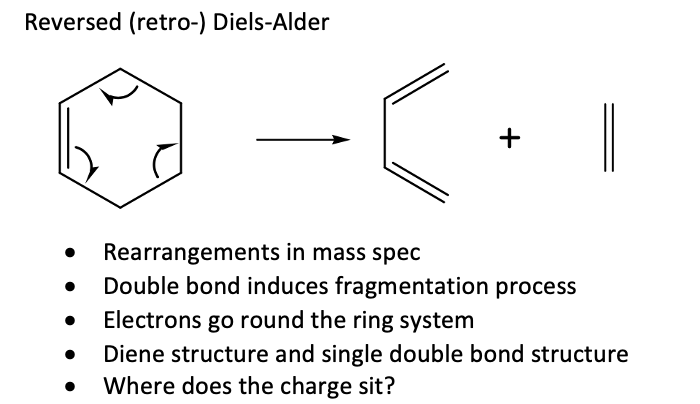
Reversed (retro-) Diels-Alder
What are the Two general rules for fragmentation in MS?
*** McLafferty ** o Stabilisation of charge is the most important factor for determining the fragmentation of a molecules o Even electron species are most stable than those with an odd number of electrons *** Stevenson ** o In a fragmentation the charge will go with the fragment with the lower ionisation potential