Nucleic Acids to Protein Structure
No description yet. This curated deck is ready for daily study.
Card preview (24)
How is the number of molecules present related to the cell’s size?
Proportionally; As the cell increases in size, the number of molecules also increases, leaving the number of molecules at the same concentration.
About how many protein molecules are there per cell?
10^6 - 10^10 protein molecules per cell
What does a copy number indicate?
how many identical matches there are to one molecule
How many copies of each protein molecule do yeast cells have on average?
50-1000s of copies
How many copies of each protein molecule do mammalian cells have on average?
10^5 - 10^6 of copies
What is the average concentration for each protein in a cell?
10nM - 1 uM
Is the copy number of one type of protein constant among individual cell types?
No, the copy number can be very strictly regulated or can vary between generations. Among cells of the same type, the level of a given protein can vary severalfold.
What can happen if the copy number of a protein changes within a cell?
The concentration of proteins can change as well.
What is a proteome?
the complete inventory of all the proteins a cell can have
Which is larger, the number of different proteins or the number of genes?
the number of proteins
Does the cell contain its entire proteome at any one time?
No, only has a subset of the total inventory.
How many proteins are expressed within a mammalian cell at any given moment?
17000 (less than a fifth of the proteome)
How many proteins can 20,000 cells generate?
Over 100,000
Where are polypeptides synthesized?
on a ribosome
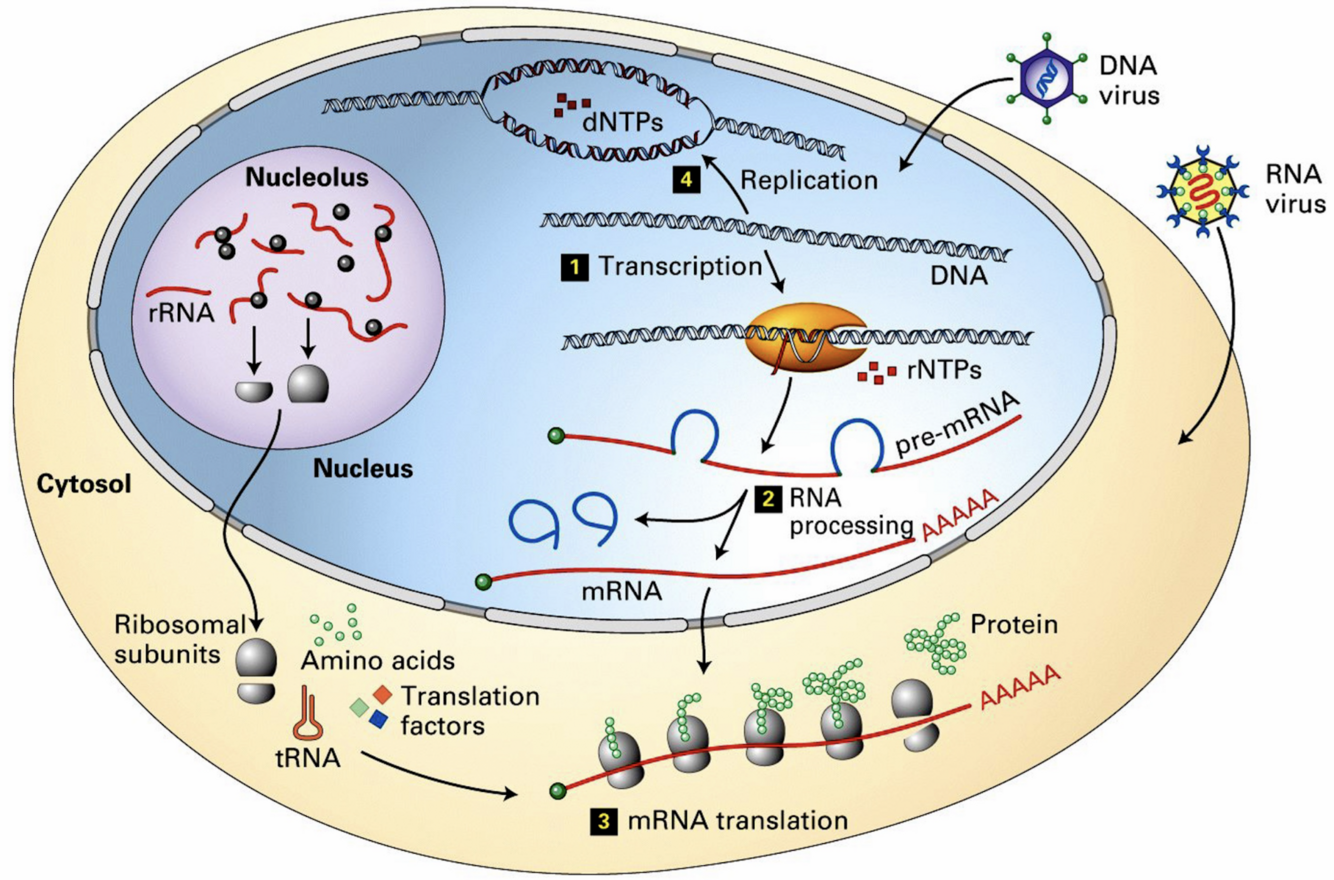
Is protein folding co- or post-translational?
Can be both
Is protein modification co- or post-translational?
Can be both
Is protein targeting/sorting co- or post-translational?
Can be both
Is protein degradation co- or post-translational?
post-translational
Describe the principle for self-assembly.
Neither energy nor extrinsic steric information is required for folding. Denaturing or renaturing depends on the environment.
Where does protein folding and targeting occur?
the cytoplasm, not the nucleus
What joins amino acids together?
covalent peptide bonds
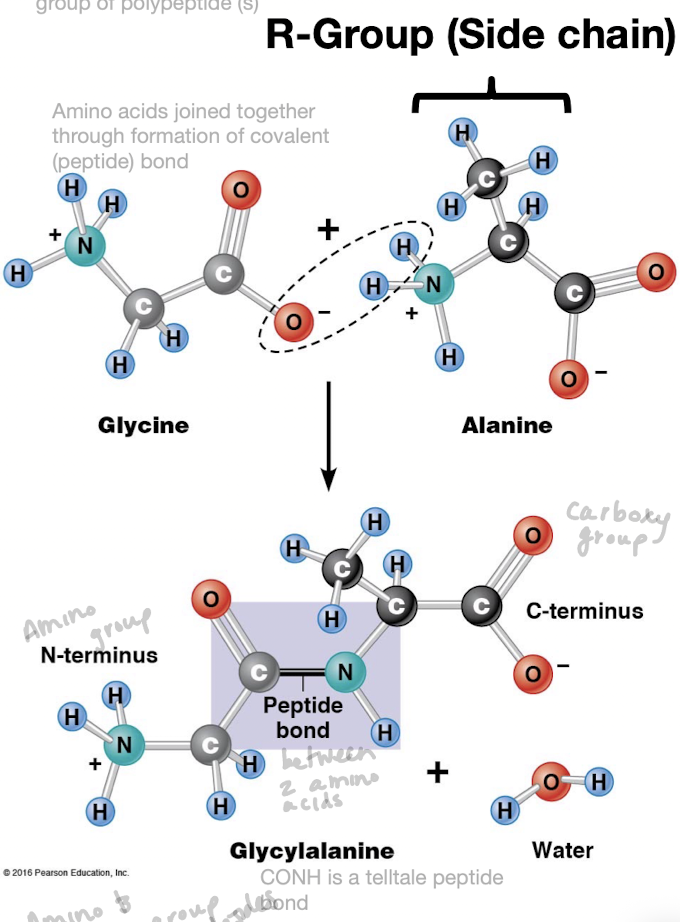
What is the primary amino acid level of peptide organization?
sequence of amino acids that specifies 3d structure
Describe the hydrophobic effect.
Water molecules interact with each other near nonpolar molecules, forming a cagelike structure around hydrophobic molecules.
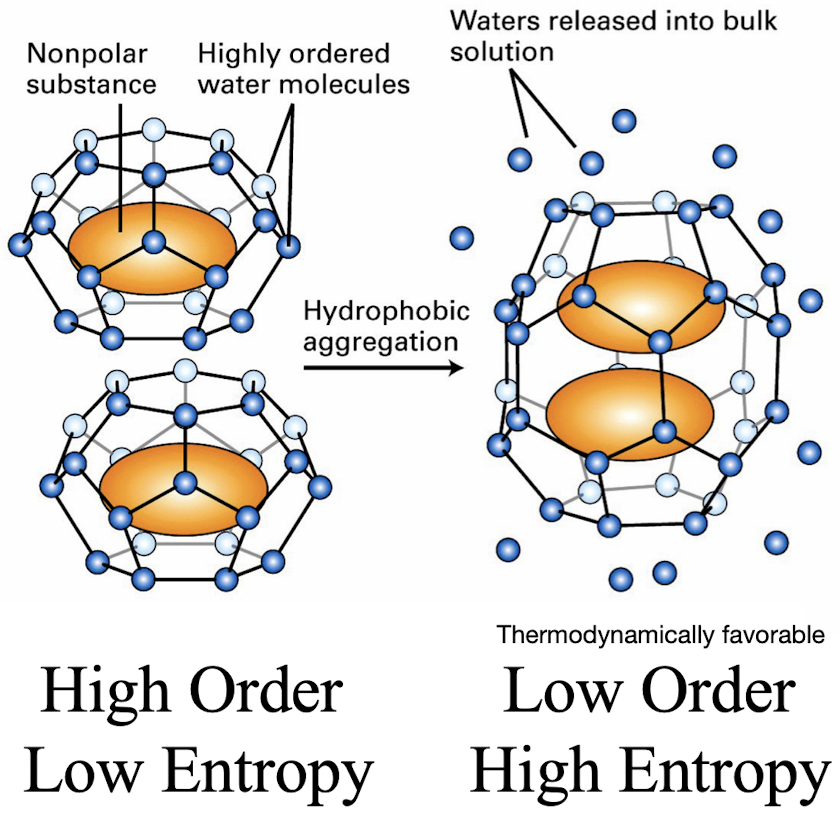
What causes the hydrophobic effect?
Water molecules’ inability to form hydrogen bonds with nonpolar molecules.