The 18 (and 16) electron rule
No description yet. This curated deck is ready for daily study.
Card preview (14)
Stable organometallic complexes are formed when….
The sum of the (neutral) metal valence electrons plus the sum of the electrons considered to be donated by the ligands (considering net charge) equals 18
For square planar complexes an analogous….
16-electron rule is used
Why is 18 electrons considered stable?
• So usually: 1xs + 3xp = 8 electron = sp³ • And then: 5xd = 18 electrons = sp³d • This means for 18 (and 16) electron complexes the bonding and non-bonding orbitals are full (and the antibonding orbtials are empty) • (there was examples where the 18e rules is violated - but good rule of thumb)
What is the key rule for the covelent model of electron counting
For a transition metal the number of electrons the metal donated to the electron count is the same as its group number
What are expections to the 18-electron rule?
• small Δ ligand (anti-bonding orbtials lower in energy) • Low dⁿ count, i.e. high oxidation state (hard to get enough ligands around the metal - sterics) • Electron rich d⁸ metal complexes, become square planar and avoid populating the dx²y² orbitals) - most common reason
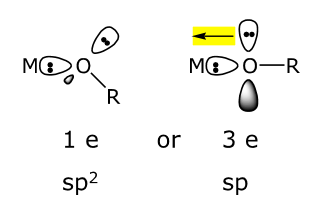
The orbital diagram below is for an Alkoxide How can 1e- be donated or 3e- be donated?
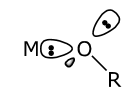
If the metal is electron deficient, the LP will be co-ordinately donated towards the metal, resulting in 3e- being donated This results in the alkoxide being either sp² or sp³ hybridised
The orbital diagram below is for an amide How can 1e- be donated or 3e- be donated?
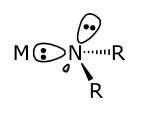
If the metal is electron deficient, the LP will be co-ordinately donated towards the metal, resulting in 3e- being donated This results in the amide being either sp² or sp³ hybridised
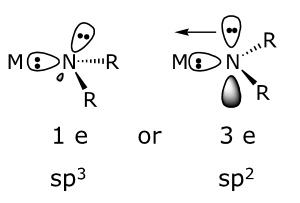
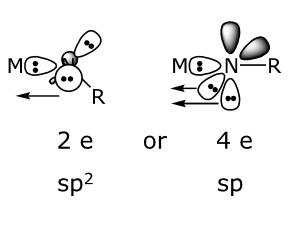
The orbital diagram below is for an imide How can 2e or 4e be donated?
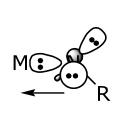
• 1e- will form a σ-bond • 1e- from one p orbital will form a π-bond • 2e- from another p-orbtial will coordinately donate (if the metal is electron deficient) • This means the imide can be sp² or sp hybridsed
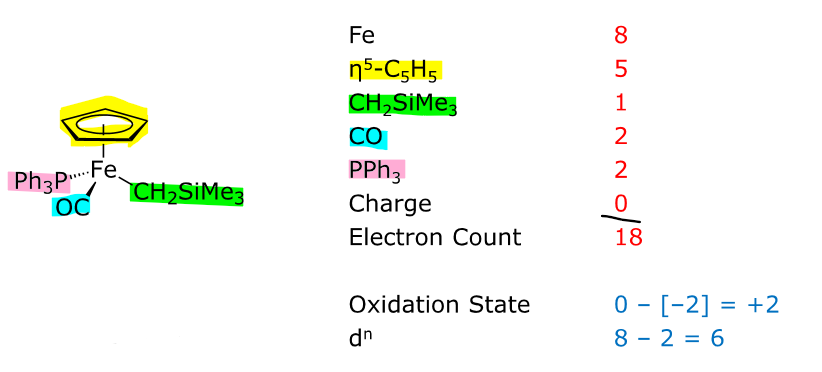
What is the electron count and dⁿ value for the following compound
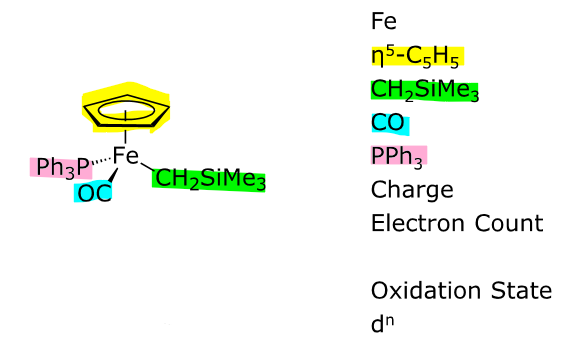
Electron count = 18 dⁿ = 6
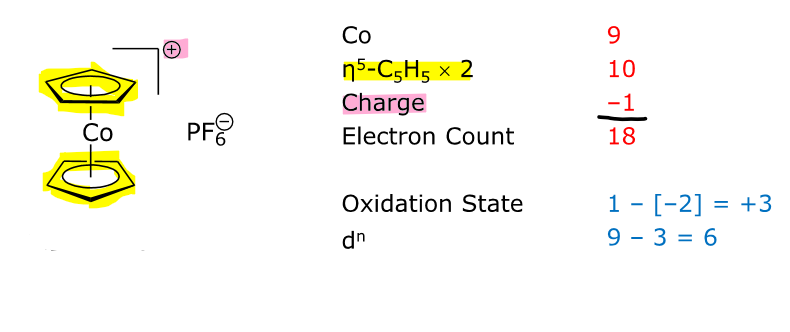
What is the electron count and the dⁿ for the following compound?
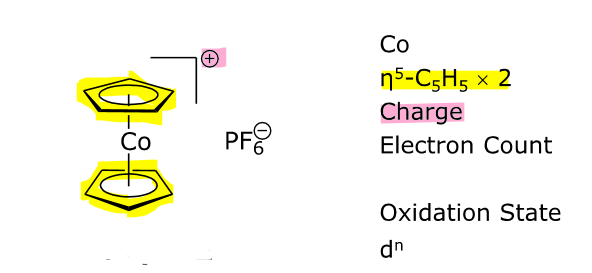
Electron count: 18 dⁿ: 6
What is the electron count and the dⁿ for the following compound?
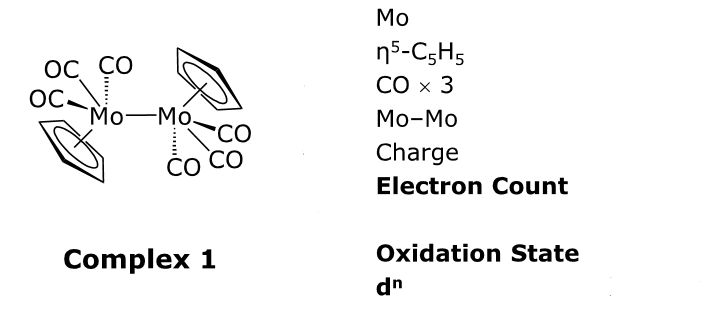
electron count: 18 dⁿ: 5
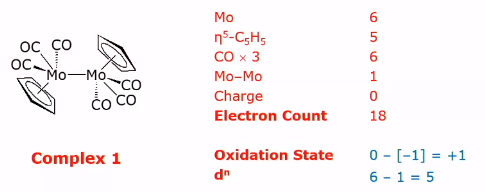
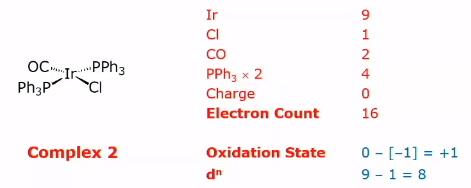
What is the electron count and the dⁿ for the following compound?
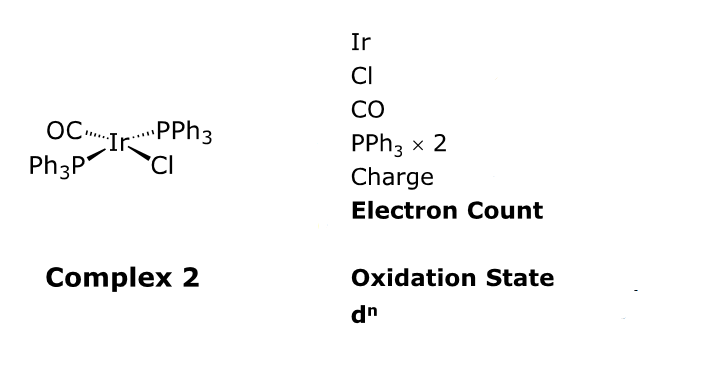
electron count: 16 dⁿ: 8 (square planar)
What is the electron count and the dⁿ for the following compound?
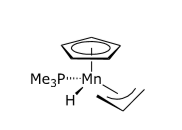
electron count: +3 dⁿ: 4
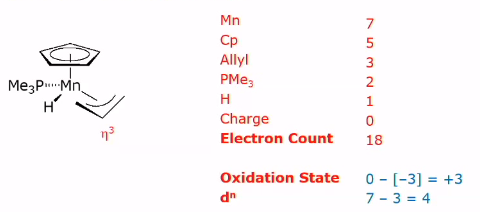
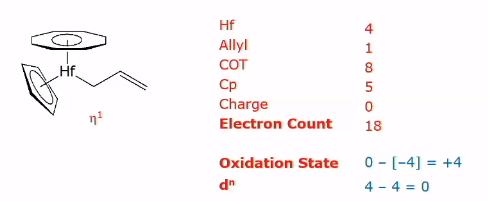
What is the electron count and the dⁿ for the following compound?
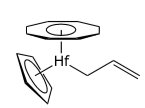
electron count: 18 dⁿ: 0