Titration
No description yet. This curated deck is ready for daily study.
Card preview (10)
Ligand
• All ligands are lone pair donors. In other words, all ligands function as Lewis bases. • binds to a central metal atom to form a coordination complex
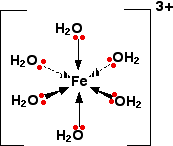
Monodentate ligand
• Donate to metal ion at one point • useless in pharmaceutical analysis • ie, water, ammonia and chloro ligands
Bidentate ligand
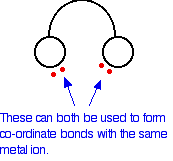
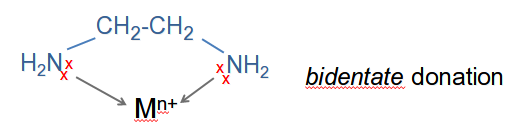
• Bidentate ligands have two lone pairs, both of which can bond to the central metal ion. • Like a pair of headphones, carrying lone pairs on each of the “ear pieces”. These will then fit snuggly around a metal ion.
Bidentate ligand example
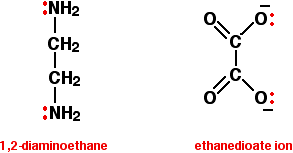
• Structure of ethylenediamine • aka 1,2-diaminoethane
Multidentate ligand/Polydentate ligand
• In pharmaceutical analysis, multidentate ligands are more important • Donates to metal through more than one point
Hexadenate ligand
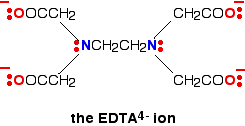
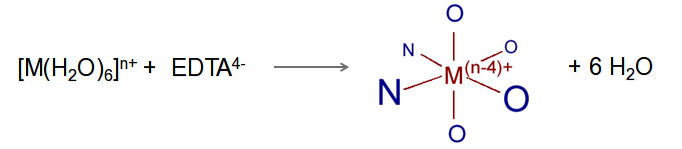
• A hexadentate ligand has 6 lone pairs of electrons • all of which can form co-ordinate bonds with the same metal ion.
Hexadentate ligand example
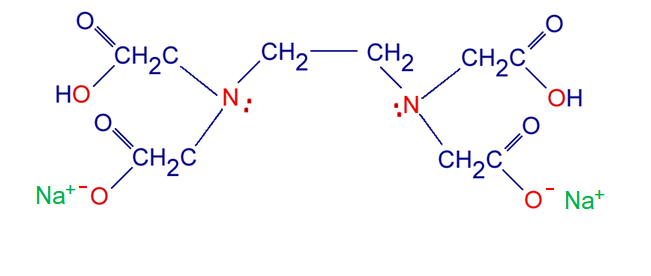
• common example:EDTA • Stands for Ethylenediaminetetracetic acid (EDTA) • It’s a derivative of etyhlenediamine • EDTA is used as a negative ion - EDTA4-.
Chelation
• Greek word=claw • The formation of rings with multidentate ligands • It’s very thermodynamically favoured • Such complexes have excellent stabiliy. • In diagram, sp3 hybridisatrion with lone pair on N
Ethylenediaminetetraacetic acid (EDTA)

• Chelating agent used in determination of metal ions • It can be haxadentate, wrapping itself around the metal ion • When complexing, EDTA can react in its fully ionised form, EDTA4- • It’s rarely used fully ionised it’s often complexes metal ions with fewer than 6 co-ordination bonds
EDTA in pharmaceutical analysis
Is often used as its disodium salt, Na2H2Y Only four sites available for complexation