Chapter 9
No description yet. This curated deck is ready for daily study.
Card preview (24)
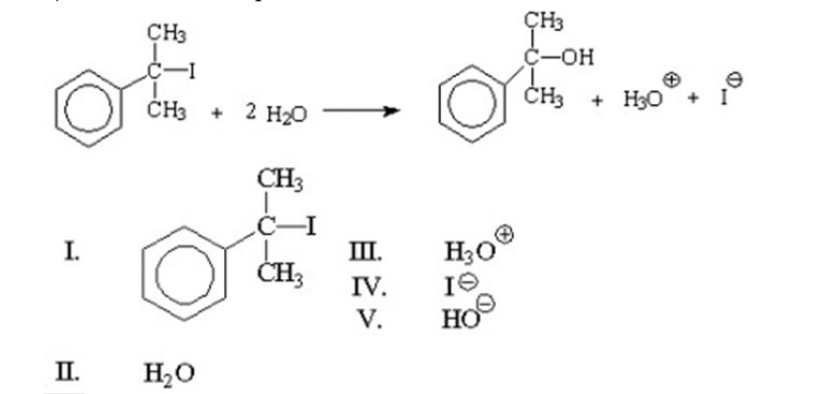
What is the nucleophile in the reaction shown below? A) I B) II C) III D) IV E) V
Answer: B
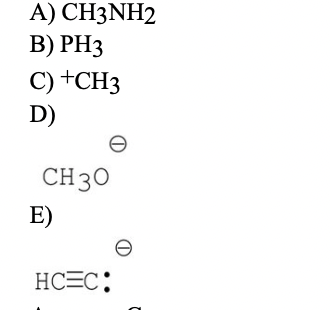
Which of the following is not a nucleophile?
Answer: C
Which of the following best describes the carbon-chlorine bond of an alkyl chloride? A) nonpolar; no dipole B) polar; δ+ at carbon and δ- at chlorine C) polar; δ- at carbon and δ+ at chlorine D) ionic E) none of the above
Answer: B
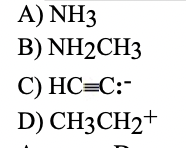
Which of the following is not normally considered to be a nucleophile?
Answer: D
Give the mechanism including the transition state.
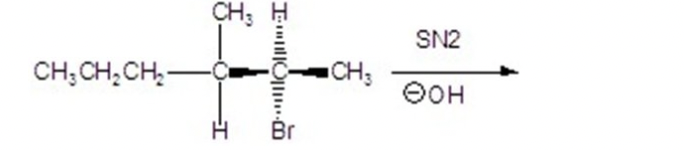
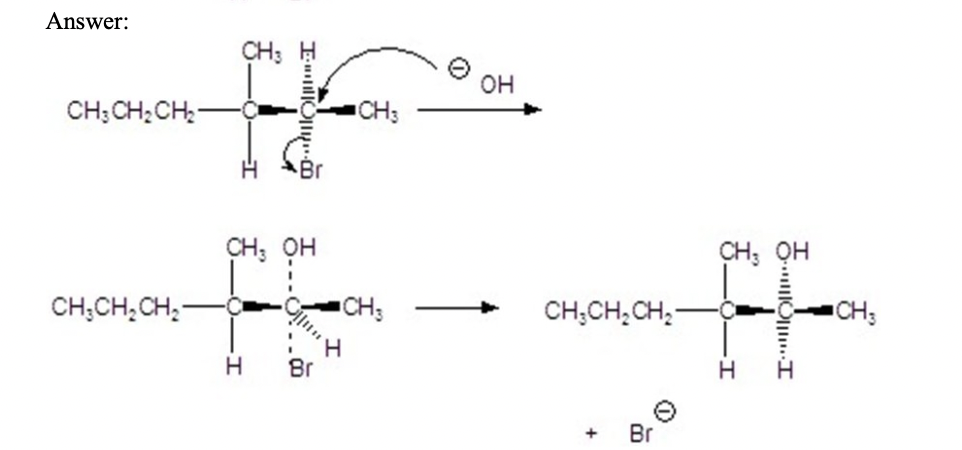
Give the mechanism including the transition state.

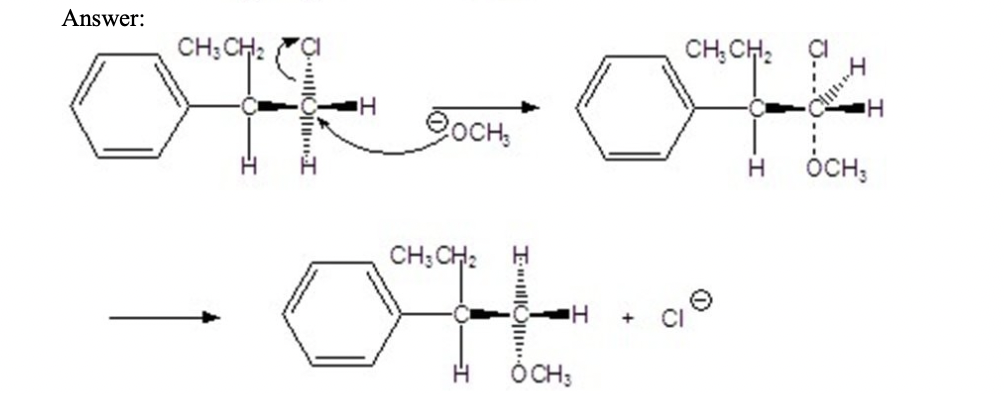
Identify the alkyl halide that reacts the fastest in a SN2 reaction. A) 2-chloro-2-methylpropane B) 2-chlorobutane C) 1-chlorobutane D) chloromethane
Answer: D
Identify the alkyl halide that reacts the fastest in an SN2 reaction. A) 1-chloropropane B) 1-bromopropane C) 1-fluoropropane D) 1-iodopropane
Answer: D
Identify the strongest nucleophile in an SN2 reaction. A) isopropoxide ion B) tert-butoxide ion C) ethoxide ion D) tert-pentoxide ion
Answer: C
Which of the following are the substitution products of the reaction shown below?
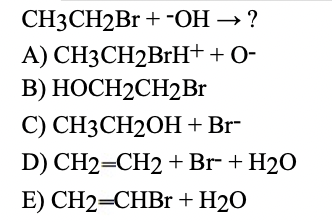
Answer: C
Which of the following alkyl halides gives the slowest SN2 reaction?
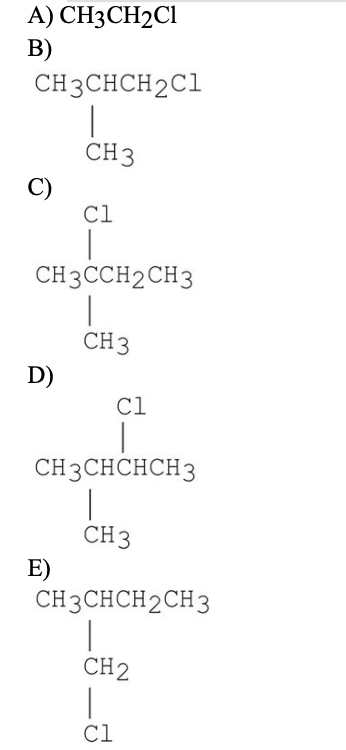
Answer: C
Assuming no other changes, what is the effect of doubling only the concentration of the alkyl halide in the above SN2 reaction? A) no change B) doubles the rate C) triples the rate D) quadruples the rate E) rate is halve

Answer: B
Assuming no other changes, what is the effect of doubling both the alkyl halide and the nucleophile concentrations in the above reaction? A) no change B) doubles the rate C) triples the rate D) quadruples the rate E) rate is halved
Answer: D
Which of the following SN2 reactions is the fastest?
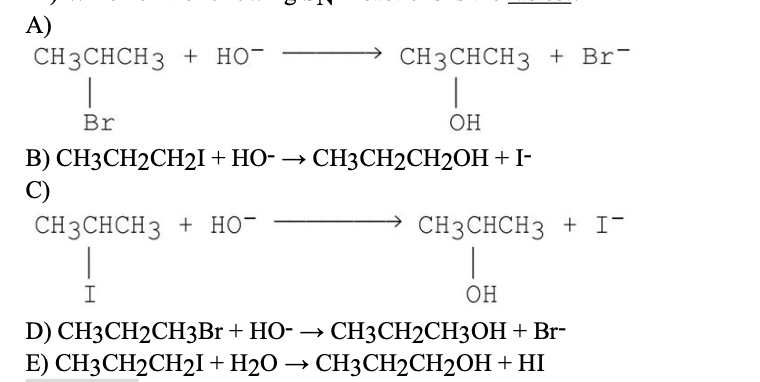
Answer: B
Which of the following SN2 reactions is the slowest?
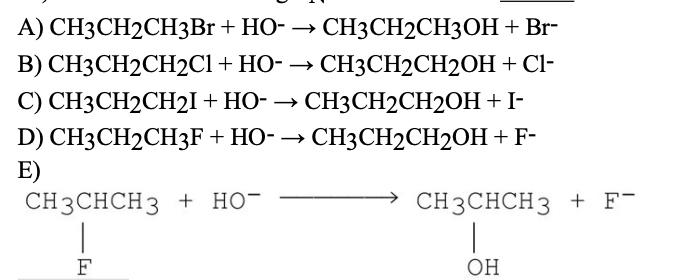
Answer: E
Which of the following compounds will undergo an SN2 reaction most readily?
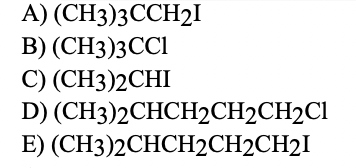
Answer: E
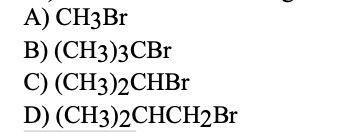
Which of the following is a secondary alkyl halide?
Answer: C
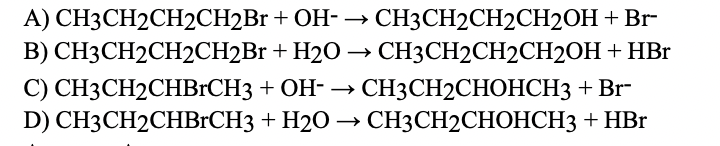
Which of the following SN2 reactions is the fastest?
Answer: A
Which of the following SN2 reactions is the slowest?

Answer: B
Which of the following does not provide evidence that there are two different mechanisms for nucleophilic substitution? A) reaction products when CH3I is used as the substrate B) reaction products when (CH3)3CCH2I is used as substrate C) the stereochemistry of nucleophilic substitutions D) the effect of nucleophile concentration on rate
Answer: A
What product results from the SN2 reaction between (R)-2-chloropentane and hydroxide? A) (R)-2-pentanol B) (S)-2-pentanol C) racemic pentanol D) 1-pentanol E) 3-pentanol
Answer: B
Provide a detailed, stepwise mechanism for the reaction below.


Do all primary alkyl iodides undergo SN2 reactions with sodium cyanide in DMSO at identical rates? Explain.
Answer: No. All primary iodides are not equally accessible to attack by the CN-. Steric hindrance varies among primary iodides.
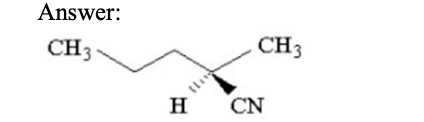
Provide the structure of the major organic product which results when (S)-2-iodopentane is treated with KCN in DMF.