26.1 Carbonyl Compounds
No description yet. This curated deck is ready for daily study.
Card preview (13)
What is a carbonyl compound?
any molecule containing the functional group C=O
What is a carbonyl group?
C=O
Name this molecule:
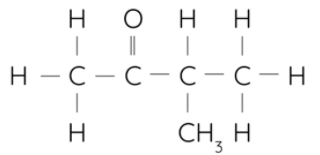
3-methylbutan-2-one
Name this molecule:
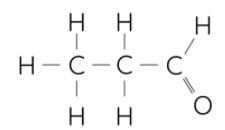
propanal
How are carbonyl compounds reduced?
+ NaBH4, which acts as a reducing agent by donating H atom
Write a general word equation for the reaction between an aldehyde + NaBH4
aldehyde + [H] ⟶ primary alcohol
Write a general word equation for the reaction between a ketone + NaBH4:
ketone + 2[H] ⟶ secondary alcohol
Why can ketones not be oxidised?
(oxidation is the loss of electrons, either by gaining oxygen or losing hydrogen) ketones cannot lose an electron in the form of a hydrogen atom, or gain oxygen
Under what conditions are aldehydes oxidised?
acidified potassium dichromate ions
Why is the gain of hydrogen considered reduction?
reduction = reduction in oxidation number due to gain of electrons H atom contains 1 electron gaining a H atom therefore means the molecule has gained 1 electron.
Carbonyl compound + HCN ⟶
hydroxynitrile
Why is HCN, hydrogen cyanide, not used in the lab during the reaction between carbonyl compounds + HCN?
HCN = highly toxic liquid boiling just above room temperature therefore sodium cyanide + sulfuric acid used instead.
What is the name of the reaction mechanism when aldehydes are reduced when reacting with NaBH4?
nucleophilic addition