Energy Changes - Facts
No description yet. This curated deck is ready for daily study.
Card preview (24)
State the law of conservation of energy
Energy at the start of a reaction = energy at the end of a reaction (Energy cannot be created or destroyed)
Define exothermic
A reaction that releases energy,
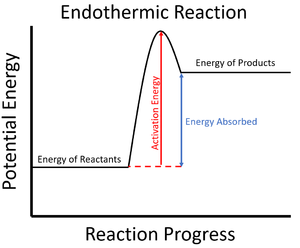
Define endothermic
A reaction that absorbs energy from its surroundings.
Define activation energy
The minimum energy required for a reaction to occur. (energy to break chemical bonds)
Give 2 examples of an endothermic reaction
• Photosynthesis • Thermal decomposistion
Give 3 types of reactions that are exothermic
• Combustion • Oxidation • Neutralisation
Give an ‘everyday’ example of exothermic processes
Handwarmers Self-heating coffee cans
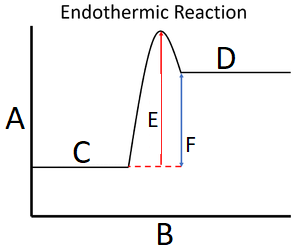
Draw and label both an endothermic reaction profile
Give an example of an everyday endothermic process
Sports injury Packs
Draw and label an exothermic reaction profile
Give the equation to calculate overall energy change of a reaction
Overall energy change = Energy of reactants - Energy of products
Describe what a chemical cell is
a redox reaction between two metals of different reactivity in an electrolyte, producing a potential difference
What is a battery?
Cells wired in series (P.D is additive)
List the factors that increase the potential difference produced by a cell
• Type of electrolyte • Difference in reactivity • Temperature
Compare the advantages and disadvantages of alkaline cells with rechargeable cells
Advantages of alkaline: * Longer shelf life * Higher energy density Disadvantages: * Single-use * Environmental impact Advantages of rechargeable: * Reusable * Cost-effective long-term Disadvantages: * Higher initial cost * Limited cycle life
Why are alkaline cells better than rechargeable cells?
• High potential difference produced • Cheaper to make
List 3 advantages hydrogen fuel cells
Advantages: * Low emissions * High efficiency * Quick refueling
Why are rechargeable cells better than alkaline cells
Electric current can reverse reaction and recharge cell less likely to end up in landfill used many times
Explain how a hydrogen fuel cell works using the overall equation
A hydrogen fuel cell converts hydrogen and oxygen into water, producing electricity: 2H₂ + O₂ → 2H₂O
Explain why the electrolyte in a fuel cell is described as an alkaline electrolyte
The electrolyte has a high pH
State the process that occurs at the anode of a hydrogen fuel cell using a half equation
2H₂ → 4H⁺ + 4e⁻
State the process that occurs at the cathode of a hydrogen fuel cell using a half equation
O₂ + 4H⁺ + 4e⁻ → 2H₂O
List 3 disadvantages of hydrogen fuel cells
Disadvantages: * Hydrogen is hard to store (gas) * Hydrogen is highly flammable / explosive * Making hydrogen is expensive
What is label A
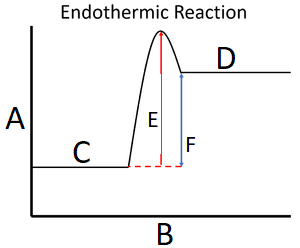
(Chemical potential) Energy