Ch15 Haloalkanes
No description yet. This curated deck is ready for daily study.
Card preview (12)
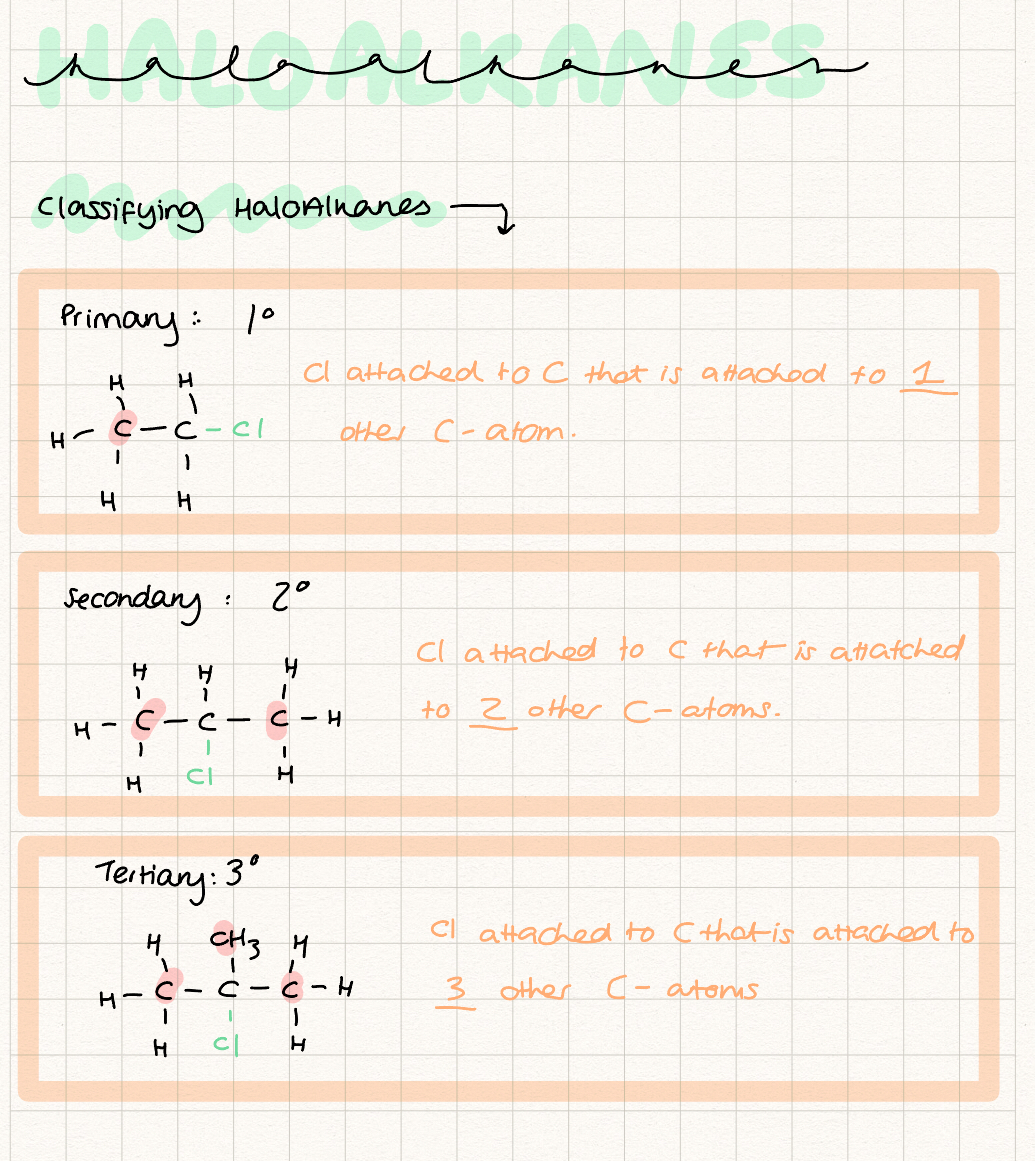
Explain the 1º 2º 3º classification of haloalkanes:
What are nucleophiles?
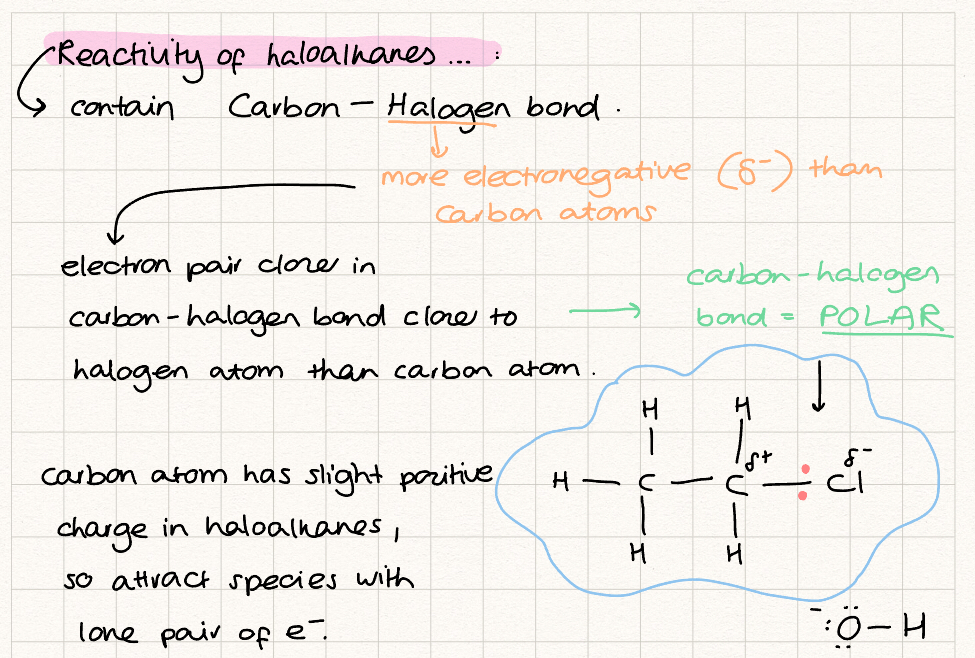
Nucleophiles are electron pair donors e.g. :OH- H2O: :NH3
What kind of reaction do haloalkanes undergo?
Nucleophillic substitution. The nucleophile replaces the halogen in a nucleophillic substitution reaction. A new compound is formed with different functional group.
Why are haloalkanes reactive?
What is hydrolysis?
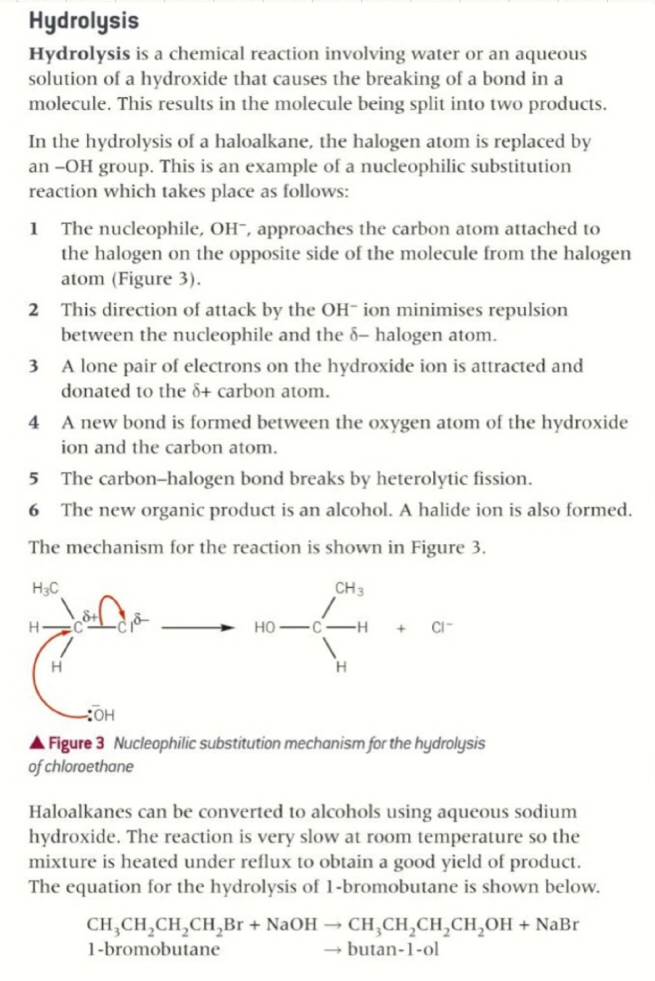
Hydrolysis is the chemical reaction involving water/aqueous solution of a hydroxide that causes the breaking of a bod in a molecule. Results in molecule being split into two products.
What is hydrolysis?
Hydrolysis is the chemical reaction involving water/aqueous solution of a hydroxide that causes the breaking of a bod in a molecule. Results in molecule being split into two products.
Describe the hydrolysis of a haloalkane in a nucleophillic substitution reaction and describe all the stages that occur and why:
What does the rate of hydrolysis of a haloalkane depend on?
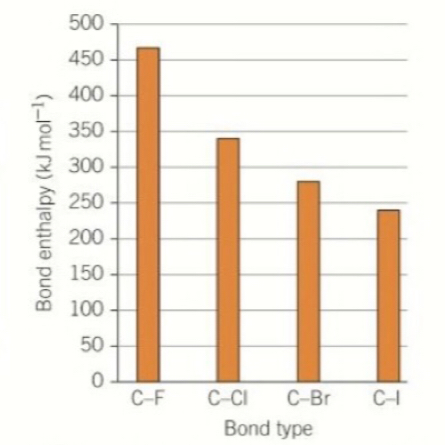
• In hydrolysis, the C-H bond is broken and -OH group replaces the halogen in haloalkane. • Rate of hydrolysis depends upon the strength of the C-H bond in the haloalkane • Look at picture for bond enthalpies: • The C-F bond is strongest carbon halogen bond • C-I bond is the weakest • Therefore, • iodoalkanes react faster than bromoalkanes • bromoalkanes react faster than chloroalkanes • fluoroalkanes are unreactive as large amount of energy required to break C-F bond.
What test can be used to measure the rate of hydrolysis of primary haloalkanes?
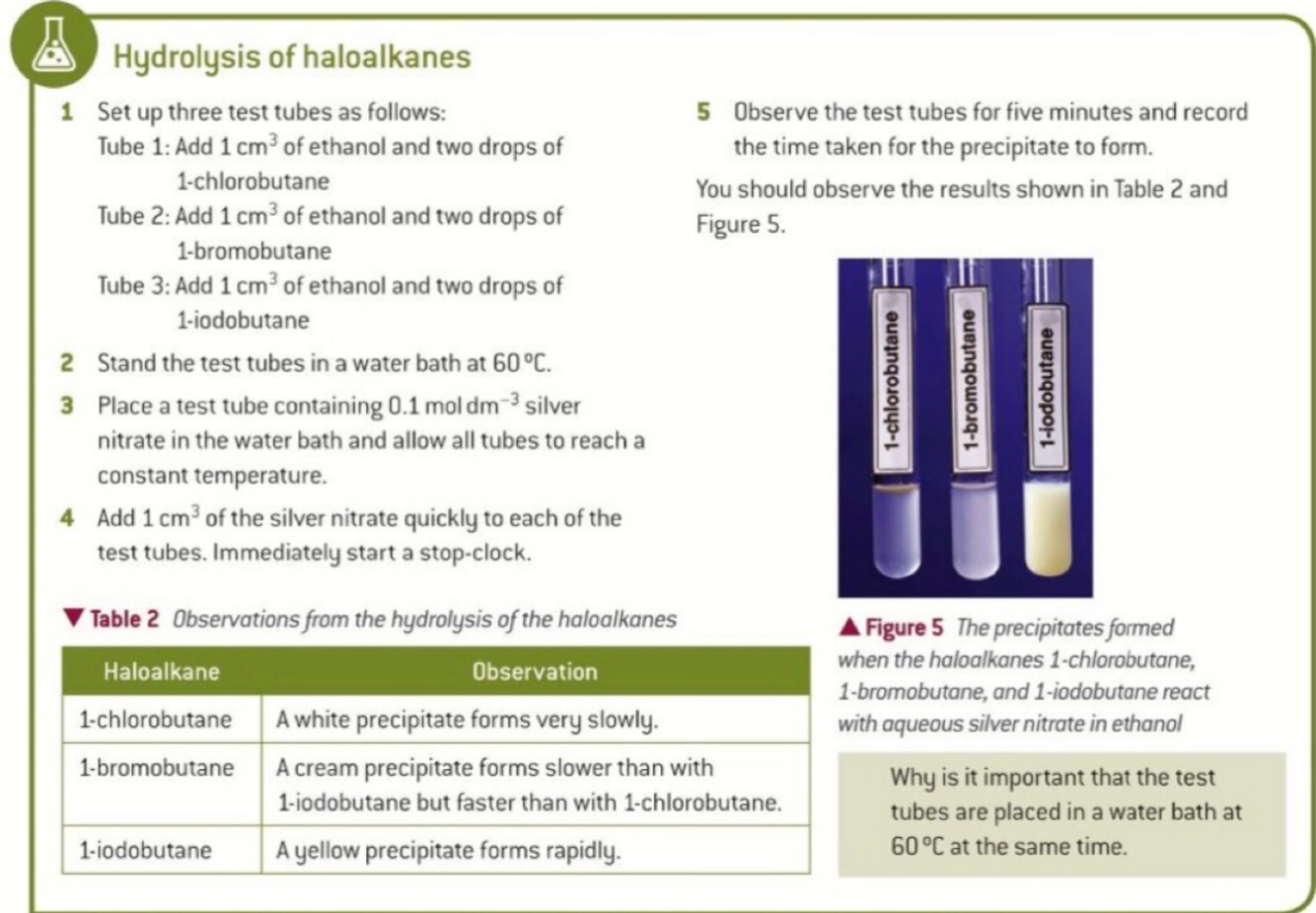
Precipiatation react with aq silver nitrate. Ag+(aq) + X-(aq) —> AgX(s) The halide ions, X-, are produced which react with Ag+ ions, to form precipitate of silver halide. The nucleophile is water, which is present in silver halide. Haloalkanes are insoluble in water Therefore, the reaction is carried out in prescene of ethanol solvent, which allows water and haloalkane to mix and produce single solution, rather than two layers.
Recall the experiement of hydrolysis of haloalkanes, mentioning appropriate quantities and the observations that would be seen.
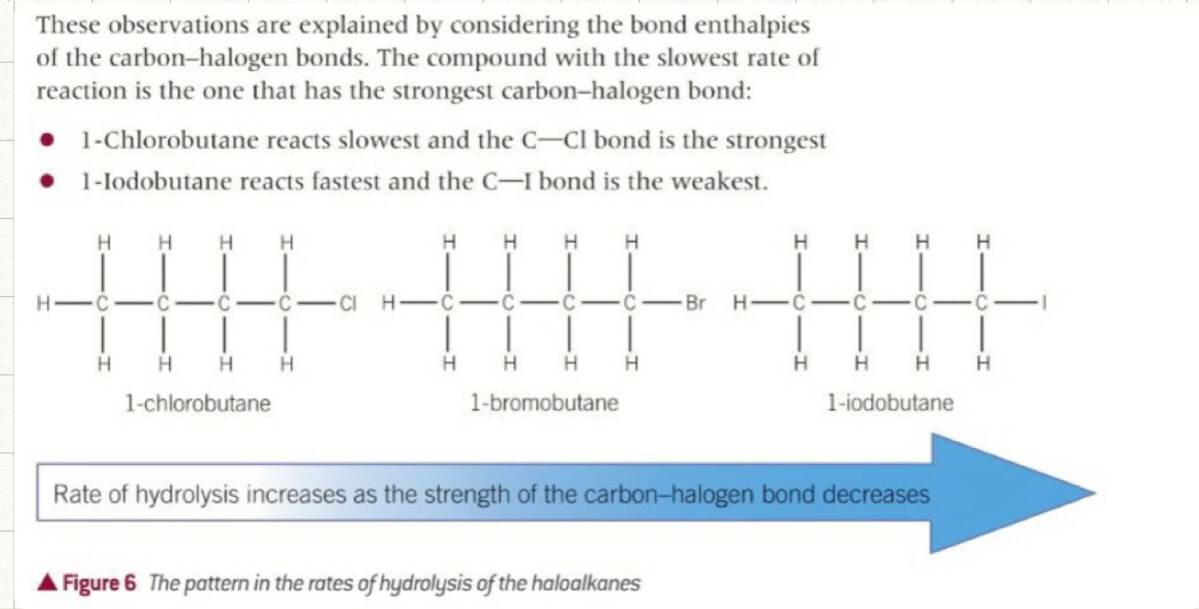
Explain the observations of the haloalkane hydrolysis experiment:
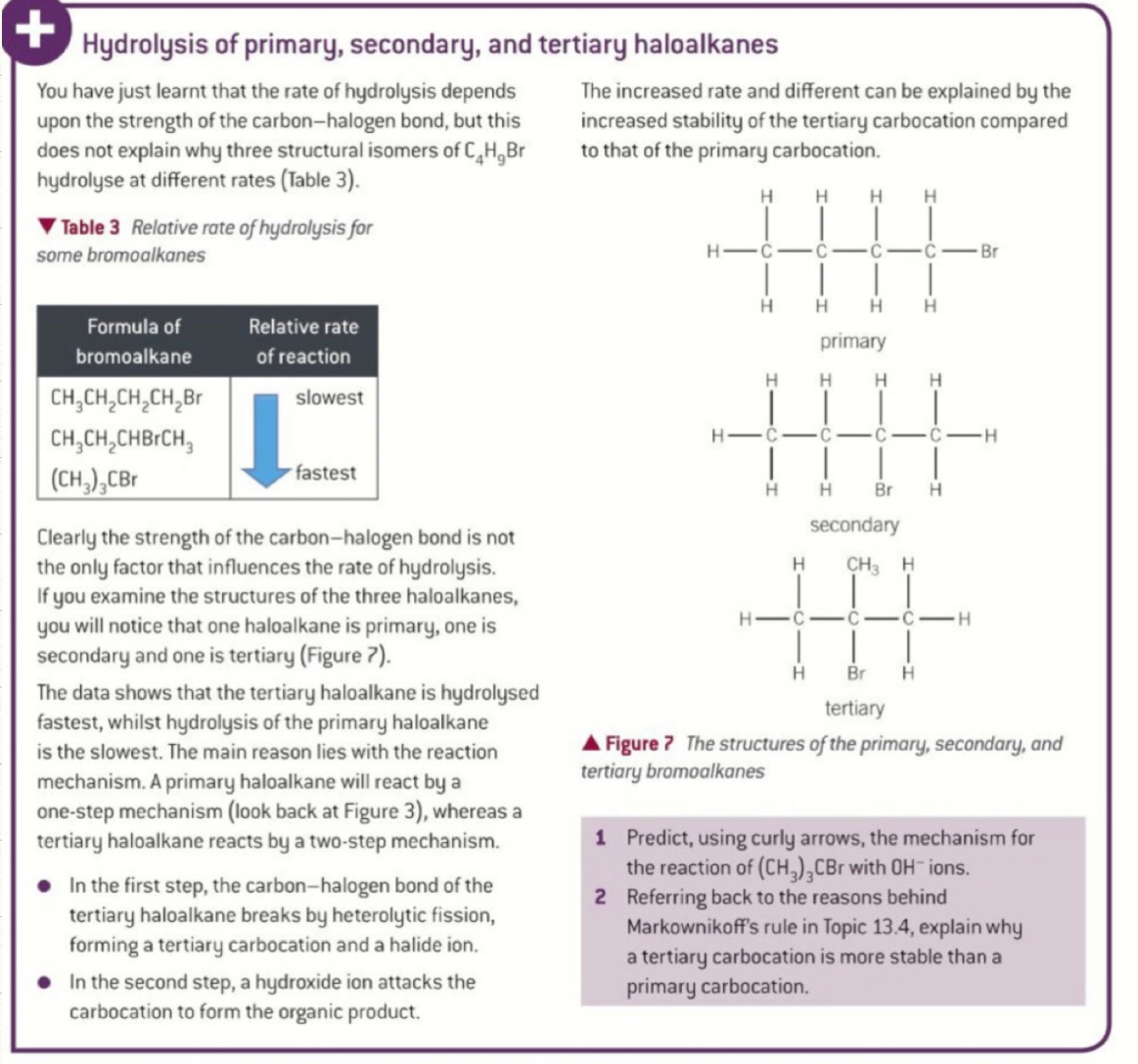
Explain the differences in hydrolysis of 1º, 2º and 3º haloalkanes