Carbs
No description yet. This curated deck is ready for daily study.
Card preview (24)
What’s the general description of carbs?
• C=O (carbonyl) and -OH (hydroxyl/alcohol) functional groups
Carb classification
• Size of base carbon chain • C=O location • Number of sugars • Stereochemistry
Galactase converts galactose to ____
Glucose
Which sugar can be directly used for energy? What happens to the ones that can’t?
Glucose Others such as fructose, galactose, and lactose get converted to glucose first
Name two main polysaccharides and their sources
• Starch: plant • Glycogen: animal
Most common non-reducing substance
Sucrose (table sugar)
Which body system can’t store/concentrate carbs?
Nervous system But glucose is its main source of energy so must maintain constant supply in tissues
Purpose of villi
Increase surface area, which increases absorbed energy from food
Types of glucose pathways and explanations
:)
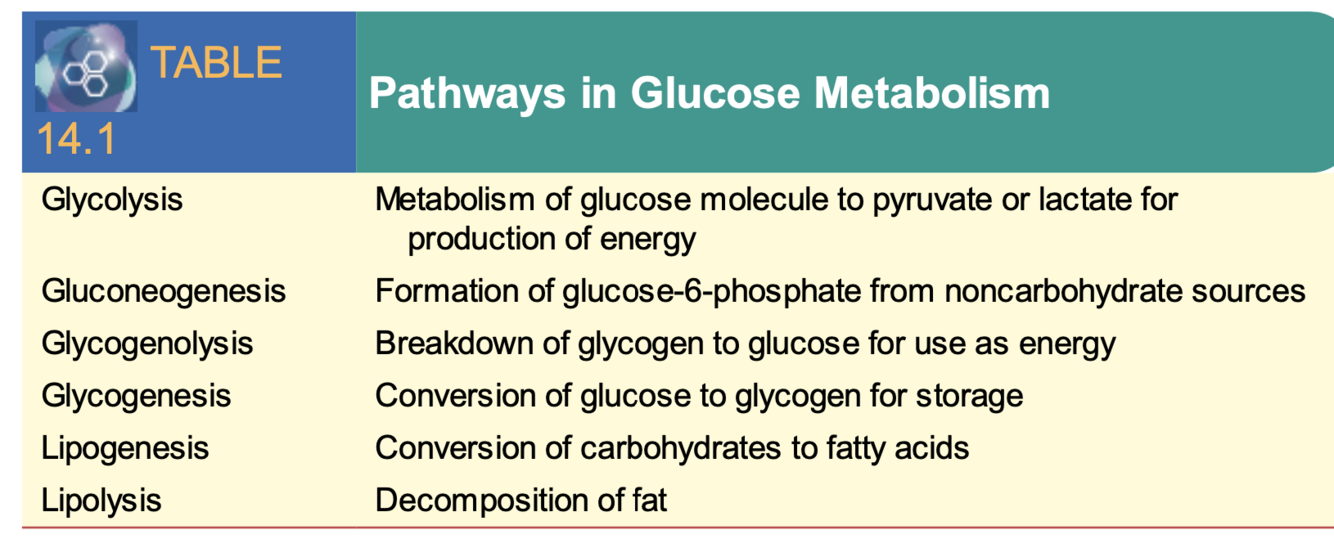
Describe glucose storage
Glucose -> Liver -> glycogen -> fat
Describe insulin production pathway (fed state)
• preproinsulin -> proinsulin (A, B, and C peptides) -> insulin + C-peptide • Anabolic process • Promotes cellular uptake of glucose
In which conditions is insulin increased?
• Lipogenesis (fat creation) • Protein synthesis • Glycogenesis
In which conditions is insulin decreased?
• Lipolysis (breakdown of fat) • Ketone formation • Gluconeogenesis (new glucose made from aa) • Glycogenolysis
Describe “fasting” state
• Glucagon released from pancreatic alpha cells during stress and fasting states • Goal: increase glucose levels (hyperglycemic agent) • Catabolic • Liver: glycogen -> glucose -> blood • Muscle: glycogen -> G6-P
Function/source of epinephrine in fight or flight?
• Secreted from adrenal medulla • Similar to glucagon • Increases plasma glucose by increasing glycogenolysis/lipolysis, and inhibiting insulin secretion
List disorders that involve hyperglycemia
• Diabetes mellitus • Endocrine disorders (acromegaly, Cushing’s syndrome, thyrotoxicosis, pheochromocytoma) • Drugs (anesthetics, steroids)
Acromegaly
Increased growth hormone
Cushing’s syndrome
Increased cortisol
Thyrotoxicosis
Increased T4
Pheochromocytoma
Increased epinephrine
List 3 symptoms of diabetes mellitus
• Polyuria (too much urine made) • Polydipsia (too much thirst) • Unexplained weight loss
Diagnostic criteria for diabetes mellitus
• HbA1C >= 6.5% • Fasting plasma glucose >= 126 mg/dL • 2hr plasma glucose >= 200 mg/dL • Random plasma glucose >= 200 mg/dL
Describe Type 1a diabetes
• Beta cell destruction due to autoimmunity -> absolute insulin deficiency • Patients must take insulin to survive • Usually young, with acute onset (days-wks) • Islet-cell Ab
Describe Type1b diabetes
Idiopathic