Aldehydes And Ketones
No description yet. This curated deck is ready for daily study.
Card preview (24)
• What are carbonyls?
• Carbonyls are compounds with a C=O bond • They can be either aldehydes or ketones
• What are the intermolecular forces in carbonyls?
• Pure carbonyls cannot hydrogen bond to themselves, but are attracted instead by permanent dipole forces
• Describe the solubility of the carbonyls in water
• The smaller carbonyls are soluble in water because they can form hydrogen bonds with water
• Explain the reactions of carbonyls
• The C=O bond is polarised because O is more electronegative than carbon. The positive carbon atom attracts nucleophiles. This is in contrast to the electrophile that are attracted to the C=C • In comparison to the C=C bond in alkenes, the C=O is stronger and does not undergo addition reactions easily
• What can the alcohols be oxidised to?
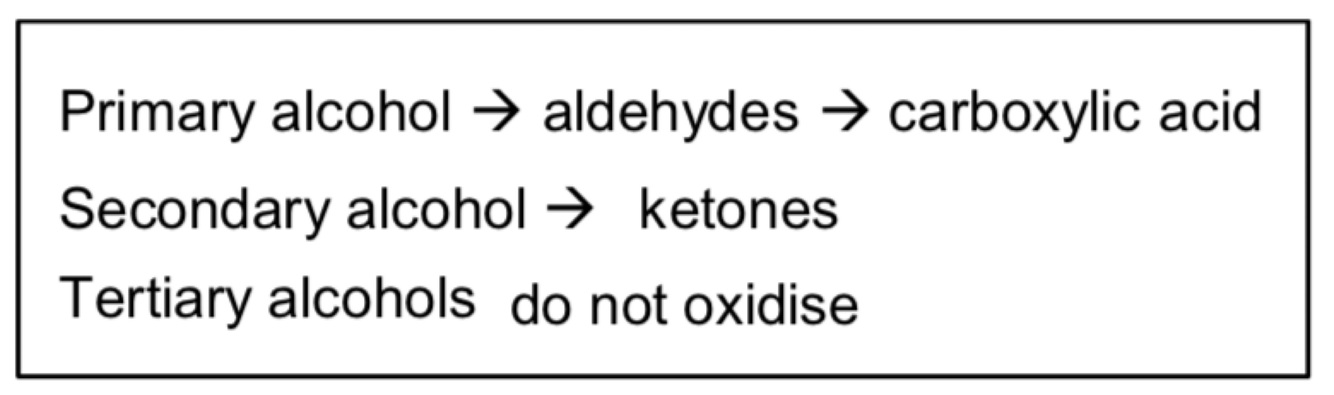
• What can aldehydes be oxidised to?
• Aldehydes can be oxidised to carboxylic acids, but ketones cannot be oxidised
• What are the reagents and conditions for the oxidation of aldehydes to carboxylic acids?
• Reagent: potassium dichromate (VI) solution and dilute sulfuric acid • Conditions: heat under reflux
• How else can aldehydes be oxidised?
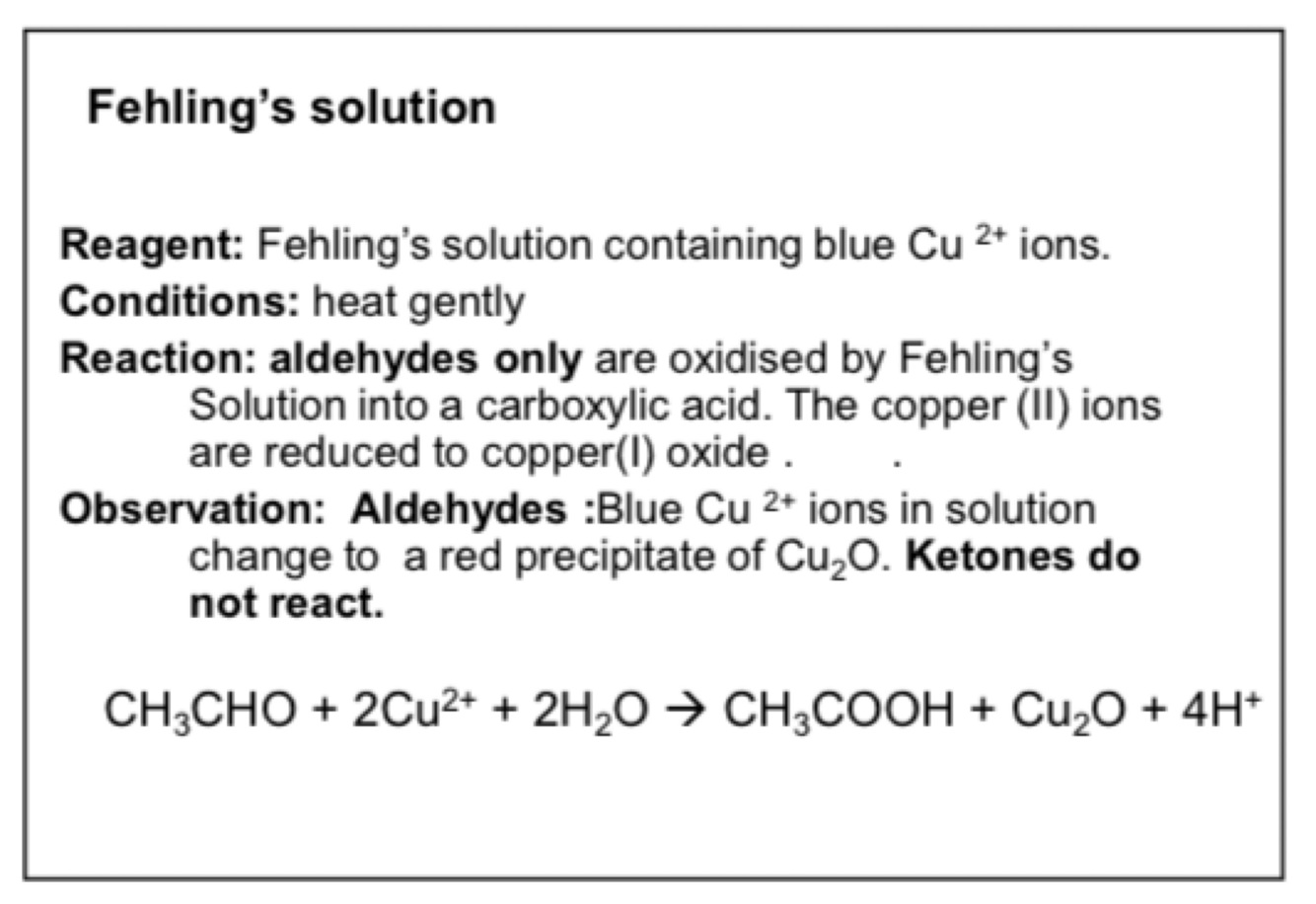
• Aldehydes can also be oxidised using Fehling’s solution or Tollen’s reagent • These are used as tests for the presence of aldehyde groups
• Describe the Tollen’s reagent functional group test for aldehydes
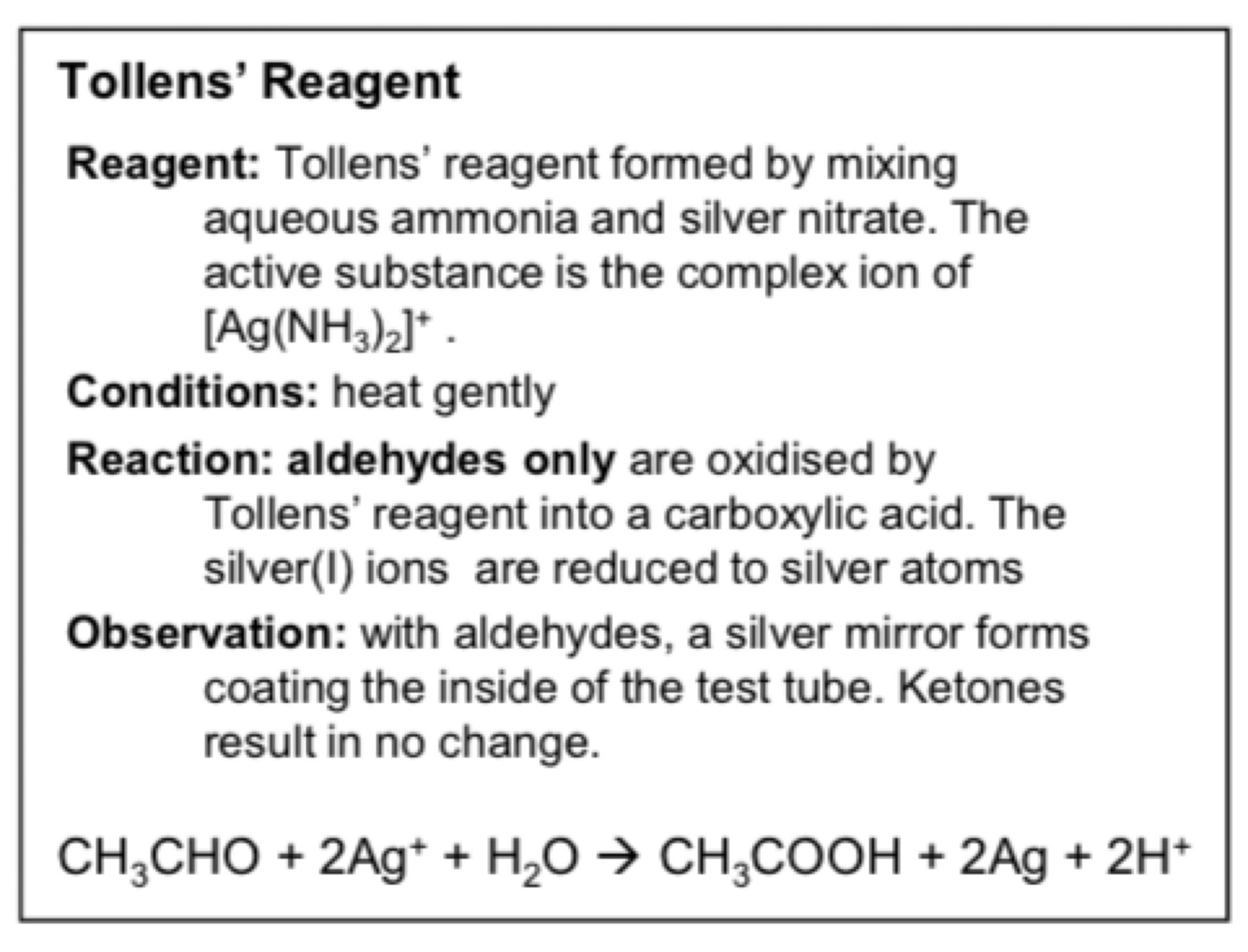
• Describe the Fehling’s solution test for aldehydes
• What are the reagents and conditions for the reduction of carbonyls (Nucleophilic addition)?
• Reagents: NaBH4 in aqueous ethanol • Conditions: room temperature and pressure
• In the Nucleophilic addition mechanism, what will aldehydes and ketones be reduced to?
• Aldehydes will be reduced to primary alcohols • Ketones will be reduced to secondary alcohols
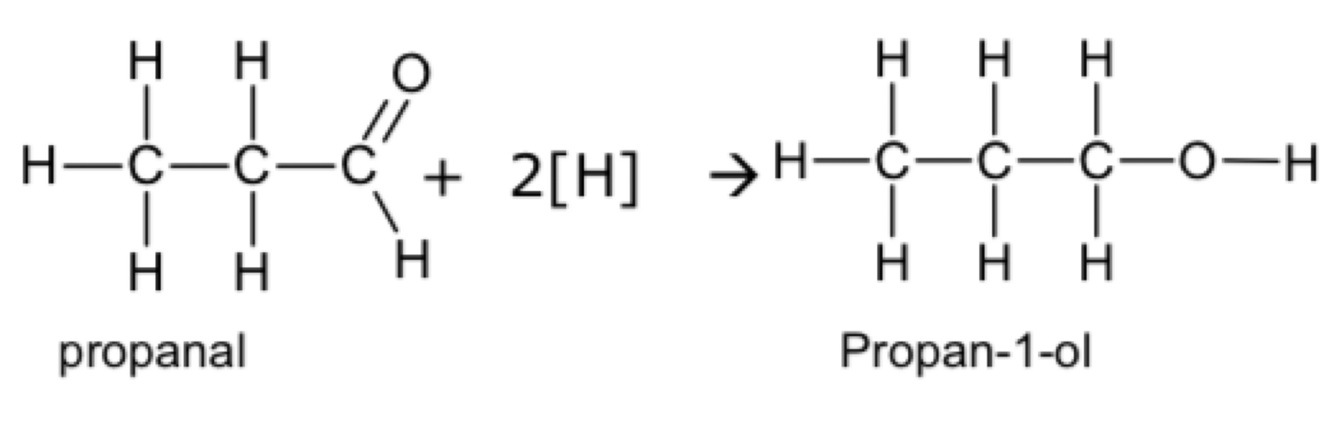
• Write an equation for the reduction of propanal
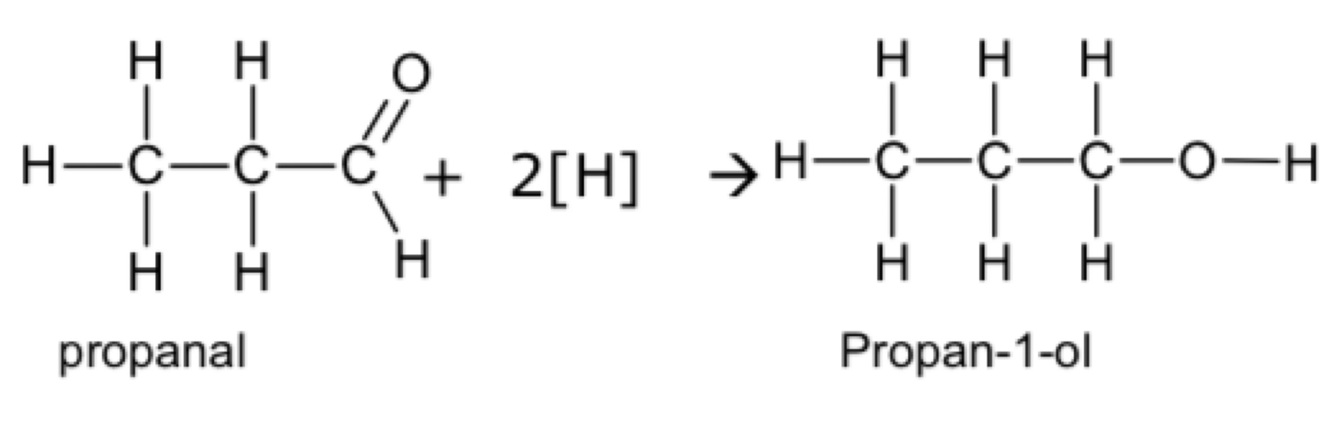
• Write an equation for the reduction of propanal
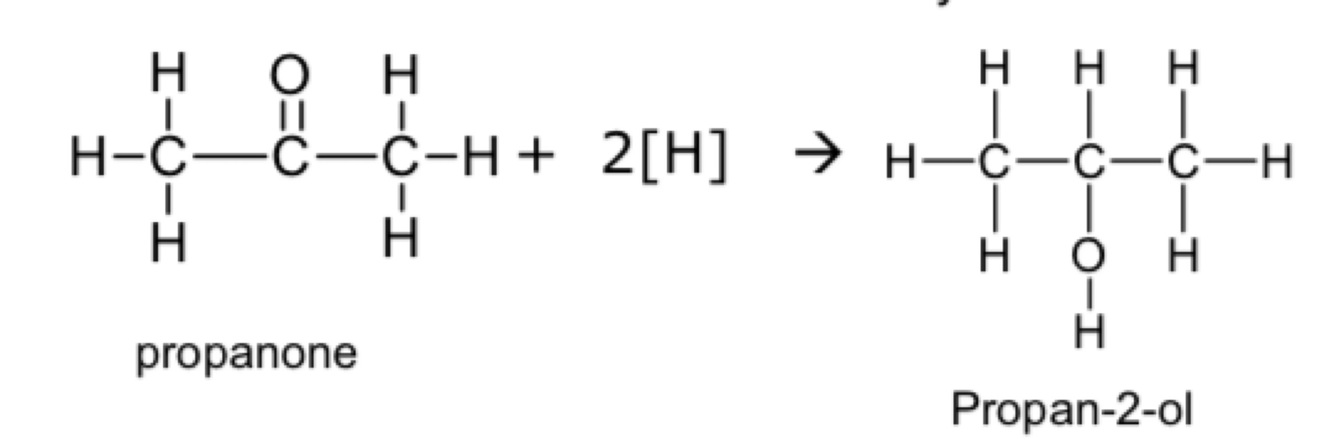
• Write an equation for the reduction of propanone
• What are the possible reducing agents for the reduction of carbonyls?
• Reducing agents such as NaBH4 (sodium tetrahydridoborate) or LiAlH4 (lithium tetrahydridoaluminate) will reduce carbonyls to alcohols
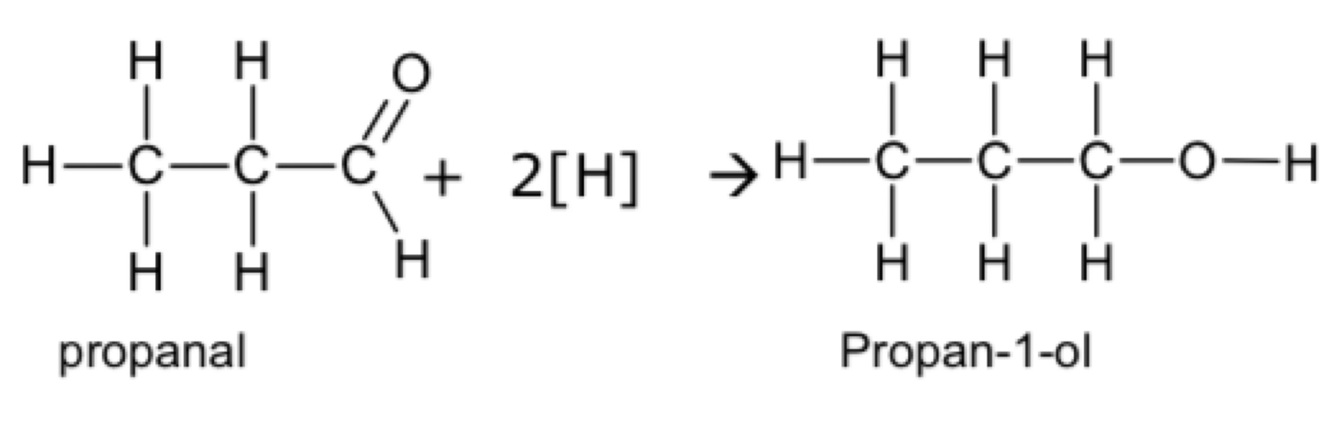
• Write an equation for the reduction of propanal
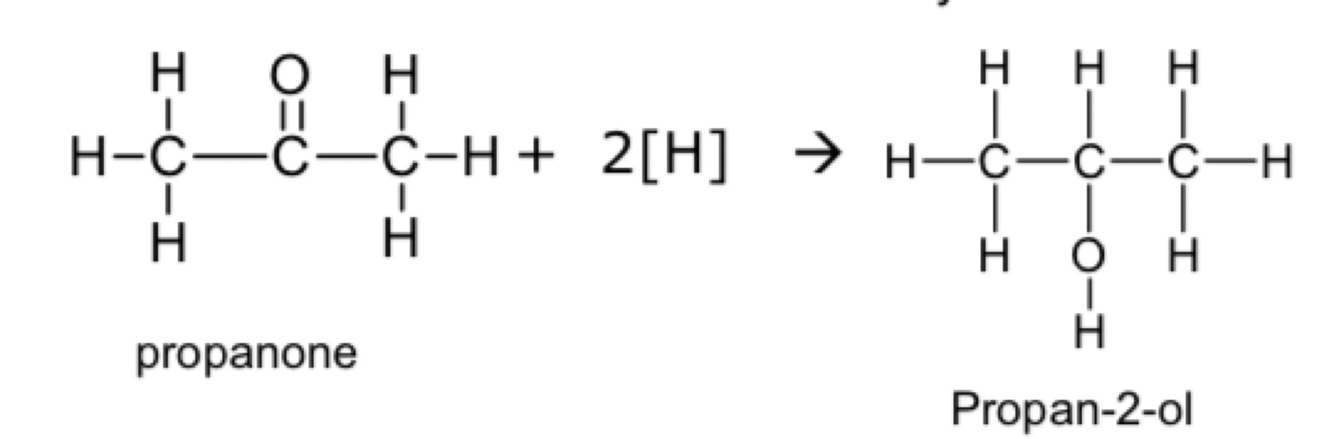
• Write an equation for the reduction of propanone
• Why can NaBH4 be used as a reducing agent in the Nucleophilic addition mechanism?
• NaBH4 contains a source of nucleophilic hydride ions (:H-) which are attracted to the positive carbon in the C=O bond
• What is catalytic hydrogenation? • Write reaction equations for the catalytic hydrogenation of ethanal and propanone
• Carbonyls can also be reduced using catalytic hydrogenation • Reagent: hydrogen and nickel catalyst • Conditions: high pressure
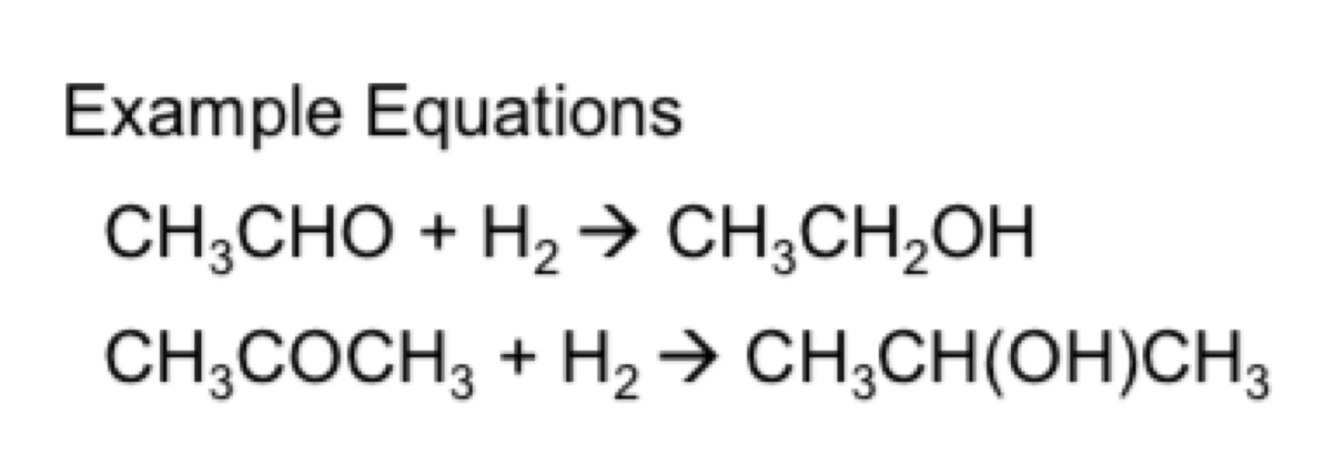
• What is the reaction and and what are the reagents, conditions and what is the mechanism for the addition of hydrogen cyanide to carbonyls to form hydroxynitriles
• Reaction: carbonyl - hydroxynitrile • Reagent: potassium cyanide (KCN) and dilute sulfuric acid • Conditions: Room temperature and pressure • Mechanism: nucleophilic addition • The KCN supplies the nucleophilic CN- ions, the H2SO4 supplies H+ ions needed in the second step of the mechanism
• Write reaction equations for the nucleophilic addition of propan-2-one and ethanal with HCN
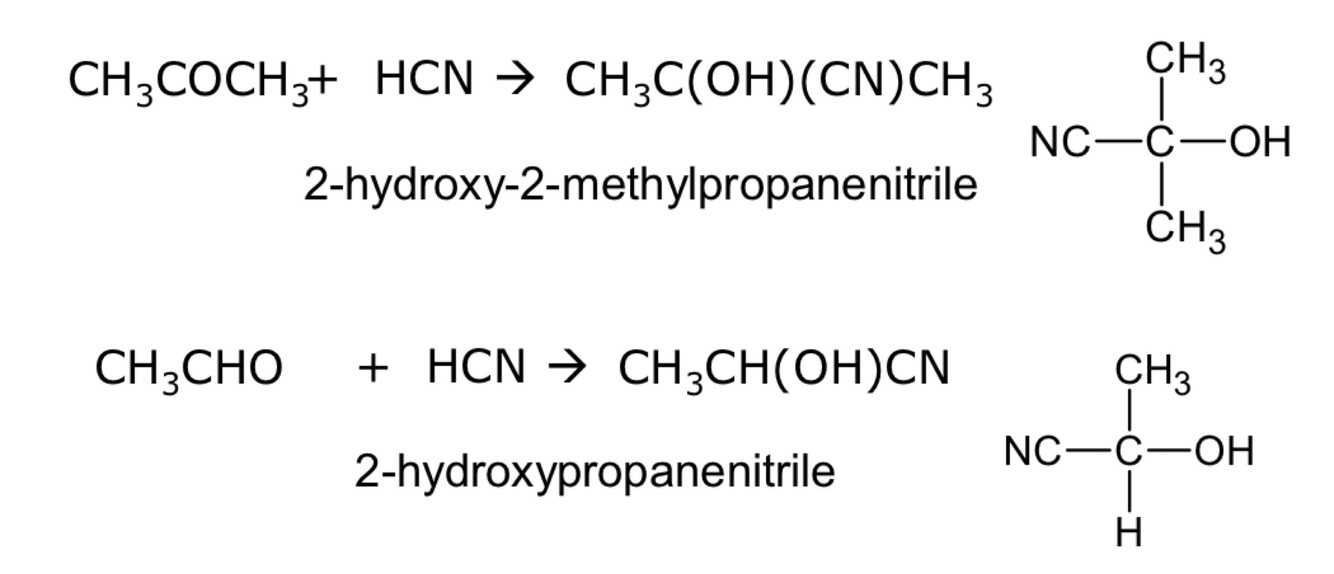
• Why is HCN not used in nucleophilic addition
• HCN is a toxic gas that is difficult to obtain • KCN/NaCN are still toxic because of the cyanide ion
• What is an advantage of using KCN or NaCN in nucleophilic addition?
• There will be a higher concentration of the CN- ion because these compounds will completely ionise • HCN is a weak acid and will only partially ionise