ChemPath: Brief Lipid Update
No description yet. This curated deck is ready for daily study.
Card preview (24)
What is the optimal medical therapy for people with coronary heart disease?
• Intensive lifestyle modification • Aspirin • High-dose statin (atorvastatin 40-80mg OD) • Optimal blood glucose control • Thiazides • Assessment for probable T2DM
What is the statistical mortality benefit of adding a thiazide diuretic to outstanding BP medications, following an MI?
Worth it, as 2 in 100 will be prevented from a further MI in the next 5 years 20% relative risk reduction 2% absolute risk reduction Shown by the SPRINT Study
List some options for people with statin intolerance.
• Ezetemibe • Plasma exchange • PCSK9 inhibitors NOTE: niacin is no longer available
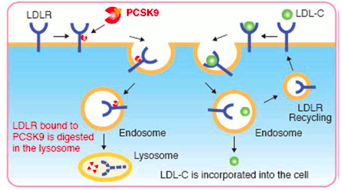
Describe the function of PCSK9
• PCSK9 targets the LDL receptors leading to endocytosis and their degradation • This reduces the ability of the liver to take up cholesterol from the blood
Name a PCSK9 inhibitor.
Evolocumab
Which patient group may benefit from PCSK9 inhibitors?
Patients who are at very high risk (e.g. familial hypercholesterolaemia) Statin-intolerant patients NOTE: PCSK9 inhibitors reduce the incidence of cardiovascular events but has no effect on mortality, and has a high NNT (Fourier study)
How long does it take to see benefit from good glucose control?
15 years to see a reduction in complications Shown by the UKPDS study
What is the legacy effect?
A period of good glycaemic control will have a beneficial effect on mortality for up to 10 years even if the patient reverts to poor glycaemic control after a certain period of time. Shown by the UKPDS study
What did the DCCT show?
Good control in type 1 diabetes improves outcomes *Legacy effect was shown here too*
What did the Advance study show?
Targeting HbA1c of less than 6.5% reduces microvascular events Intensive glucose control was associated with an increased risk of severe hypoglycaemia and hospitalisation BUT no increased risk of mortality (unlike Accord study)
What are the effects of sudden aggressive blood glucose control in patients with long-standing poor glycemic control and cardiovascular complications?
• Reduced the incidence of complications • Increased mortality (likely due to precipitating tachycardia and arrhythmias) Really important to consider whether the patient has atheromas to begin with before suddenly tightening glucose control This was found by the ACCORD trial
Describe how SGLT2 inhibitors can reduce blood glucose.
Increases urinary excretion of glucose causing a reduction in blood glucose and blood pressure. NOTE: this can also be used in heart failure because of its diuretic effect Main side-effects: UTIs due to glycosuria, rarely DKA
Name an SGLT2 inhibitor
Empagliflozin
What were the key findings of the EMPA-REG study?
Significant reduction in mortality after just 4 years Reduces HbA1c Treats heart failure due to diuresis Prevents nephropathy as it reduces albuminuria by letting glucose pass into the tubules instead - protects the kidneys (initial sharp reduction in GFR but then recovers) *Albumin is poisonous to the kidneys so these SGLT2 inhibitors are renal-protective*
What is the physiological role of GLP1?
• Produced by the gut and signals to the pancreas to produce more insulin (incretin effect) • Also has a direct effect on satiety and gastric emptying
What breaks down GLP1?
DPP4
Which class of drugs inhibits the breakdown of GLP1?
Gliptins (by inhibiting DPP4 and, thereby, preventing the breakdown of GLP1) Likely to be phased out as GLP-1 analogues work better
List three examples of GLP1 analogues.
• Exanatide (synthetic version of exendin 4) • Liraglutide (saxenda) • Semaglutide All injections at the moment so SGLT2 inhibitors are preferred in combination with metformin
Summarise the steps in the pharmacological management of type 2 diabetes mellitus.
• Metformin • if non-insulin monotherapy at maximum tolerated dose does not achieve or maintain the HbA1c target after 3 months add either: • Second oral agent OR • GLP1 agonist OR • Basal insulin In patients with long-standing suboptimally controlled T2DM and established cardiovascular disease, empagliflozin (SGLT2 inhibitor) or liraglutide (GLP1 analogue) should be considered.
What are the two sources of cholesterol arriving in the small intestine
Bile. Dietary.
What is the main carrier protein which determines cholesterol absorption?
NPC1L1
What are the two protein channels which allow cholesterol to move back into the intestinal lumen?
ABC G5 ABC G8
What are the two fates of cholesterol once they are absorbed in the liver? (name the enzymes responsible)
Hydrolysed by 7-alpha-hydroxylase into bile acids. Esterification by ACAT and incorporation with ApoB + triglycerides to form VLDL
What is the enzyme responsible for packing cholesterol ester, triglycerides and ApoB into VLDLs
MTP