U3-1 - Metals
No description yet. This curated deck is ready for daily study.
Card preview (24)
Metal + Oxygen → …
Metal oxide
Metal + Water → …
Metal hydroxide + Hydrogen
Metal + Acid → …
Salt + Hydrogen
Chemical test for hydrogen gas
Burns with a (squeaky) pop
Very reactive metals must be extracted from their ores via …
electrolysis.
Metals around the middle of the ECS can be extracted from their ores via …
heating with carbon.
Very unreactive metals can be extracted from their ores via …
heating alone.
What type of metal pairs generate higher voltages in electrochemical cells?
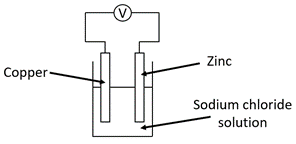
Far apart in the ECS
What is the direction of electron flow in electrochemical cells?
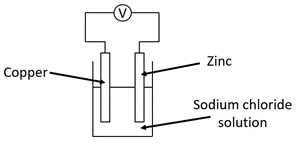
From metal higher in the ECS to metal lower in the ECS (remember - electrons flow down)
Describe the structure of a metal lattice
Positive metal ions surrounded by delocalised electrons
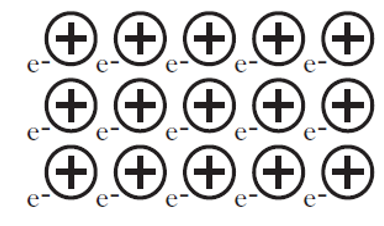
Metallic bond
Electrostatic attraction between positive metal ions and delocalised electrons
Displacement reaction
A reaction in which a more reactive metal displaces a less reactive metal from a compound. E.g. Mg + FeSO4 → MgSO4 + Fe
What allows metals to conduct electricity?
Delocalised electrons (charged particles + free to move)
Why must a d.c. supply be used during electrolysis?
So that the products can be identified.
Redox reaction
A reaction involving a transfer of electrons. (One reactant loses electrons, the other gains them)
Loss of electrons
Oxidation (remember - OIL RIG)
Gain of electrons
Reduction (remember - OIL RIG)
Oxidation
Loss of electrons (rememeber - OIL RIG)
Reduction
Gain of electrons (rememeber - OIL RIG)
How do you turn this reduction equation into an oxidation equation? Cu2+ + 2e– → Cu
Reverse it Cu → Cu2+ + 2e–
When copying equations from the ECS, which equation gets reversed?
The one higher up in the ECS
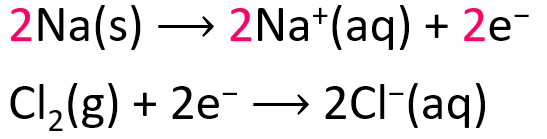
What has to be done before these equations can be added up?
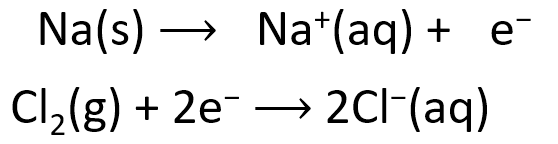
Electrons must be balanced (so multiply whole Na equation by 2)
What type of reaction is this? MgO + H2SO4 → MgSO4 + H2O
Neutralisation (base + acid)
What type of reaction is this? C2H4 + Br2 → C2H4Br2
Addition (multiple reactants, only one product)