LO 3.2 - Structure
No description yet. This curated deck is ready for daily study.
Card preview (14)
Question A number of Abiotic factors influence the development of soil structure. What are they? Soil Structure
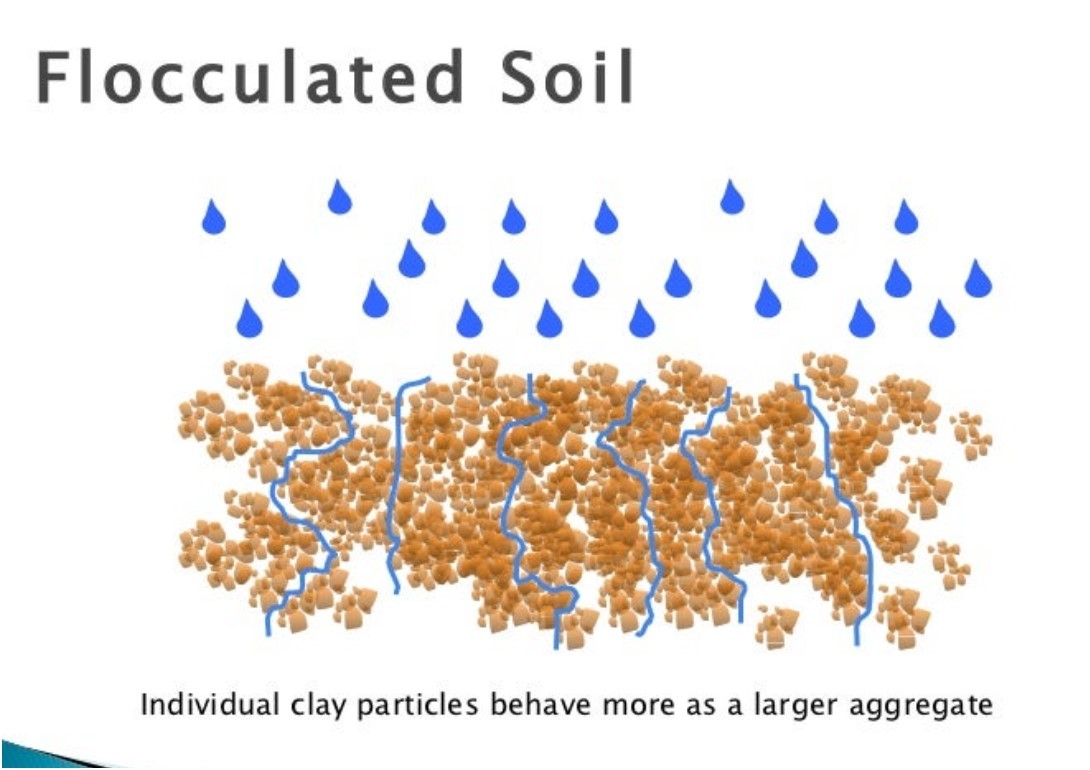
Abiotic factors of soil structure: * Abiotic means not relating to living organisms. * Clay particles are negatively charged. They attract positive ions such as Calcium and Magnesium. These cations act as ‘bridges’, binding clay particles together. The process by which clay particles are bound together is known as flocculation. * This process is most important at the level of the individual clay particles. Soil Structure
Question A number of Biotic factors influence the development of soil structure. What are they? Soil Structure
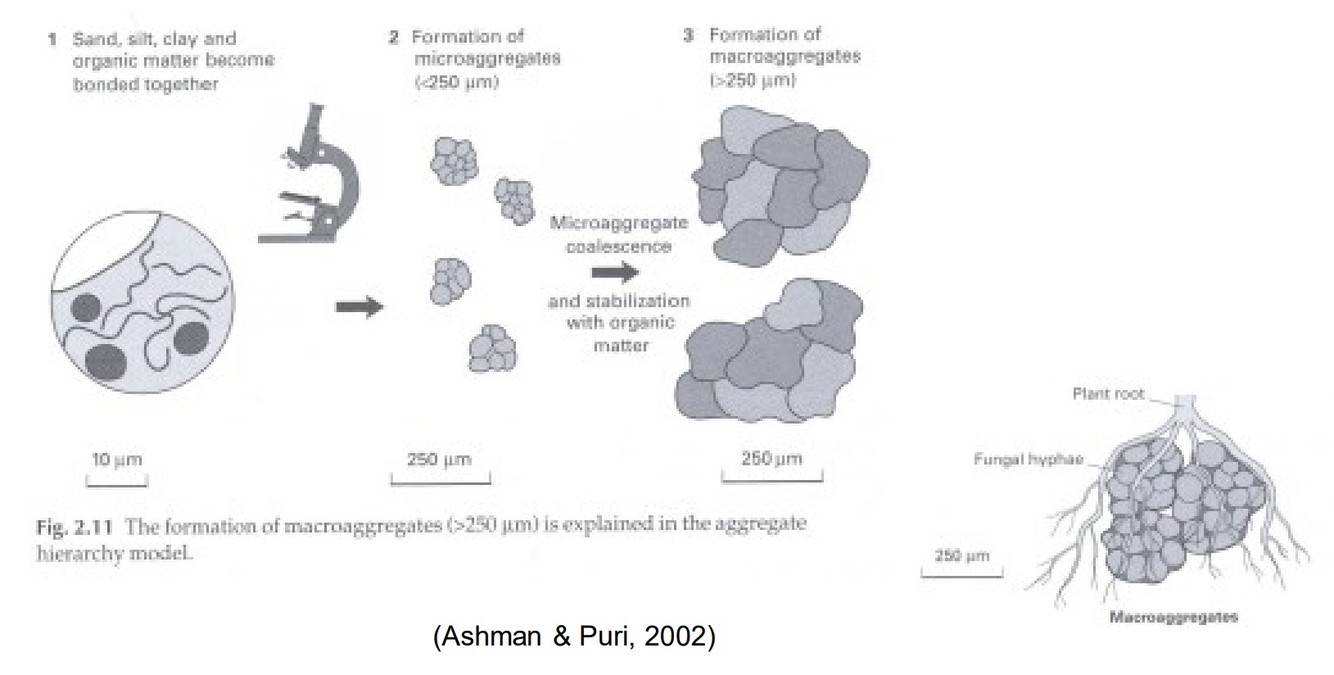
Biotic factors of soil structure: * Biotic means relating to living organisms. * Fungi, bacteria and plant root hairs secrete sticky sugars called polysaccharides. These coat the surface of particles in the soil, causing them to stick together. * Plant roots and fungal hyphae bind smaller peds together to form larger ones. * The activities of earthworms, and the bacteria in their digestive systems, encourage the formation of aggregates and make aggregates more stable. Soil Structure
Question How are Peds described and name the four general types of Peds? Soil Structure
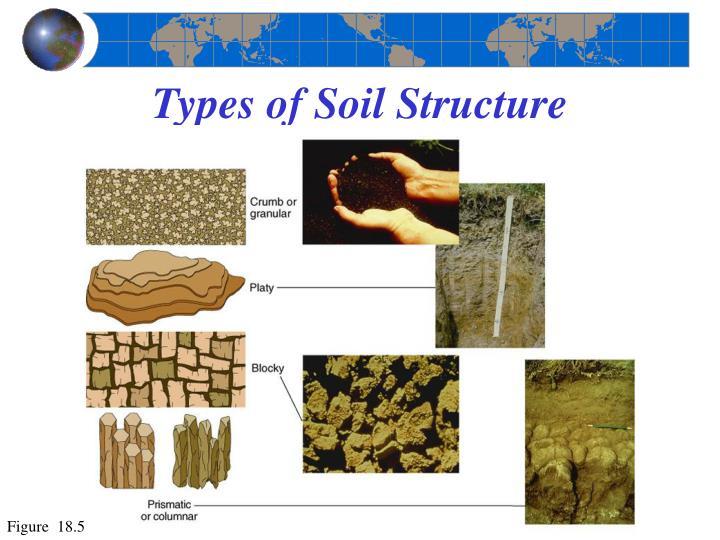
Peds are described by their size, shape and strength. Types of peds. • Granular or spherical peds. • Platy peds. • Blocky peds. • Prisim like peds. Soil Structure
Question What are Granular or Spherical Peds? Soil Structure
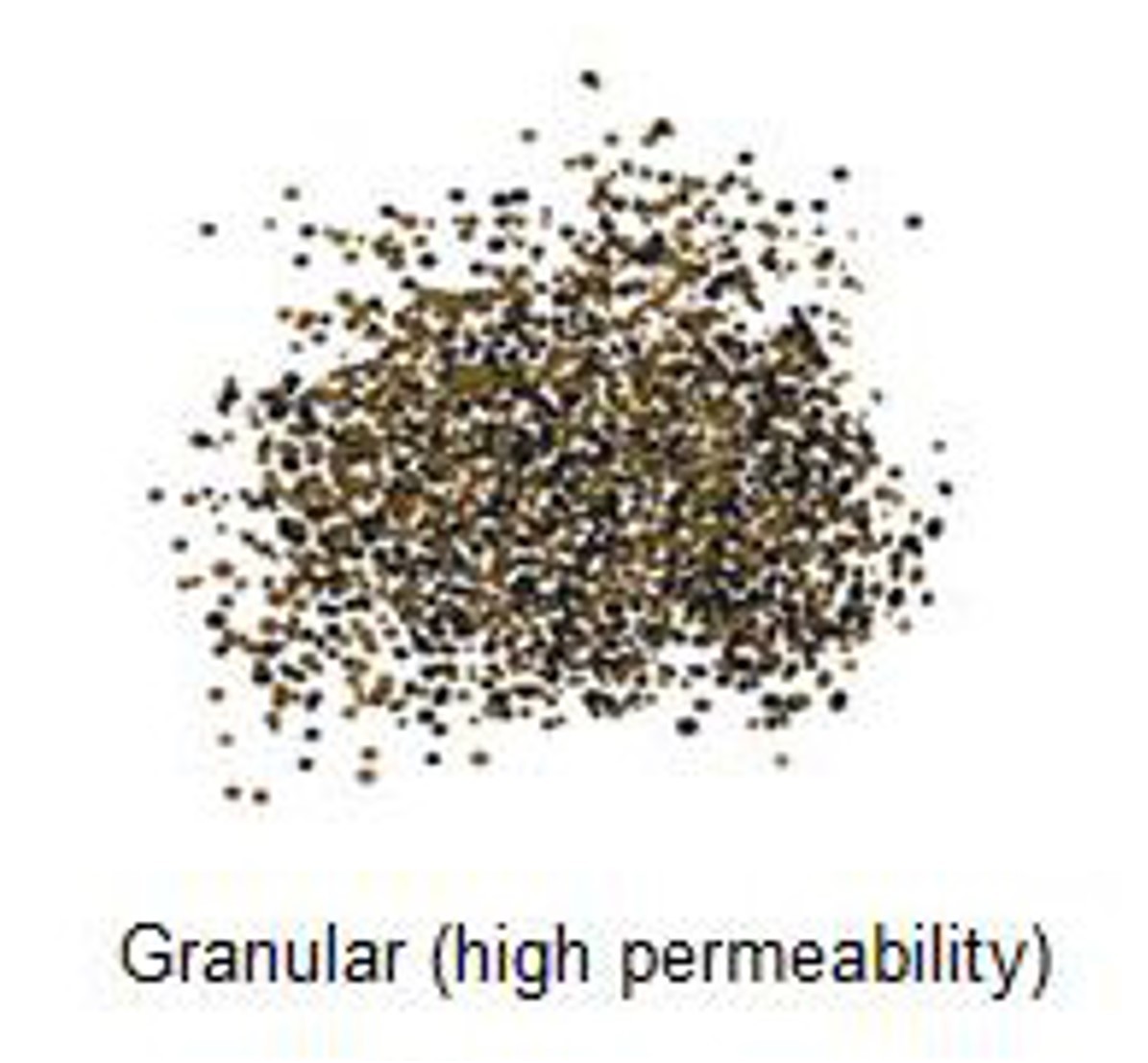
Granular or spherical peds: * Are round in shape and 1mm to 10mm in size. They are common in the upper horizons of grassland soils that have been modified by earthworms and in loosely packed soils that are rich in OM. Soil Structure
Question What are Platy Peds? Soil Structure
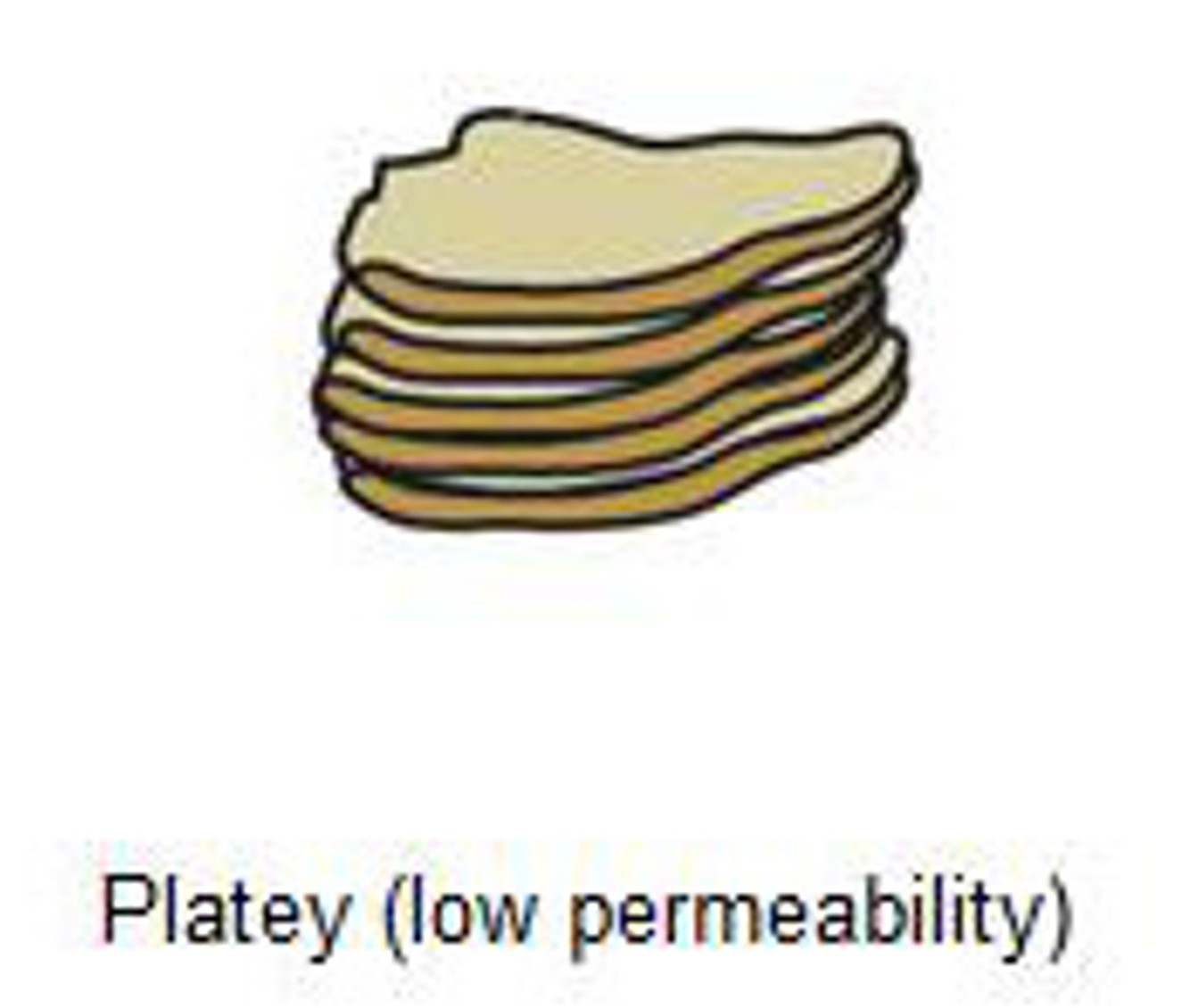
Platy peds: * Are 1mm to 10mm in size and are thin, plate-like structures that usually occur in leached horizons close to the surface. This type of ped can occur in the A horizon of a soil over an impermeable B horizon, or in the surface of a soil that has been compacted by machinery. Soil Structure
Question What are Blocky Peds? Soil Structure
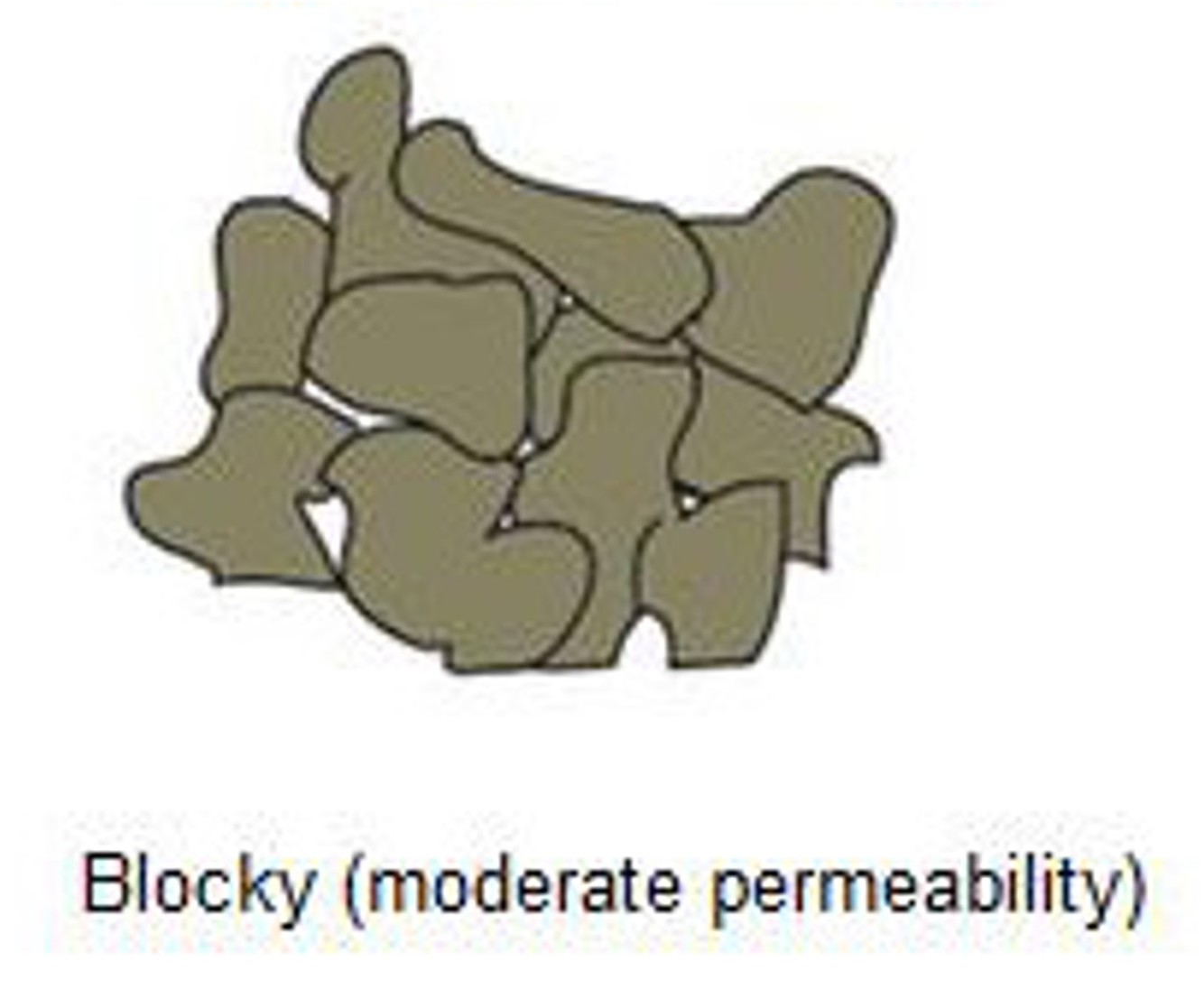
Blocky peds: * Are roughly cube-shaped, 5mm to 50mm in size and occur in lower horizons, where they contribute to aeration, drainage and root penetration. Soil Structure
Question What are Prisim like (prismatic) Peds? Soil Structure
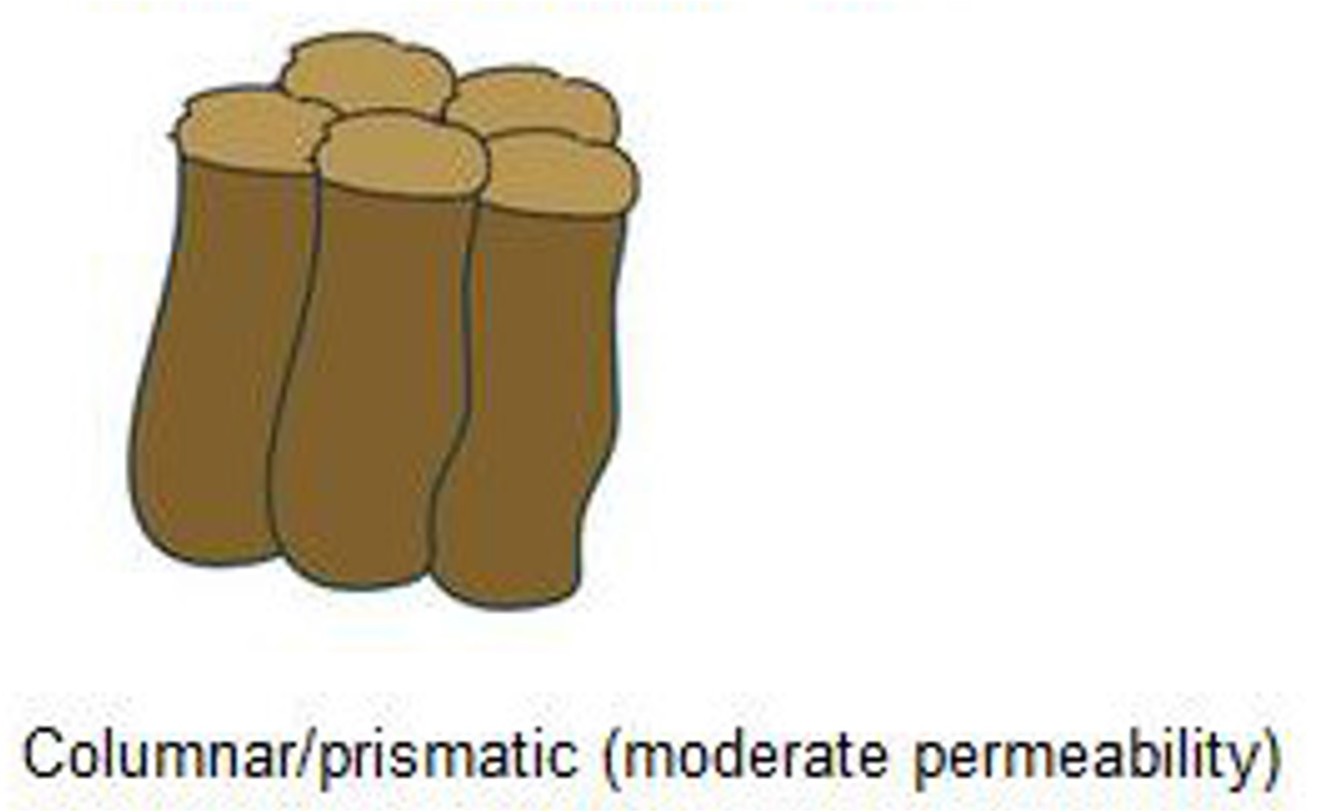
Prism-like (prismatic) peds: * Are vertical, column-shaped structures, 10mm to 100mm in size and commonly occur in the subsoil of heavy clays. The upper surface of these peds can be too dense for roots to penetrate. Soil Structure
Question The grade of peds describes how distinct the peds are and how durable they are. List the four grades. Soil Structure
Ped grades: * Structureless or Apedal. * Weakly (indistinct) developed. * Moderately developed. * Strongly developed. Soil Structure
Question What are Apedal soils? Soil Structure
Apedal soils have no visible aggregation: * They can either be ‘massive’ if all of the particles are packed together, or ‘single-grain’ if the particles are separate and distinct (as in beach sand, for instance). Soil Structure
Question What are Weakly (indistinct) developed peds? Soil Structure
Weakly developed structure: * Has poorly formed, indistinct peds that are barely observable and break up easily. Soil Structure
Question What are Moderately developed ped structures? Soil Structure
Moderately developed structure: * Has well formed, moderately durable peds that break apart from each other when disturbed, with some broken peds. Soil Structure
Question What are Strongly developed ped structures? Soil Structure
Strongly developed structure: * Has durable, distinct peds that adhere weakly to one another, but few of the peds break apart. There is little or no unaggregated material. Soil Structure
Question What are some points regarding Soil structure and multiple grade Peds? Soil Structure
Soil structure: * Soils with a good crumb structure have a range of different sized peds, and a range of different sized pores. * Large pores are needed for drainage, air exchange, soil organisms, root development and ease of working. * Small pores are needed to hold water – pores smaller than around 0.03 mm are able to retain water against gravity. Soil Structure
Question Soil structure influences: Name 6 things. Soil Structure
Soil structure influences: * Pore space * Aeration * Water infiltration/drainage * Root development * Seedling emergence * Susceptibility to erosion Soil Structure