Unit 1 - Atomic structure and bonding
No description yet. This curated deck is ready for daily study.
Card preview (24)
Name the subatomic particles that are found in an atom
Protons Neutrons Electrons
Describe subatomic particles in terms of their location, mass and charge.
- Protons are positive and located in the nucleus - Neutrons are neutral and located in the nucleus - Electrons are negative and located: around the nucleus or in the electrons shells or in energy levels.
An atoms have a mass number of 25 and atomic number of 13, how many protons, neutrons and electrons does this atom have>
Protons: 13 Neutrons: 25-13 = 12 neutrons Electrons: 13
How many protons, neutrons and electrons are present in this atom. What is the name of this element?
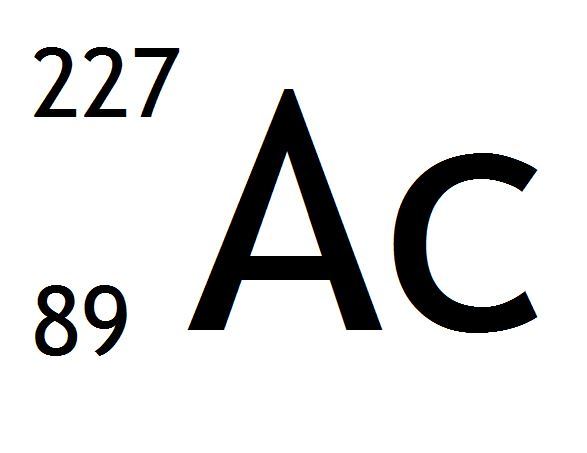
Protons = atomic number = 89 Neutrons = mass number - atomic number= 227 - 89 = 138 Electrons = 89 (same as number of protons in an atoms) Name of element: Actinium
Why an atom is always neutral?
Because it has the same amount of protons (oositive charges) and electrons (negative charge)
Write the nuclide notation for the element that has 35 protons and 45 neutrons.
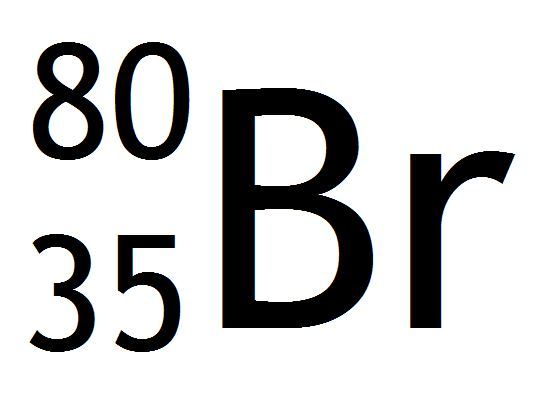
Give an example of an element with similar chemical properties of Iodine. Explain why they have similar chemical properties.
Any element from group 7. Because they are in the same group and have the same amount of electrons on their outer shell.
What is an ion?
An atom that has lost or gained electrons to become stable.
What is the name of group 1, 7 and 0/8 in the periodic table?
Group 1: Alkalis metals Group 7: Halogens Group 8/0: Noble gas
Write the electron arrangement for an atom of carbon.
Carbon atom has 12 protons, so will have 12 electrons. The electron arrangement for carbon atom is: 2,8,2
How many electrons does Sulfur need to loose or gain to become stabe?
Sufur has the electron arrangement: 2,8,6 to become stable, sulfur need to gain 2 electrons, and would have the electron arrangement 2,8,8
Write the electron arrangement of Aluminium ion.
Aluminium atom has the electron arrangement: 2,8,3 to become stabe and become an ion it need to loose 3 electrons, the electron arrangement for Aluminium ion is: 2,8
How does an atom become a positive ion? For example Ca2+?
Atoms become positive ions by loosing electrons. Ca2+ has lost 2 electrons.
How does atoms become negative ions? For example N3- ?
Atoms become negative ions by gaining electrons. For example N3- has gained 3 electrons.
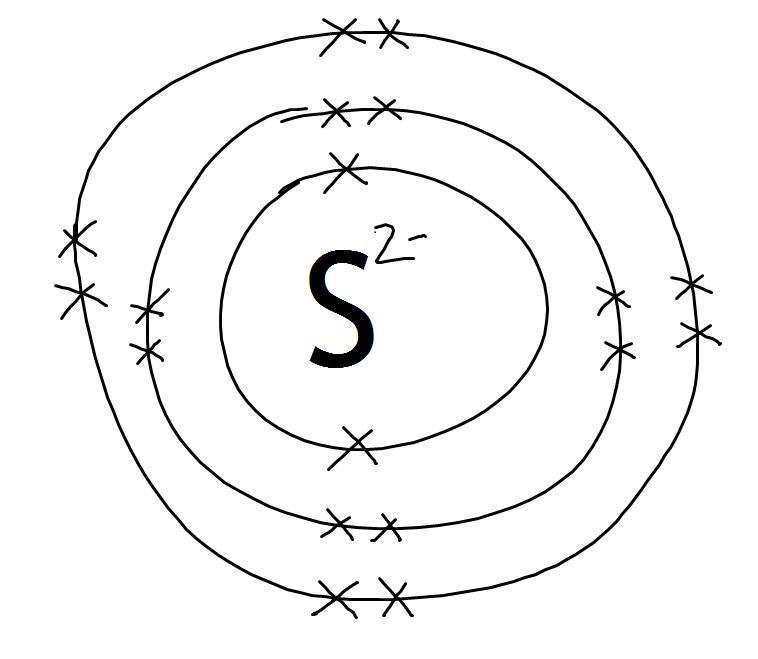
Draw the electron arrangement for Sulfur ion.
Give the definition of an isotope.
Isotopes are: Elements with the same atomic number but different mass number or Elements with the same number of protons but a different number of neutrons.
Explain what is the RAM (Relaive Atomic Mass)
The relative atomic mass of an element is the average mass of its atoms.
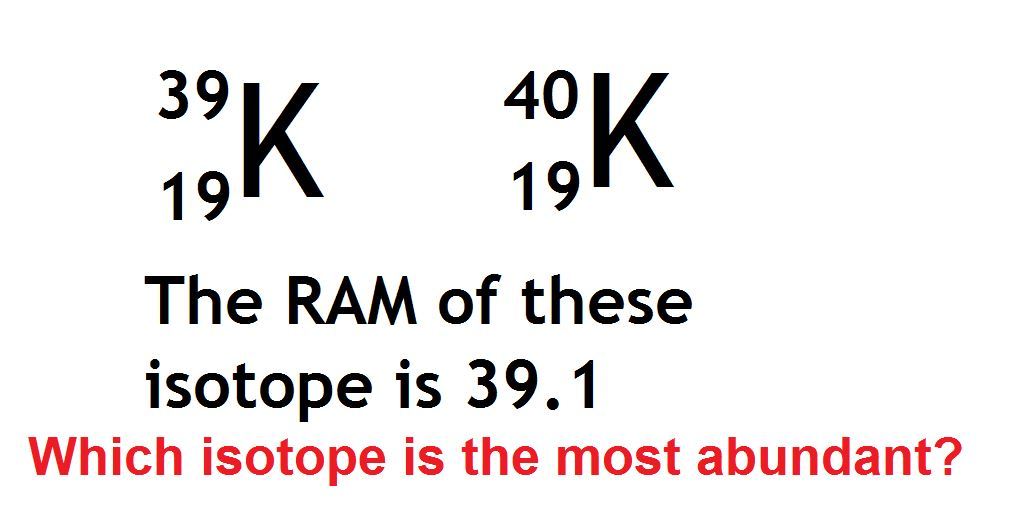
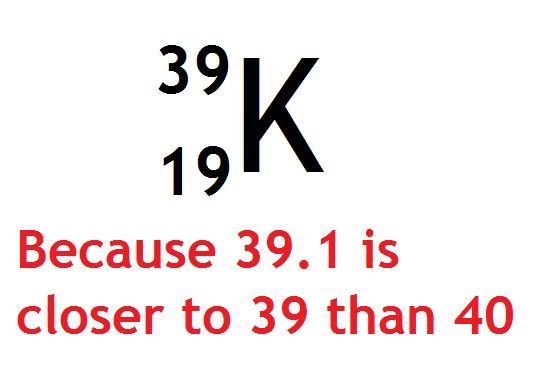
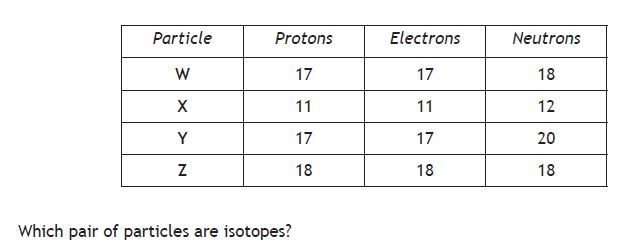
W and Y
A sample of nitrogen was found to contain two isotopes. The isotope with a mass number of 14 was present at 70% and the other with a mass of number 15 was present 30%. What is the relative atomic mass of this sample of nitrogen?
(14x70)+(15x30) / 100 = 14.3 Your result for the RAM should always be between the different mass number, if you have a higher number, you probably forgot to divide by 100, if your number is smaller, you probably divided by 100 too many times.
Describe how covalenent bonds are formed.
By sharing a pair of electrons.
What type of atoms can be found in covalent bond?
non-metals with non-metals
Draw a dot and cross diagram for water.
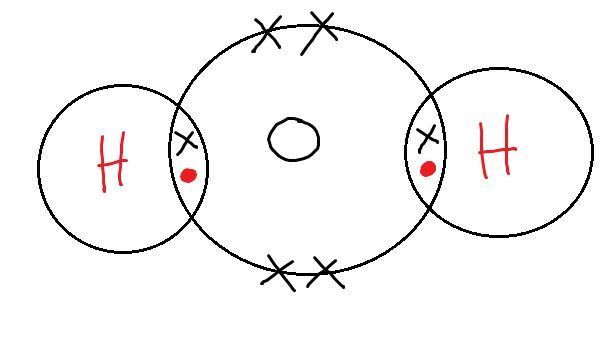
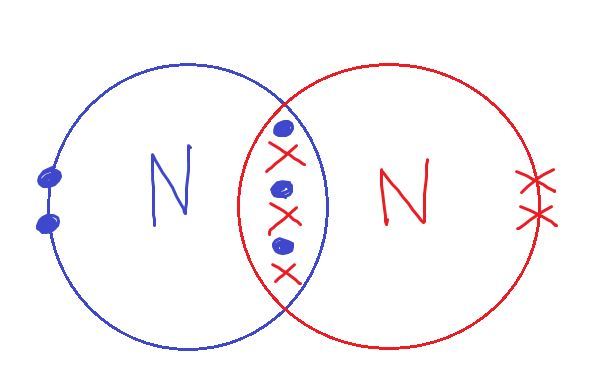
Draw a dot and cross diagram for N2