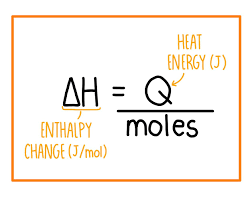
1.4- Energetics- UNFINISHED
No description yet. This curated deck is ready for daily study.
Card preview (24)
What is ‘enthalpy’?
A measure of the heat content of a substance.
What is enthalpy change (ΔH)?
Change in heat content at constant pressure.
What are ‘standard conditions’ (ΔH°)?
100kPa. Stated temperature (usually 298K). 1 moldm^-3 (for solutions).
What type of reaction is this a reaction profile for?
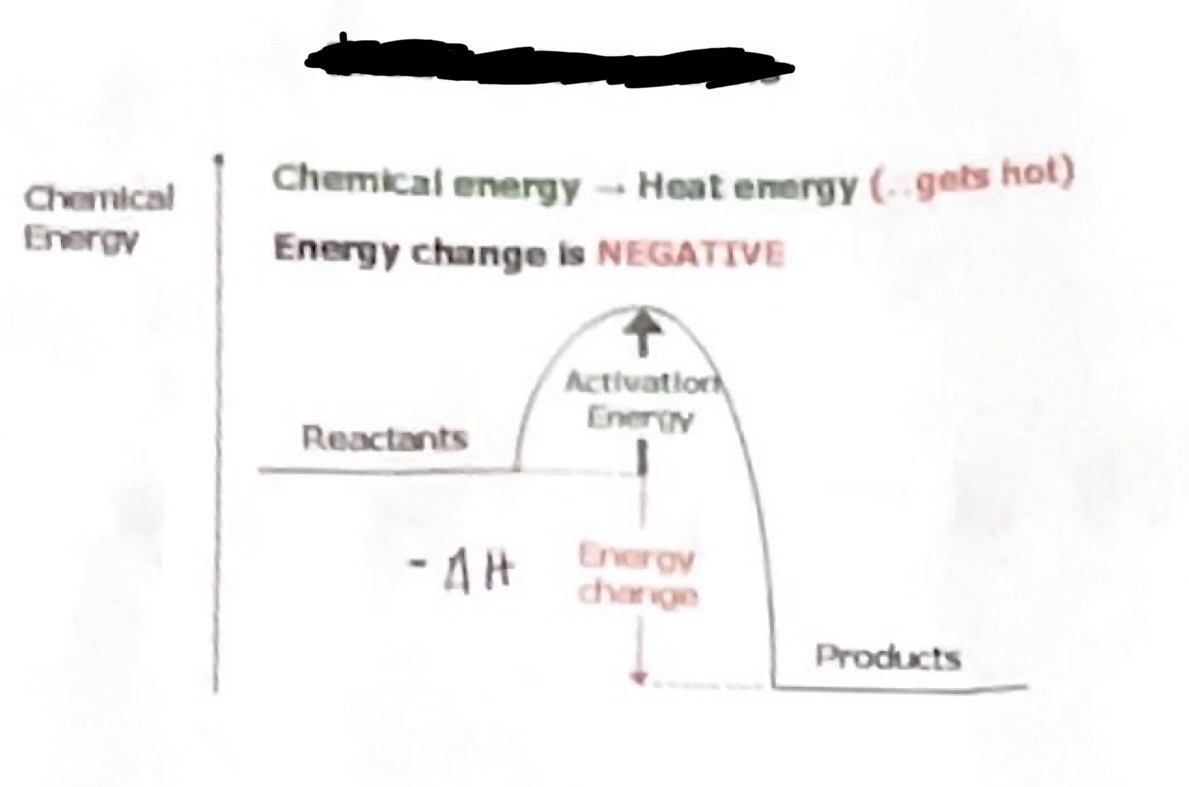
EXOthermic
Fill in the blank.
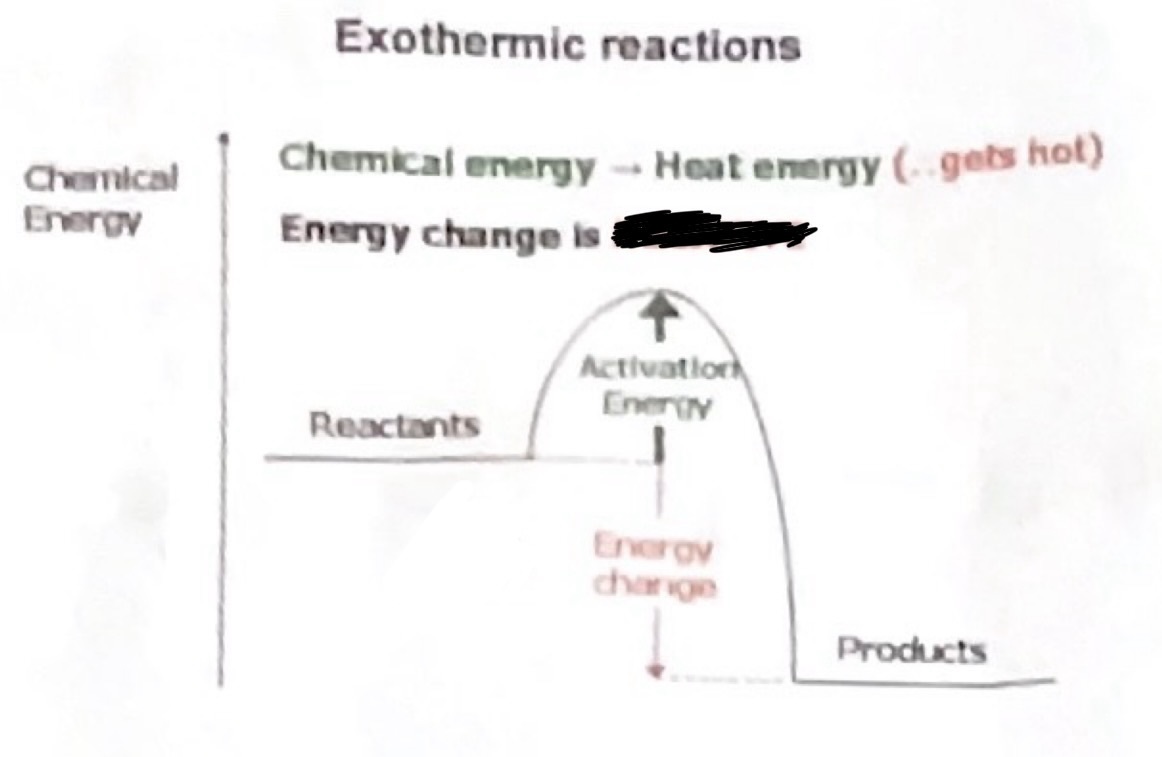
NEGATIVE.
Fill in the blank.
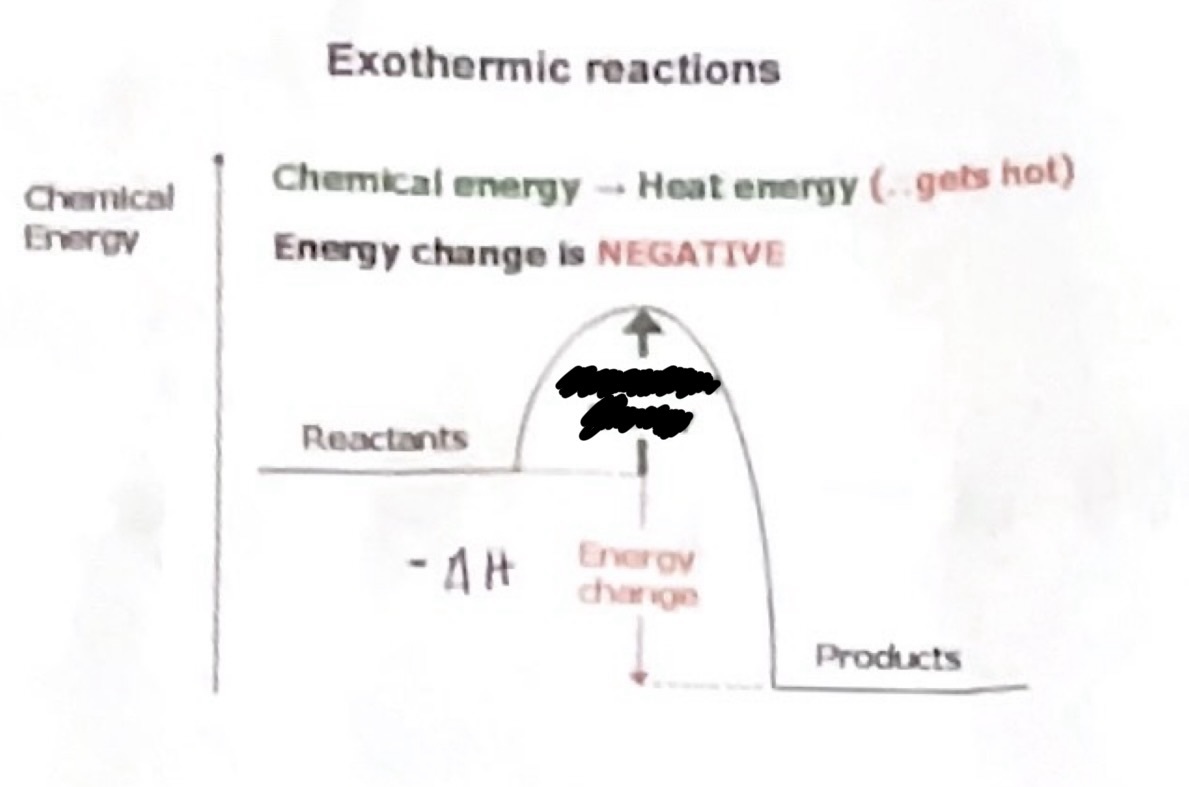
Activation energy
Fill in the blank.
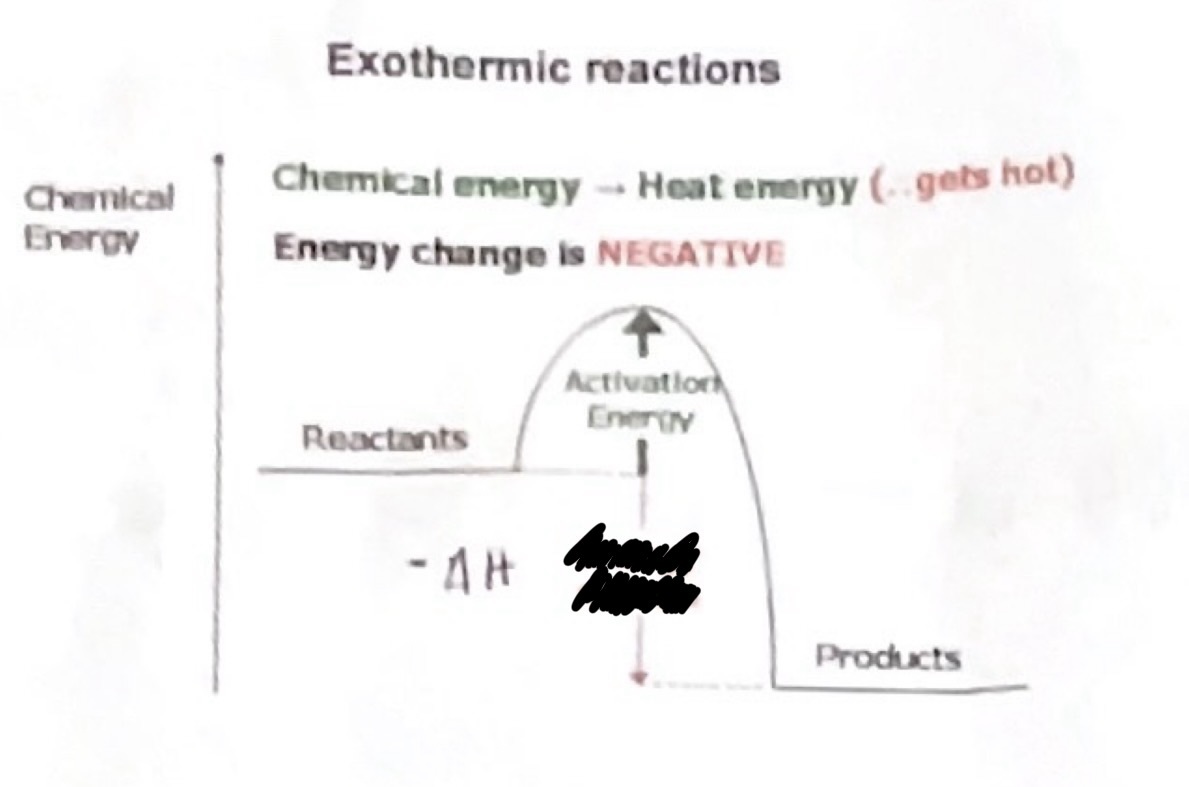
Energy change
What type of reaction is this a reaction profile for?
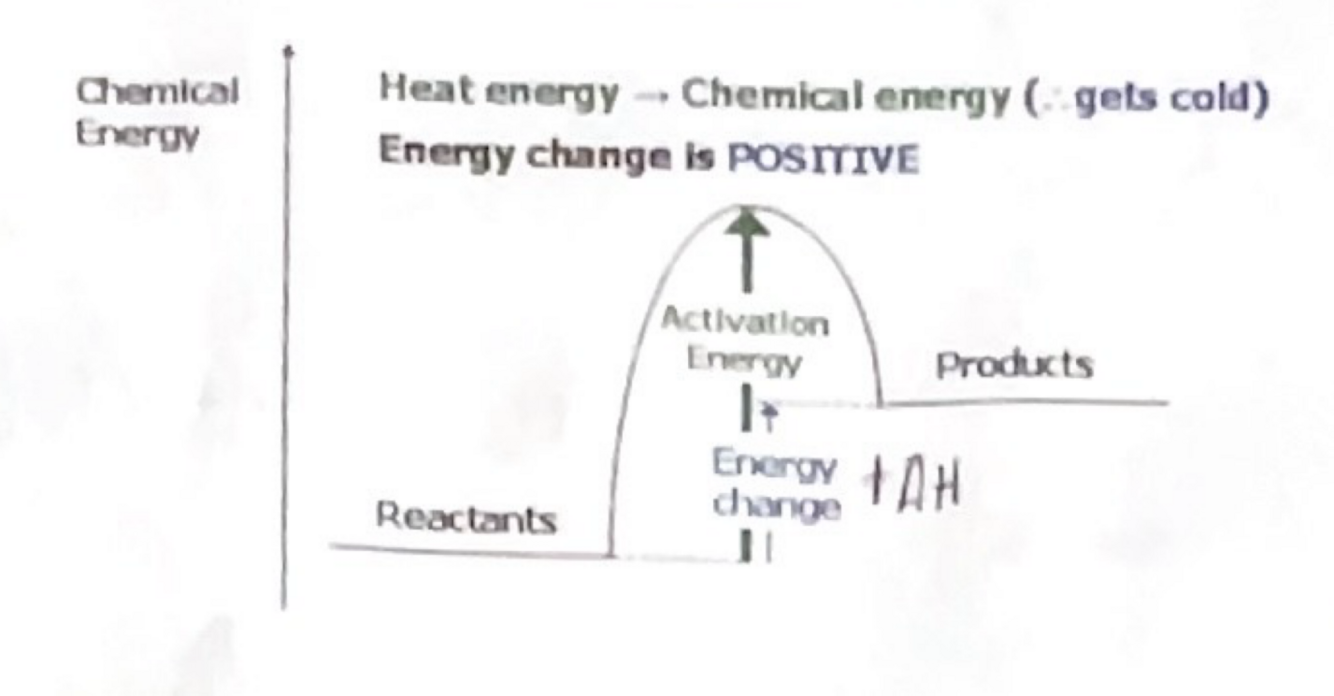
ENDOthermic
Fill in the blank.
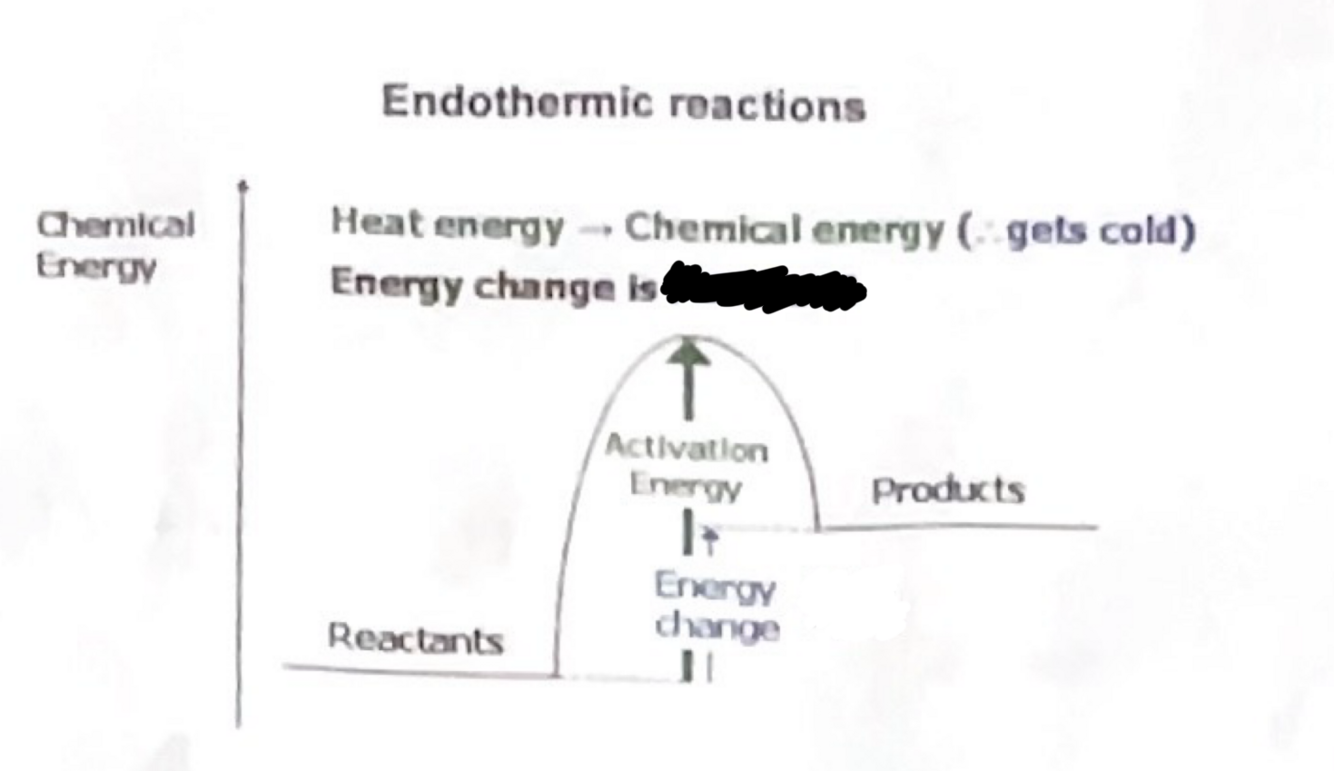
POSITIVE
What is the standard enthalpy change of reaction (ΔᵣH°)
The enthalpy change for a reaction with the quantities shown in the chemical equation.
If you half an equation, what will happen to the standard enthalpy change of the reaction?
The standard enthalpy change of the reaction will half.
What is the standard enthalpy change of formation (ΔfH°)
Enthalpy change when 1 mole of a substance is formed from its constituent elements with all reactants and products in standard states under standard conditions.
What is the (ΔfH°) of an element in its standard state?
0
How do you write an equation for (ΔfH°)?
1) Write all the individual elements that make up a substance on the reactants side of the equation. 2) Put the correct state symbols after each of the substances in the equation. This will be the state of each of the substances at room temperature. 3) Balance the equation so that only 1 mole of the product is formed.
What is the standard enthalpy change of combustion (ΔcH°)?
Enthalpy change when 1 mole of a substance is completely burned in oxygen with all reactants and products in standard states under standard conditions.
How do you write an equation for (ΔcH°)?
1) Start with 1 mole of reactant. 2) Add oxygen as another reactant. 3) Oxidise each element in the reactant substance separately into an ‘oxide’ on the product side. 4) Balance equation, ensuring there is still only 1 mole of original reactant.
What is the standard enthalpy change of neutralisation (ΔₙₑᵤₜH°)?
Enthalpy change when 1 mole of water is formed in a reaction between an acid and alkali under standard conditions.
How do you write an equation for (ΔₙₑᵤₜH°)?
Write a normal equation for neutralisation, then correct numbers to have 1H2O in the equation.
How can we find the enthalpy change for a reaction?
By measuring the temperature change in a reaction.
What is specific heat capacity?
The amount of energy needed to make 1g of a substance 1°C (1K) hotter.
What is the equation we can use to find the *change in temperature** in a reaction?
q = mcΔT
What does each letter in the ‘q = mcΔT’ stand for?
q = heat energy given out m = mass of substance heated c = specific heat capacity ΔT = temperature rise
What are the units needed for the values of each letter in the equation ‘q = mcΔT’?
q = J m = g c = J/g/K ΔT = K
What is the equation to find the enthalpy change per mole?