Aqua Metal Ions
No description yet. This curated deck is ready for daily study.
Card preview (24)
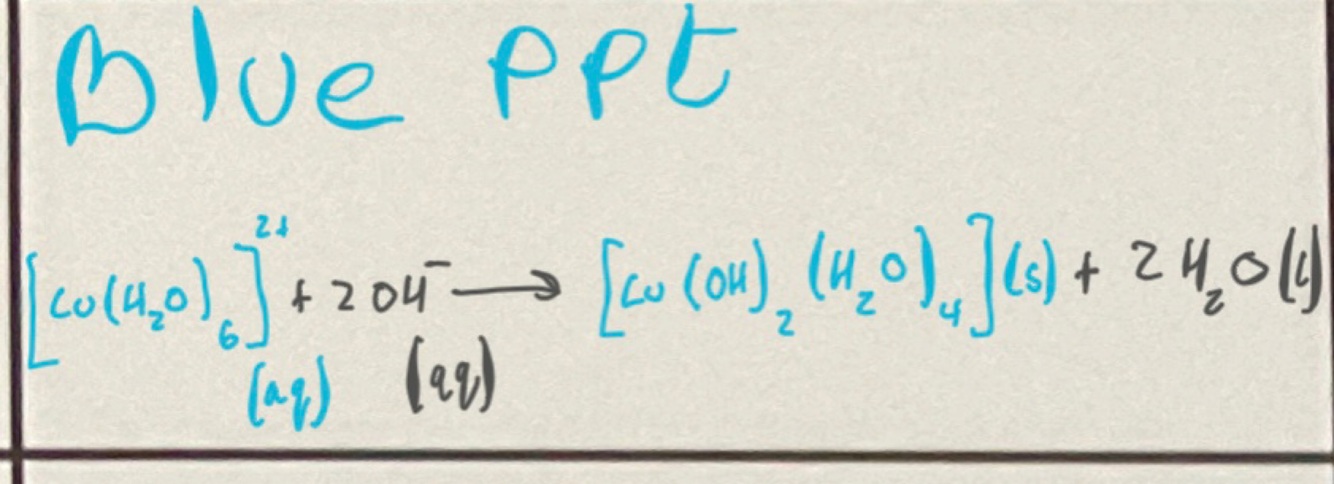
Write the equation and observed reaction for the reaction between a Copper Aqua complex and a few drops of OH-(aq) (Excess same as this)
Blue Solution ——-> Blue precipitate
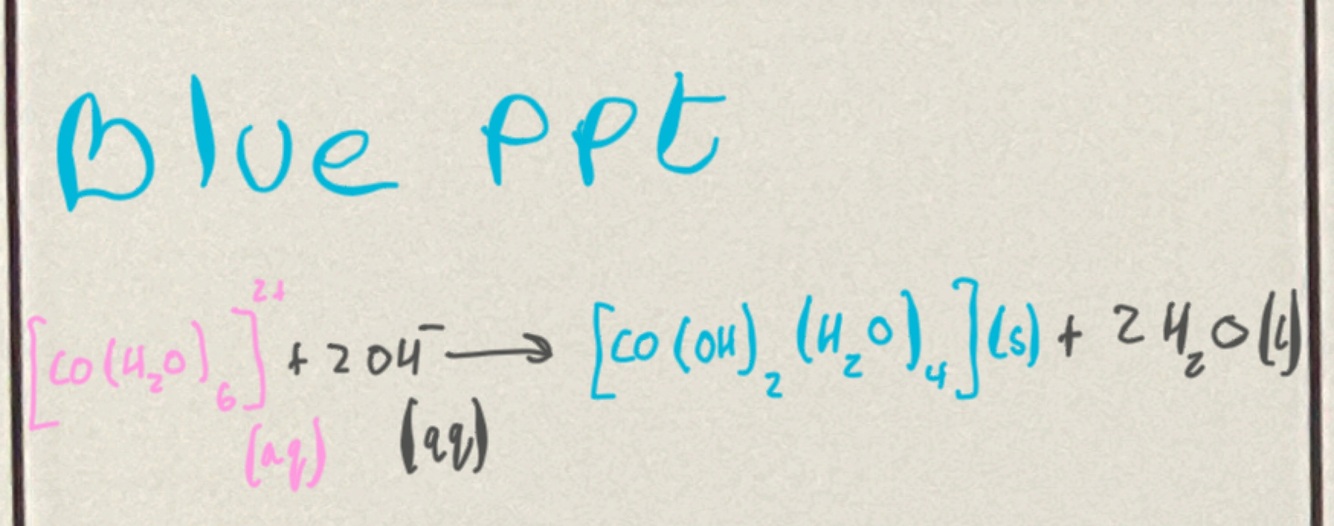
Write the equation and observed reaction for the reaction between a Colbolt Aqua complex and a few drops of OH-(aq) (Excess same as this)
Pink Solution ——-> Blue Precipitate
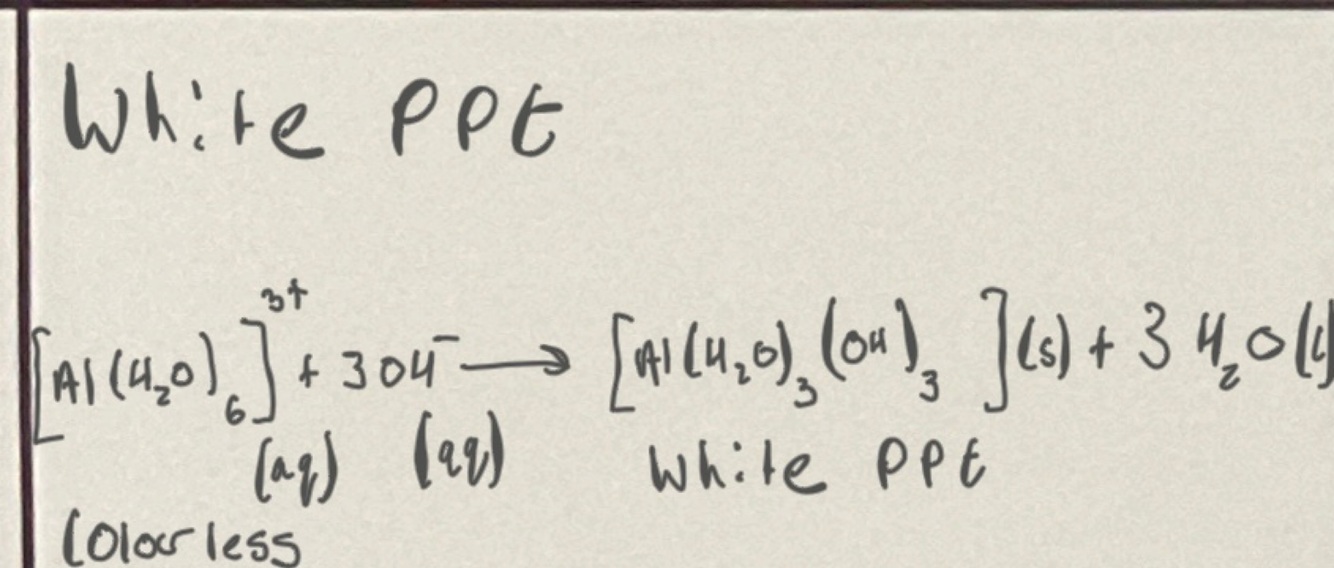
Write the equation and observed reaction for the reaction between a Aluminium Aqua complex and a few drops of OH-(aq)
Clear and Colourless Solution ——> White Precipitate
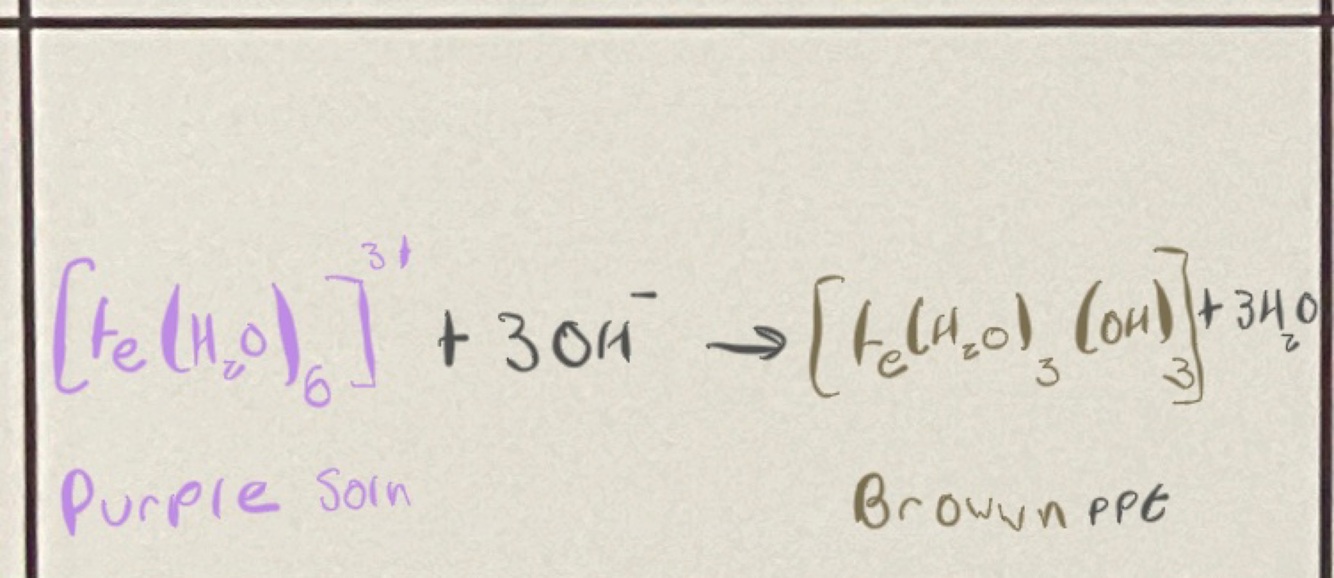
Write the equation and observed reaction for the reaction between a Iron(3+) Aqua complex and a few drops of OH-(aq) (Excess same as this)
Purple Solution ——-> Brown Precipitate
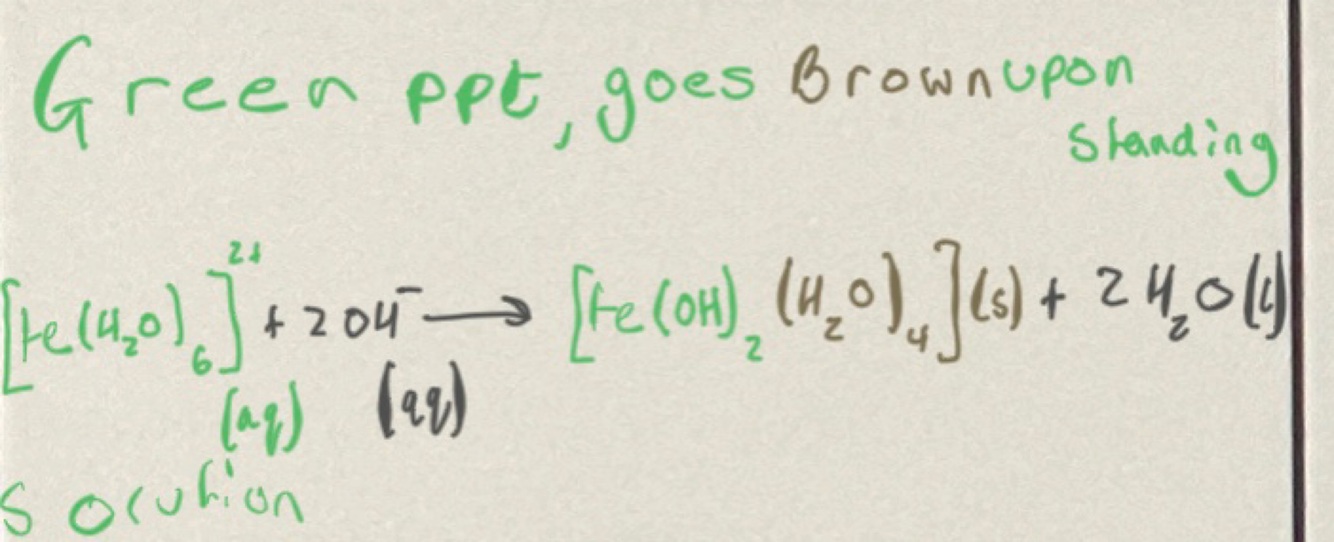
Write the equation and observed reaction for the reaction between a Iron(2+) Aqua complex and a few drops of OH-(aq) (Excess same as this)
Green Solution ——> Green Precipitate ——> Brown (on standing)
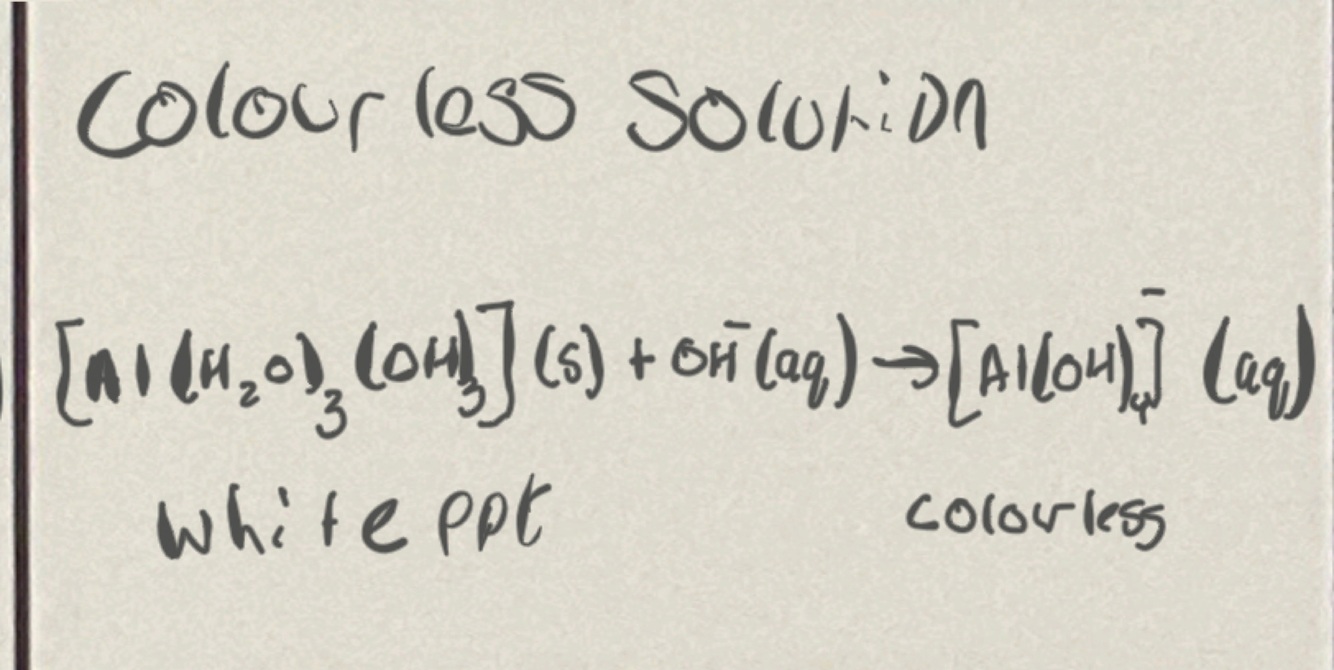
Write the equation and observed reaction for the reaction between a Aluminium Aqua complex and excess OH-(aq)
Clear and Colourless solution ——> White Precipitate ———> Colourless solution (precipitate dissolves) + 3 H2O on products
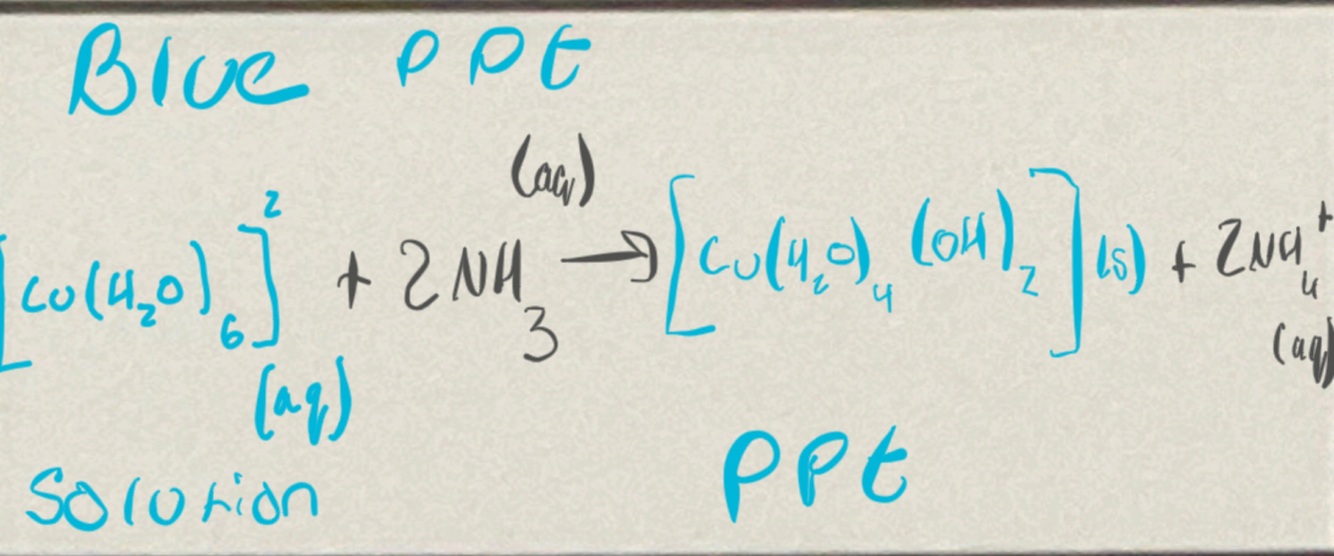
Write the equation and observed reaction for the reaction between a Copper Aqua complex and a few drops of NH3(aq)
Blue Solution ——-> Blue Precipitate
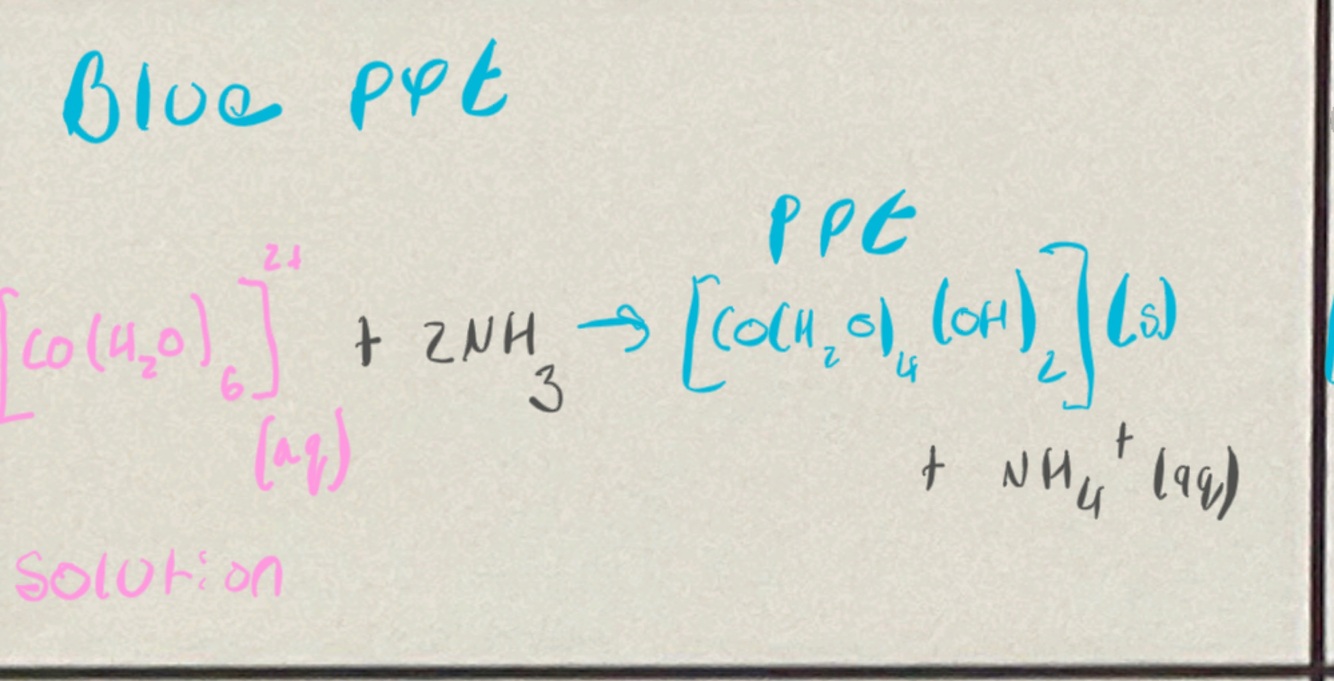
Write the equation and observed reaction for the reaction between a Colbolt Aqua complex and a few drops of NH3(aq)
Pink Solution ——-> Blue Precipitate (2NH4+ not one)
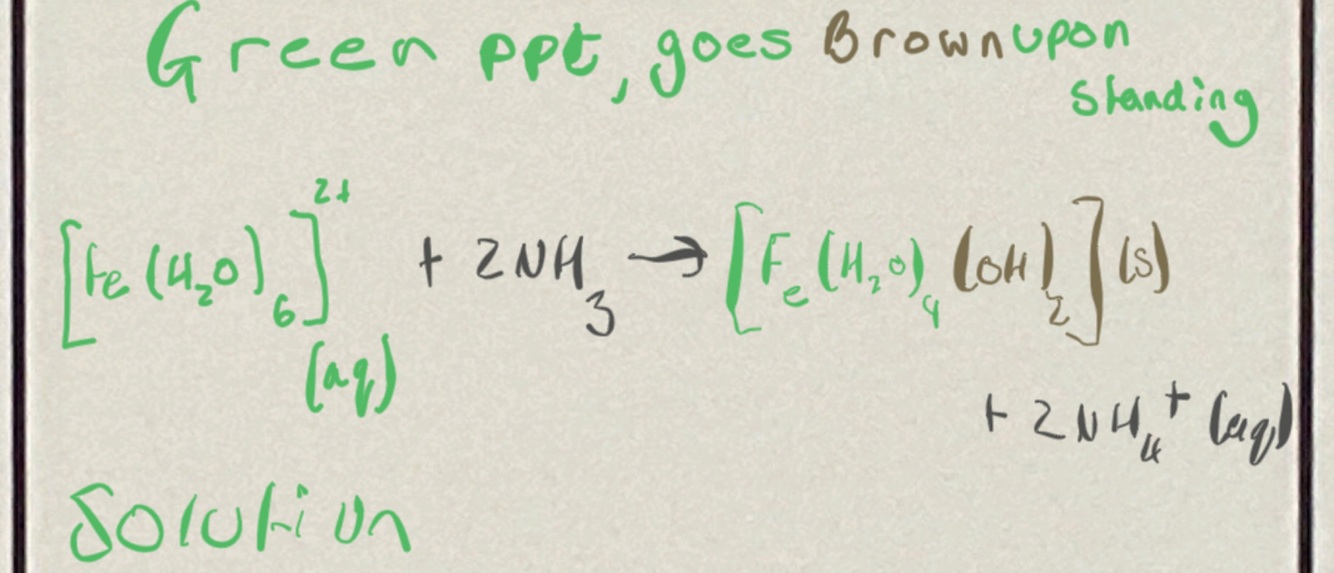
Write the equation and observed reaction for the reaction between a Iron(2+) Aqua complex and a few drops of NH3(aq)
Green Solution ———-> Green Precipitate ———> Brown precipitate (on standing)
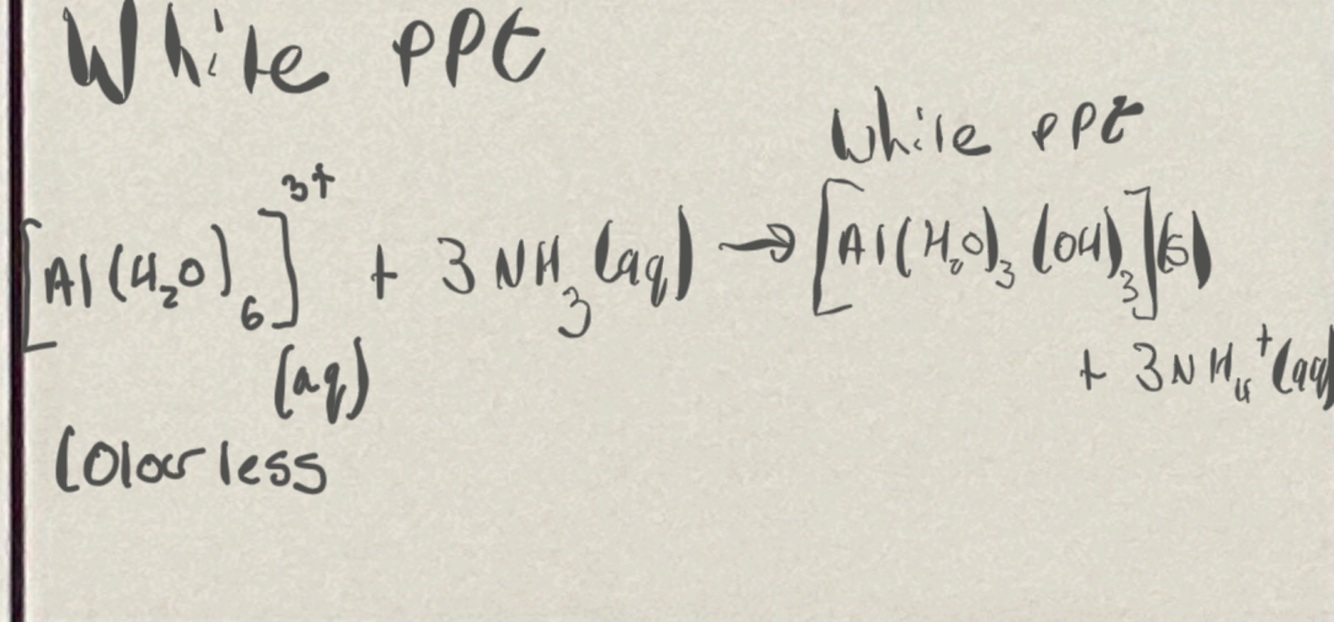
Write the equation and observed reaction for the reaction between a Aluminium Aqua complex and a few drops of NH3(aq) (Same as Excess)
Clear and Colourless Solution ——> White Precipitate
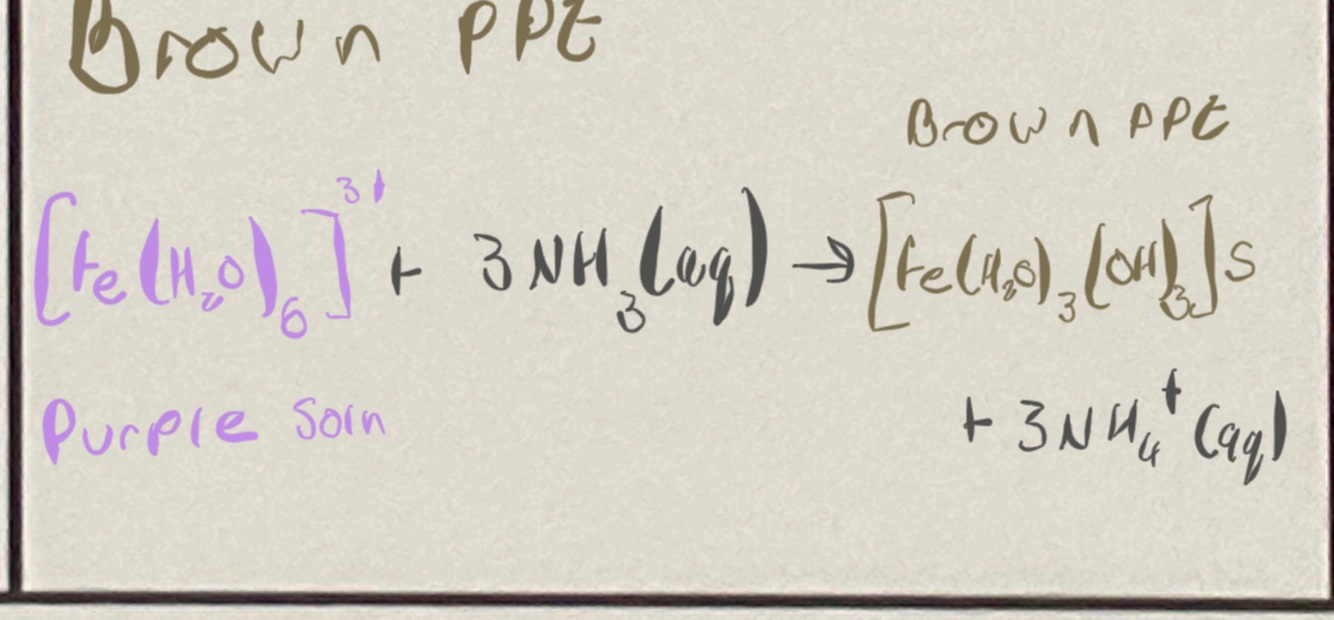
Write the equation and observed reaction for the reaction between a Iron(3+) Aqua complex and a few drops of NH3(aq)
Purple Solution ——> Brown Precipitate
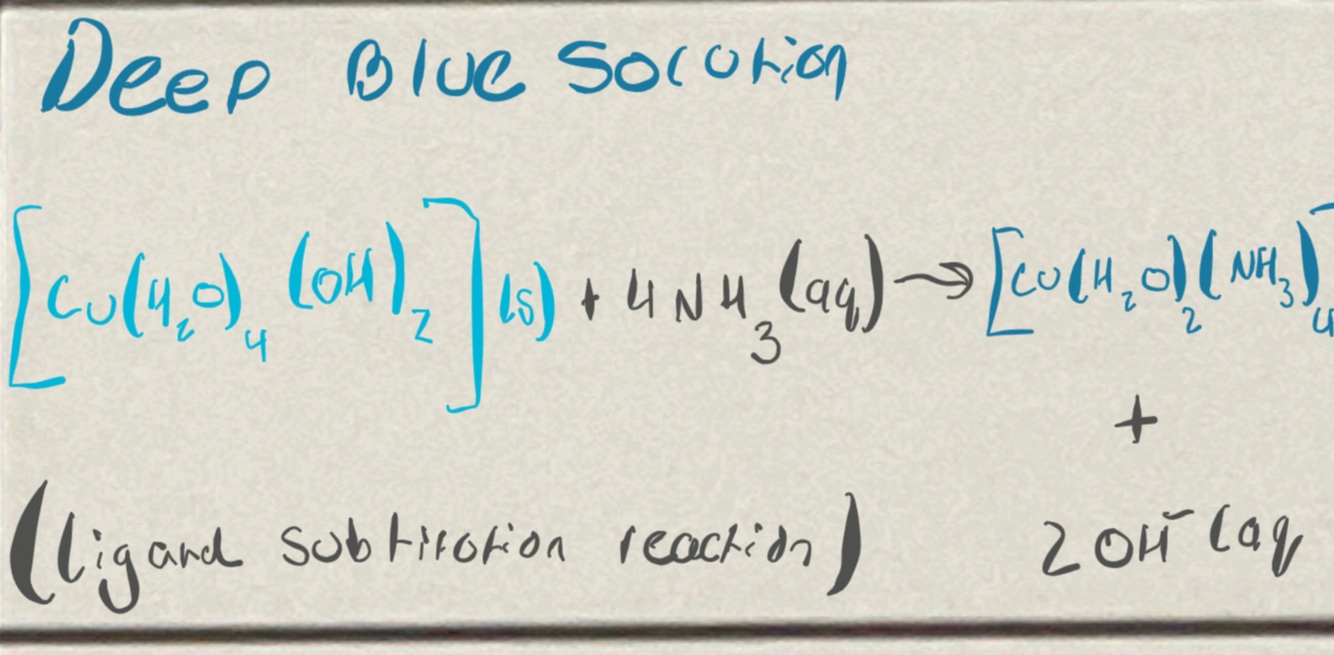
Write the equation and observed reaction for the reaction between a Copper Aqua complex and Excess NH3(aq)
Ligand Substitution Reaction Blue Solution ——> Blue Precipitate —-> Deep Blue Solution
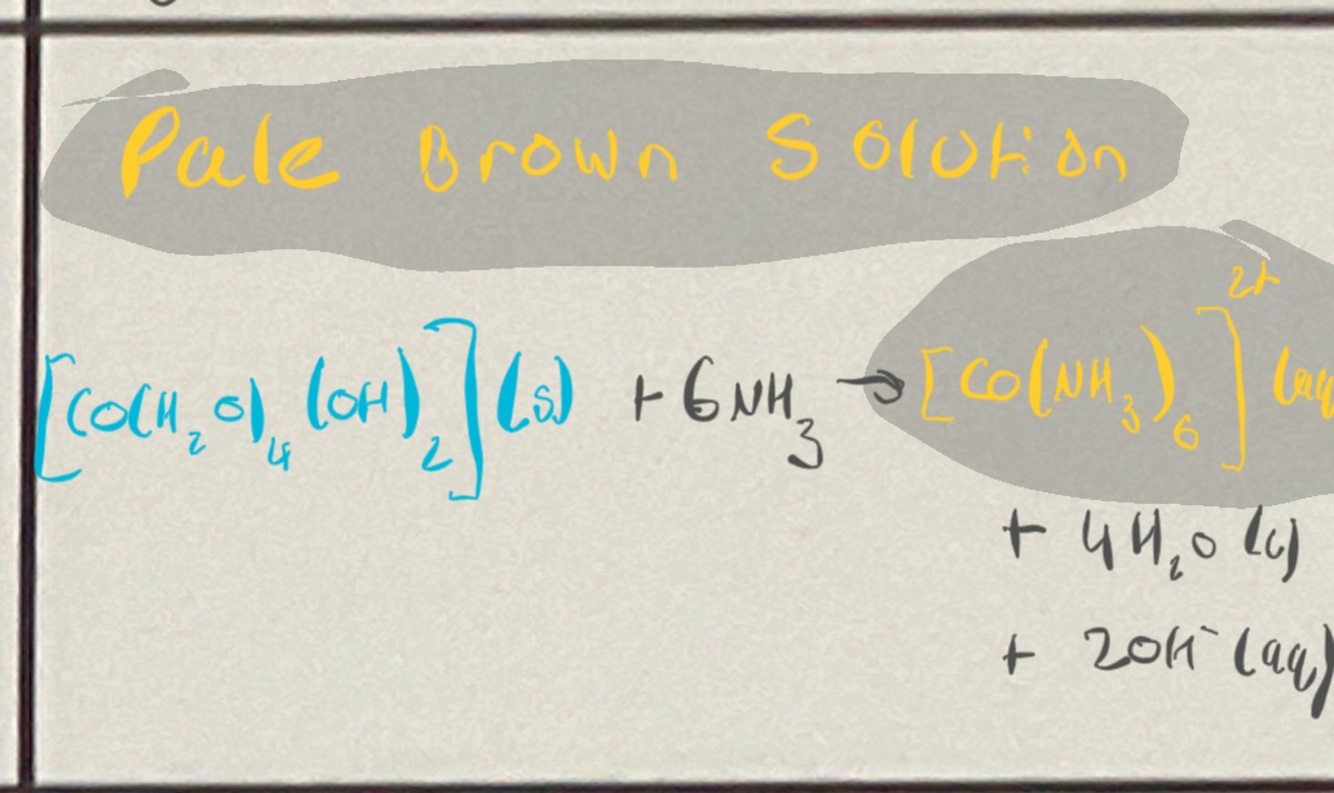
Write the equation and observed reaction for the reaction between a Colbolt 2+ Aqua complex and Excess NH3(aq)
Pink Solution —-> Blue Precipitate —-> Pale Brown Solution
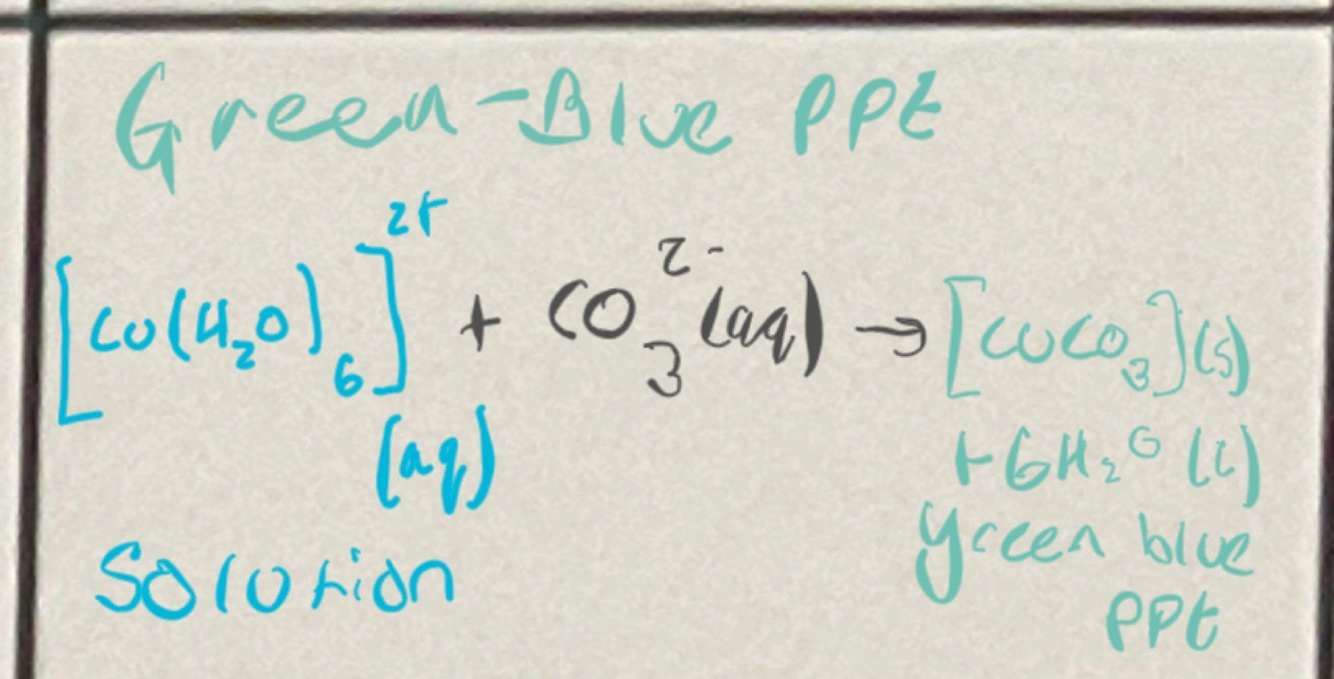
Write the equation and observed reaction for the reaction between a Copper Aqua complex and a Carbonate ion (CO3 2- ) (aq)
Blue Solution ——-> Blue Green Precipitate
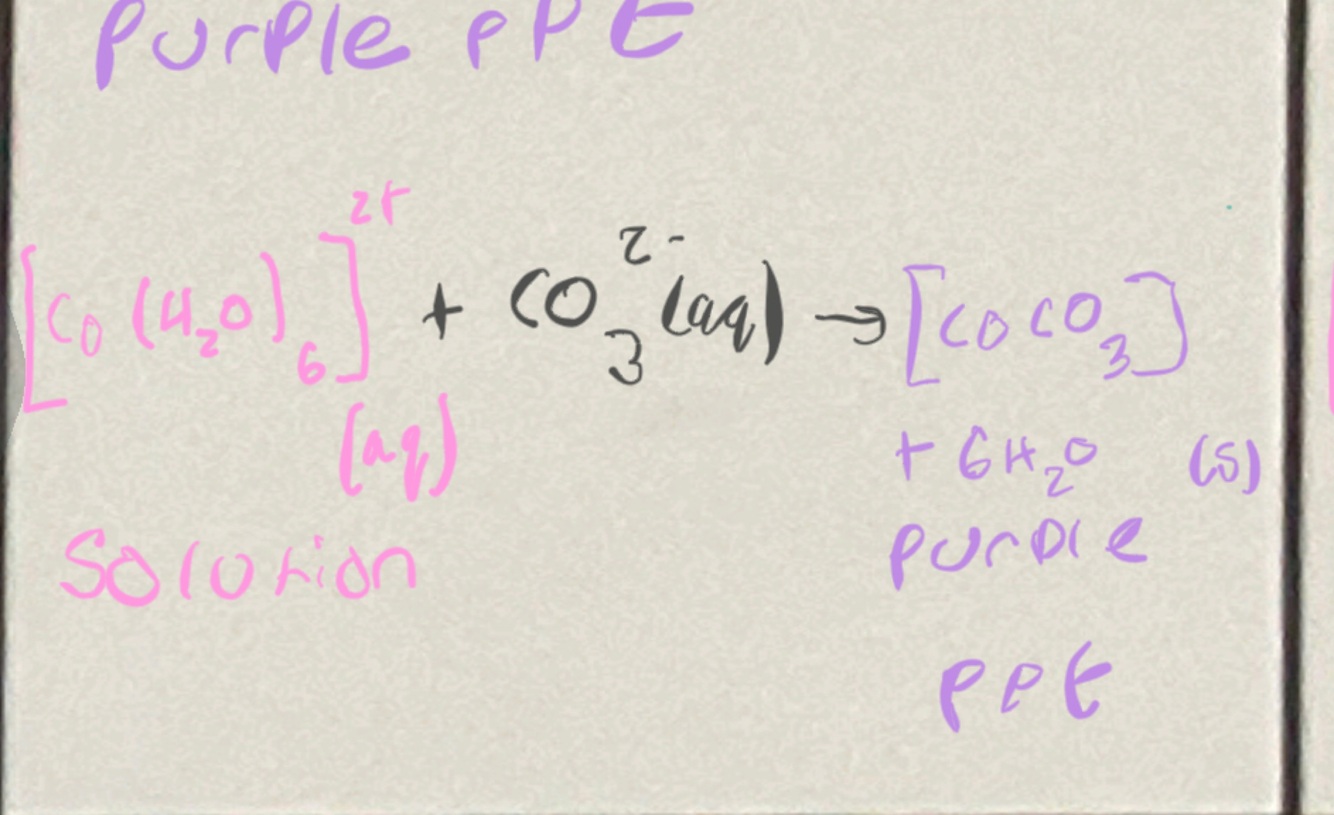
Write the equation and observed reaction for the reaction between a Colbolt Aqua complex and a Carbonate ion (CO3 2- ) (aq)
Pink Solution ——-> Purple Precipitate + Water
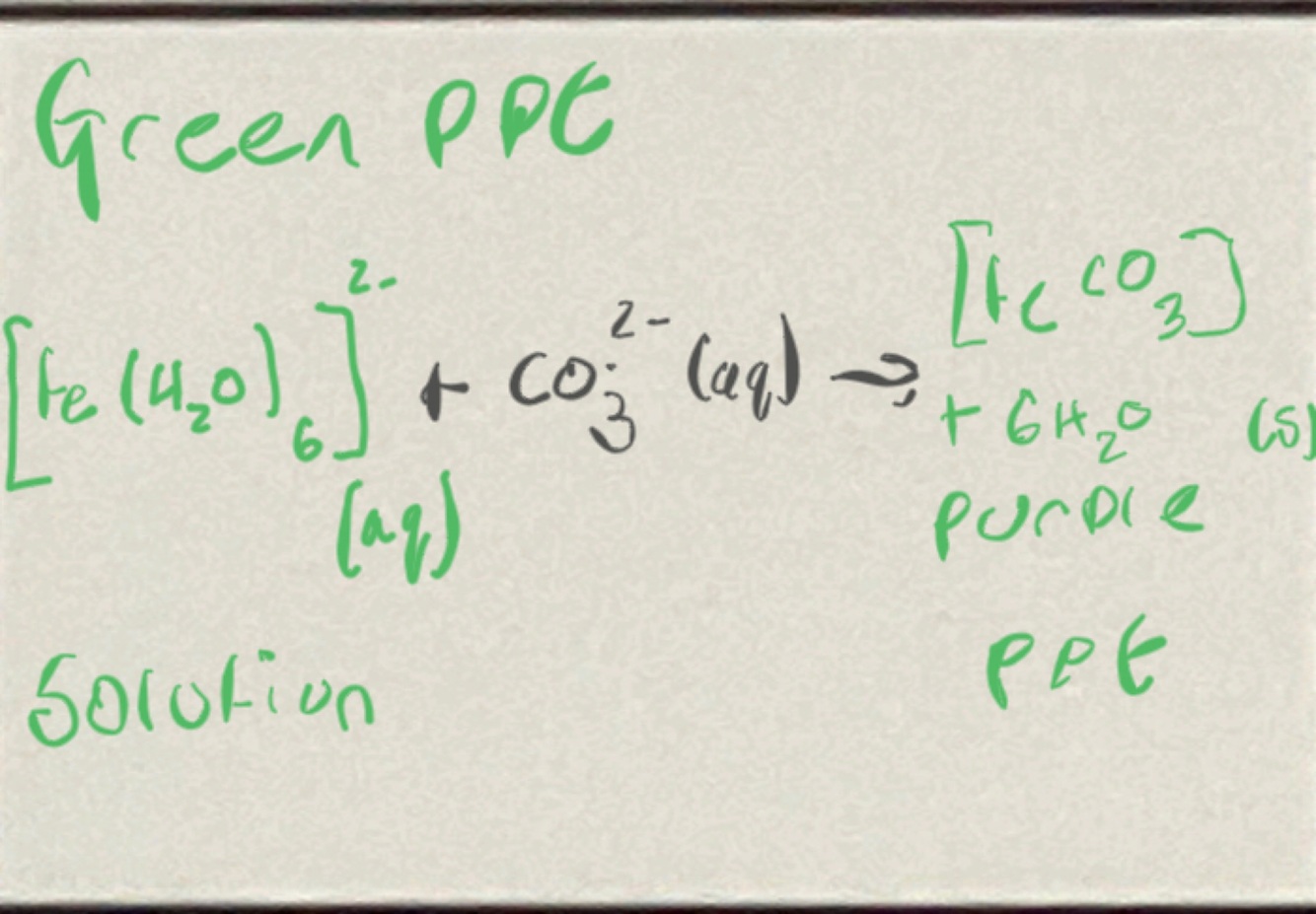
Write the equation and observed reaction for the reaction between a Iron (2+) Aqua complex and a Carbonate ion (CO3 2- ) (aq)
(2+ on Complex) Green Solution ——-> Green precipitate + Water
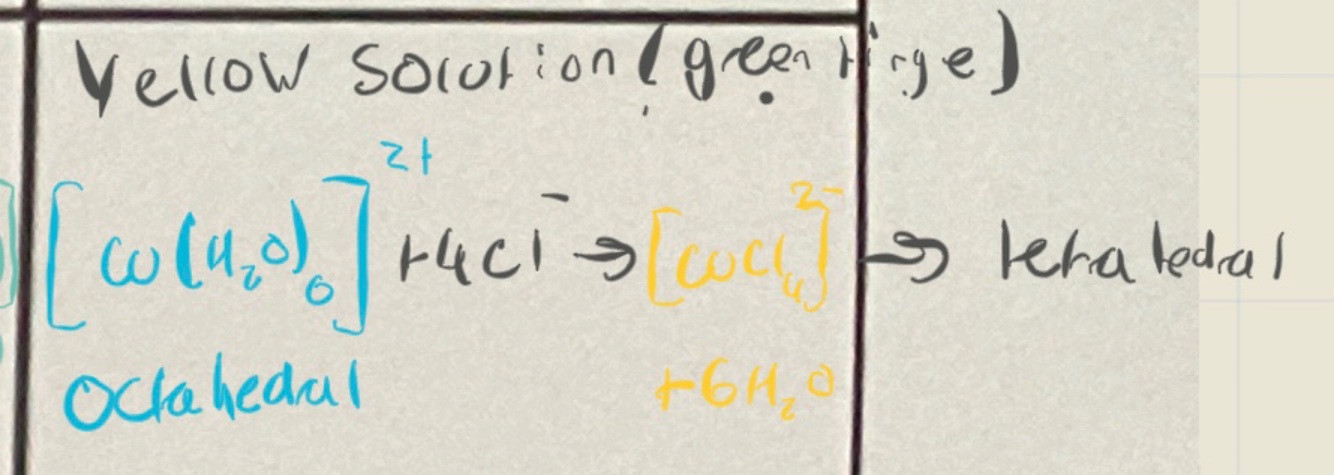
Write the equation and observed reaction for the reaction between a Copper Aqua complex and Hydrochloric Acid (HCl) (aq)
Blue Solution ——-> Yellow Solution with a green tinge Tetrahedral change in structure
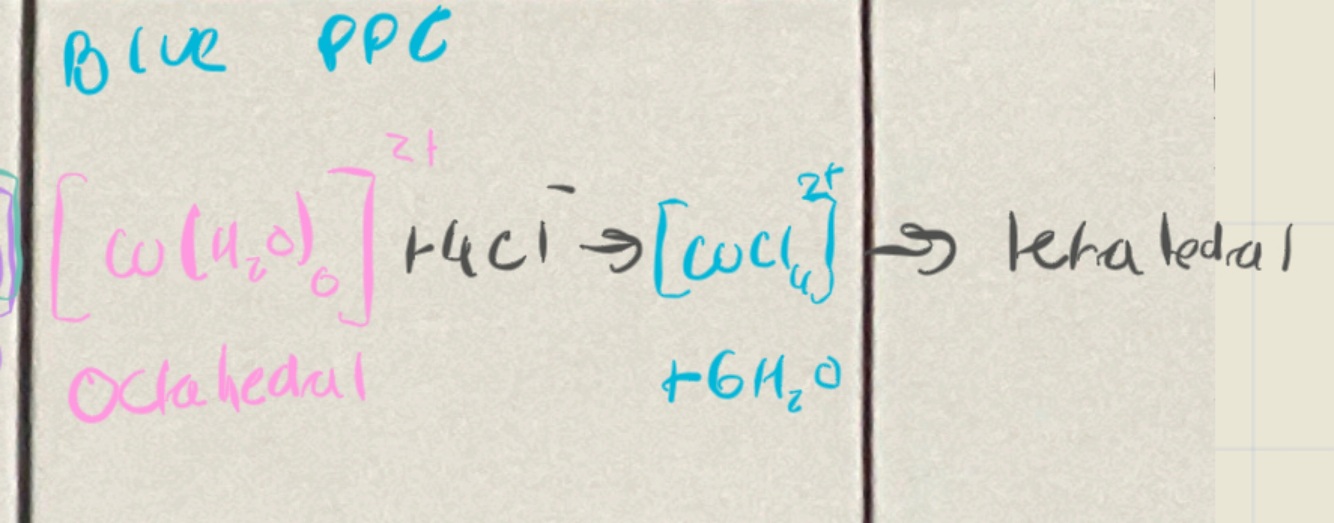
Write the equation and observed reaction for the reaction between a Colbolt Aqua complex and Hydrochloric Acid (HCl) (aq)
Pink Solution ——-> Blue solution tetrahedral Change in structure -2 charge on Colbolt chloride
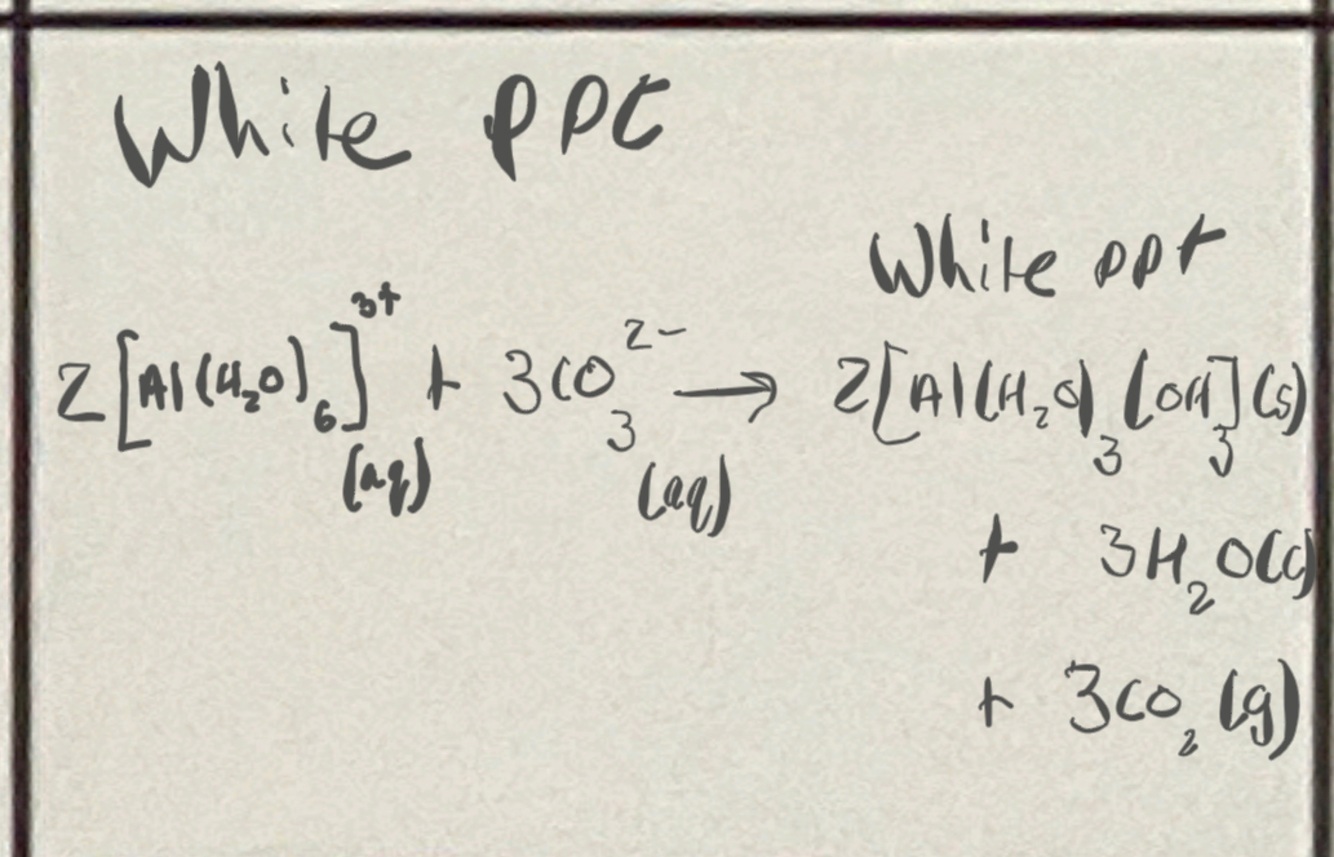
Write the equation and observed reaction for the reaction between a Aluminium Aqua complex and a Carbonate ion (CO3 2- ) (aq)
Clear and Colourless Solution ——-> White Precipitate + effervescence
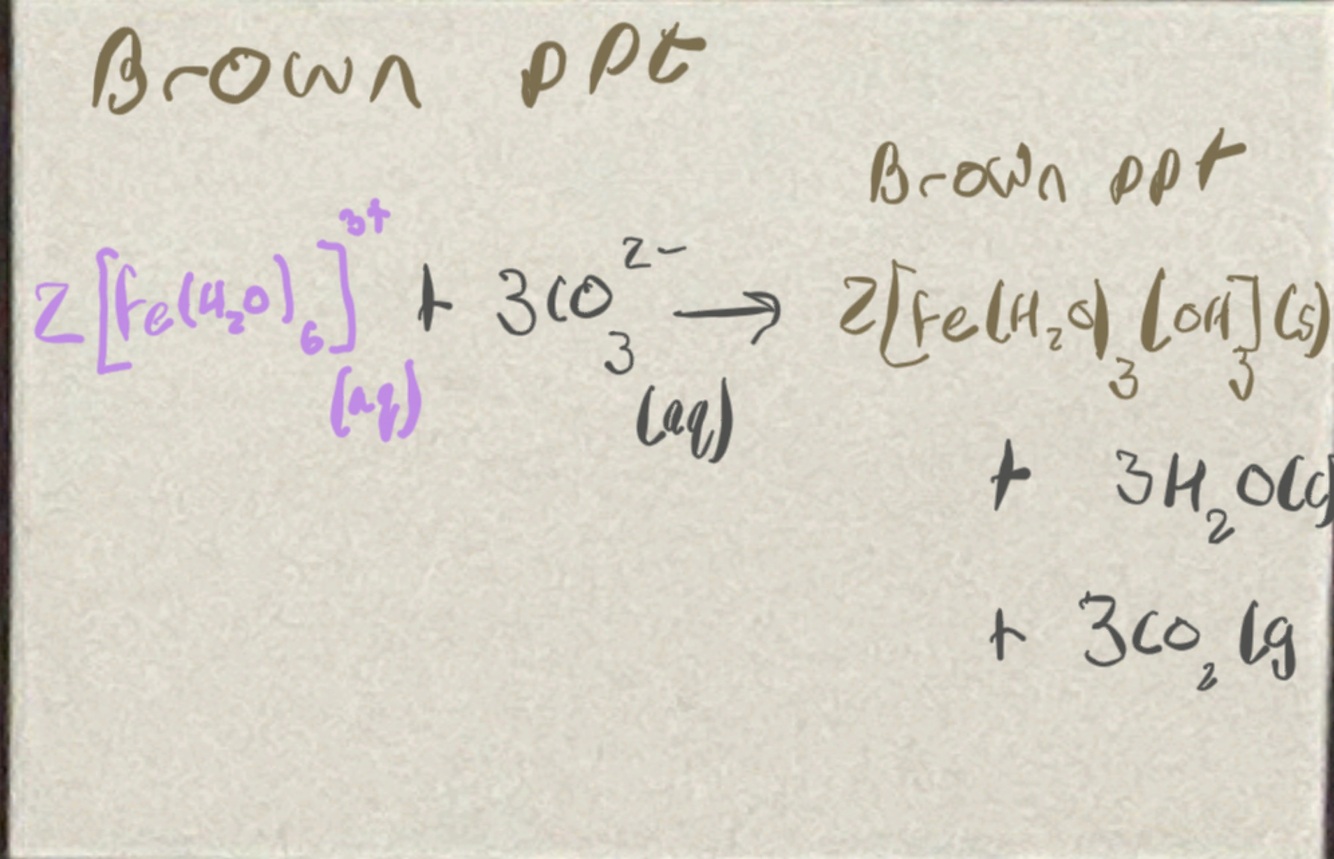
Write the equation and observed reaction for the reaction between a Iron (3+) Aqua complex and a Carbonate ion (CO3 2- ) (aq)
Purple Solution ——-> Brown precipitate + effervescence
Why are Metal-Aqua Ions Acidic in solution
Complex ions react with water (hydrolysis) Aqua complex ions Dissociate Weakly Thus Produces H+ ions Within Solution H+ ions produce the hydronium ion making the solution more acidic
Why are 3+ Metal-Aqua ions are more acidic then 2+ Metal aqua ions
3+ Metal ions have a larger charge density (larger charge and smaller) As a result the 3+ ions are more polarising They attract the electrons in the O-H in the bond more strongly towards the metal ion, which weakens the bond This means the H+ ion is more readily released which goes on to from more hydroxonium ions
What does Amphoteric Mean?
A substance that can act as a Bronstead-Lowry Acid and Base
Name an example for an amphoteric metal hydroxide
Hydrated Aluminium Hydroxide
