M2 - Chemical Bonding (1)
No description yet. This curated deck is ready for daily study.
Card preview (24)
State what is meant by the term ionic bond [1].
Electrostatic attraction between positive and negative ions ✔ *Ionic bonding occurs between a metal and non-metal *
Describe what is meant by the term ionic lattice, in terms of the type and arrangement of particles present [2].
Repeating pattern ✔ of oppositely charged ions ✔
What is the result of ions attracting oppositely charged ions in all directions?
Giant ionic lattice (e.g. NaCl)
What happens to the melting / boiling points for giant ionic lattices, when the ionic charges increase in NaCl to MgO?
Melting / boling point increases as there is a stronger attraction between ions of Mg2+ and O2- than Na+ and Cl-
Are ionic compounds soluble?
Yes, they dissolve in polar solvents such as water / Alcohols
Can ionic compounds conduct electricity in solid, liquid or aqueous states, explain why
Na2O conducts electricity when molten or in aq solution and not when solid ✔ Molten Na2O has ions which are mobile ✔ Solid Na2O has ions which are fixed (in position) OR ions are not mobile ✔
Summarise the properties of most ionic compounds
High melting and boiling points. Dissolve in polar solvents such as water. Conduct electricity only when molten or dissolved in aqueous solution.
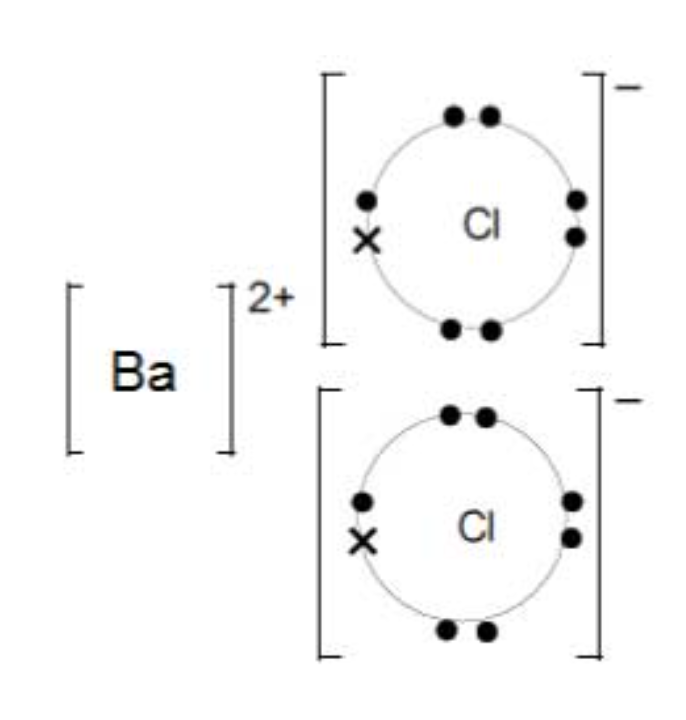
Draw a ‘dot-and-cross’ diagram to show the bonding in solid barium chloride. Show outer electrons only [2].
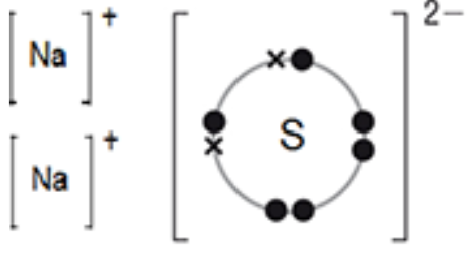
Draw a ‘dot-and-cross’ diagram to show the bonding in sodium sulfide. Show outer electrons only [2].
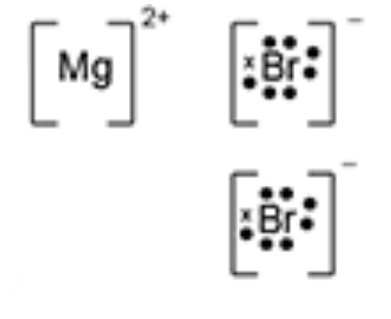
Draw a ‘dot-and-cross’ diagram to show the bonding in MgBr2. Show outer electrons only [2].
What is meant by the term covalent bond [1].
Shared pair of electrons ✓ Covalent bonding occurs between non-metals
What is a dative covalent bond? Provide an example of a compound that has a dative covalent bond
The shared pair of electrons has been supplied by one of the bonding atoms only. The N atom on the ammonia molecule (NH3) donates its lone pair of electrons to an H+ ion forming an ammonium ion, NH4+.
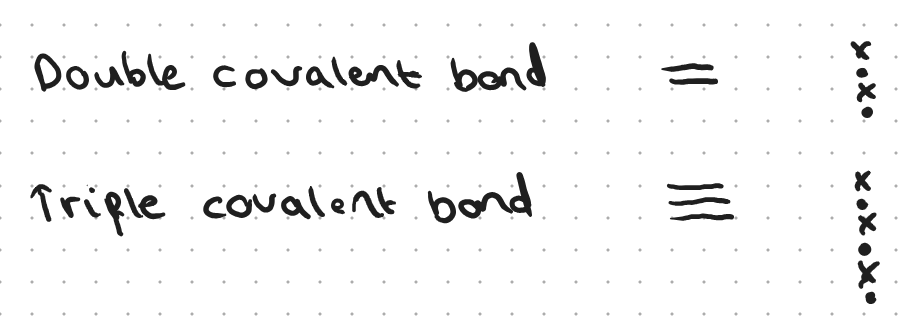
What is a multiple covalent bond? Provide some examples
Two atoms share more than one pair of electrons:
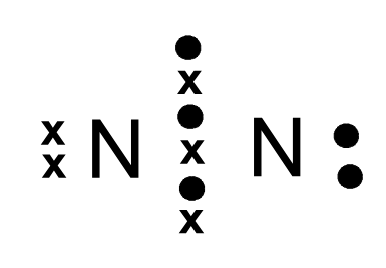
Draw a ‘dot-and-cross’ diagram to show the bonding in a nitrogen molecule. Show outer electrons only [1].
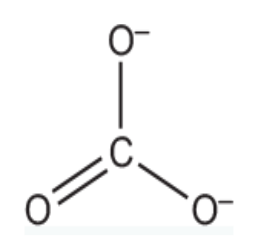
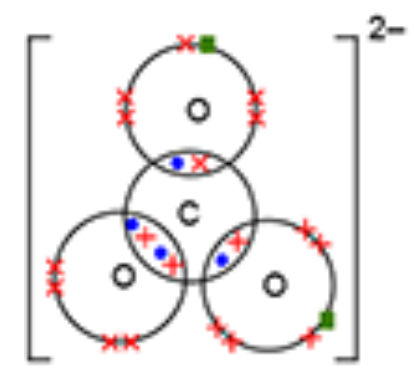
Na2CO3 contains the carbonate ion, CO32−, shown below. Draw the ‘dot-and-cross’ diagram for the carbonate ion. Show outer electrons only and use different symbols for electrons from C and O, and any ‘extra’ electrons [2].
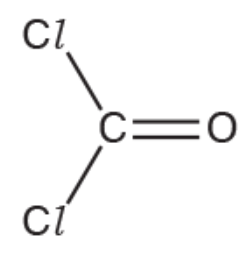
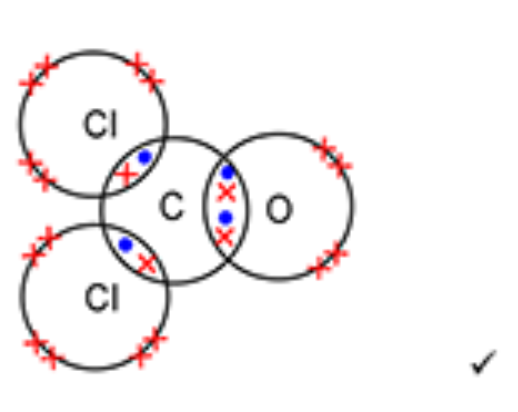
The displayed formula of a phosgene molecule is shown below. Draw a ‘dot-and-cross’ diagram of a phosgene molecule, COCl2. Show outer electrons only [1].
Define the term average bond enthalpy (ABE)?
The energy needed to break one mole of bonds in the gaseous state (kJ mol-1) Larger the ABE value, the stronger the covalent bond
Describe the bonding and structure in graphite. Explain why graphite is a good conductor, a soft material and has a very high melting point [5].
Giant covalent lattice Arranged in layers Good conductor - mobile electrons High melting point - covalent bonds have to be broken Soft - weak forces between the layers
State what is meant by the term metallic bonding? [2]
Electrostatic attraction between delocalised electrons and the positive ions
The melting points of the Period 3 metals sodium and magnesium are shown below. Explain the differences in the melting points of sodium and magnesium, using the model of metallic bonding [3].

Magnesium has more outer OR bonding electrons ✓ Magnesium ions have a greater (positive) charge (density) ✓ Magnesium has a greater attraction between ions and delocalised electrons ✓
Magnesium has metallic bonding and is a good conductor of electricity. Describe, with the aid of a labelled diagram, the metallic bonding in magnesium and explain why magnesium conducts electricity. Include the correct charges on the particles in your diagram [3].
Diagram with regular arrangement of labelled ‘Mg2+ ions’ OR ‘2+ ions’ AND attempt to show electrons ✓ Labelled electrons between other species AND statement anywhere of delocalised electrons (can be in text or in diagram) ✓ Electrons move ✓
On a mini-white board / scrap piece of paper draw out the bond angles table, with the headings: number & type of electron pairs, electron-pair repulsion theory, shape, bond angle/o & name
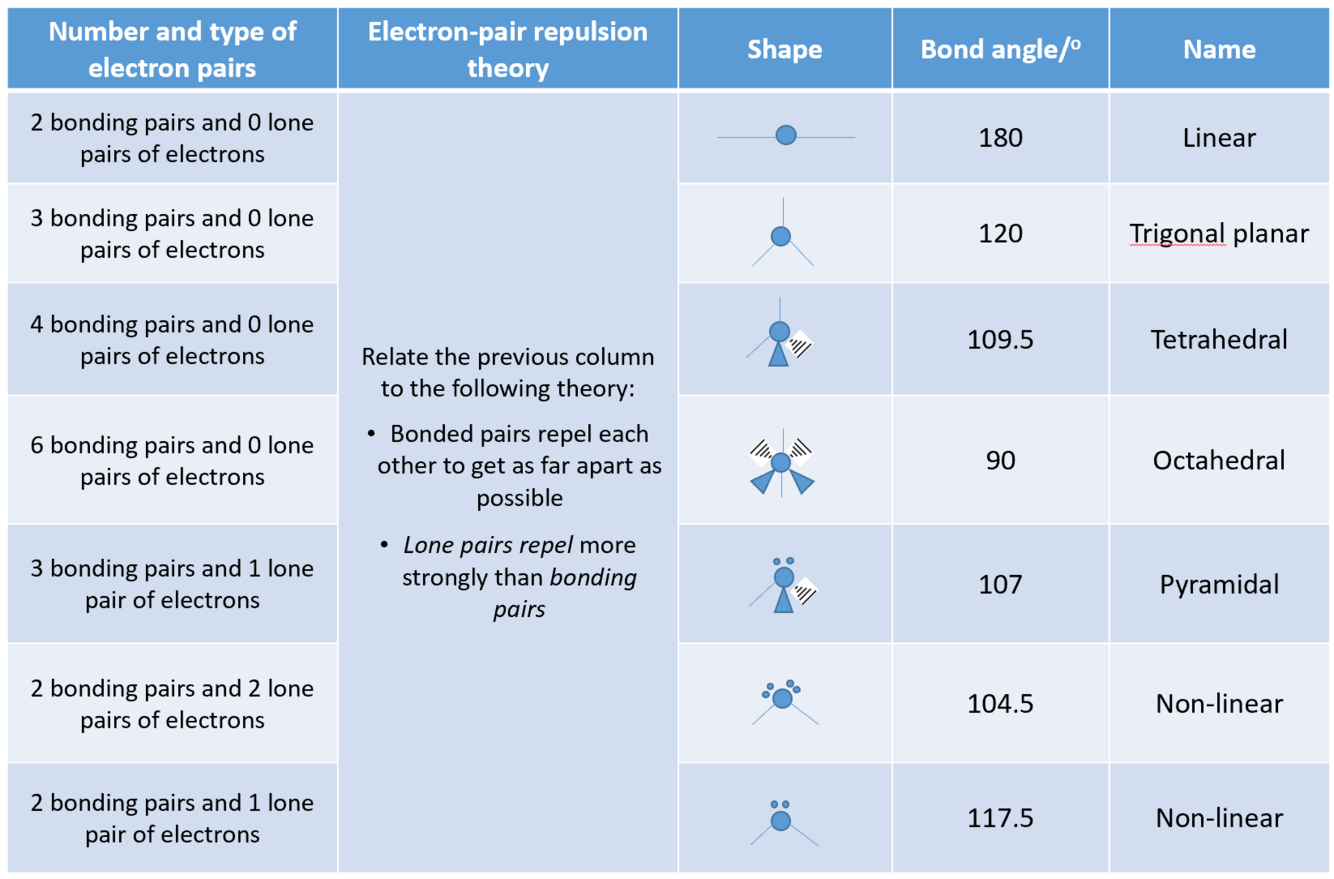
What does molecular shape depend on?
Electron pairs around the central atom: bonded and lone pairs of electrons
In what way do electron pairs interact?
They repel each other