Intro to Insects
No description yet. This curated deck is ready for daily study.
Card preview (24)
How many insects are there?
Estimated 10^18 insects alive at any one time Over 1,000,000 described species Constitute ~50% of all known species Estimates range from 2-30 million species in total
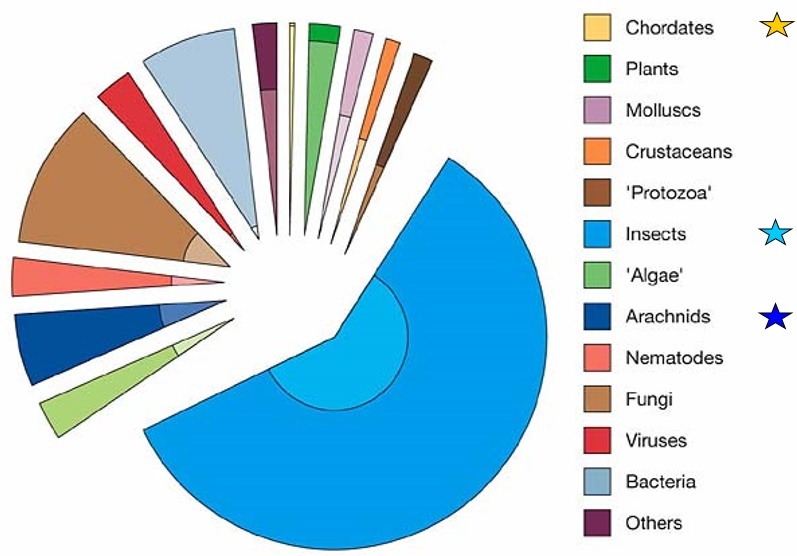
Insect Diversity
Vary in size from sub-milimeter to crow-sized heaviest extant: 100g longest extant: 56cm Habitats: just about everywhere save marine
Sociality
• Solitary: e.g. preying mantis, locust, bees • Gregarious (act as individuals but aggregate in groups): e.g. locust, collembola, bees• Sub-social (most primitive level of interaction involving parents and offspring): e.g. wasps, bees • Highly social (complex social “caste” system): e.g. ants, bees, termites
Common Features
• Body divided into: head, thorax, abdomen • Head: One pair of antennae and mandibles; 2 pairs of maxillae • Thorax: 3 pairs of legs; usually 2 pairs of wings • Abdomen: no locomotory appendages; genital opening usually at posterior end • Post-embryonic development requires metamorphosis
Classification of Insects
• All insects are in the class ‘Insecta’ • There are two sub-classes: 1.Apterygota 2. Pterygota • The sub-class Pterygota has two divisions: i) **Exopterygota** ii) **Endopterygota** • These two divisions also known as: Hemimetabola Holometabola
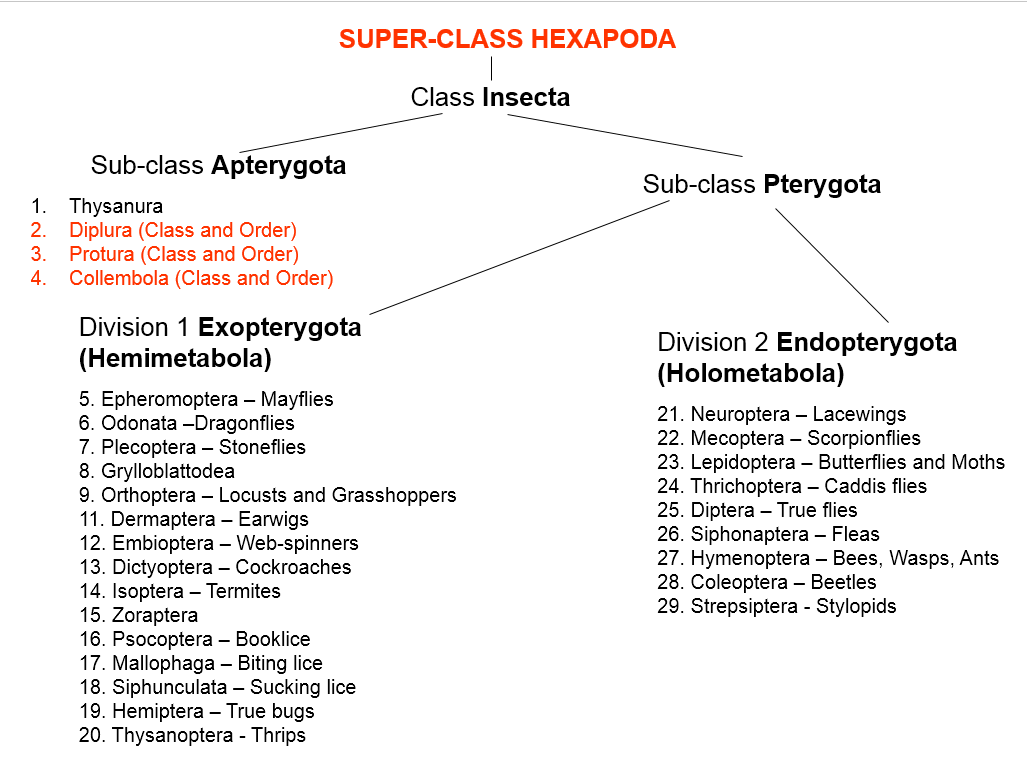
Sub-class Apterygota
• No wings – a primitive feature • Metamorphosis slight or absent (nymphs/young are effectively miniature adults (can’t reproduce) • One (or more) pairs of pre-genital appendages on abdomen • Adult mandibles articulate with head capsule at single point Contains orders: Collembola (springtails) and Thysanura (silverfish)
Subclass Pterygota
• Winged (sometimes secondarily wingless) • Metamorphosis occurs • Adults have no pre-genital abdominal appendages • Adult mandible articulates with head capsules at two points • Contains all the ‘important’ orders
Superorder Exopterygota
(aka hemimetabola) • Simple metamorphosis • Immature stages are nymphs – increasingly resemble adult • Pupa rarely present • Wings develop externally • Nymphs (called naiads if aquatic) and adults often feed on same food resources • Includes: dragonfly, termites, cockroaches, greenfly.
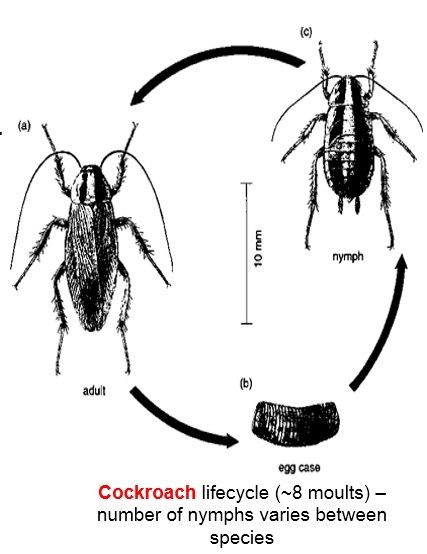
Superorder Endopterygota
• Metamorphosis complex • Immature stages are larvae – differ from adults in form and function (and often diet) • Larva assimilates food • Pupa present: does not feed, tissues ‘re-organised’ • Wings develop internally • Contains: flies, butterflies and moths, bees, wasps, ants and beetles
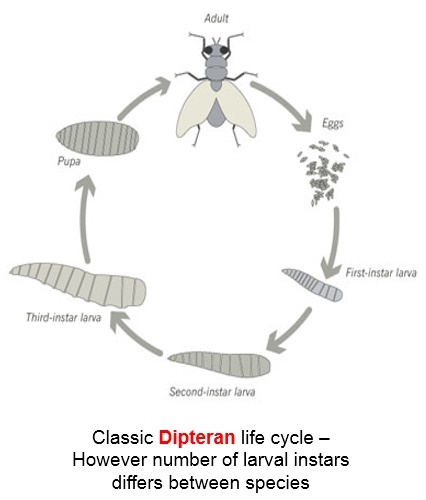
Types of Insect Larvae
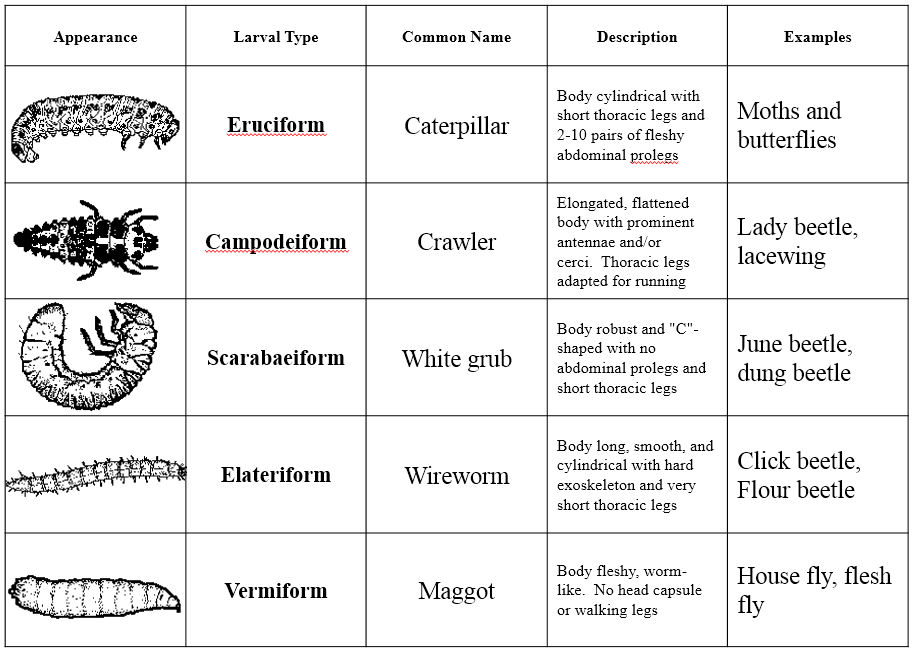
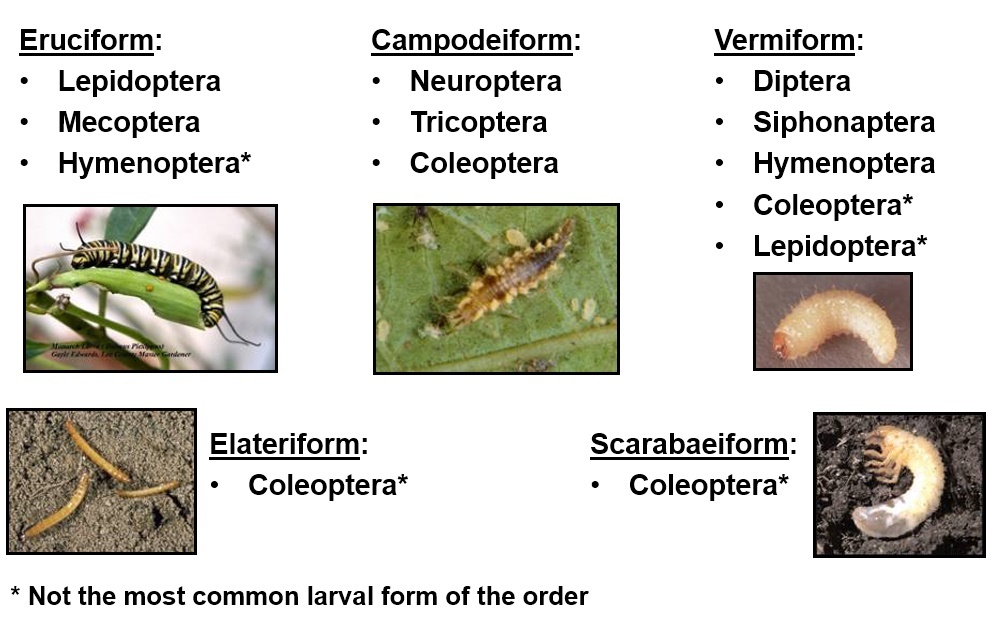
Larva(e) is a generalised term that refers to all endopterygote orders (and sometimes to exopterygote orders) Most larvae can be grouped into one of five categories based on physical appearance
Eruciform Larvae
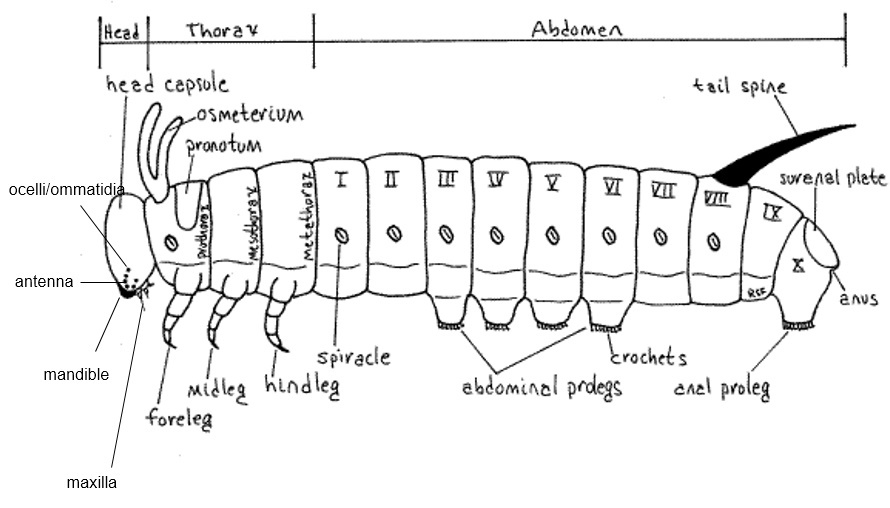
(Caterpillars!) • Well defined segmentation with abdominal prolegs • Each thoracic segment has a pair of segmented legs • Well developed head capsule with biting mouthparts • Head strongly sclerotized; antennae present • Peripneustic arrangement of spiracles (prothorax and abdominal sections 1-8) Abdominal prolegs on segments 3, 4, 5, 6 and 10 (in Lepidoptera)
Campodeiform Larvae
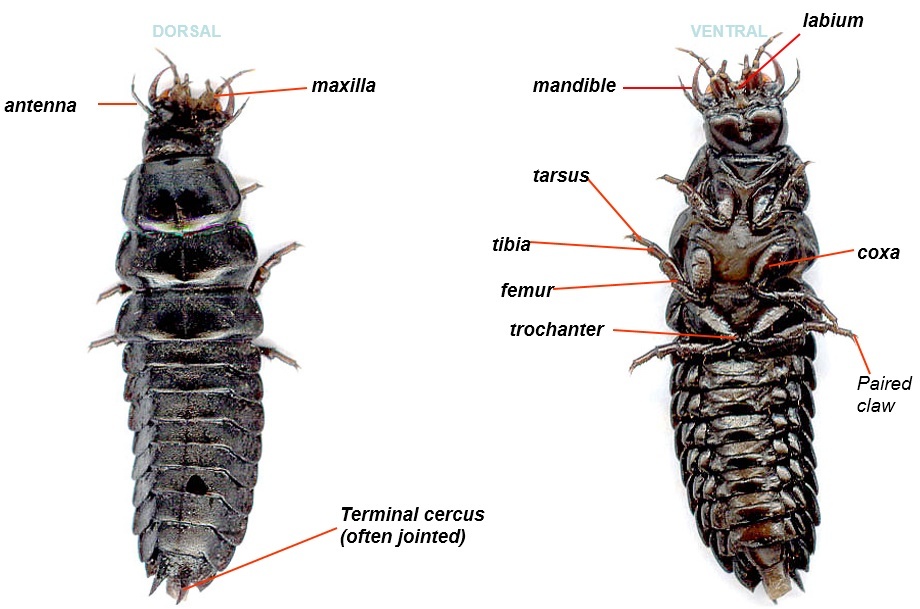
OLIGOPOD: Lack abdominal pro-legs; Have functional thoracic legs • Well sclerotised • Distinct segmentation • Dorso-ventrally flattened • Active predators
Scarabaeiform Larvae
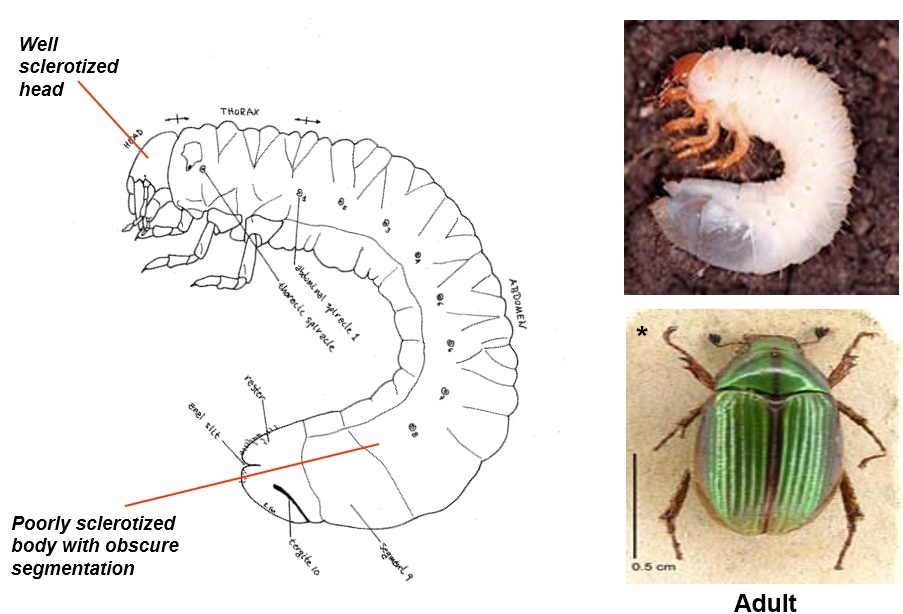
OLIGOPOD: Lack abdominal pro-legs; Have functional thoracic legs • Well sclerotised head only • Less distinct segmentation • slow moving detritivores or phytophages
Apodous Larvae
Larvae without legs – e.g. vermiform larvae of diptera, which are often classified based on head capsule characteristics. • Eucephalous – well sclerotised head capsule. • Hemicephalous – reduced (retractable) head capsule. • Acephalous – without a head capsule
Larval Types by Order
Endopterygote Pupae
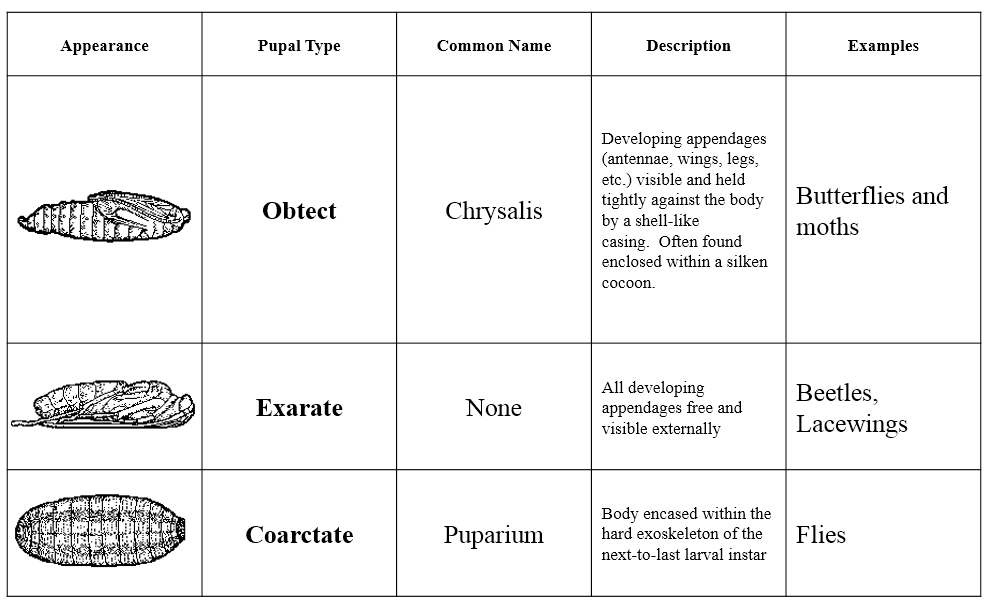
Between their last larval instar and their adult form, Endopterygotes enter a pupal stage
Insect Reproduction
• Parthenogenesis (development from an unfertilised egg) • Can be obligatory or facultative • Virtually all orders have at least one asexual representative • Highly successful means of rapidly exploiting favourable conditions • Female only eggs = thelytokous e.g. aphids • Male only eggs = arrhenotokous e.g. Hymenoptera (male drones) • Male and female eggs = amphitokous e.g. Hymenoptera • Hermaphroditism (male and female reproductive organs) • Polyembryony (two or more embryo’s from one egg)
Oviparity (egg-laying)
• Ovoviviparity EGG + YOLK -> LAID -> HATCH • Pseudoplacental viviparity EMBRO (PLACENTA-FED) -> LAID/HATCH ~SIMULTANEOUSLY • Hemocoelus viviparity EMBRYO IN HAEMOLYMPH • Adenotrophic viviparity LARVA HATCHES IN FEMALE – MILK FED -> LAID -> PUPARIATION
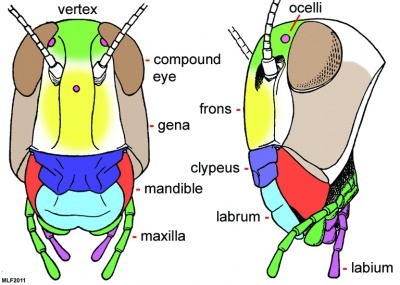
The Insect Head
Insect Mouthparts
Good example of diversity in form and function: • Specific mouthparts have been adapted to feed on different substrates • In some cases. Different mouthparts have been modified to feed on the same type of food, e.g. liquids • Two broad categories: • mandibulate (chewing) • haustellate (piercing-sucking, sponging, and siphoning)
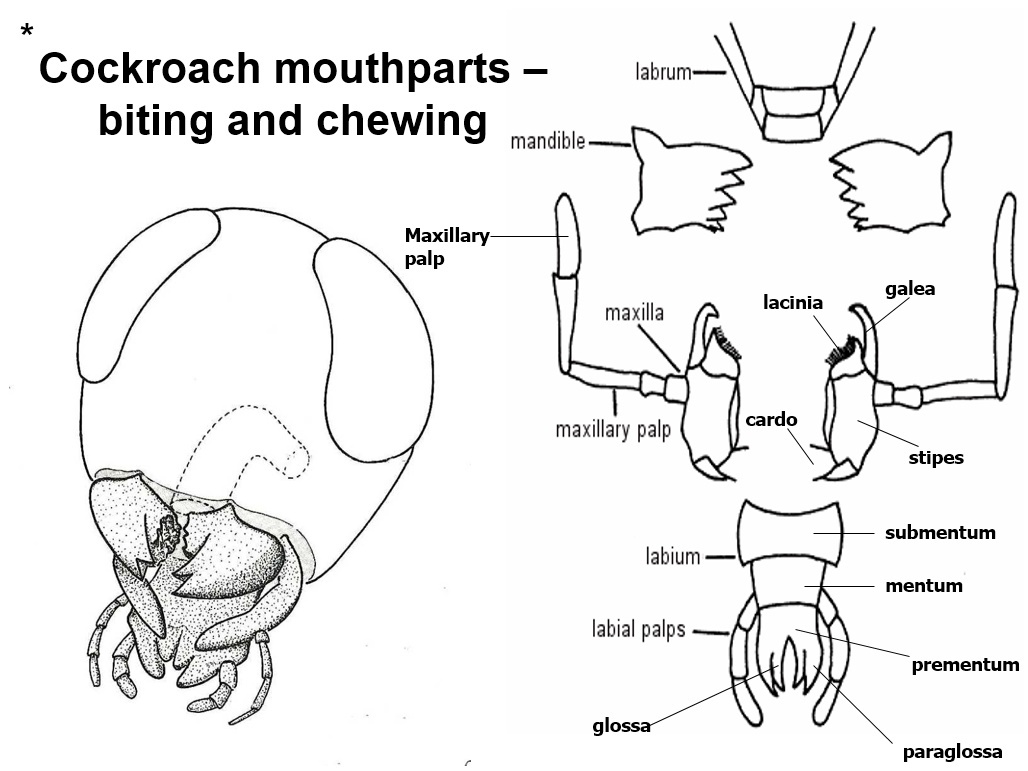
Mandibulate Mouthparts
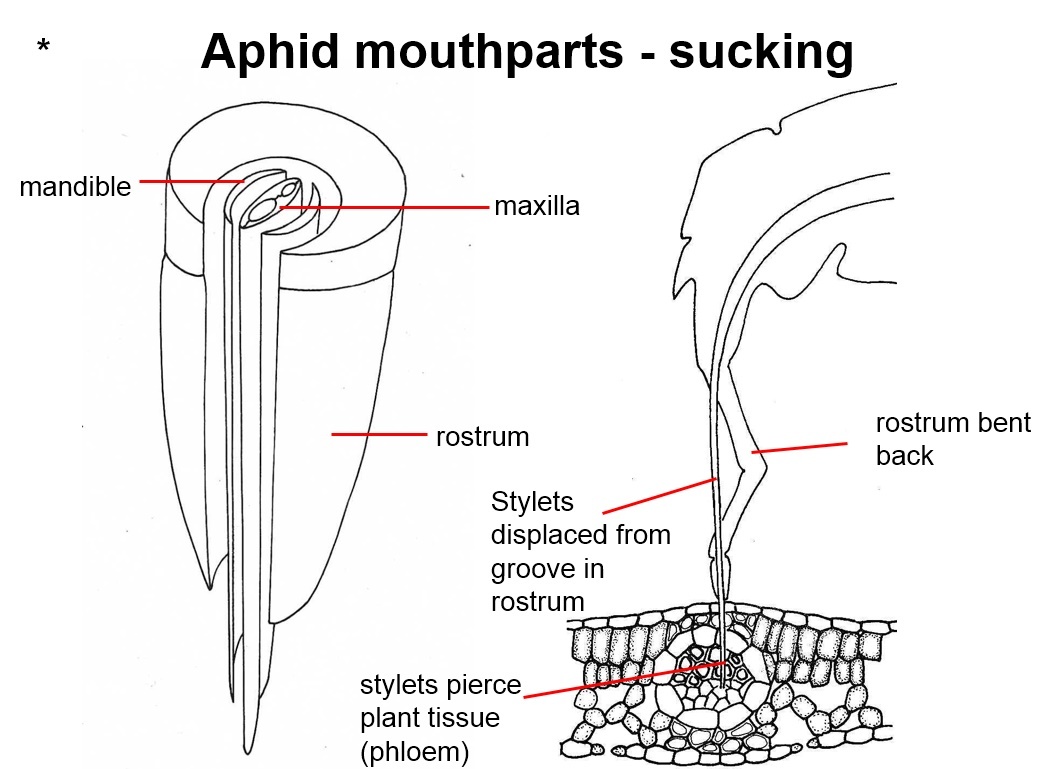
Haustellate Mouthparts (aphid)
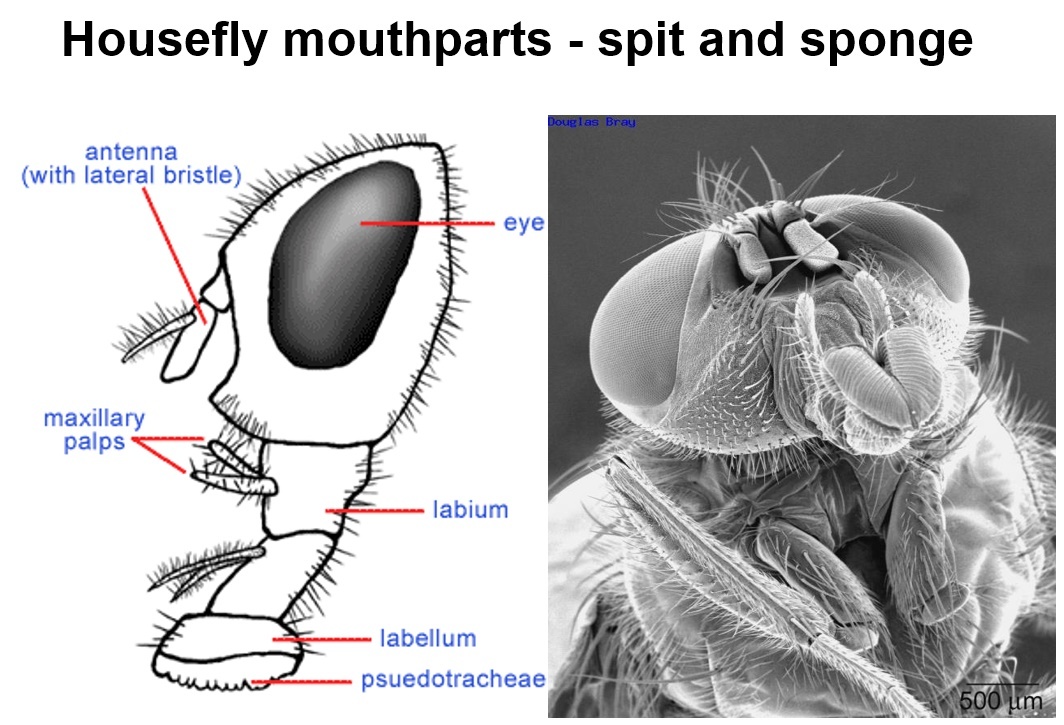
Haustellate Mouthparts (Housefly)
Mouthparts Glossary
Labrum: articulates with the lower margin of the insect’s “face” (the clypeus), concealing some or most of the mandibles. Mandibles: positioned between the labrum and maxillae. Largest mouthparts of chewing insects - used to masticate (cut, tear, crush, chew) food. Maxillae: (paired) situated beneath the mandibles, manipulate food during mastication, have hairs and “teeth” along their inner margins. Labium: single structure, although formed from two fused secondary maxillae. Described as ‘floor’ of the mouth. Proboscis: siphoning mouthpart, e.g. in Lepidoptera. Stylet: elongated piercing mouthpart, e.g. in Aphids. Labellum: sponge-like feeding organ with pseudotrachae, e.g. house fly.