6.33 Adaptive Immunity
No description yet. This curated deck is ready for daily study.
Card preview (7)
Adaptive Immunity
The adaptive immune responses share two key characteristics: * They are specific (i.e. they can differentiate between different types of pathogens and respond accordingly) * They are adaptive (i.e. they produce a heightened response upon re-exposure – there is immunological memory
Antigen Recognition
Antigens are substances that the body recognise as foreign and that can elicit an immune response Antigens are presented to lymphocytes via identification markers on the surface of native cells (MHC molecules) * MHC I markers are found on all body cells (except RBCs) and present endogenous antigens (cell-mediated response) * MHC II markers are on innate immune cells (macrophages) and present exogenous antigens (humoral response)
Antibodies
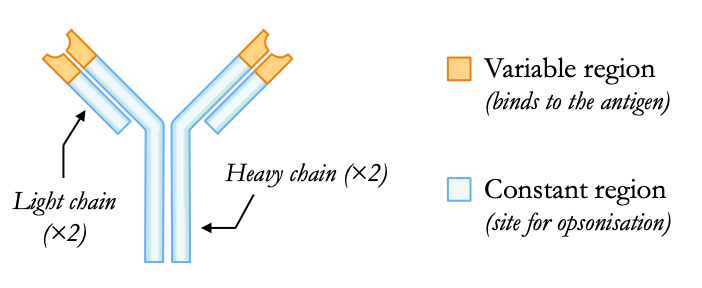
Antibodies are proteins produced by B lymphocytes that are specific to a given antigen (they are also called immunoglobulins)
Roles of Lymphocytes: Humoral Immunity
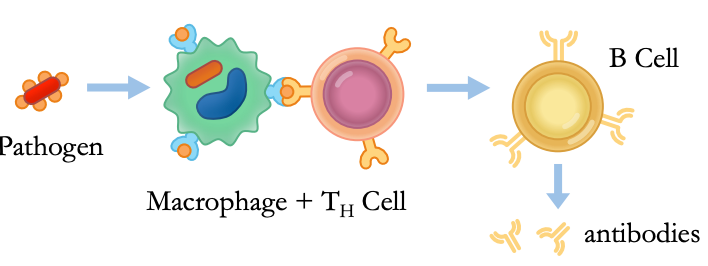
Humoral Immunity (targets ‘non-self ’) * B cells each produce one specific type of antibody * Macrophages or dendritic cells present antigen fragments (via MHC II markers) to helper T lymphocytes (TH cells) * TH cells release cytokines and activate the antigen-specific B cells (which rapidly divide to form many plasma cells) * The plasma cells make antibodies specific to the antigen * A small proportion of B cell clones differentiate into long-lasting memory B cells (for long-term immunity)
Roles of Lymphocytes: Cell Mediated Immunity
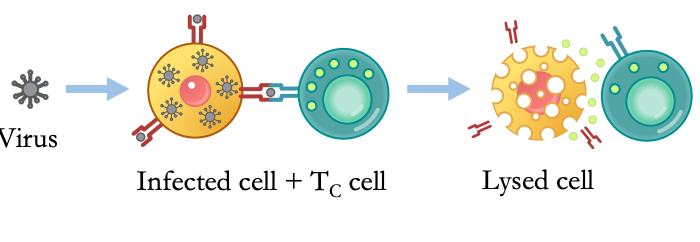
Cell Mediated Immunity (targets ‘self ’) * Infected cells present antigens on their MHC I markers * Antigens are recognised by cytotoxic T cells (and TH cells) * Cytotoxic T lymphocytes (TC cells) bind to the infected cell and trigger its destruction (via perforating enzymes) * TH cells stimulate the formation of memory TC cells * TC cells can target virus-infected cells and tumor cells * Suppressor T cells regulate the action of TC cells in order to prevent sustained T cell activation (i.e. autoreactivity)
Immune system disorders: Immunodeficiency
Immunodeficiency * HIV is a retrovirus that infects helper T cells (TH cells) * It is usually transmitted via the exchange of bodily fluids (e.g. sex, breastfeeding, transfusions, injections, etc.) * HIV is integrated into the genome of infected TH cells * After a prolonged period of inactivity, it becomes active and lyses the TH cell as it begins to spread * This results in an inability to produce antibodies and a general loss of immunity (disease is called AIDS)
Immune system disorders: Hypersensitivity
Allergens are substances that trigger an immune response despite not being inherently harmful (e.g. peanut allergy) * When a B cell is activated by an allergen, it makes large quantities of allergen-specific antibodies (IgE) * These IgE antibodies bind to mast cells and ‘prime’ them * Upon re-exposure to the allergen, the sensitised mast cells release large quantities of histamine (causes inflammation) * This inflammatory response is called an allergic reaction