Cell Transport Mechanisms 1&2
No description yet. This curated deck is ready for daily study.
Card preview (24)
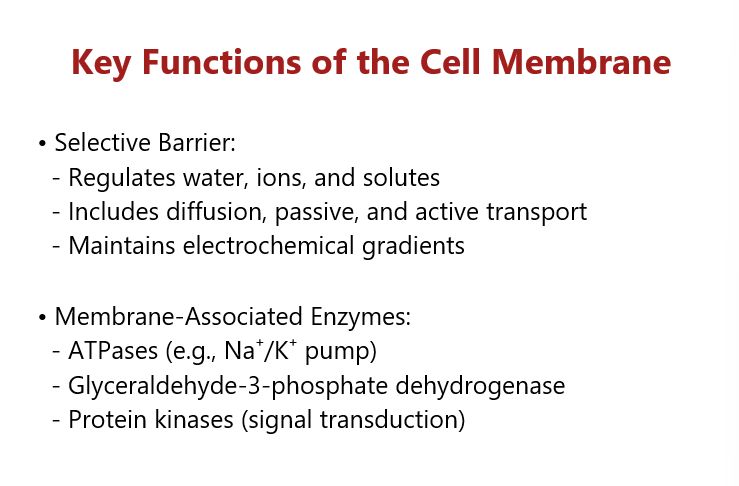
What are the functions of the Cell Membrane?
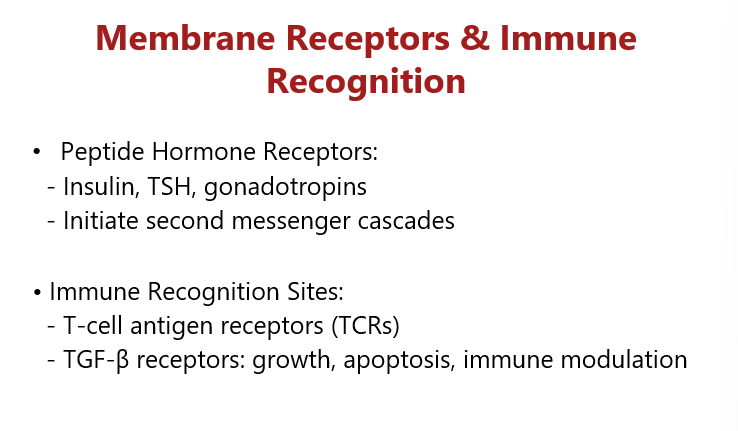
Examples of Membrane Receptors & Immune Recognition Receptors
G-protein receptors initate second messenger cascades.
What are P4-ATPases and ABC Trasnsporters?
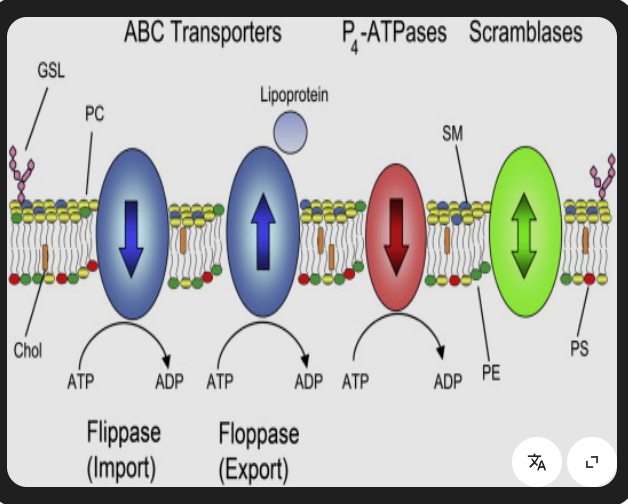
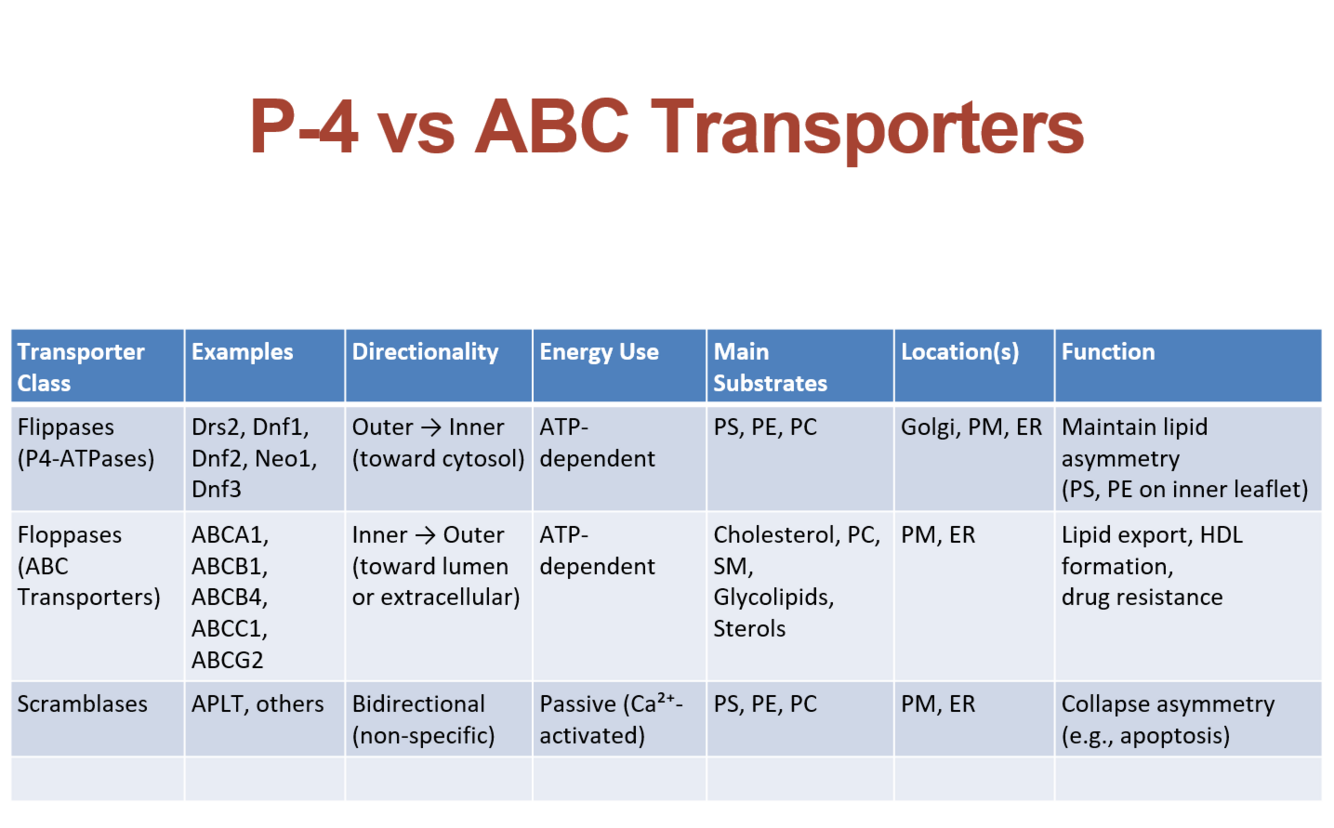
P4-ATPases: Flippases and Scramblases * Maintain membrane lipid asymmetry (some components more numerous on one side of membrane than another) This asymmetry creates structurally and functionally distinct sides. * These are flippase proteins: move materials outer -> inner leaflet. Requires** ATP**. Used to remove xenobiotics. * On organelle membranes * Used in vessicle formation and signalling. • Scramblases: bidirectional transporters. They help to equlibrate the membrane. **Do not **use ATP. They are also on organelle membranes. ABC Transporters: (ATP-binding cassette) Floppases • Uses ATP • Floppases: inner -> outer leaflet Uses ATP Eg. ABCA1 and MsbA ABC Transporters • Type I/II importers: nutrient uptake (amino acids, B12) • Exporters: move drugs, toxins and lipids. • Eg. Detoxification. ABC Transporters are a major factor in multi-drug resistances in cancer and bacteria.
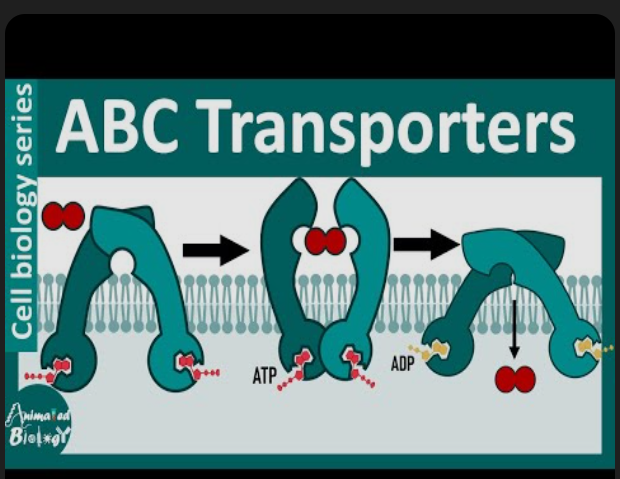
Examples of ABC Transporters
ABCA1 - Cholesterol efflux ABCB1 (P-glycoprotein) - Drug efflux ABCB4 - Phosphatidylcholine (PC) export ABCC1 - PC, sphingomyelin export ABCC2 - Bilirubin and drug metabolites ABCG2 - Sterol export
Examples of Flippases (P4-ATPases)
Drs2 - Phosphatidylethanolamine, Phosphatidylserine flipping; Golgi and endosomal trasnport Dnf1, Dnf2 - Flip Phosphatidylcholine, Phosphatidylethanolamine, Phosphatidylserine at plasma membrane. Dnf3 - Works with Neo1 (cell surface receptor which coorectly positions phosphatidylserine). Flips phosphatidylserine in endosomes Neo1 - Maintains lipid asymmetry in Endoplasmic Reticulum, Golgi Apparatus, plasma membrane.
What are Scramblases?
ATP - independent, bidirectional lipid movement. * Activated by Ca2+ or apoptosis signals. * Disrupt lipid asymmetry (expose Phosphatidylserine on outer leaflet) * TMEM16F - Key Ca2+ activated scramblase. * Xkr8 - Apoptosis - associated scramblase
What is Vesicular Transport Integration?
• Lipid sorting during endoplasmic reticulum –> Golgi –> Plasma membrane trafficking. • Flippases help shape membrane curvature for budding • ABC transporters load vessicles with luminal-facing lipids. • Scramblases act during vesicle fusion or stress • Essential in exocytosis, endocytosis, and organelle biogenesis
What is the clinical significance of the different trasnporters?
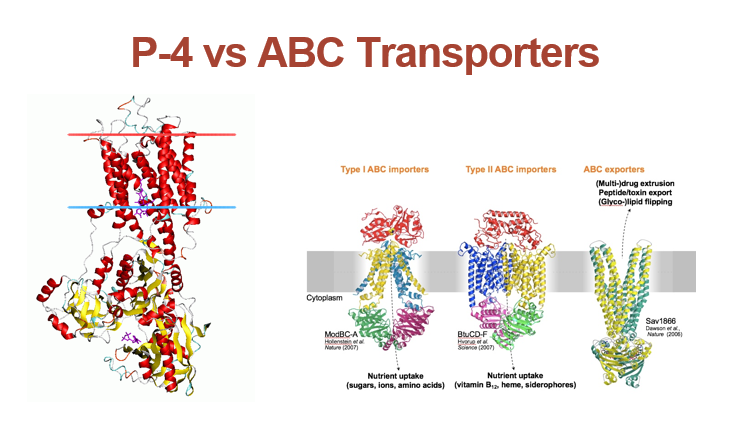
• Tangier disease - ABCA1 mutation –> low HDL • Cytic fibrosis - CFTR (ABCC7) defect • Drug resistance - ABCB1 (P-gp), ABCG2 drug resistance in cancer. • Cholestasis - ABCB4 mutations affect bile lipid export • Apoptosis - phosphatidylserine exposure by scramblases (Xkr8) • Neurodegeneration - improper lipid flipping impacts membrane signalling.
Intracellular Phospholipid and lipid trafficking
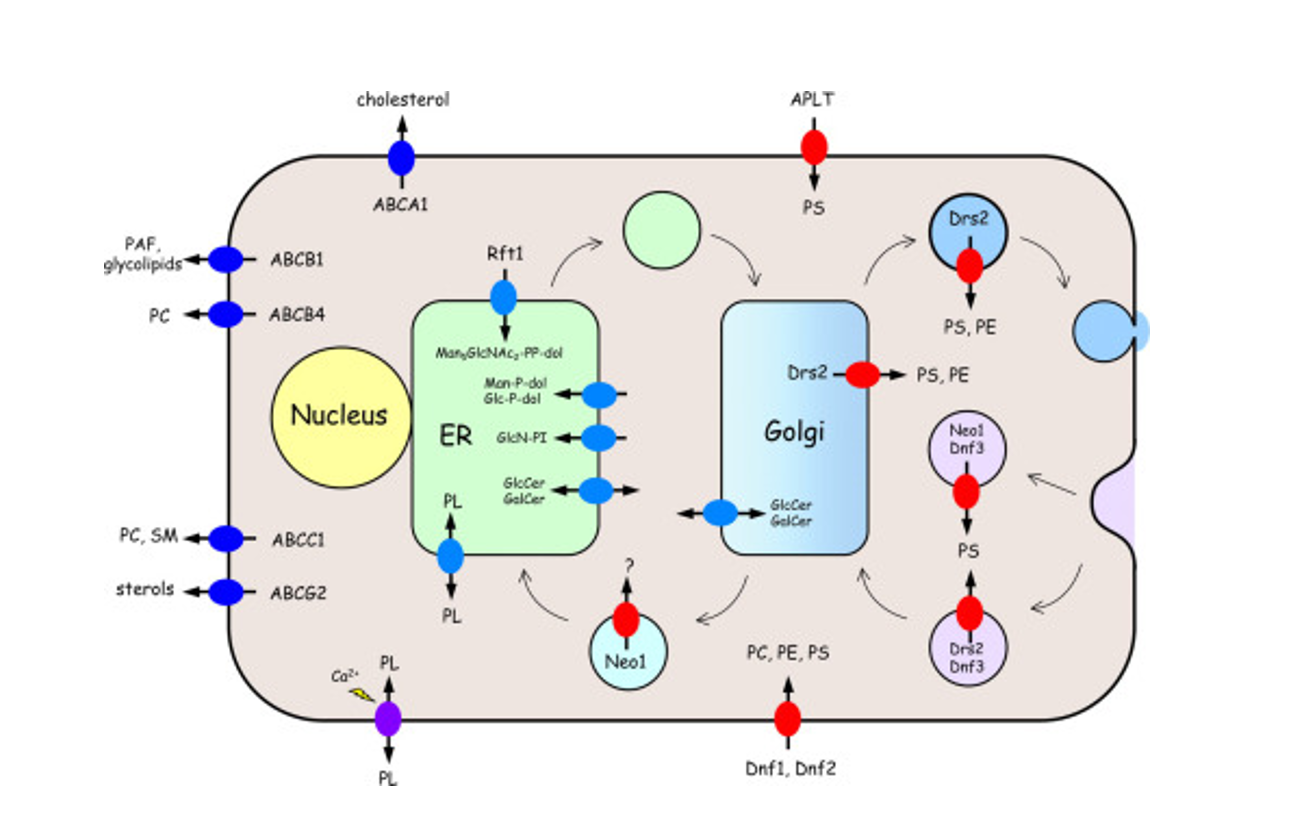
The image is a diagram illustrating the intracellular location and function of various lipid transporters in a eukaryotic cell. “Flippases” (red arrows) are ATP-dependent P4-ATPases that primarily transport lipids toward the cytoplasm, helping maintain membrane asymmetry. “Floppases” (blue arrows) are ATP-binding cassette (ABC) transporters that move lipids away from the cytoplasm in an ATP-dependent manner. The diagram shows specific examples of flippases (like Drs2, Dnf1, Dnf2,) and floppases (like ABCA1, ABCB1, ABCB4) in different organelles such as the plasma membrane, ER, and Golgi apparatus. These transporters are crucial for establishing and maintaining the asymmetric distribution of phospholipids like phosphatidylserine (PS), phosphatidylethanolamine (PE), and phosphatidylcholine (PC) across cell membranes.
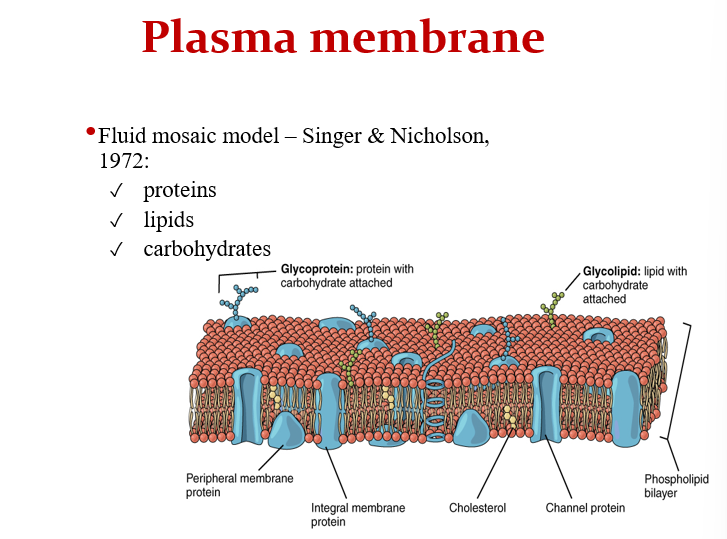
Picture of Fluid Mosaic Model
Explain membrane asymmetry
Membrane asymmetry is the unequal distribution of lipids, proteins, and carbohydrates between the inner (cytosolic) and outer (extracellular) layers (leaflets) of a cell membrane, crucial for cell signaling, transport, and function, with specific lipids like phosphatidylserine (inner) and sphingomyelin (outer) having distinct locations maintained by lipid transporters (flippases/floppases) and enzymes, ensuring proteins face the correct direction and maintaining cell health.
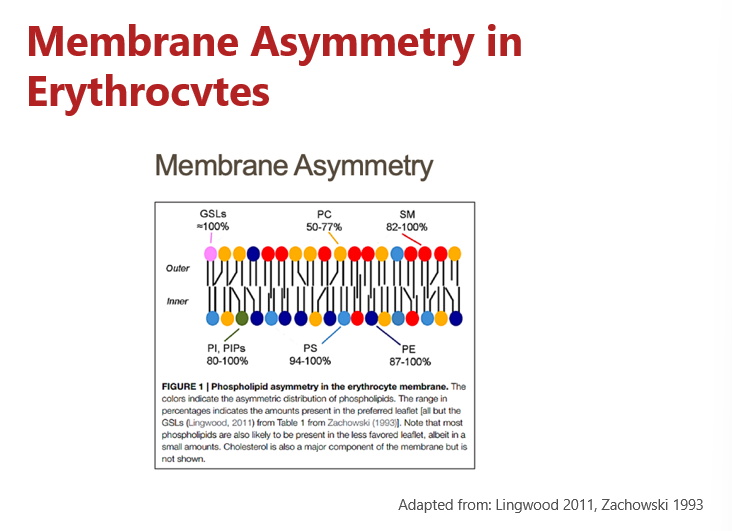
Explain how membrane assymetry affect the plasma membrane of the red blood cell.
The 2 monolayers of the lipid bilayer are polar opposites based on composition (the hydrophilic side and the hydrophobic side are oppositely charged.) • Erythrocytes – lipids with choline (CH3)3N+CH2CH2OH) in their polar group; phosphatidylcholine + sphingomyelin are exclusive to outer monolayer: • terminal primary amino group (phosphatidylethanolamine + phosphatidylserine) are in the inner monolayer. • The inner monolayer of the erythrocyte plasma membrane is negatively charged. • This difference in polarity contributes to potential diff. between the monolayers.
What is the physiologic significance of the membrane asymmetry 1?
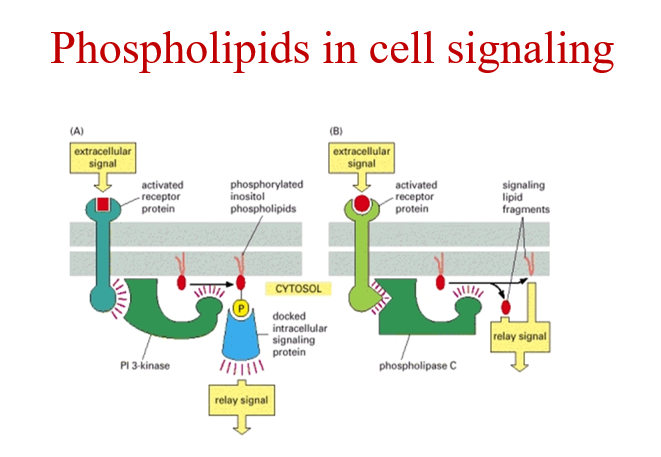
Functional usefulness: * cytosolic proteins bind to specific polar groups on the cytosolic face of the bilayer. * Protein kinase C - activated in response to extracellular signals. * The activation of protein kinase C, requires phoshatidylserine (in cytosolic monolayer) - Phosphoinositide (PI) 3-kinase is activated and phosphorylates inositol phospholipid ->phosphatidylinositol. - phosphatidylinositol recruits & docks intracellular signalling proteins -> downstream response (growth and metabolism). • Akt: Proteins/Protein Kinase B proteins which relay signals from growth factors and hormones so play a key role in cell survival, growth & metabolism.
What is the physiologic significance of the membrane asymmetry 2?
The plasma membrane has phospholipids which through extracellular signalling cleaves speciifc phospholipids. • the activated phospholipids (phospholipases) produce Phospholipase C (PLC) - a short-lived intercellular mediator. • PLC cleaves the phosphatidyl inositol (PIP2) (in the cytosolic monolayer) into Inositol triphosphate (IP3) and diacylglycerol (DAG). • IP3 is released into the cytosol and stimulates Ca2+ from the Endoplasmic reticulum. • DAG activates protein kinase C which phosphorylates substrate proteins.
Explain how membrane asymmetry is used for Apoptosis.
Phosphatidylserine is used as an indicator of senescence. • Phosphatidylserine - normally cytosolic is translocated extracellularly. • Phosphatidylserine on the cell surface marks/targets the cell for phagocytosis. (Clearance) • This requires the inactivation of the translocator protein responsible for localising phosphatidylserine to the cytosol. • Scramblase is activated - nonspecific, bidirectional lipid translocation.
What are Lateral and Transverse diffusion?
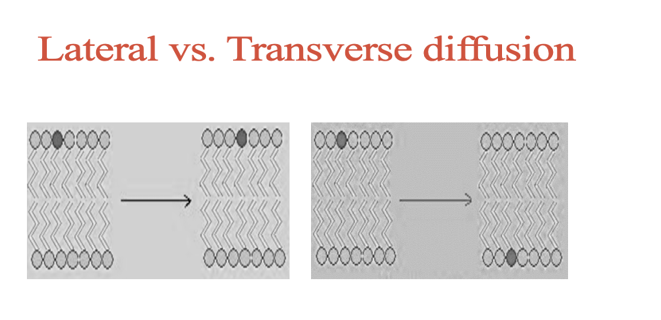
Lateral Diffusion: rapid horizontal movement of lipids & proteins within single leaflet of membrane. Tansverse Diffusion: flip-flop; slow movement from one leaflet of membrane to another.
What is Phase Separation?
When lipids within a cell membrane spontaneously separate into distinct, organized regions (like oil and water), creating liquid-ordered (Lo) and liquid-disordered (Ld) phases, or droplets, due to varying lipid properties (saturation, cholesterol, etc.) and interactions, crucial for organizing signaling molecules and membrane functions. Liquid-Ordered (Lo) Phase: Denser, more ordered regions rich in saturated lipids and cholesterol (like rafts). Liquid-Disordered (Ld) Phase: More fluid, less ordered regions with unsaturated lipids.
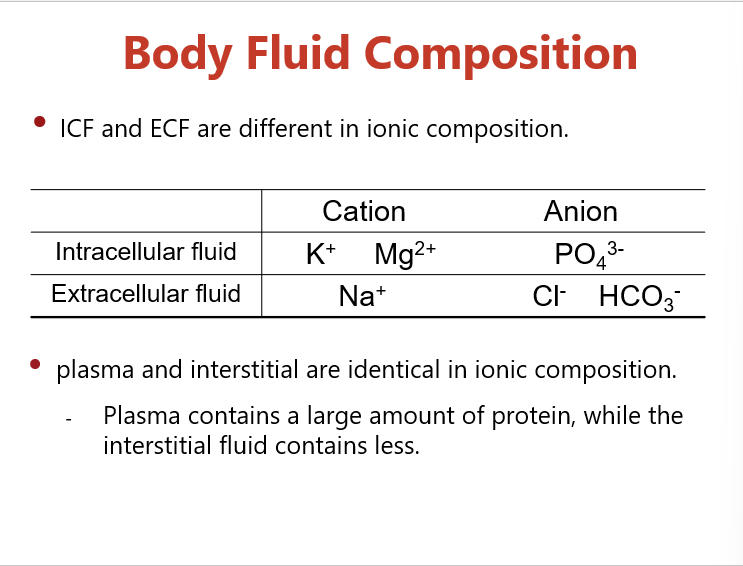
Body Fluid Composition
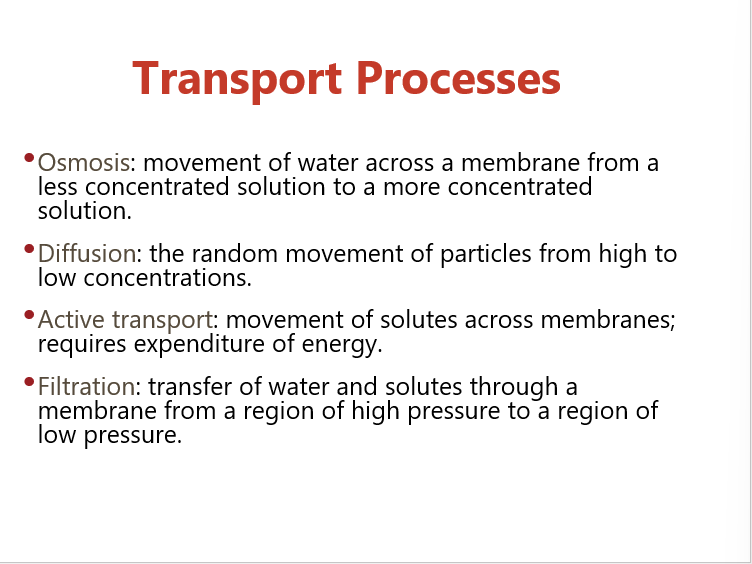
What are the four main transport processes?
What is an Osmole?
An osmole is the amount of substance which must be dissolved to produce Avagadro’s number (6.0221x10^23) of particles in a volume of solution. (1 mole of a substance).
What is Osmolarity?
of osmoles of solute/L (molar conc). • Depends on volume, temp & pressure. • Unit: osmole/L of solution • 80% of total ECF osmolarity is due to Na+ and Cl-. • 50% of total ICF osmolarity due to K.
What is Osmolality?
of osmoles/kg of solvent (H20) (similar to Mass conc) * Depends on the mass of the solvent and independent of temp & pressure. * Concerns the solute’s ability to attract H20. • 80% of total ECF osmolality is due to Na and Cl. • 50% of total ICF osmolality due to K.
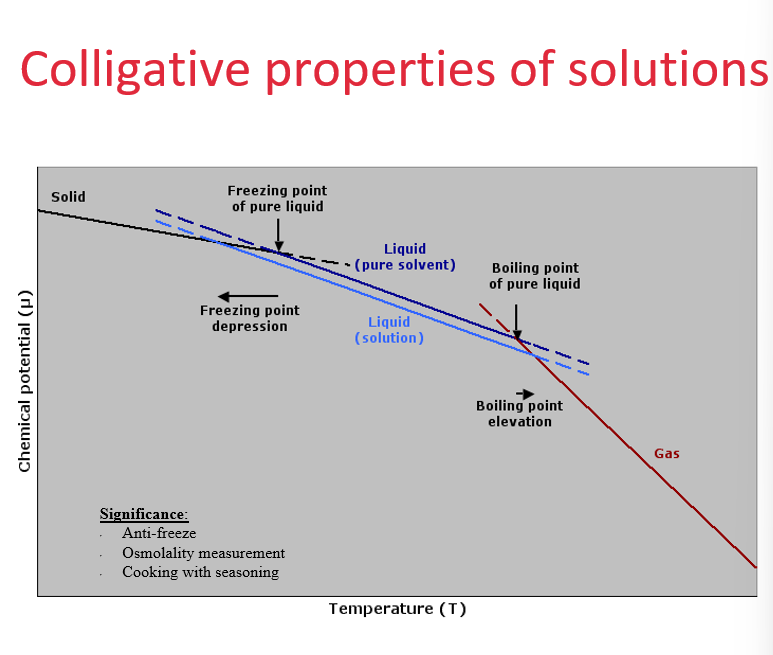
What are the colligative properties of Osmolality and Osmolarity?
Solution characteristics, like boiling point elevation, freezing point depression, vapor pressure lowering, and osmotic pressure, that depend only on the number (concentration) of solute particles, not on the characterisitcs of the particles.
How is Osmolality measured?
Osmolality is usually measured by freezing point depression. * The more concentrated a solvent, the lower the freezing point. • Freezing point depression is also a colligative property so osmolality & freezing point depression can be extrapolated from each other.