25.3 Chemistry of Phenol
No description yet. This curated deck is ready for daily study.
Card preview (17)
What is the chemical formula of phenol?
C6H5OH
Draw the skeletal formula of phenol:
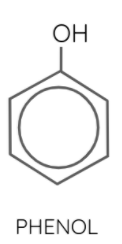
What is the IUPAC name for this molecule?
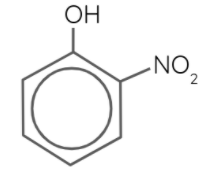
2-nitrophenol
What is the IUPAC name for this molecule?
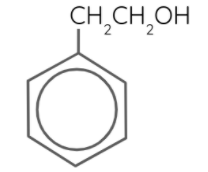
2-phenylethanol
What is the IUPAC name for this molecule?
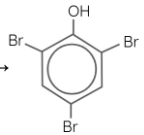
2,4,6-tribromophenol
What is the IUPAC name for this molecule?
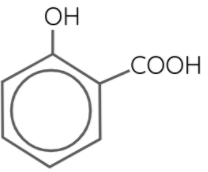
2-hydroxybenzoic acid
Why is phenol considered a weak acid?
Phenol + Water ⇌ Phenoxide ion + Hydrogen ion has the ability to partially dissociate in water to release H+
What happens when phenol is added to water?
Phenol + Water ⇌ Phenoxide ion + Hydrogen ion partial dissociation
Rank these molecules from strongest to weakest acid: phenol, carboxylic acid, alcohol
(strongest) • Carboxylic acid • Phenol • Alcohol (weakest)
Using reactions with weak & strong bases, describe the difference in acid strength of alcohols, carboxylic acids & phenols:
• alcohols not strong enough to react with strong base, ∴ weakest • phenols can react with strong base only • carboxylic acids can react with strong bases & even weak bases, ∴ strongest
The weaker the base, the ___ the acid required to react with it.
stronger
What are the conditions for electrophilic substitution of phenols?
room temperature (does not require halogen carrier)
Why can electrophilic substitution in phenols take place under milder conditions than that of benzene?
phenol is more reactive: • lone pair from :OH donated to ring of delocalised 𝛑-electrons • phenol’s aromatic ring has higher electron density than benzene’s • greater attraction for electrophiles/polarising ability • ∴ reactions of phenol can take place under milder conditions
Name 2 types of electrophilic substitution reactions of phenol:
• Bromination • Nitration
Write a chemical equation for the bromination of phenol:
• C6H5OH + 3Br2 ⟶ C6H2Br3OH + 3HBr decolourises bromine water, forms white precipitate
Write a chemical equation for the nitration of phenol:
• C6H5OH + HNO3 ⟶ C6H4NO2OH + H2O
Describe & explain the differences in reactivity of benzene & phenol:
• phenol more reactive than benzene • lone pair on :OH donated to ring of delocalised 𝛑-electrons • aromatic ring in phenol has higher electron density than that of benzene • phenol has greater attraction for electrophiles/polarising ability