Chapter 11: Decision Making
No description yet. This curated deck is ready for daily study.
Card preview (13)
Bayes’ theorem
Book definition: “A theorem that prescribes how to combine the prior probability of a hypothesis with the conditional probability of the evidence, given the hypothesis, to assess the posterior probability of the hypothesis, given the evidence. (p. 262)”
Conditional probability
Book definition: “In the context of Bayes’ theorem, the probability that a particular piece of evidence will be found if a hypothesis is true. (p. 262)”
Descriptive model
Book definition: “A model that states how people actually behave. Contrast with prescriptive model. (p. 263)”
Framing effect
Book definition: “The tendency for people to make different choices among the same alternatives, depending on the statement of the alternatives. (p. 273)”
Gambler’s fallacy
Book definition: “The belief that, if a string of probabilistic events has turned out one way, there is an increased probability that the next event will now turn out the other way. (p. 269)”
Posterior probability
Book definition: “In Bayes’ theorem, the probability that a hypothesis is true after consideration of the evidence. (p. 263)”
Prescriptive model
Book definition: “A model that specifies how people ought to behave to be considered rational. Contrast with descriptive model. (p. 263)”
Prior probability
Book definition: “In Bayes’ theorem, the probability that a hypothesis is true before consideration of the evidence. (p. 262)”
Probability matching
Book definition: “The tendency to choose an alternative with a probability that matches the frequency with which that alternative occurs in experience. (p. 267)”
Recognition heuristic
Book definition: “If one item can be recognized and another cannot, people view the recognized item to have a higher value on dimensions like size. (p. 270)”
Subjective probability
Book definition: “The probability people associate with an event, which need not be identical to the event’s objective probability. (p. 273)”
Subjective utility
Book definition: “The value that someone places on something. (p. 272)”
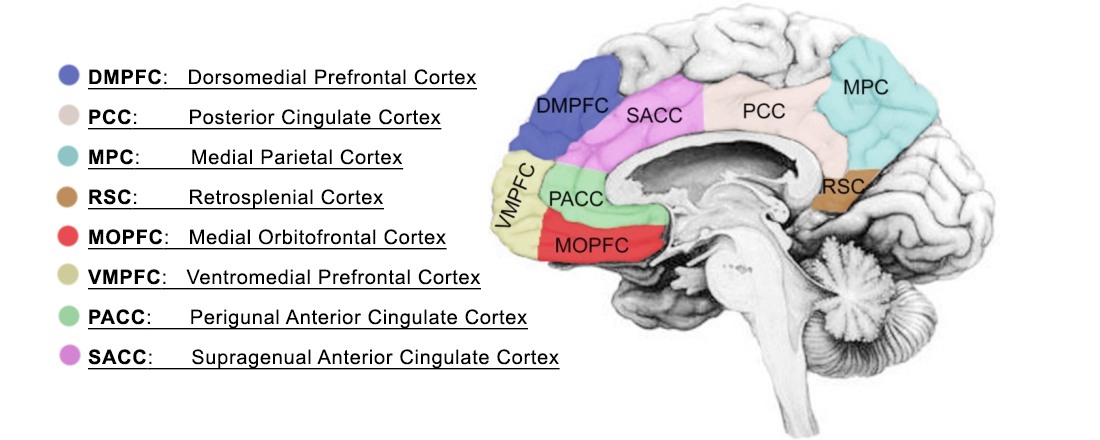
Ventromedial prefrontal cortex
Book definition: “The portion of the cortex in the front and center of the brain. It seems to be involved in decision making and self-regulation, including activities like gambling behavior. (p. 260)”